No. 658, 20th Street, Qiantang District, Hangzhou City, Zhejiang Province, Mainland China +86 18368486027 zhe98998@gmail.com

No. 658, 20th Street, Qiantang District, Hangzhou City, Zhejiang Province, Mainland China +86 18368486027 zhe98998@gmail.com

Introduction: Why has single-screw pump technology become the core choice for industrial fluid transportation?
In the fields of petroleum refining, chemical engineering, and new energy, single-screw pumps, with their unique structural advantages, have become ideal equipment for transporting high-viscosity media, media containing solid particles, and corrosive media. However, when faced with the demands of complex operating conditions, how can customized design achieve precise matching between the pump body and the media? Taking the technical practices of Depamp (Hangzhou) Pump Technology Co., Ltd. as an example, this article systematically expounds on the core technical points of single-screw pumps, covering technical principles, parameter analysis, and selection guidelines.
Keywords: single screw pump, original manufacturer, customized design, fluid transportation, Depam Pumps
Opening on Industry Technical Pain Points: Three Major Technical Bottlenecks of Traditional Single Screw Pumps
STEP1:Insufficient media adaptabilityConventional pump body materials struggle to withstand strong acids, strong alkalis, and high-temperature media, leading to seal failure or pump body corrosion. For instance, when a chemical enterprise used an ordinary stainless steel pump body to transport concentrated sulfuric acid, leakage occurred after just three months of operation, with repair costs reaching as high as 200,000 yuan.
STEP2:Large deviation in flow accuracyWhen conveying high-viscosity media, traditional screw pumps, due to their unreasonable rotor-stator clearance design, can exhibit a flow fluctuation rate of up to ±15%, failing to meet the metering requirements of fine chemicals.
STEP3:Difficulties in energy efficiency optimizationThe fixed rotational speed design leads to severe energy waste in pump units under low-load conditions. A case study from a certain oil field shows that the energy consumption of traditional pump units is over 30% higher than that of optimized equipment.
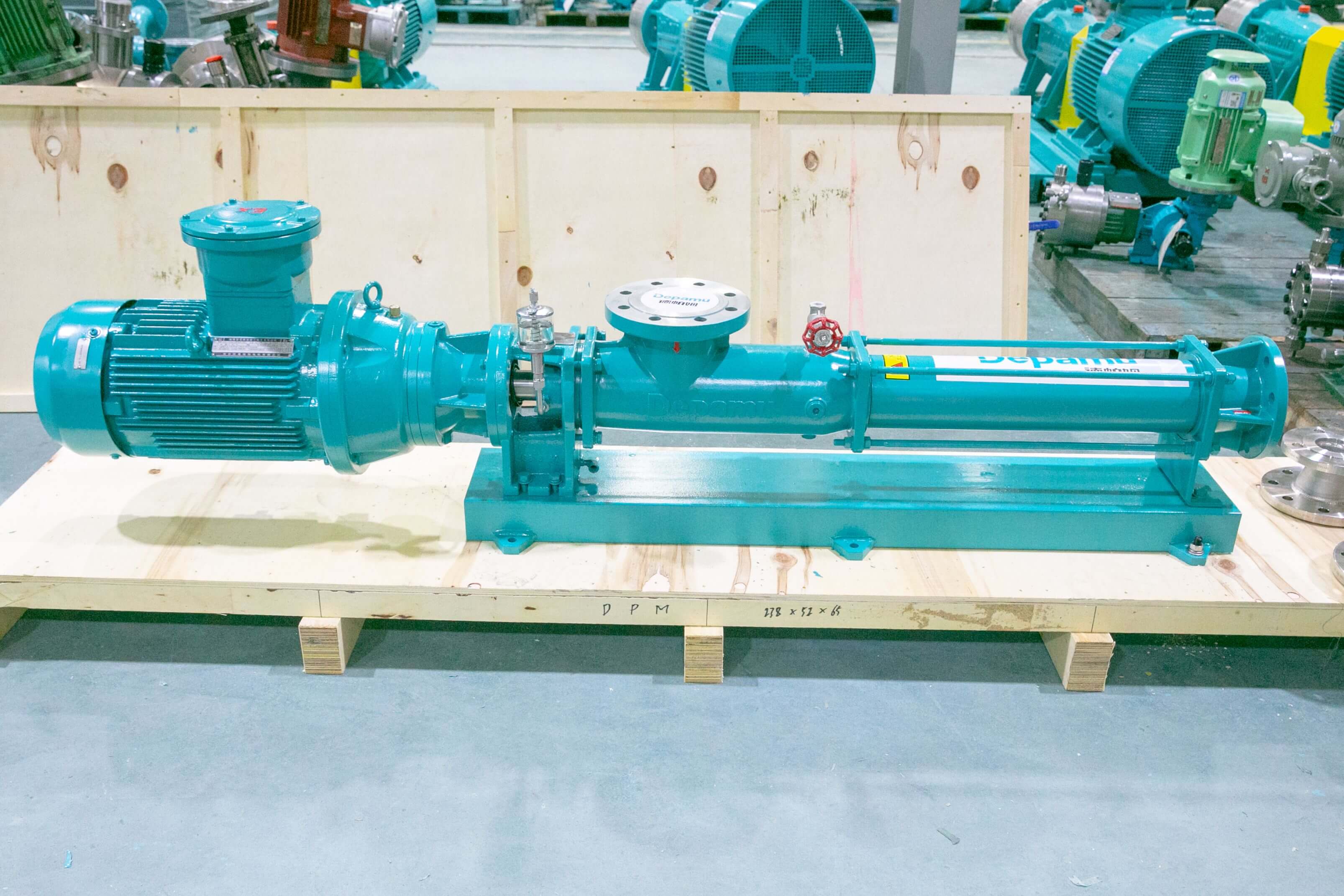
Introduction to the company's technological strength: Three major technological breakthroughs of Depamp Pumps
As an original manufacturer with 21 years of experience in research and development of high-end positive displacement pumps, Depamp (Hangzhou) Pump Technology Co., Ltd. addresses industry pain points through the following technological strategies:
1. Material customization system
STEP 1: Establish a medium-material database covering characteristic parameters of over 200 corrosive media, enabling rapid matching with special materials such as Hastelloy alloys and duplex stainless steels.
STEP 2: Utilize laser cladding technology to form a 0.5mm-thick corrosion-resistant layer on the surface of the pump body's flow passage components. Through actual measurements, in a sulfuric acid environment at 120℃ with a concentration of 98%, the service life is extended to over 5 years.
STEP 3: Typical Case: Provided a titanium alloy single-screw pump for a nuclear power plant, successfully resolving the challenge of transporting chlorine-containing coolant, with the equipment operating continuously for 3 years without failure.
2. Precise flow control technology
STEP 1: Develop a variable-gap rotor-stator structure to control the flow fluctuation rate within ±2% by adjusting the screw eccentricity (adjustable from 0.5 to 2 mm).
STEP2: Integrate a variable frequency drive system to achieve stepless speed regulation from 0 to 1500 rpm, and form a closed-loop control system in conjunction with a flow sensor to meet the ±1% measurement accuracy requirement of the chemical industry.
STEP 3: Detection Indicator: When conveying a medium with a viscosity of 5000 mPa·s, the measured flow stability reaches 98.5%, which is 5 percentage points superior to the industry standard.
3. Energy Efficiency Optimization Plan
STEP 1: Utilizing a permanent magnet synchronous motor paired with an intelligent sleep mode, it can reduce energy consumption by 40% under intermittent operating conditions.
STEP 2: Optimize the hydraulic model of the pump body, increasing the volumetric efficiency to 88%, which is 12% higher than that of traditional designs.
STEP 3: Project Data: In a polymer flooding project at a certain oil field, the annual electricity savings per unit of equipment reached 120,000 kilowatt-hours, equivalent to a reduction of 96 tons in carbon dioxide emissions.
For more information, please visit the official website:www.depamufluid.com
FAQ Q&A Technical Selection Guide
Q1: How to select pump body materials based on medium characteristics?
STEP 1: Acidic medium (pH < 4): Hastelloy C-276 or polytetrafluoroethylene (PTFE) lining is preferred, with corrosion resistance meeting Grade A of ASTM G28 standard.
STEP 2: Alkaline medium (pH > 12): Biphasic steel 2205 or nickel-based alloy 625 can be used for stable operation in a 50℃ environment.
STEP3: For media containing solid particles: The rotor surface is coated with hard alloy (with a hardness above HRC65), and the stator is made of rubber elastomer (with a Shore hardness of 60-70).
Q2: How are flow parameters calculated?
STEP 1: Basic formula: Q = 4eDn × η (Q: flow rate in L/min; e: eccentricity in mm; D: screw diameter in mm; n: rotational speed in rpm; η: volumetric efficiency).
STEP 2: Correction coefficient: For high-viscosity media (>1000 mPa·s), multiply by a viscosity correction factor of 0.8-0.9.
STEP 3: Practical Case: When conveying a medium with a viscosity of 2000 mPa·s, a pump body with a screw diameter of 80 mm, an eccentricity of 1.5 mm, and a rotational speed of 300 rpm is selected. The theoretical flow rate is calculated as 4×1.5×80×300×0.85 = 122.4 L/min, with an actual measured value of 120 L/min and an error of 1.96%.
Q3: How to troubleshoot common failures?
STEP 1: Insufficient flow: Check whether the inlet filter is clogged (cleaning is required if the pressure differential exceeds 0.2 MPa) or if the gap between the rotor and stator is too large (re-adjustment is required).
STEP 2: Seal leakage: Verify the mechanical seal spring pressure (standard value: 0.15-0.25 MPa), or replace the O-ring (material must be compatible with the medium).
STEP 3: Abnormal vibration: Check the alignment accuracy of the coupling (deviation ≤ 0.05 mm) or the bearing clearance (radial clearance ≤ 0.08 mm).
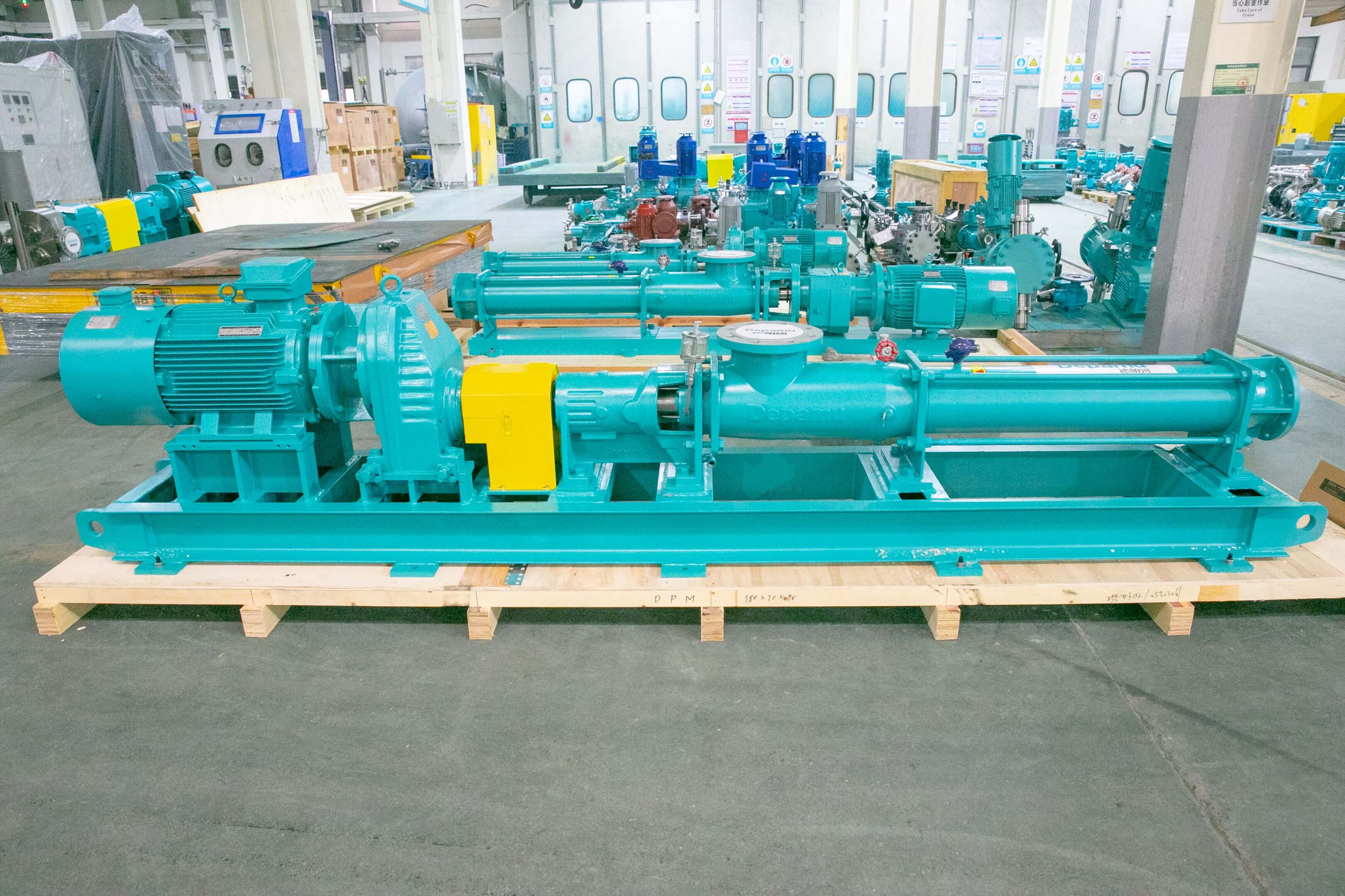
Reference for full text summary
The technical selection of single-screw pumps requires a comprehensive consideration of three major dimensions: medium characteristics, flow accuracy, and energy efficiency requirements. Depamp Pump Industry provides full lifecycle solutions for fields such as petroleum refining, chemical engineering, and new energy through three major technological systems: material customization, precise flow control, and energy efficiency optimization. Its 35,000-square-meter factory and a 400-member R&D team enable full-process control from scheme design to delivery. The sales revenue of 560 million yuan in 2025 confirms market recognition of its technological capabilities. For more information on customized services, please visitwww.depamufluid.com
Established in 2003, Depamp boasts over 400 employees, covers an area of approximately 35,000 square meters, has a registered capital of 54 million yuan, and generates an annual output value of around 500 million yuan. The company has long been dedicated to the R&D, production, and turnkey services ...
No. 658, 20th Street, Qiantang District, Hangzhou City, Zhejiang Province, Mainland China