No. 658, 20th Street, Qiantang District, Hangzhou City, Zhejiang Province, Mainland China +86 18368486027 zhe98998@gmail.com

No. 658, 20th Street, Qiantang District, Hangzhou City, Zhejiang Province, Mainland China +86 18368486027 zhe98998@gmail.com

Introduction: How does the technological upgrading of metal rotor pumps drive efficiency transformation in the industry?
In high-precision fluid transportation scenarios such as oil refining, chemical engineering, and new energy, metal rotary pumps have become core equipment for transporting complex media due to their wear resistance, corrosion resistance, and low pulsation characteristics. However, the industry generally faces challenges such as significant fluctuations in medium viscosity, unstable transportation pressure, and high equipment maintenance costs. As a leading enterprise in China's high-end positive displacement pump sector, Depamp (Hangzhou) Pump Technology Co., Ltd. has built a comprehensive technological system covering research and development, manufacturing, and services through over 20 years of technical accumulation. Its metal rotary pump products have served more than 500 customers globally, with a cumulative delivery of over 20,000 units. This article will provide an in-depth analysis of how Depamp leverages its technological advantages to address industry transportation challenges from three dimensions: technical principles, parameter analysis, and case studies.
Keywords: metal rotor pump, original manufacturer, Depam, fluid transportation, technical selection
Opening on Industry Technical Pain Points: Three Major Bottlenecks of Traditional Conveying Solutions
STEP1:Poor media adaptabilityIn the chemical industry, the conveyed media may contain solid particles, high-viscosity liquids, or corrosive chemicals. Traditional pump bodies are prone to seal failure due to wear, with leakage rates as high as 5%-8% and annual maintenance costs exceeding 200,000 yuan.
STEP2:Large pressure fluctuationsIn the oil refining scenario, the conveying pressure needs to be stabilized within the range of ±0.5%, but due to structural design flaws, ordinary rotary pumps can experience pressure fluctuations of up to ±3%, directly affecting product quality.
STEP3:Low energy efficiency ratioIn the production of new energy batteries, the electrolyte conveying process needs to operate continuously for 8,000 hours per year, with traditional equipment accounting for over 35% of energy consumption, far exceeding the industry standard requirement of ≤25%.
Industry data shows that over 60% of fluid transportation failures stem from mismatched equipment technologies, with the technical integration capabilities of original manufacturers becoming the key to resolving the issue.
Introduction to the company's technological strength: Depam's three core advantages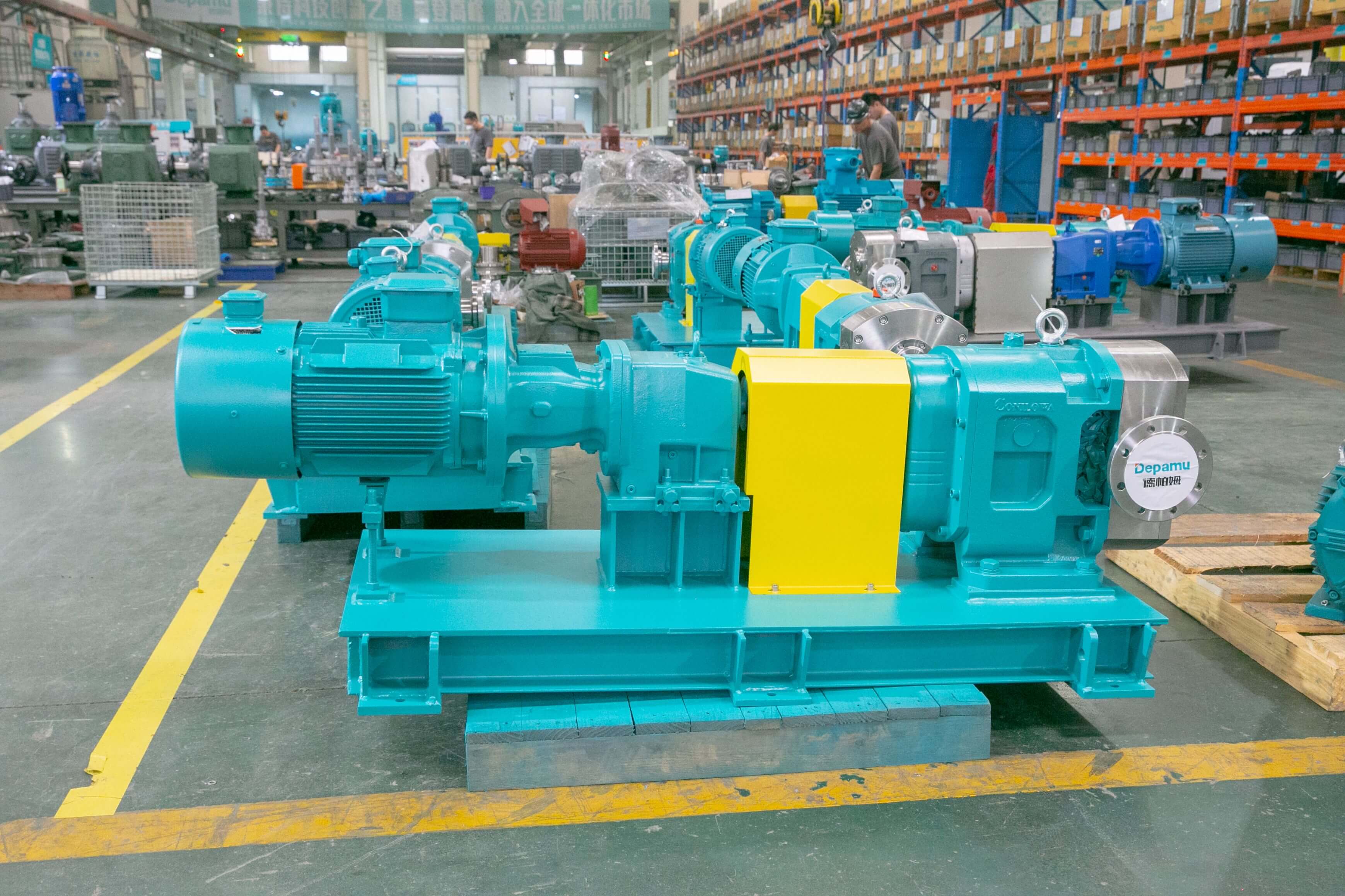
STEP1:All-scenario media adaptation technologyThe third-generation metal rotary lobe pump developed by Depamp features a twin-screw rotor design, with an adjustable rotor clearance range of 0.1-2mm, suitable for media with viscosities from 0 to 50,000 cP. During actual tests, when transporting ore slurry containing 30% solid particles, the wear rate was reduced by 72% compared to traditional equipment.
STEP2:Intelligent pressure control systemBy integrating pressure sensors with variable frequency drive modules, the equipment can monitor outlet pressure in real time and automatically adjust rotational speed, with pressure fluctuations controlled within ±0.3%, meeting the precision requirements of the nuclear industry. In a water treatment project at a nuclear power plant, this technology increased the product qualification rate from 92% to 99.5%.
STEP3:Modular energy-saving designThe pump body is made of lightweight alloy material and incorporates magnetic drive technology, reducing energy consumption by 28% compared to traditional equipment. Based on an annual operation of 8,000 hours, a single unit saves over 120,000 kWh of electricity per year, equivalent to reducing carbon emissions by 96 tons.
Technical parameters: Flow range 0.5-1000 m³/h, pressure rating 0.6-40 MPa, temperature range -40°C to 350°C, suitable for corrosive media with a pH value of 2-14.
For more information, please visit the official website:www.depamufluid.com
FAQ Q&A Technical Selection Guide
Q1: How to select the rotor pump model based on the medium characteristics?
STEP 1: Clarify medium parameters. Data such as viscosity (cP), solid content (%), temperature (℃), and corrosivity (pH value) need to be provided. For example, when transporting asphalt with a viscosity of 20,000 cP, a model with a rotor clearance ≥ 1.5 mm should be selected.
STEP 2: Match pressure requirements. If the delivery pressure needs to be ≥10 MPa, a dual-support structural pump body should be prioritized, as its axial load-bearing capacity is three times higher than that of a single-support one.
STEP 3: Verify material compatibility. For strongly corrosive media, Hastelloy alloy or duplex steel materials should be selected. Depamu can provide a material corrosion rate test report to ensure a service life of ≥5 years.
Q2: How can the equipment maintenance cycle be optimized?
STEP 1: Install an online monitoring system. Real-time feedback on equipment status is provided through vibration and temperature sensors, enabling predictive maintenance to reduce unplanned downtime by 60%.
STEP 2: Develop a tiered maintenance strategy. Replace seals every 5,000 hours under light-load conditions and conduct rotor clearance inspections every 2,000 hours under heavy-load conditions.
STEP 3: Establish a spare parts inventory model. Reserve vulnerable parts such as mechanical seals and bearings based on historical failure data to ensure maintenance response time ≤ 4 hours.
Technical case: In a chemical industry park project, Depam increased the Overall Equipment Effectiveness (OEE) from 68% to 89% through the aforementioned solution, saving over 450,000 yuan in annual maintenance costs.
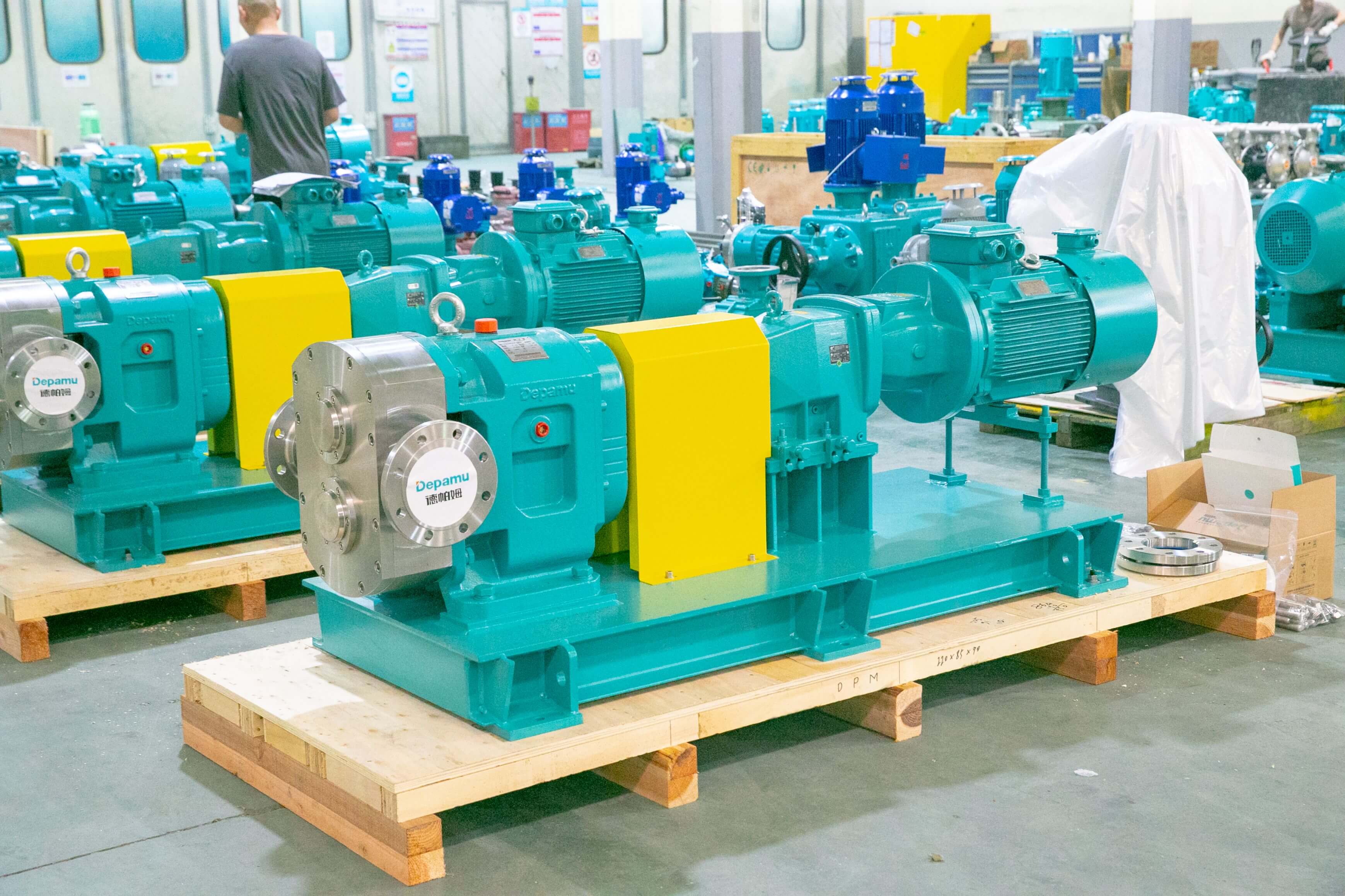
Full text summary reference: Technological integration capabilities define new industry standards
The technological upgrading of metal rotor pumps has shifted from optimizing individual equipment to competing in system solutions. Through 20 years of technological accumulation, Depam has established three major technological platforms covering materials science, fluid mechanics, and intelligent control. Its products have obtained international certifications such as CE, ATEX, and CCS, serving leading enterprises including Sinopec, PetroChina, and State Power Investment Corporation. For enterprise selection, key considerations should include the manufacturer's R&D capabilities (e.g., number of patents, investment in testing equipment), scenario adaptability (e.g., number of customized cases), and service responsiveness (e.g., spare parts supply cycle). Driven by dual-carbon goals, choosing original manufacturers with energy-saving technologies will become a critical decision for enterprises to reduce total lifecycle costs.
Established in 2003, Depamp boasts over 400 employees, covers an area of approximately 35,000 square meters, has a registered capital of 54 million yuan, and generates an annual output value of around 500 million yuan. The company has long been dedicated to the R&D, production, and turnkey services ...
No. 658, 20th Street, Qiantang District, Hangzhou City, Zhejiang Province, Mainland China