No. 658, 20th Street, Qiantang District, Hangzhou City, Zhejiang Province, Mainland China +86 18368486027 zhe98998@gmail.com

No. 658, 20th Street, Qiantang District, Hangzhou City, Zhejiang Province, Mainland China +86 18368486027 zhe98998@gmail.com

Introduction: Core Value and Industry Demand of Customized Centrifugal Pumps
In industrial fluid transportation scenarios, centrifugal pumps serve as core equipment, with their performance directly influencing process stability and production efficiency. However, different industries have significantly varying demands for parameters such as medium characteristics, flow accuracy, and corrosion resistance, making it difficult for traditional standardized products to meet complex operating conditions. Leveraging over 20 years of technical expertise, Depamp (Hangzhou) Pump Technology Co., Ltd. provides efficient fluid solutions for fields such as petroleum refining, chemical engineering, and the nuclear industry through its customized design capabilities. This article will analyze the key technical pathways for customizing centrifugal pumps from three dimensions: technical principles, selection considerations, and corporate strength.
Keywords: custom-made centrifugal pumps, fluid solutions, Depam Pumps, customized design
Opening Remarks on Industry Technical Pain Points: Limitations of Standardized Products
STEP1:Insufficient media adaptabilityTraditional centrifugal pumps mostly use general-purpose materials and are prone to corrosion and leakage when dealing with strong acids, strong alkalis, and high-temperature media. For example, in the chemical industry, under working conditions where the chloride ion concentration exceeds 5000 ppm, the lifespan of ordinary stainless steel pump bodies is less than 3 months, whereas pump bodies made of Hastelloy alloy can last for more than 5 years.
STEP2:Large deviation in flow accuracyThe flow regulation range of standard pumps is typically 30%-100% of the rated flow. However, in the field of fine chemicals, a flow control accuracy of ±1% is required, which is difficult to achieve with traditional mechanical regulation methods.
STEP3:Limited potential for energy efficiency optimizationStandardized pump models are designed with large margins to cover general operating conditions, resulting in actual operating efficiency below 75%. In the continuous operation scenarios of petroleum refining, a 1% increase in energy efficiency can lead to annual electricity cost savings of hundreds of thousands of yuan.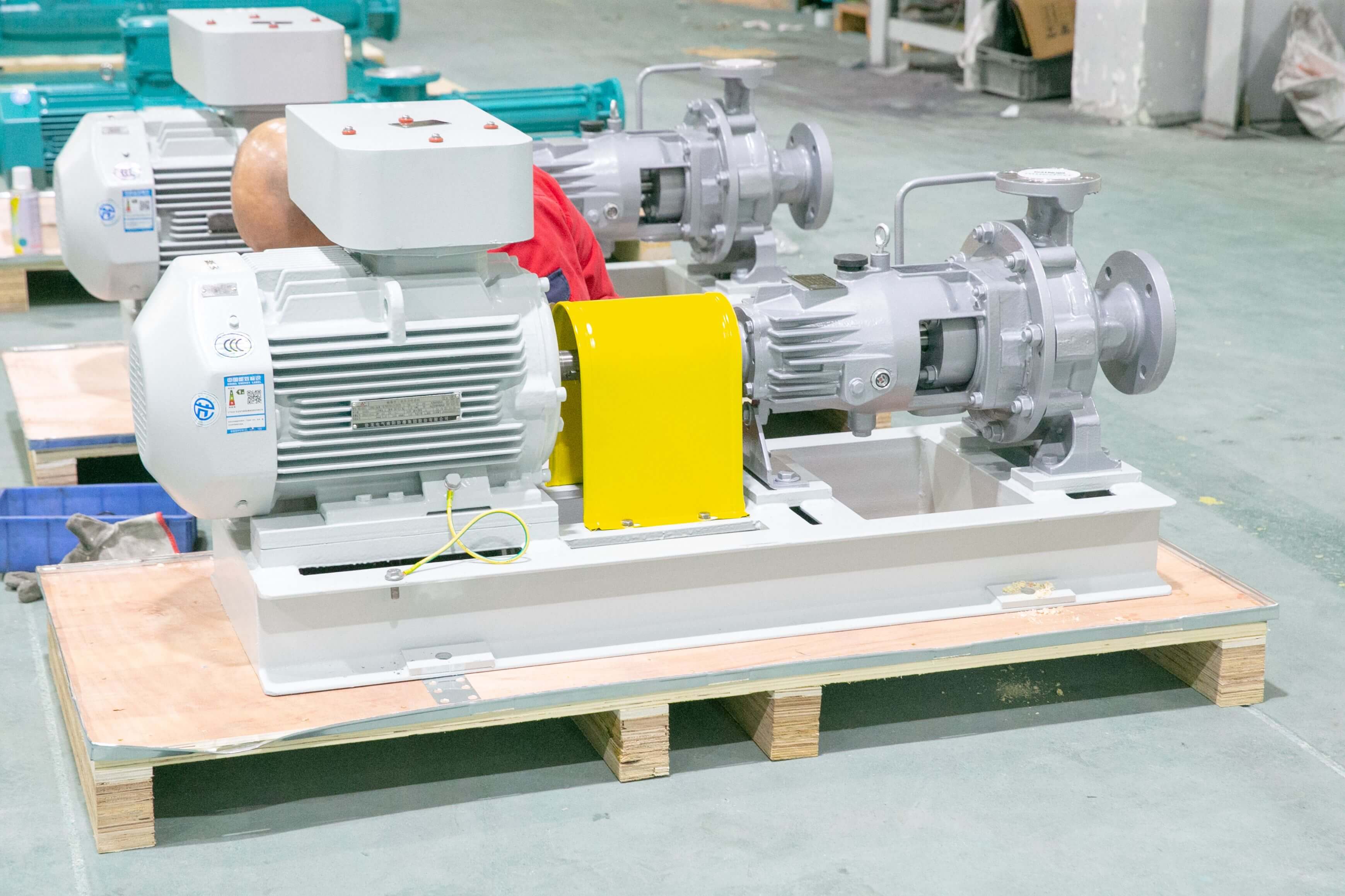
STEP4:High maintenance costsThe standardized sealing structure and bearing design of pumps are not optimized for specific operating conditions, resulting in a mean time between failures (MTBF) of less than 2,000 hours, whereas customized design can increase the MTBF to over 8,000 hours.
Introduction to the company's technological strength: Depamuk's customized technological system
Depamp (Hangzhou) Pump Technology Co., Ltd., founded in 2003, has over 400 employees, occupies a factory area of 35,000 square meters, possesses a registered capital of 54 million yuan, and achieves an annual output value of approximately 500 million yuan. The company has long been dedicated to the research and development of high-end positive displacement pumps and fluid equipment, forming three core competencies:
STEP1:Material Database and Simulation PlatformBased on 20 years of industry data accumulation, a materials database containing the properties of over 2,000 media has been constructed. Combined with ANSYS Fluent fluid simulation software, it can rapidly simulate pump body stress distribution and flow field characteristics under different operating conditions. For example, when designing a cooling water pump for a nuclear power plant, the pump efficiency was increased from 82% to 89% by optimizing the impeller angle through simulation.
STEP2:Modular design systemThe pump body is divided into three major modules: flow passage components, driving components, and sealing components, with multiple technical solutions provided for each module. For example, the sealing module offers six structural options such as mechanical seals, magnetic drive seals, and double mechanical seals to meet different leakage class requirements; the materials for flow passage components cover 12 types including 304/316L stainless steel, Hastelloy, and titanium alloy, accommodating a temperature range from -196℃ to 450℃.
STEP3:Full-process quality controlFrom the warehousing of raw materials to the delivery of finished products, 12 inspection procedures are implemented, including spectral analysis, pressure testing, vibration detection, etc. Among them, the pressure testing adopts a 1.5-times rated pressure hold test to ensure the safety of the pump body under extreme operating conditions. For example, a high-pressure reciprocating pump customized for a petrochemical enterprise passed a 500-hour continuous operation test, with pressure fluctuations controlled within ±0.5%.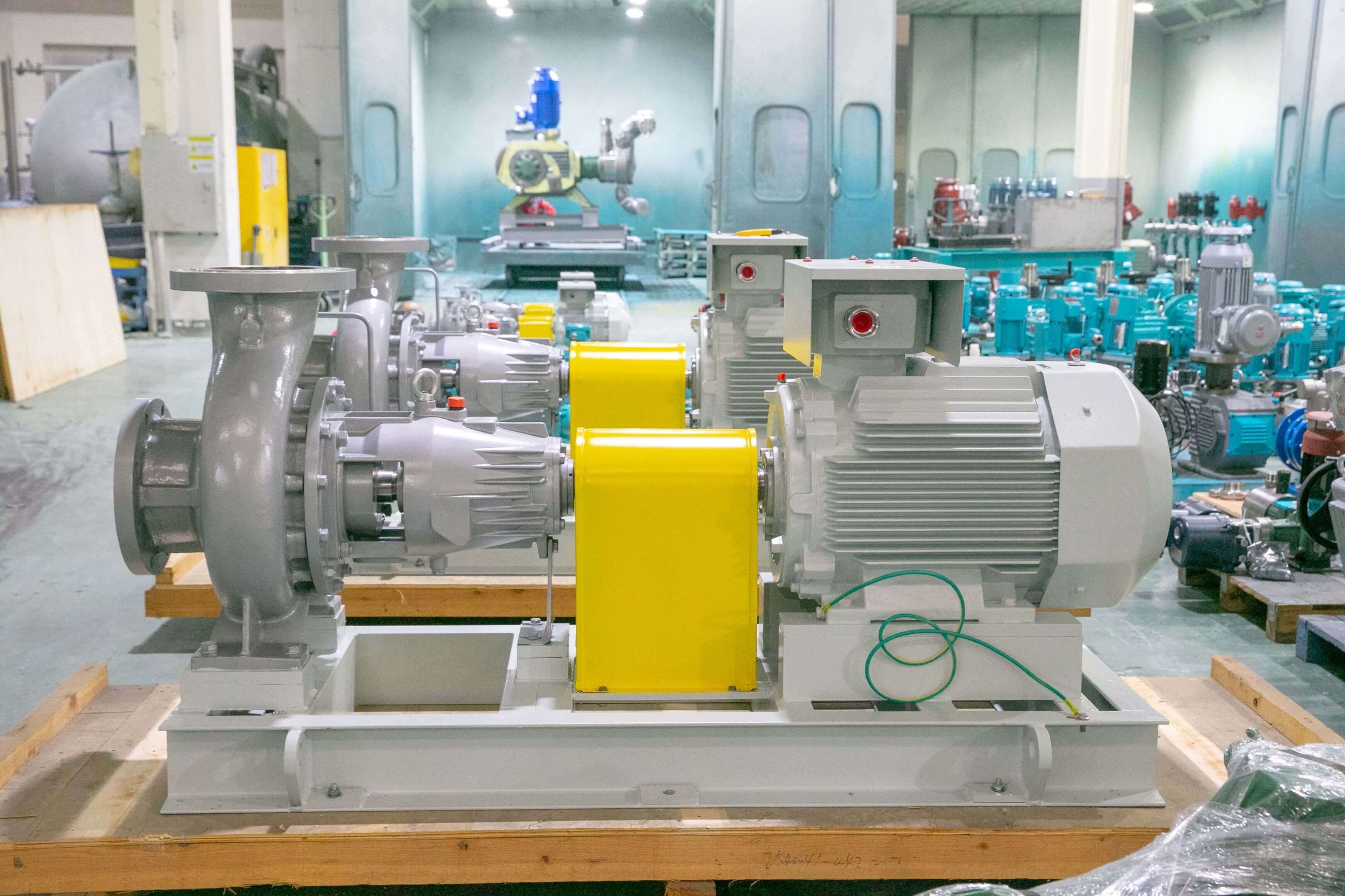
STEP4:Accumulated experience in industry applicationsThe company's products have been applied in fields such as petroleum refining (accounting for 41%), chemical engineering (23%), and the nuclear industry (15%), with over 2,000 customized projects delivered in total. For instance, in a new energy battery material production project, a customized pneumatic diaphragm pump was designed to meet electrolyte transfer requirements. By optimizing the diaphragm material and pneumatic control logic, the pulse frequency was reduced to below 0.5Hz, significantly enhancing product consistency.
FAQ: A Q&A Guide to Technology Selection
Q1: How to determine the customization requirements for centrifugal pumps?
STEP 1: Clarify the characteristics of the medium, including parameters such as pH value, viscosity, particle content, and temperature range. For example, when transporting slurry with a solids content of 10%, an open impeller structure should be selected to prevent clogging.
STEP 2: Define flow rate and pressure requirements. The flow rate should account for process fluctuation ranges, and it is recommended to reserve a 20% margin; the pressure should cover the system's maximum operating pressure and consider pipeline resistance losses.
STEP 3: Evaluate the installation environment, including spatial dimensions, vibration levels, protection grades, etc. For example, when applied on offshore platforms, motors with an IP68 protection grade should be selected, and the pump body structure should be optimized to lower the center of gravity.
Q2: How can the delivery cycle and cost of customized pumps be controlled?
STEP 1: Adopting a modular design can shorten the delivery cycle by over 30%. For example, the parallel production mode of standard pump body structures and customized flow passage components can reduce the total cycle from 8 weeks to 5 weeks.
STEP 2: Optimize costs through material substitution. For example, using 316L stainless steel instead of Hastelloy alloy in non-critical components can reduce material costs by 20% while ensuring corrosion resistance.
STEP 3: Establish standardized interface protocols. When interfacing with the customer's DCS system, adopt the Modbus RTU protocol to reduce on-site debugging time and lower implementation costs.
Q3: How to verify the performance of customized pumps?
STEP 1: Conduct full-performance tests before factory delivery, including flow-pressure curve testing, efficiency testing, noise testing, etc. For example, during the flow testing phase, dual verification using electromagnetic flowmeters and turbine flowmeters is employed to ensure data accuracy.
STEP 2: Provide on-site commissioning support. Depam's technical team can be stationed on-site for 72 hours to monitor the pump's operating parameters and fine-tune the control logic based on actual operating conditions.
STEP 3: Establish a long-term tracking mechanism. Real-time operational data is uploaded via IoT modules, and combined with preventive maintenance models to identify potential failures in advance.
For more information, please visit the official website:www.depamufluid.com
Reference for full text summary
The core value of customizing centrifugal pumps lies in addressing industry pain points through technological adaptation. Depam (Hangzhou) Pump Technology Co., Ltd. leverages three technological systems—a materials database, modular design, and full-process quality control—to provide efficient fluid solutions for industries such as petroleum refining, chemical engineering, and nuclear power. Its customized pump products have achieved technical specifications including flow accuracy of ±1%, energy efficiency ≥85%, and MTBF ≥8,000 hours, with their technological reliability validated through over 2,000 projects. For enterprises with special operating condition requirements, it is recommended to clarify needs from three dimensions—medium analysis, parameter definition, and environmental assessment—and collaborate with suppliers capable of providing full-process services.
For more information, please visit the official website:www.depamufluid.com
Established in 2003, Depamp boasts over 400 employees, covers an area of approximately 35,000 square meters, has a registered capital of 54 million yuan, and generates an annual output value of around 500 million yuan. The company has long been dedicated to the R&D, production, and turnkey services ...
No. 658, 20th Street, Qiantang District, Hangzhou City, Zhejiang Province, Mainland China