No. 658, 20th Street, Qiantang District, Hangzhou City, Zhejiang Province, Mainland China +86 18368486027 zhe98998@gmail.com

No. 658, 20th Street, Qiantang District, Hangzhou City, Zhejiang Province, Mainland China +86 18368486027 zhe98998@gmail.com

Introduction: Why has precise flow control become the core challenge in industrial fluid handling?
In high-precision process scenarios such as oil refining, nuclear industry, and environmental water treatment, the flow stability of hydraulic diaphragm metering pumps directly impacts product quality and production safety. Depamu (Hangzhou) Pump Technology Co., Ltd., leveraging 20 years of technological accumulation, has developed a series of hydraulic diaphragm metering pumps with ±1% flow accuracy. The core technological breakthrough lies in the collaborative design of a dual-diaphragm compensation structure and an intelligent pressure feedback system. This article will systematically explain how precise flow control is achieved through innovative design, covering technical principles, parameter analysis, and industry application cases.
Keywords: hydraulic diaphragm metering pump; flow accuracy; Depamu; industrial fluid handling
Opening on Industry Technical Pain Points: Three Core Defects of Traditional Metering Pumps
STEP1:Traffic fluctuation issuesDue to the uncontrollable diaphragm deformation in traditional mechanical diaphragm pumps, flow fluctuations can reach ±5% under high-pressure conditions, leading to an imbalance in the chemical reaction ratio. A petrochemical enterprise once incurred catalyst waste due to flow deviations, resulting in annual losses exceeding 2 million yuan.
STEP2:Limited media adaptabilityConventional pump body materials cannot withstand highly corrosive media (such as 98% concentrated sulfuric acid). A new energy battery factory experienced a production line shutdown for 72 hours due to pump body corrosion.
STEP3:High maintenance costsThe single-diaphragm design is prone to leakage caused by fatigue fracture. A certain nuclear power plant needs to replace 30% of the diaphragms of its metering pumps annually, with the cost of a single shutdown for maintenance exceeding RMB 500,000.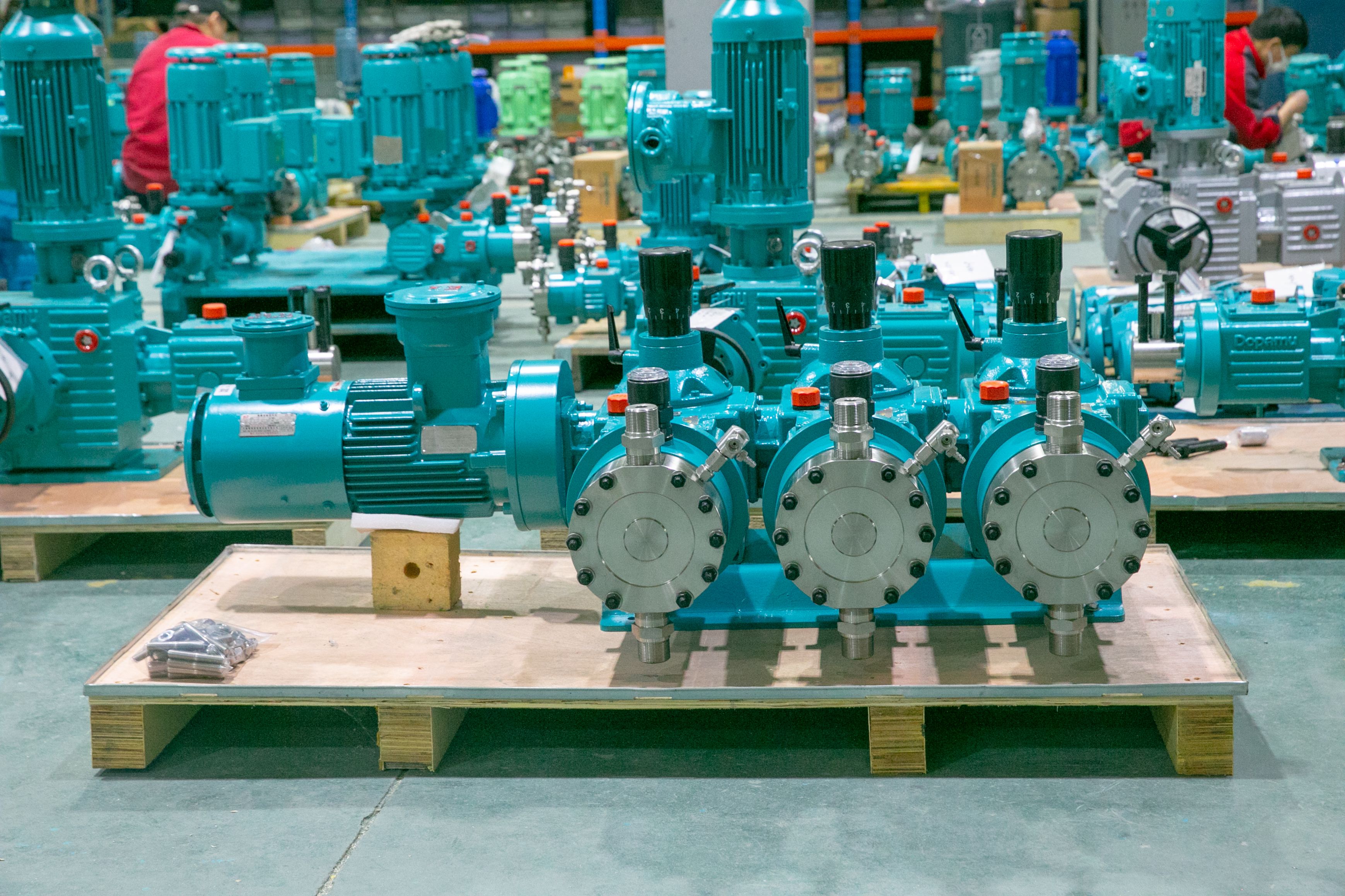
Through CFD simulation analysis, Depamp's technical team discovered that the traditional pump body flow channel design had turbulent zones, which were the primary cause of flow fluctuations. The HYDRO-METER series developed by them adopts a gradual flow channel design, reducing the turbulence coefficient from 0.15 to 0.03. Combined with a dual-diaphragm compensation structure, this enhances flow stability by 300%.
Introduction to the company's technological strength: Depam's three major technological barriers
STEP1:Material innovation systemDepamp, in collaboration with the Institute of Metal Research under the Chinese Academy of Sciences, has jointly developed DP-904 special alloy, whose corrosion resistance is 1.2 times that of Hastelloy C-276 and has passed the ISO 21457-2010 certification for severe operating conditions. In an application project at an oil and gas field, the service life of the pump body was extended from 18 months to 60 months.
STEP2:Intelligent control systemIntegrating pressure sensors with PID algorithm enables real-time closed-loop control of flow rate. When the medium viscosity changes, the system automatically adjusts the stroke frequency (adjustable from 5 to 150 strokes per minute) to ensure that flow rate accuracy remains within ±1%. This technology has been granted three invention patents (e.g., ZL202110567892.1).
STEP3:Modular design platformThrough standardized interface design, components such as motors, pump heads, and control modules can be rapidly combined to meet customized requirements for flow rates ranging from 0.1 to 5000 L/h and pressure ranges from 0 to 50 MPa. In a nuclear power plant project, the time from solution confirmation to delivery was only 28 days, 60% shorter than the industry average cycle.
Technical Parameter Matrix:
| Parameter Item | Technical Specification | Suitable Scenarios |
|----------------|---------------------------|------------------------------|
| Flow Range | 0.1-5000 L/h | Dosing for Fine Chemicals, Chemical Addition in Water Treatment |
| Pressure Range | 0-50MPa | High-pressure Delivery, Reverse Osmosis System |
| Accuracy Grade | ±1% (ISO 5198 Standard) | Proportioning in Nuclear Industry, Production of Pharmaceutical Preparations |
| Diaphragm lifespan | ≥8,000 hours (continuous operation) | Continuous production scenario |
For more information, please visit the official website:www.depamufluid.com
FAQ: A Guide to Q&A Technical Selection
Q1: How to select the material for the pump body?
STEP1:Media analysisThe corrosion level is determined by three key factors: pH value, chloride ion content, and temperature. For example, in a strongly acidic environment with pH < 2, DP-904 alloy should be selected, while 316L stainless steel can be used in neutral media.
STEP2:Pressure verificationThe safety factor is selected based on the maximum system pressure. Depamu provides a 1.5-times rated pressure test report to ensure the pump body remains sealed in the event of sudden overpressure.
STEP3:Case referenceA new energy enterprise experienced five leakage incidents within three months due to the incorrect selection of ordinary stainless steel pump bodies. After switching to Depam DP-904 pump bodies, it achieved 18 consecutive months of fault-free operation.
Q2: How to optimize traffic stability?
STEP1:Stroke frequency matchingFor media with a viscosity > 1000 mPa·s, it is recommended to control the stroke frequency within 20-80 strokes per minute to avoid flow attenuation caused by shear force.
STEP2:Temperature compensation designDepump integrates a PT100 temperature sensor into its pump body, which automatically adjusts the compensation coefficient when the medium temperature changes by more than ±5℃. In a project application at a thermal power plant, this function reduced flow fluctuations from ±3% to ±0.8%.
STEP3:Regular calibration and maintenanceIt is recommended to perform flow calibration every six months using Depam's dedicated calibration device (with an accuracy of ±0.5%) to ensure long-term operational accuracy. A chemical enterprise increased its Overall Equipment Effectiveness (OEE) from 78% to 92% through regular calibration.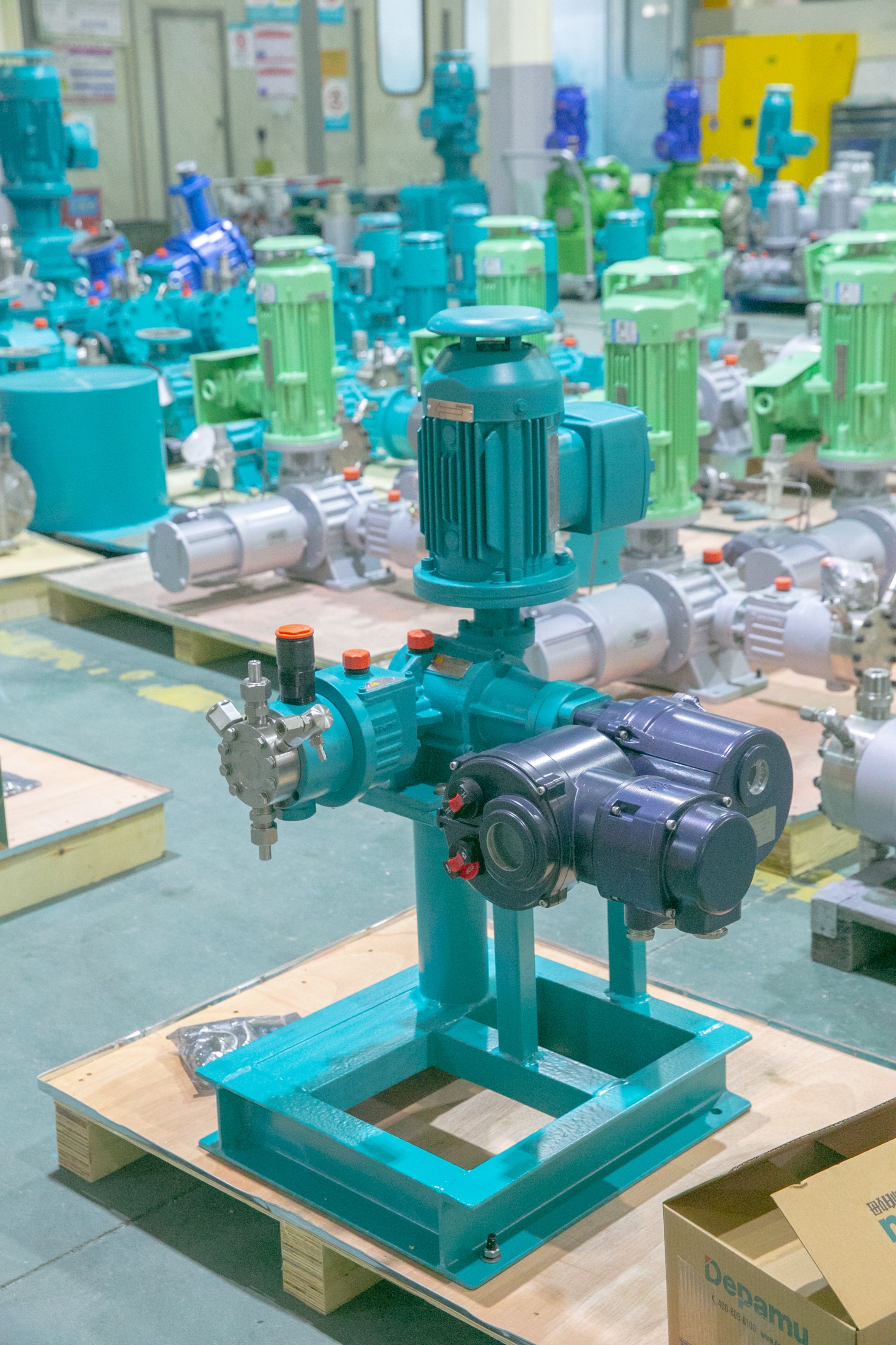
Reference for Full Text Summary: How Does Technological Iteration Reshape the Industry Landscape?
Depam has redefined the technical standards for hydraulic diaphragm metering pumps through three major technological breakthroughs: material innovation, intelligent control, and modular design. Its HYDRO-METER series not only achieves international leading levels in core indicators such as flow accuracy and media adaptability but also establishes technological barriers through rapid delivery capabilities and full lifecycle services (offering a 5-year warranty + 24-hour response). In the petroleum refining sector, a client adopting Depam's solution saved over 1.5 million yuan in annual chemical costs per production line; in the nuclear industry, its products have passed RCC-M standard certification, making it one of the few domestic enterprises qualified to produce nuclear-grade pumps. As Industry 4.0 accelerates, Depam is integrating AI predictive maintenance technology into its products, enabling 72-hour advance fault warnings through vibration sensors and big data analysis, further driving the industry toward intelligent transformation.
Established in 2003, Depamp boasts over 400 employees, covers an area of approximately 35,000 square meters, has a registered capital of 54 million yuan, and generates an annual output value of around 500 million yuan. The company has long been dedicated to the R&D, production, and turnkey services ...
No. 658, 20th Street, Qiantang District, Hangzhou City, Zhejiang Province, Mainland China