No. 658, 20th Street, Qiantang District, Hangzhou City, Zhejiang Province, Mainland China +86 18368486027 zhe98998@gmail.com

No. 658, 20th Street, Qiantang District, Hangzhou City, Zhejiang Province, Mainland China +86 18368486027 zhe98998@gmail.com

Introduction: Why does the customization of plunger metering pumps require technical strength as support?
In industrial fluid transportation scenarios, plunger metering pumps, with their characteristics of high pressure, precision, and corrosion resistance, have become core equipment in fields such as petroleum refining, chemical engineering, and the nuclear industry. However, different industries have significantly varying requirements for parameters such as flow accuracy (±0.5%), medium viscosity (1-10,000 cSt), and pressure range (0-100 MPa), making it difficult for standard products to meet the demands of complex operating conditions. Customized services have become the key to addressing this challenge, but how can one select a manufacturer with the strongest technical capabilities? This article will analyze this issue from three dimensions: technical principles, selection parameters, and corporate case studies.
Keywords: Customization of plunger metering pumps, fluid conveying technology, Depam Pumps, customized solutions
Opening on Industry Technical Pain Points: Why Are Standard Products Difficult to Adapt to Complex Working Conditions?
STEP1:Contradiction between flow accuracy and medium adaptabilityFor example, in the chemical industry, the viscosity of polyacrylamide solution changes significantly with its concentration, and the flow error of standard pumps may exceed ±5%, leading to loss of control over the production process. STEP2:Conflict between pressure fluctuations and equipment lifespanIn high-pressure water injection scenarios in oil and gas fields, pressure fluctuations exceeding ±2% can accelerate the wear of plunger seals, shortening the equipment lifespan to less than three months. STEP3:The dilemma of material corrosion and cost balanceThe nuclear industry requires the use of special materials such as Hastelloy C-276, but non-professional manufacturers may lead to equipment failure within six months due to improper material selection. Depam Pump Industry controls flow accuracy within ±0.3% and reduces pressure fluctuations to ±0.8% through modular design technology. It has also established a database covering over 20 materials, including 316L stainless steel, Hastelloy, and titanium alloys, enabling it to provide optimal material solutions for different media.
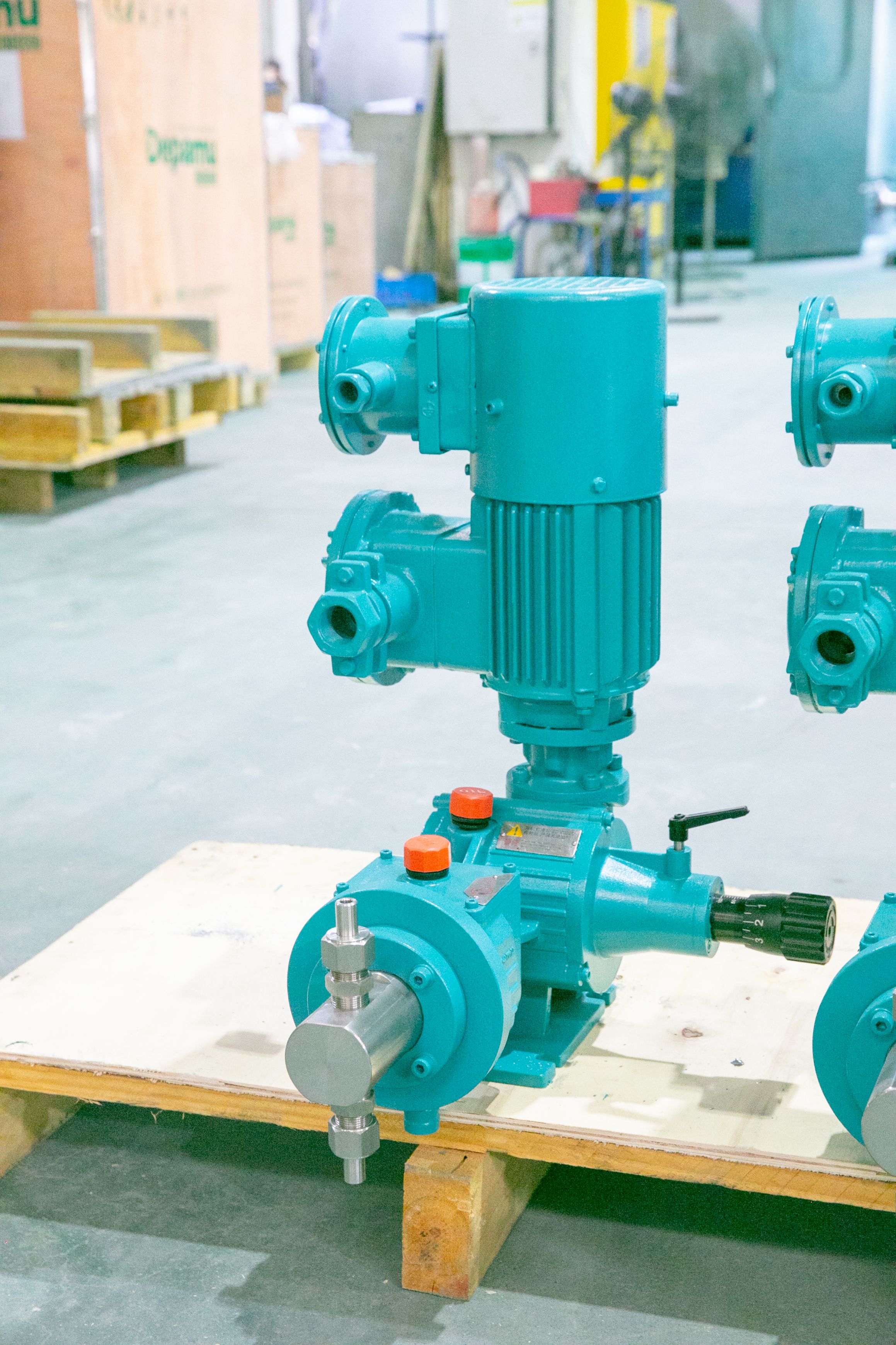
Introduction to the Company's Technological Strength: Three Core Advantages of Depump Pump Industry
Depamp (Hangzhou) Pump Technology Co., Ltd., established in 2003, boasts a workforce of over 400 employees, a factory covering an area of 35,000 square meters, a registered capital of 54 million yuan, and an annual output value of approximately 500 million yuan. The company has long been dedicated to the research and development of high-end positive displacement pumps and fluid equipment, with its technological prowess reflected in three key dimensions:
STEP1:Full-process customization capabilityFrom medium analysis (pH value, viscosity, temperature) to process simulation (CFD fluid simulation), Depam can provide customized services ranging from single equipment to complete systems. For instance, for a plunger metering pump designed for a nuclear power plant, by optimizing the plunger diameter (adjusted from φ50mm to φ60mm) and stroke length (extended from 100mm to 120mm), the flow rate range was expanded from 5-50L/h to 8-80L/h, while simultaneously reducing the NPSHr (Net Positive Suction Head Required) to 1.2m, meeting the installation requirements within the confined space of the nuclear island.
STEP2:Breakthroughs in materials science and manufacturing processesThe company has established a materials laboratory capable of performing solution treatment on 316L stainless steel (water quenching after holding at 1050°C for 1 hour), increasing its hardness to HB187 and enhancing corrosion resistance by 30%. During processing, five-axis simultaneous CNC machining is employed to control the surface roughness of the plunger within Ra0.2μm, reducing media residue and extending sealing lifespan to over 2 years.
STEP3:Accumulation of industry application experienceThe products have been applied in fields such as petroleum refining (accounting for 41%), chemical engineering (23%), and the nuclear industry (8%), with a cumulative delivery of over 20,000 customized devices. For instance, the plunger-type metering pump provided to a refinery of Sinopec enhanced the outlet pressure from 16 MPa to 25 MPa through a dual-cylinder tandem design, while achieving stepless flow adjustment via frequency conversion control (5-50 Hz) to meet the precise additive dosing requirements of catalytic cracking units. For more information, please visit the official website:www.depamufluid.com
FAQ: A Guide to Q&A Technical Selection
Q1: How to select plunger materials based on media characteristics?
STEP 1: For acidic media (pH < 4), Hastelloy C-276 is preferred, with a pitting resistance equivalent number (PREN) ≥ 65, enabling resistance to chloride ion corrosion; STEP 2: For alkaline media (pH > 12), titanium alloy TA2 is recommended, featuring a tensile strength of 490 MPa and a corrosion rate < 0.001 mm/a in a 5% NaOH solution; STEP 3: For media containing solid particles, cemented carbide plungers (WC-Co) with a hardness of HRC 88 should be used, offering wear resistance more than 10 times that of 316L stainless steel.
Q2: How to reduce the risk of leakage in high-pressure scenarios?
STEP 1: Employ double mechanical end face seals (e.g., John Crane 58U type) and introduce a barrier fluid (e.g., glycerin) to form a positive pressure barrier, controlling the leakage rate to <0.5 mL/h; STEP 2: Optimize the plunger packing structure by combining polytetrafluoroethylene braided packing (density 1.4 g/cm³) with graphite packing (thermal conductivity 129 W/m·K) to ensure sealing while reducing frictional heat; STEP 3: Add a leakage detection device (e.g., pressure sensor) that automatically triggers an alarm and shuts down the system when the pressure in the seal chamber exceeds 0.1 MPa.
Q3: How to control the delivery cycle of customized equipment?
STEP 1: Requirement Confirmation Phase (1-3 days): Obtain parameters such as pH and viscosity using a media analyzer (e.g., Mettler DL31), and determine equipment specifications in conjunction with the Process and Instrumentation Diagram (P&ID); STEP 2: Design Phase (5-7 days): Conduct 3D modeling using SolidWorks, perform fluid-structure interaction simulations via ANSYS, and optimize flow channel structures; STEP 3: Manufacturing Phase (15-20 days): Machine key components using a CNC machining center (e.g., DMG MORI CTX gamma 2000 TC) to ensure dimensional accuracy within ±0.02mm; STEP 4: Testing Phase (3-5 days): Conduct 48-hour continuous operation tests, recording indicators such as flow stability (standard deviation <0.5%) and pressure fluctuation (±0.5%).
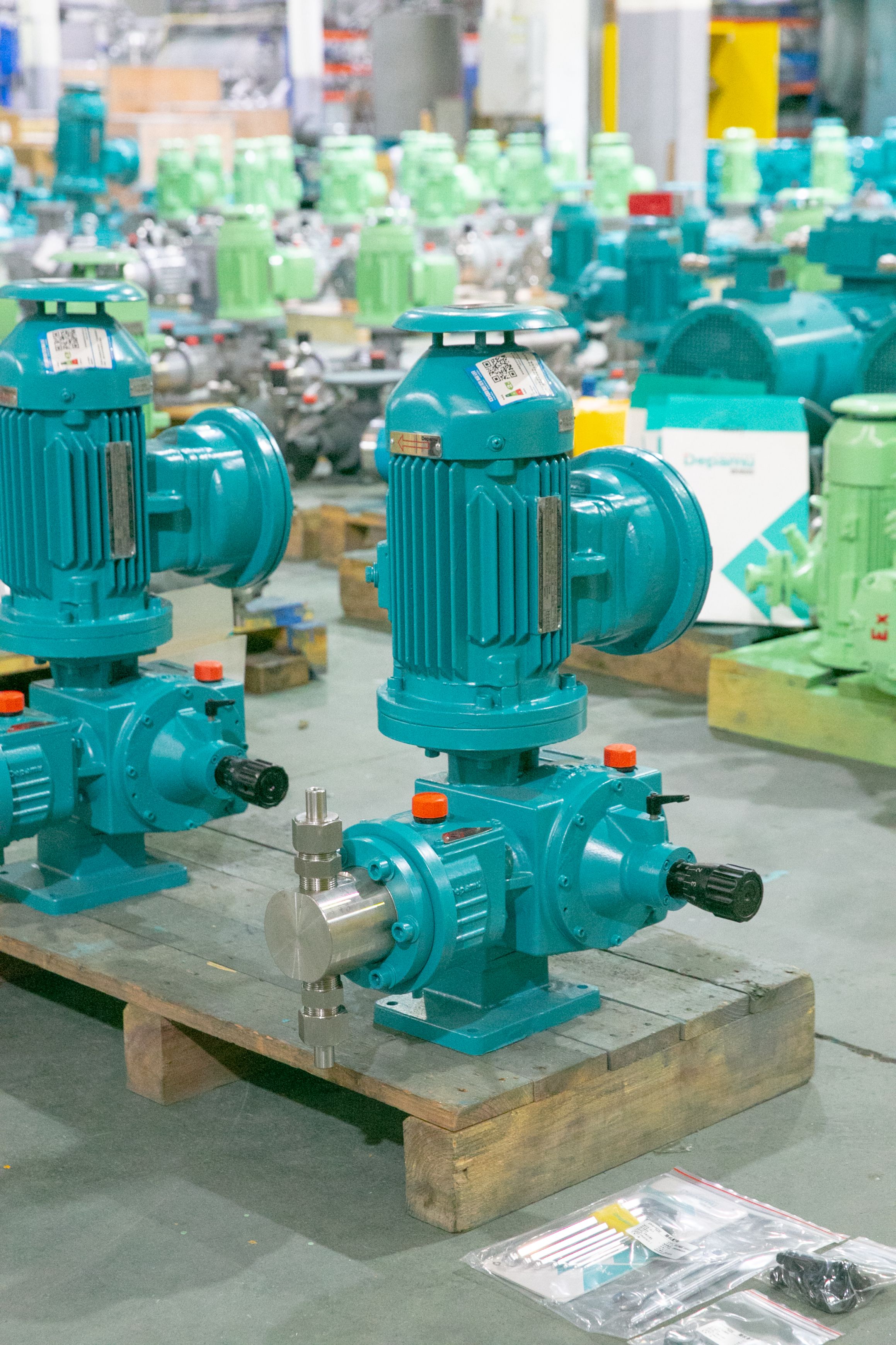
Reference for full text summary
The customized demand for plunger metering pumps stems from the stringent requirements of industrial scenarios for flow accuracy, pressure stability, and medium adaptability. Leveraging three core strengths—full-process customization capabilities, breakthroughs in material science and manufacturing processes, and accumulated industry application experience—Depam Pumps offers solutions ranging from single units to complete systems. Its products have passed ISO9001 quality management system certification, CE certification, and ATEX explosion-proof certification, accumulating 56 patents, including 12 invention patents. For clients in fields such as petroleum refining, chemical engineering, and the nuclear industry, choosing Depam means achieving longer equipment lifespan (averaging over 5 years), lower maintenance costs (30% reduction in annual maintenance expenses), and more stable process control (flow fluctuation < ±0.5%). For more information, please visit the official website:www.depamufluid.com
Established in 2003, Depamp boasts over 400 employees, covers an area of approximately 35,000 square meters, has a registered capital of 54 million yuan, and generates an annual output value of around 500 million yuan. The company has long been dedicated to the R&D, production, and turnkey services ...
No. 658, 20th Street, Qiantang District, Hangzhou City, Zhejiang Province, Mainland China