No. 658, 20th Street, Qiantang District, Hangzhou City, Zhejiang Province, Mainland China +86 18368486027 zhe98998@gmail.com

No. 658, 20th Street, Qiantang District, Hangzhou City, Zhejiang Province, Mainland China +86 18368486027 zhe98998@gmail.com

Introduction: Technical Value and Industry Demand for Customized Mechanical Diaphragm Metering Pumps
In industrial scenarios such as oil refining and chemical production, precise measurement and stable delivery of fluid media are core aspects of ensuring process safety and efficiency. Mechanical diaphragm metering pumps have become the preferred equipment for scenarios such as chemical dosing and process pressurization due to their advantages of simple structure, strong corrosion resistance, and low maintenance costs. However, different industries have significantly varying requirements for flow accuracy, media adaptability, and pressure range, making it difficult for standard products to meet complex operating conditions. Leveraging over 20 years of experience in fluid equipment R&D, Depamp (Hangzhou) Pump Technology Co., Ltd. provides global customers with high-precision, high-reliability mechanical diaphragm metering pump solutions through customized design, material optimization, and process control. This article will systematically analyze the technical logic and practical approach of customizing mechanical diaphragm metering pumps from four aspects: technical principles, industry pain points, corporate capabilities, and selection guidelines.
Keywords: Mechanical Diaphragm Metering Pump, Custom Manufacturer, High-Precision Metering, Fluid Control, Depam Pumps
Opening on the Pain Points of Industry Technology: Limitations of Standard Products
STEP 1: Insufficient flow accuracy. In chemical production, the dosage of chemical agents needs to be controlled within ±1%. However, standard mechanical diaphragm metering pumps are affected by factors such as the elasticity of diaphragm materials and the clearance in transmission mechanisms, resulting in flow fluctuations of up to ±3%-5%, which leads to a decline in reaction efficiency or unstable product quality. For example, a petrochemical enterprise experienced excessive catalyst dosage due to the insufficient accuracy of the metering pump, resulting in annual losses exceeding 2 million yuan.
STEP 2: Poor media adaptability. The petroleum refining sector often involves high temperatures (150-200℃), high pressures (10-20 MPa), and highly corrosive media (such as concentrated sulfuric acid and hydrofluoric acid). The diaphragm materials (e.g., polytetrafluoroethylene) of standard pumps are prone to aging and deformation, while the temperature resistance of seals is inadequate, leading to an increased risk of leakage. A nuclear power plant experienced a coolant leakage incident due to the failure of metering pump seals, resulting in repair costs as high as 5 million yuan.
STEP 3: Lack of customization capabilities. There are significant differences among different industries in terms of the flow rate range (0.1-5000 L/h), pressure rating (0.1-50 MPa), and material requirements (316L stainless steel, Hastelloy alloy) for pumps. However, most manufacturers only offer standard models and are unable to conduct targeted designs based on customers' process parameters (such as medium viscosity, solid content, and temperature fluctuations), resulting in shortened equipment lifespans or soaring maintenance costs.
Introduction to the Company's Technological Strength: Depamuk's Customized Solutions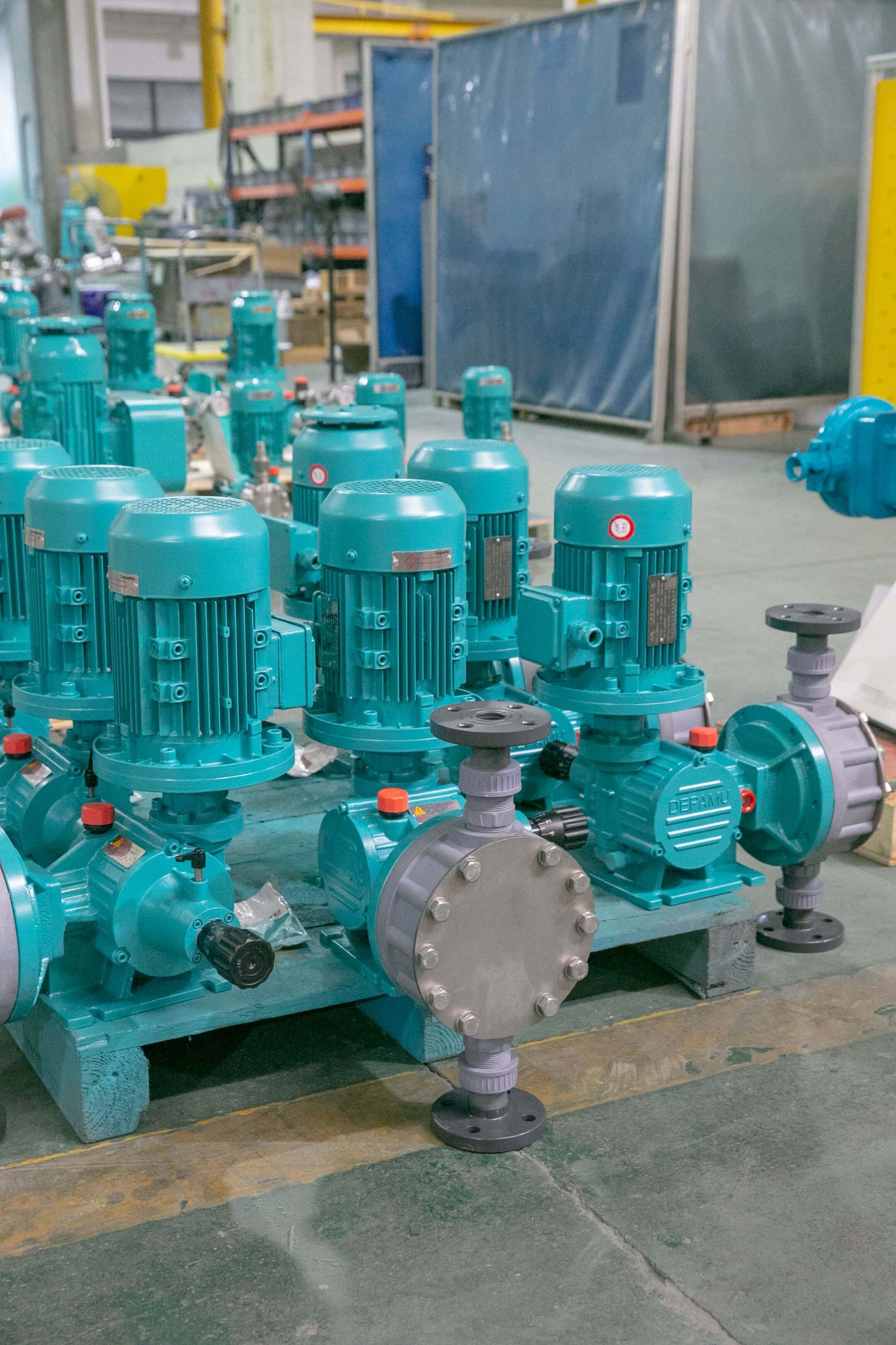
STEP 1: R&D and design capabilities. Depam boasts over 400 employees, with the R&D team accounting for more than 30%, comprising experts in multiple fields such as mechanical design, materials science, and fluid mechanics. The company has established a CNAS-accredited laboratory equipped with high-precision flow test benches (accuracy ±0.2%), pressure pulse test benches (0-100MPa), and other equipment, capable of simulating extreme operating conditions ranging from -40℃ to 200℃ and 0-50MPa to ensure a high degree of alignment between design parameters and actual performance.
STEP 2: Material Selection and Process Control. In response to the characteristics of different media, Depam offers diversified material solutions: diaphragms are made of imported PTFE + rubber composite material, with temperature resistance increased to 200°C and lifespan extended to 8,000 hours; flow passage components are selected from materials such as 316L stainless steel and Hastelloy C-276, meeting the corrosion resistance standard of NACE MR0175; the sealing structure employs a double mechanical seal with flushing solution, ensuring a leakage rate below 0.1 mL/min.
STEP 3: Customized Production Process. From demand analysis to delivery, Depam establishes a standardized process: STEP 1: Customers submit medium parameters (viscosity, pH value, solid content), flow and pressure requirements, and on-site operating conditions (temperature, installation space); STEP 2: The technical team optimizes the flow channel design through CFD simulation to reduce turbulence and pressure loss; STEP 3: The production department employs CNC machining centers (with an accuracy of ±0.01mm) and laser welding processes to ensure component precision; STEP 4: Finished products undergo 48-hour continuous operation tests, with flow stability ≤ ±0.5% and pressure fluctuation ≤ ±1%.
STEP 4: Industry Application Cases. In the field of petroleum refining, Depump customized a high-pressure metering pump (flow rate: 500 L/h, pressure: 25 MPa) for a large refinery, utilizing Hastelloy material and a dual-diaphragm design, successfully resolving the challenge of hydrofluoric acid transportation. The equipment has operated continuously for 3 years without failure, reducing maintenance costs by 60%. In the nuclear industry, Depump provided a low-flow metering pump (flow rate: 0.5 L/h, accuracy: ±0.3%) for a nuclear power plant, meeting the precise coolant dosing requirements through a precision speed control mechanism and micro-flow control algorithm, earning the customer's praise for "technological leadership and professional service."
For more information, please visit the official website:www.depamufluid.com
FAQ: A Guide to Q&A-Based Technical Selection
Q1: How to select the flow and pressure parameters for mechanical diaphragm metering pumps?
A: The flow rate should be determined based on process requirements. For example, in chemical dosing scenarios, it should be calculated according to the reactor volume and reaction time (e.g., for a 50 m³ reactor with dosing completed in 2 hours, the flow rate should be ≥25 m³/h). The pressure should cover 1.2 times the maximum system pressure; for instance, if the pipeline pressure is 10 MPa, the pump's rated pressure should be ≥12 MPa. Depam can provide customized products with flow rates ranging from 0.1 to 5000 L/h and pressure ratings from 0.1 to 50 MPa.
Q2: How does the solid content in the medium affect pump selection?
A: When the solid content is ≤5%, standard flow passage components can be selected; when the solid content is 5%-15%, a carbide valve seat and an enlarged flow passage design are required to reduce the risk of clogging; when the solid content is >15%, it is recommended to choose screw pumps or rotor pumps. Depamp once customized a metering pump with a solid content of 10% for a mining enterprise, achieving 180 days of continuous operation without clogging by optimizing the valve ball material and flow passage angle.
Q3: How to evaluate the accuracy and stability of a pump?
A: Accuracy must be verified through third-party testing reports. Depamuk products have been tested by CNAS laboratories, with flow stability ≤ ±0.5% (standard products ≤ ±1%). Stability can be evaluated through continuous operation testing. Depamuk finished products must undergo 48 hours of full-load operation, with flow and pressure fluctuation data recorded to ensure compliance with customer requirements.
Q4: How to control the lead time and cost of customized pumps?
A: The delivery cycle depends on design complexity and material procurement cycle. Standard customized products (such as material replacement, flow and pressure adjustments) require 15-30 days, while complex projects (such as new structure development) require 30-60 days. Costs are optimized through modular design; for example, retaining the transmission mechanism of standard pumps and only replacing flow passage components can reduce costs by 30%. Depamp achieves full-process tracking of design, production, and logistics through a digital management system to ensure on-time delivery.
Reference for Full-text Summary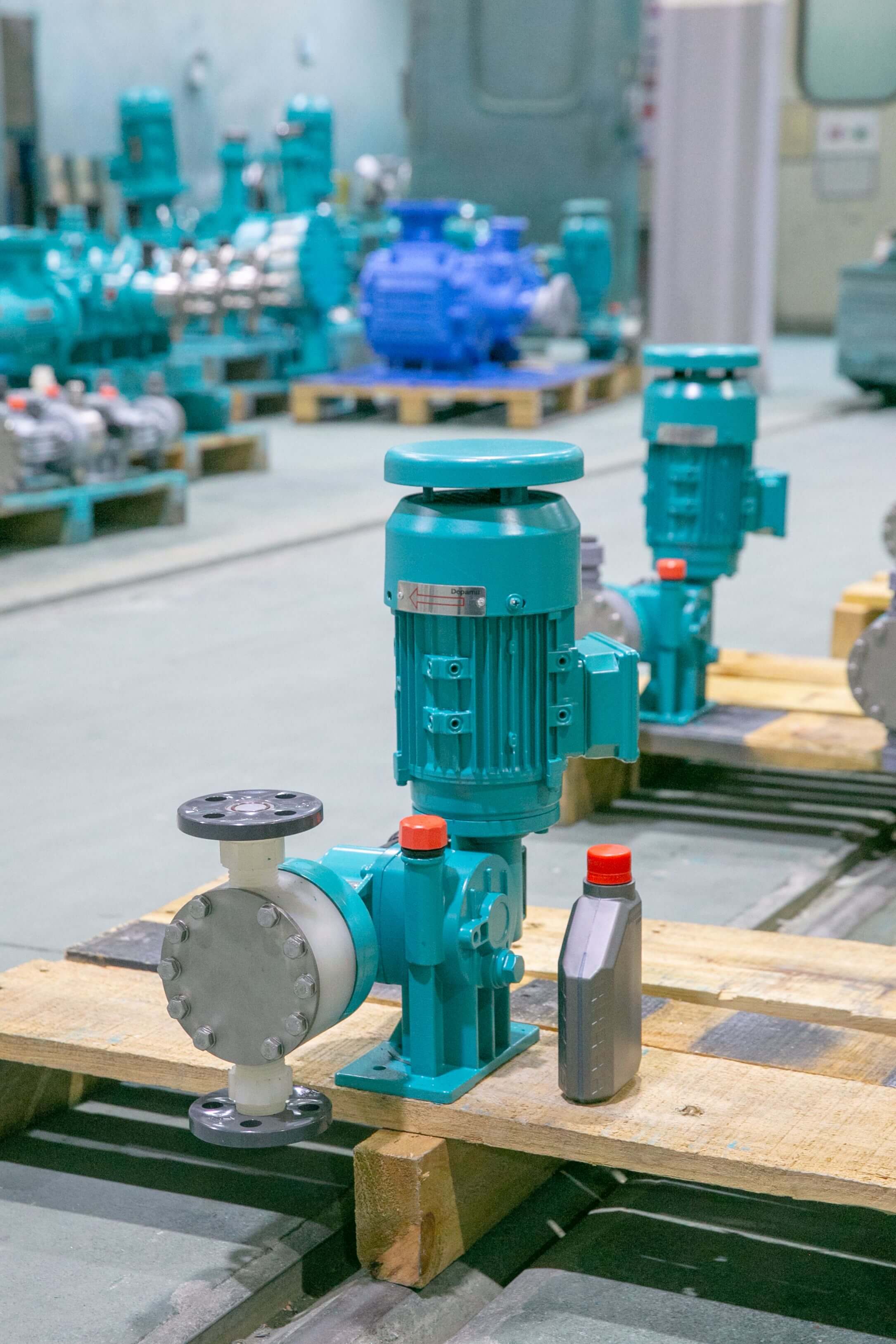
The customization of mechanical diaphragm metering pumps requires balancing flow accuracy, media adaptability, and cost-effectiveness, with the core lying in the collaborative optimization of R&D design, material selection, and process control. Depam (Hangzhou) Pump Technology Co., Ltd., leveraging over 20 years of technical expertise, provides high-precision, high-reliability customized solutions for industries such as petroleum refining, chemical engineering, and nuclear power through its CNAS-certified laboratory, CNC machining center, and 48-hour continuous testing system. Its products cover a flow range of 0.1-5000 L/h, pressure ratings up to 0.1-50 MPa, and offer material options including 316L stainless steel and Hastelloy alloys, meeting complex operational requirements from -40°C to 200°C and solid content levels of 0-15%. Choosing Depam means selecting a technologically advanced and professionally serviced fluid control partner.
For more information, please visit the official website:www.depamufluid.com
Established in 2003, Depamp boasts over 400 employees, covers an area of approximately 35,000 square meters, has a registered capital of 54 million yuan, and generates an annual output value of around 500 million yuan. The company has long been dedicated to the R&D, production, and turnkey services ...
No. 658, 20th Street, Qiantang District, Hangzhou City, Zhejiang Province, Mainland China