No. 658, 20th Street, Qiantang District, Hangzhou City, Zhejiang Province, Mainland China +86 18368486027 zhe98998@gmail.com

No. 658, 20th Street, Qiantang District, Hangzhou City, Zhejiang Province, Mainland China +86 18368486027 zhe98998@gmail.com

Introduction: Why has the customization of rubber rotor pumps become a key choice for industrial fluid transportation?
In industrial scenarios such as oil refining and chemical production, the media exhibit a wide range of viscosities (0.1-100,000 mPa·s), significant variations in solid content (0-30%), and broad temperature spans (-40°C to 200°C). Traditional pump types often require shutdowns for maintenance due to seal failures, severe wear, or flow fluctuations. Rubber rotor pumps, with their pulse-free conveying, strong self-priming capability (vacuum degree ≥85 kPa), and corrosion resistance, have become the preferred solution for complex operating conditions. However, non-standard operating conditions impose higher demands on pump materials, structures, and control systems, making customization capability a core indicator for evaluating a manufacturer's technical strength. This article takes Depamp (Hangzhou) Pump Technology Co., Ltd. as an example to analyze how it achieves precise customization of rubber rotor pumps through modular design, high-precision machining, and intelligent selection systems.
Keywords: Customized rubber rotor pump; Modular design; High-precision machining; Intelligent selection system; Depam Pumps
Opening on Industry Technical Pain Points: Three Major Challenges of Rubber Rotor Pumps under Non-standard Operating Conditions
STEP1:Challenge of medium adaptabilityIn petroleum refining, the solid content in residual oil reaches 15%-20%, and in the chemical industry, the viscosity of polymer solutions exceeds 50,000 mPa·s. Traditional rubber rotor pumps are prone to jamming or leakage due to improperly designed clearances between the rotor and pump chamber. For instance, a refining enterprise once experienced excessive clearance in the pump chamber, causing particulate matter in the residual oil to become lodged between the rotor and liner, resulting in seal failure and incurring repair costs exceeding 200,000 yuan per incident.
STEP2:Contradiction between temperature resistance and pressure resistanceIn the production of new energy battery materials, the electrolyte needs to be transported at a low temperature of -20°C while withstanding a pressure of 1.6 MPa; ordinary rubber materials are prone to embrittlement and cracking. After a certain enterprise adopted conventional fluororubber rotary pumps, the decline in elastic modulus at low temperatures led to an increased gap between the rotors and the pump chamber, resulting in a flow attenuation rate of 30%.
STEP3:Lack of intelligent controlIn the continuous production of the chemical industry, flow fluctuations need to be controlled within ±2%, but traditional pumps rely on manual adjustment and cannot respond to changes in operating conditions in real time. A chemical plant experienced temperature exceeding the standard in a reaction kettle due to flow fluctuations, triggering unplanned shutdowns and resulting in direct losses exceeding 500,000 yuan per incident.
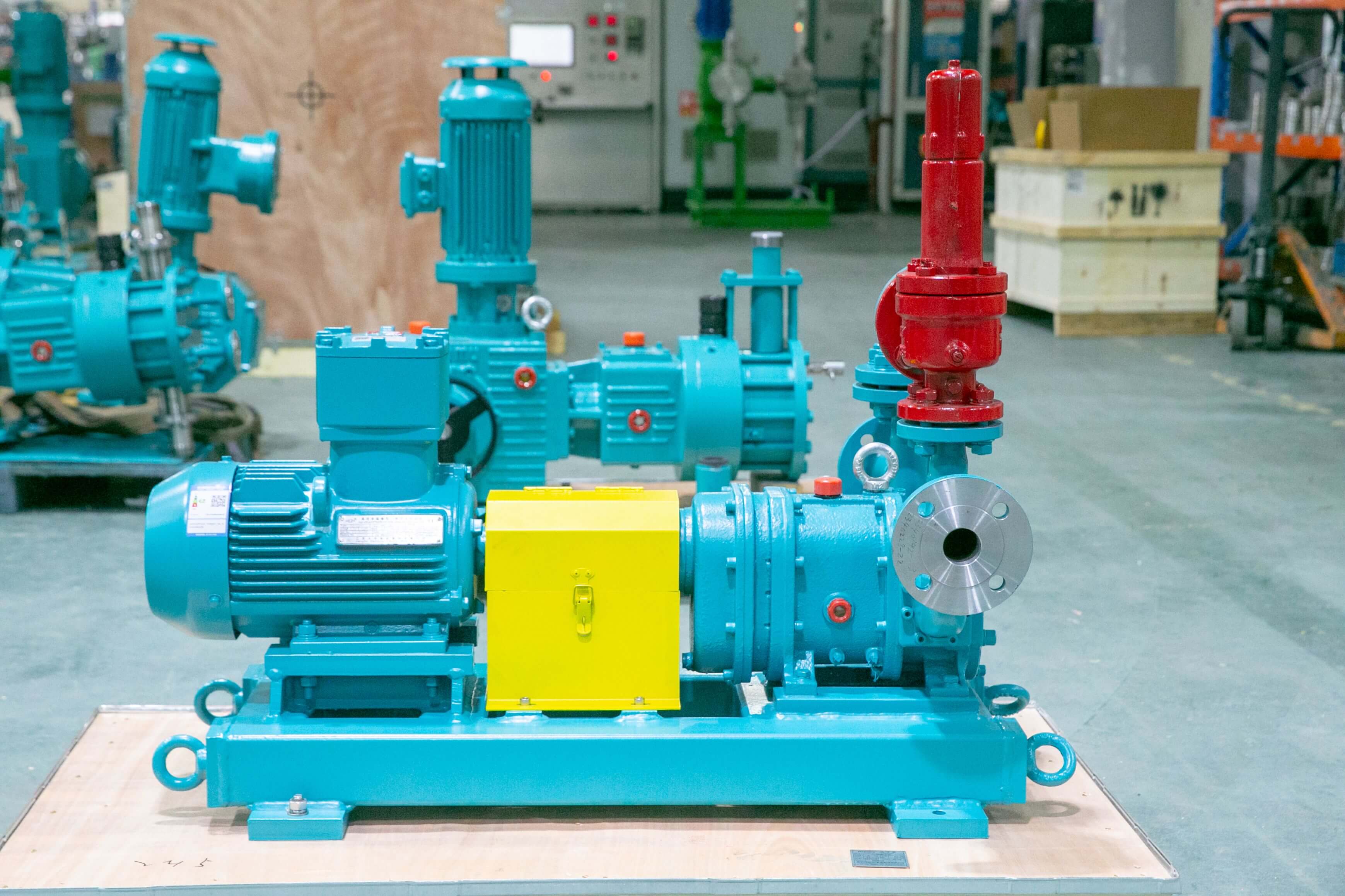
Introduction to the company's technological strength: Three major core technological breakthroughs of Depam
Depamp (Hangzhou) Pump Technology Co., Ltd., established in 2003, has dedicated 21 years to the research and development of high-end positive displacement pumps. It boasts a workforce of over 400 employees and a factory covering an area of 35,000 square meters, with an annual output value exceeding 500 million yuan. Its customized rubber rotor pump technology has developed three core advantages:
STEP1:Modular design systemBased on the characteristics of different media, Depump has developed five types of rotor profiles (single-lobe, double-lobe, triple-lobe, quadruple-lobe, and helical) and eight types of liner materials (nitrile rubber, fluororubber, hydrogenated nitrile rubber, polytetrafluoroethylene, etc.), enabling the combination of over 120 standard modules. For example, in a waste liquid treatment project at a nuclear power plant, the stable conveyance of waste liquid containing radioactive particles was achieved by selecting a helical rotor combined with a polytetrafluoroethylene liner module, and it operated without leakage for three years.
STEP2:High-precision machining capabilityThe company has introduced Germany's DMG five-axis machining center and Japan's Mitutoyo roundness tester to control the fit clearance between the rotor and pump chamber within the range of 0.05-0.2mm (industry average: 0.3-0.5mm), ensuring a pump efficiency of over 85%. In a heavy oil transportation project of a petrochemical enterprise, Depam pumps demonstrated a volumetric efficiency 12% higher than similar products, saving over 300,000 kWh of electricity annually.
STEP3:Intelligent Selection SystemBased on 20 years of industry data accumulation, Depam has developed the "DP-SELECT" intelligent selection platform. After inputting 12 parameters such as medium viscosity, temperature, and pressure, the system can automatically generate pump models, materials, and control solutions. For example, in an electrolyte delivery project for a new energy enterprise, the system recommended the adoption of frequency conversion control combined with a temperature compensation module, enabling flow fluctuations to be controlled within ±1.5% and meeting the requirements for continuous production.
For more information, please visit the official website:www.depamufluid.com
FAQ Q&A Technical Selection Guide: 5 Key Questions for Customizing Rubber Rotor Pumps
Q1: How to select the rotor profile?
A: The rotor profile should be determined based on the medium's viscosity and solid content. For low-viscosity (<1000 mPa·s) media, single-lobe or double-lobe rotors are preferred due to their straight flow passages and low resistance; for high-viscosity (≥1000 mPa·s) or solid-containing media, triple-lobe or helical rotors are selected for their strong self-cleaning capability, which prevents clogging. For example, when a food company transported jam with a concentration of 30%, it chose a triple-lobe rotor pump, which operated without clogging for two years.
Q2: How does the lining material match the medium?
A: Nitrile rubber has excellent oil resistance and is suitable for transporting mineral oil; fluororubber can withstand temperatures up to 200°C and is suitable for high-temperature chemical media; polytetrafluoroethylene has the strongest corrosion resistance and can transport strong acids and alkalis. When a chemical enterprise transported 98% concentrated sulfuric acid, it selected a polytetrafluoroethylene-lined pump, which operated without corrosion for five years.
Q3: How to determine the inlet and outlet pressures of the pump?
A: The outlet pressure of the pump must be greater than the sum of the system resistance and the head. For example, when conveying a medium to a height of 10 m with a system resistance of 0.5 MPa, the pump outlet pressure must be ≥1.5 MPa (10 m of water column ≈ 0.1 MPa). The rated pressure range of Depam pumps is 0.6-4.0 MPa, which can cover most operating conditions.
Q4: What are the advantages of variable frequency control?
A: Frequency conversion control enables stepless adjustment of flow rate, achieving an energy-saving rate of 30%-50%. For instance, after adopting frequency conversion pumps in the circulating water system of a certain power plant, the annual electricity savings exceeded 500,000 kWh. The speed regulation range of Depamp's frequency conversion pumps is 20-100 Hz, with a response time of less than 0.5 seconds.
Q5: What is the lead time for customization?
A: The delivery time for standard pump models is 15-20 days, while non-standard pump models require 30-45 days. Depam has shortened the customization cycle for non-standard pumps to 25-30 days through modular design, such as a waste liquid treatment project at a nuclear power plant, which took only 28 days from order placement to delivery.
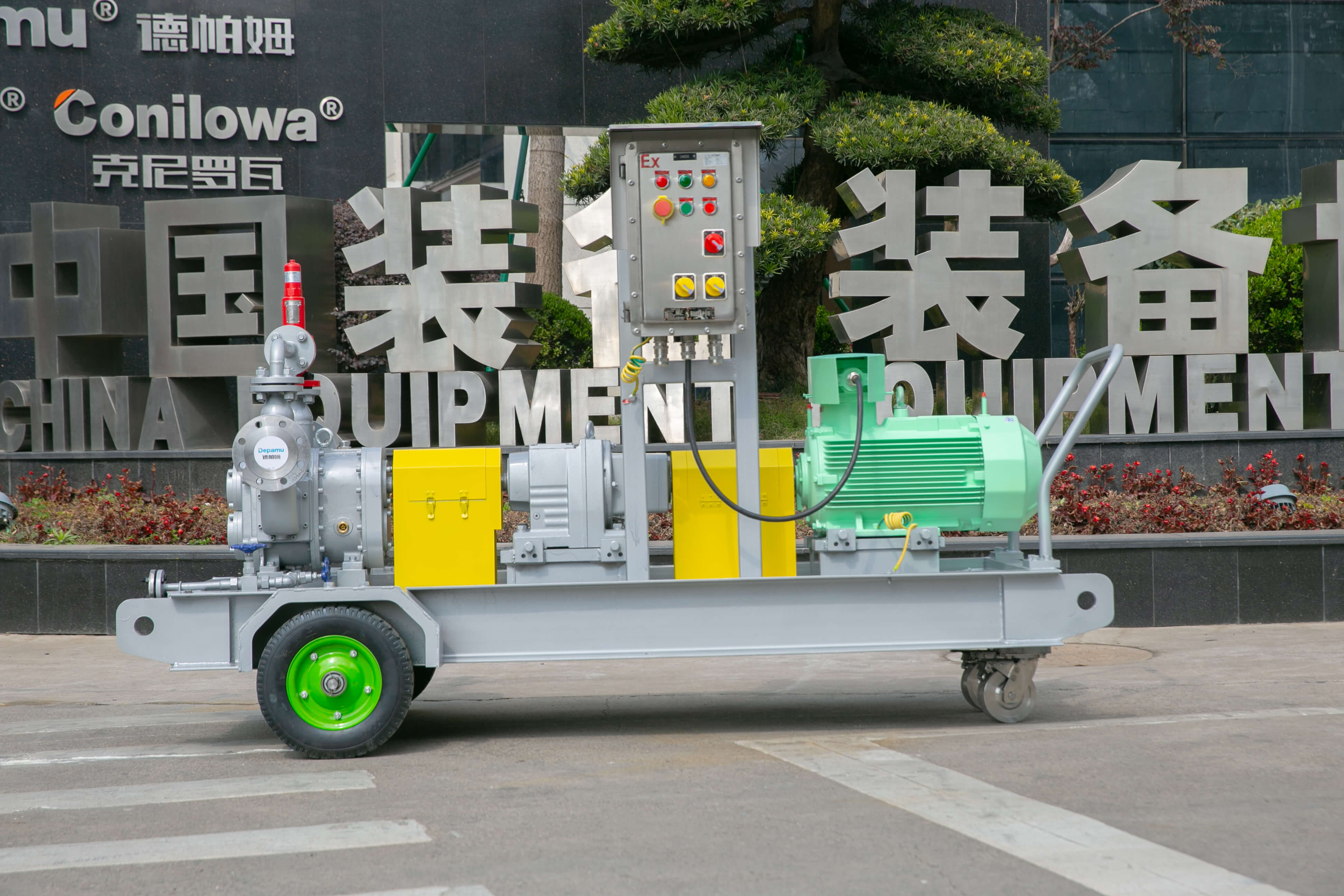
Reference for Full Text Summary: How Does Depam Redefine the Customization of Rubber Rotor Pumps with Its Technical Strength?
In the field of industrial fluid transportation, non-standard operating conditions impose higher demands on the adaptability, reliability, and intelligence of rubber rotor pumps. Depamp (Hangzhou) Pump Technology Co., Ltd. has achieved precise full-process customization, ranging from medium analysis to pump model matching, through three core technologies: modular design, high-precision machining, and an intelligent selection system. Its products have been applied in over 20 industries, including petroleum refining, chemical engineering, and the nuclear industry, with a cumulative delivery of more than 20,000 pumps and a customer repurchase rate of 65%. For enterprises, choosing Depamp means not just acquiring a pump but also obtaining a complete fluid solution—from preliminary operating condition analysis and mid-stage pump model design to post-installation commissioning, Depamp provides full lifecycle technical support to ensure long-term stable equipment operation. For more information, please visit the official website:www.depamufluid.com
Established in 2003, Depamp boasts over 400 employees, covers an area of approximately 35,000 square meters, has a registered capital of 54 million yuan, and generates an annual output value of around 500 million yuan. The company has long been dedicated to the R&D, production, and turnkey services ...
No. 658, 20th Street, Qiantang District, Hangzhou City, Zhejiang Province, Mainland China