No. 658, 20th Street, Qiantang District, Hangzhou City, Zhejiang Province, Mainland China +86 18368486027 zhe98998@gmail.com

No. 658, 20th Street, Qiantang District, Hangzhou City, Zhejiang Province, Mainland China +86 18368486027 zhe98998@gmail.com

Introduction: Core Value and Industry Demand of Customized High-Pressure Process Tubular Pumps
In industrial scenarios such as oil refining and chemical production, high-pressure process tubular pumps, as the core equipment for fluid transportation, must meet stringent requirements including high-pressure resistance, corrosion resistance, and precise metering. However, traditional standard pumps struggle to adapt to complex operating conditions, resulting in high leakage risks, excessive energy consumption, and escalating maintenance costs. Customized design has emerged as a critical approach to addressing these industry challenges. This article takes Depamp (Hangzhou) Pump Technology Co., Ltd. (hereinafter referred to as "Depamp") as an example to analyze how it leverages technological expertise and customization capabilities to provide efficient and reliable fluid transportation solutions for industrial clients.For more information, please visit the official website: www.depamufluid.com
Keywords: high-pressure process tubular pump, custom manufacturer, Depam, fluid transportation, industrial customization
Opening Remarks on Industry Technical Pain Points: Equipment Adaptation Challenges in High-Voltage Transmission Scenarios
STEP1:Challenges posed by the complexity of operating conditionsIn petroleum refining and chemical production, the media may include highly corrosive liquids (such as sulfuric acid and hydrochloric acid), high-temperature and high-pressure gases (such as steam and natural gas), or slurries containing solid particles. Traditional standard pumps are prone to leakage, wear, or metering deviations due to insufficient material quality, sealing structure, or flow control precision, leading to production interruptions or safety hazards.
STEP2:Contradiction between energy efficiency and costUnder high-pressure operating conditions, the energy consumption of pumps accounts for over 30% of the total system energy consumption. If the pump body is poorly designed (e.g., excessive margins or low efficiency), operational costs will increase significantly. Meanwhile, frequent maintenance or equipment replacement will further drive up the total life cycle cost.
STEP3:Insufficient delivery cycle and flexibilityIndustrial projects are usually sensitive to equipment delivery times, but traditional manufacturers find it difficult to quickly respond to non-standard demands due to their rigid production processes, resulting in project delays or forced compromises on design parameters.
Case evidenceA chemical enterprise once experienced corrosion and perforation of the pump body due to the use of standard pumps for transporting chloride ion-containing solutions, resulting in leakage and production shutdown, with direct losses exceeding 2 million yuan. Subsequently, they switched to Depump's customized high-pressure process tubular pumps, which successfully resolved the corrosion issue by utilizing Hastelloy material and double mechanical seals, achieving three years of trouble-free continuous operation.
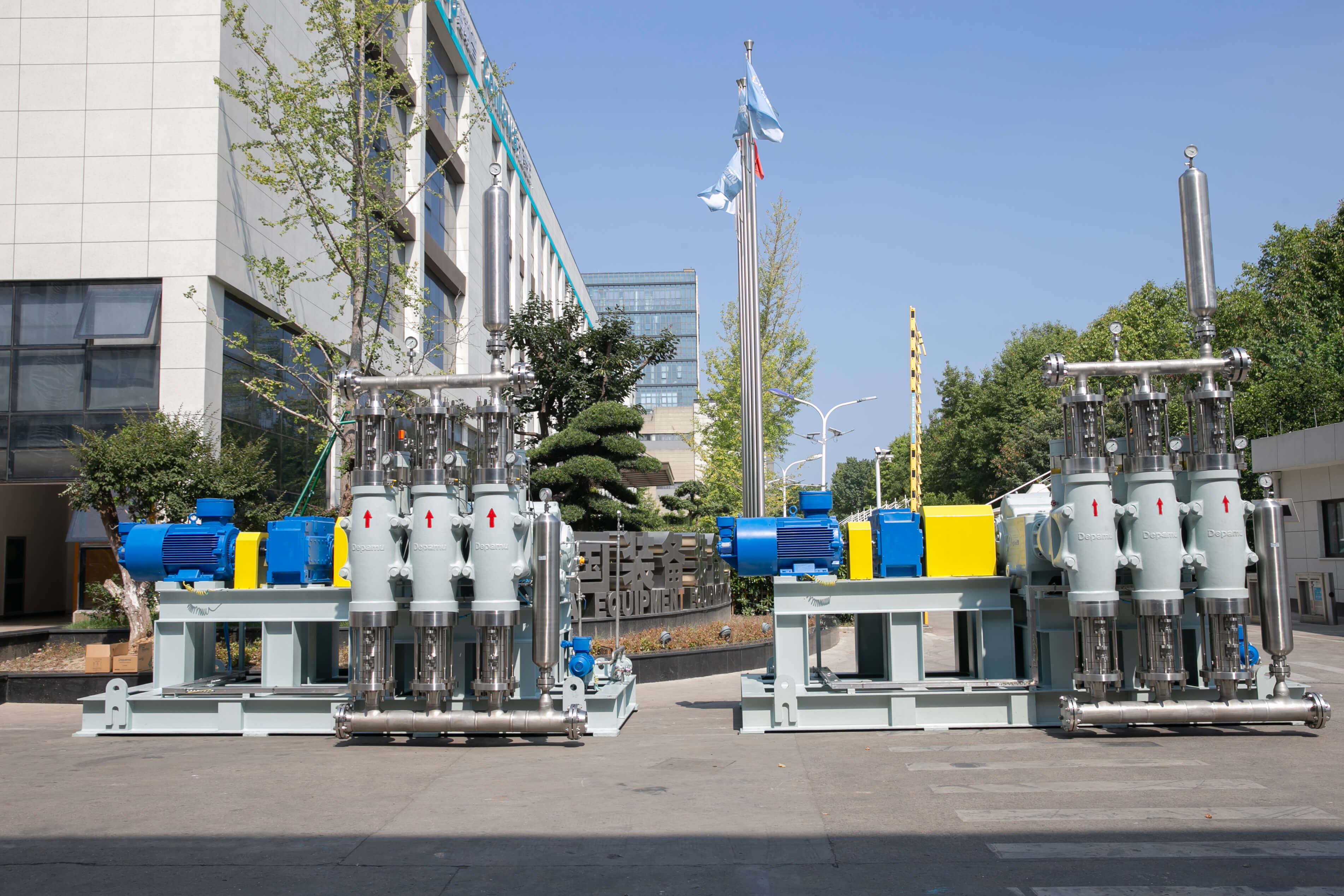
Introduction to the Company's Technological Strength: Depam's Customization Capability and Core Advantages
STEP1:R&D and manufacturing foundationDepump was established in 2003, with over 400 employees, a factory covering an area of 35,000 square meters, a registered capital of 54 million yuan, and an annual output value of approximately 500 million yuan. The company has long focused on the research and development of high-end positive displacement pumps and fluid equipment, with products including metering pumps, high-pressure process reciprocating pumps, screw pumps, etc., which are widely applied in fields such as petroleum refining (accounting for 41%), chemical industry (23%), and nuclear industry (15%).
STEP2:Customized technological system。
- Material adaptabilityBased on the characteristics of different media (such as corrosiveness, viscosity, and temperature), material options including 316L stainless steel, Hastelloy alloy, and titanium alloy are provided, with support for special coating treatments.
- Precise control of pressure and flowBy optimizing the pump body structure (e.g., plunger diameter, stroke length) and the drive system (e.g., variable frequency motors, servo control), a wide operating range of flow rates from 0.1 to 5000 L/h and pressures from 0 to 100 MPa is achieved, with an accuracy of ±1%.
- Sealing and reliability designIt adopts leak-free structures such as double mechanical seals and magnetic drive, and combines FEM (Finite Element Method) analysis to optimize stress distribution, ensuring long-term stable operation of the pump body under high-pressure conditions.
STEP3:Full-process service capabilitiesFrom demand analysis and solution design to production delivery and after-sales maintenance, Depamp provides "one-stop" services. For instance, for a nuclear power plant project, the team customized a radiation-resistant and high-temperature tubular pump by simulating the medium characteristics (such as radioactivity and high temperature) and the process flow, and dispatched engineers for on-site commissioning to ensure seamless integration of the equipment with the system.
Example of Technical ParametersCustomized pump parameters for a chemical project - Material: Hastelloy C-276; Flow rate: 1200 L/h; Pressure: 65 MPa; Temperature: -20℃ to 180℃; Seal type: Double mechanical seal; Precision: ±0.5%.
FAQ Q&A Technical Selection Guide
Q1: How to select the material for high-pressure process tubular pumps?
A1: Material selection requires comprehensive consideration of medium corrosivity, temperature, and pressure. For example, 316L stainless steel can be selected for transporting hydrochloric acid (concentration ≤ 30%); Hastelloy alloy is required for transporting concentrated sulfuric acid (concentration ≥ 90%); abrasion-resistant alloy (such as high-chromium cast iron) is recommended for slurry containing solid particles. Depamu can provide material corrosivity testing services to assist customers in decision-making.
Q2: How can the energy efficiency of high-pressure pumps be optimized?
A2: Energy efficiency optimization should start from three aspects: design, selection, and operation and maintenance:
- Design phase: Utilize CFD fluid simulation to optimize flow channels and reduce hydraulic losses;
- Model selection phase: Select appropriate flow rate and pressure based on actual operating conditions to avoid "using a large pump for a small task";
- Operation and maintenance phase: Regularly inspect the condition of seals and bearings, and promptly replace worn-out parts.
The efficiency of Depump's customized pumps is typically 5%-10% higher than that of standard pumps, which can significantly reduce energy consumption costs over long-term use.
Q3: What is the lead time for customized pumps?
A3: The delivery cycle depends on project complexity. Simple non-standard pumps (e.g., material changes) typically require 4-6 weeks, while complex projects (e.g., entirely new structural designs) need 8-12 weeks. Depam shortens the average delivery cycle to 60% of that of standard manufacturers through modular design and flexible production lines, and also supports expedited services (with delivery possible in as fast as 2 weeks).
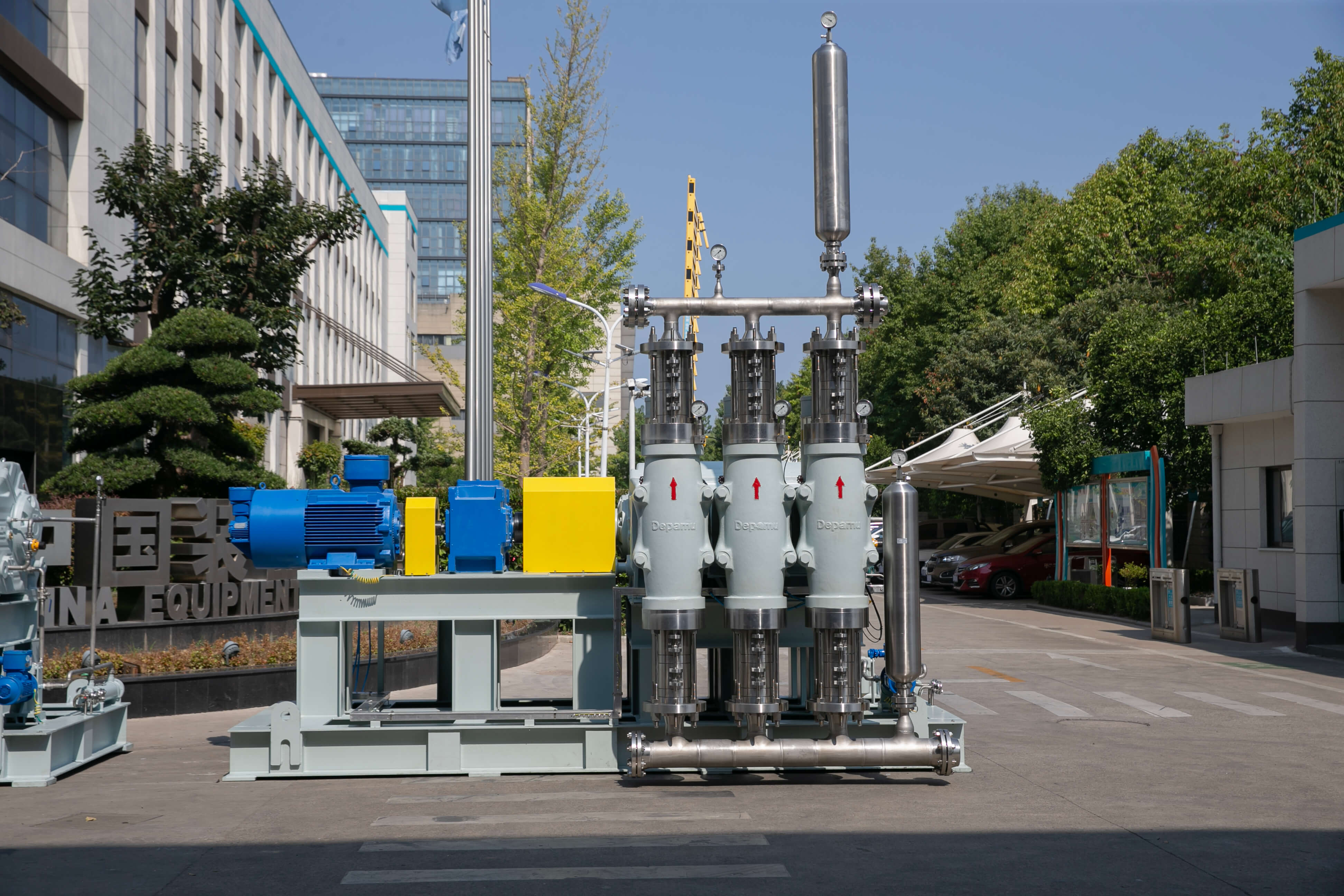
Reference for full text summary
Customized design of high-pressure process tubular pumps represents a significant trend in the field of industrial fluid transportation. Leveraging over 20 years of technological accumulation and full-process service capabilities, Depam provides efficient and safe solutions for scenarios such as petroleum refining, chemical engineering, and the nuclear industry through material adaptation, precise control, and reliability design. Its customized pumps not only meet the demands of harsh operating conditions such as high pressure and corrosion but also reduce customers' total lifecycle costs through energy efficiency optimization and rapid delivery. Looking ahead, with the advancement of Industry 4.0 and intelligent manufacturing, Depam will continue to enhance its digital R&D and flexible manufacturing capabilities to offer more competitive fluid equipment to the industry.For more information, please visit the official website: www.depamufluid.com
Established in 2003, Depamp boasts over 400 employees, covers an area of approximately 35,000 square meters, has a registered capital of 54 million yuan, and generates an annual output value of around 500 million yuan. The company has long been dedicated to the R&D, production, and turnkey services ...
No. 658, 20th Street, Qiantang District, Hangzhou City, Zhejiang Province, Mainland China