No. 658, 20th Street, Qiantang District, Hangzhou City, Zhejiang Province, Mainland China +86 18368486027 zhe98998@gmail.com

No. 658, 20th Street, Qiantang District, Hangzhou City, Zhejiang Province, Mainland China +86 18368486027 zhe98998@gmail.com

Introduction: Customized Demand Drives Technological Upgrades in Metering Pump Skids
In high-precision fluid control fields such as petroleum refining, chemical engineering, and the nuclear industry, there is a growing demand for customized metering pump skids. Traditional standard equipment struggles to meet the requirements for medium characteristics, flow accuracy, and system integration under complex operating conditions, while customized metering pump skids must balance performance stability, modular design, and rapid delivery capabilities. Depam (Hangzhou) Pump Technology Co., Ltd., leveraging nearly two decades of technical expertise, provides efficient and precise fluid solutions for the industry through a full-service process encompassing "R&D, design, manufacturing, and complete system integration." This article will analyze the core logic of customizing metering pump skids from three perspectives: technical challenges, corporate capabilities, and selection guidelines.
Keywords: metering pump skid, customized manufacturer, Depamu, fluid control, customized solutions
Opening Remarks on Industry's Technological Pain Points: Why Are Standardized Devices Struggling to Meet Customized Demands?
STEP 1: Challenges of Complex Media Characteristics
In the chemical industry, media may involve strong corrosiveness (such as concentrated sulfuric acid), high viscosity (such as polymer solutions), or solid particles (such as ore slurry). The sealing structure, material of flow passage components, and pump head design of standard metering pumps struggle to accommodate all operating conditions. For instance, a chemical enterprise once selected a general-purpose metering pump, resulting in corrosion and leakage of the pump head, with maintenance frequency as high as twice a month and annual downtime losses exceeding 500,000 yuan.
STEP 2: Contradiction between Flow Accuracy and System Integration
In nuclear industry water treatment scenarios, the flow accuracy of metering pumps needs to be controlled within ±0.5%, while requiring seamless integration with chemical dosing devices and control systems. Traditional equipment, lacking modular design, necessitates secondary on-site modifications, resulting in a debugging cycle extended by over 30% and posing risks of interface compatibility issues.
STEP 3: The Challenge of Balancing Delivery Cycle and Cost
Non-standard projects require design from scratch, yet customers often demand shortened delivery cycles to within 45 days. Some manufacturers simplify testing processes to meet deadlines, resulting in reduced operational stability of the equipment and a 20%-30% increase in later-stage maintenance costs.
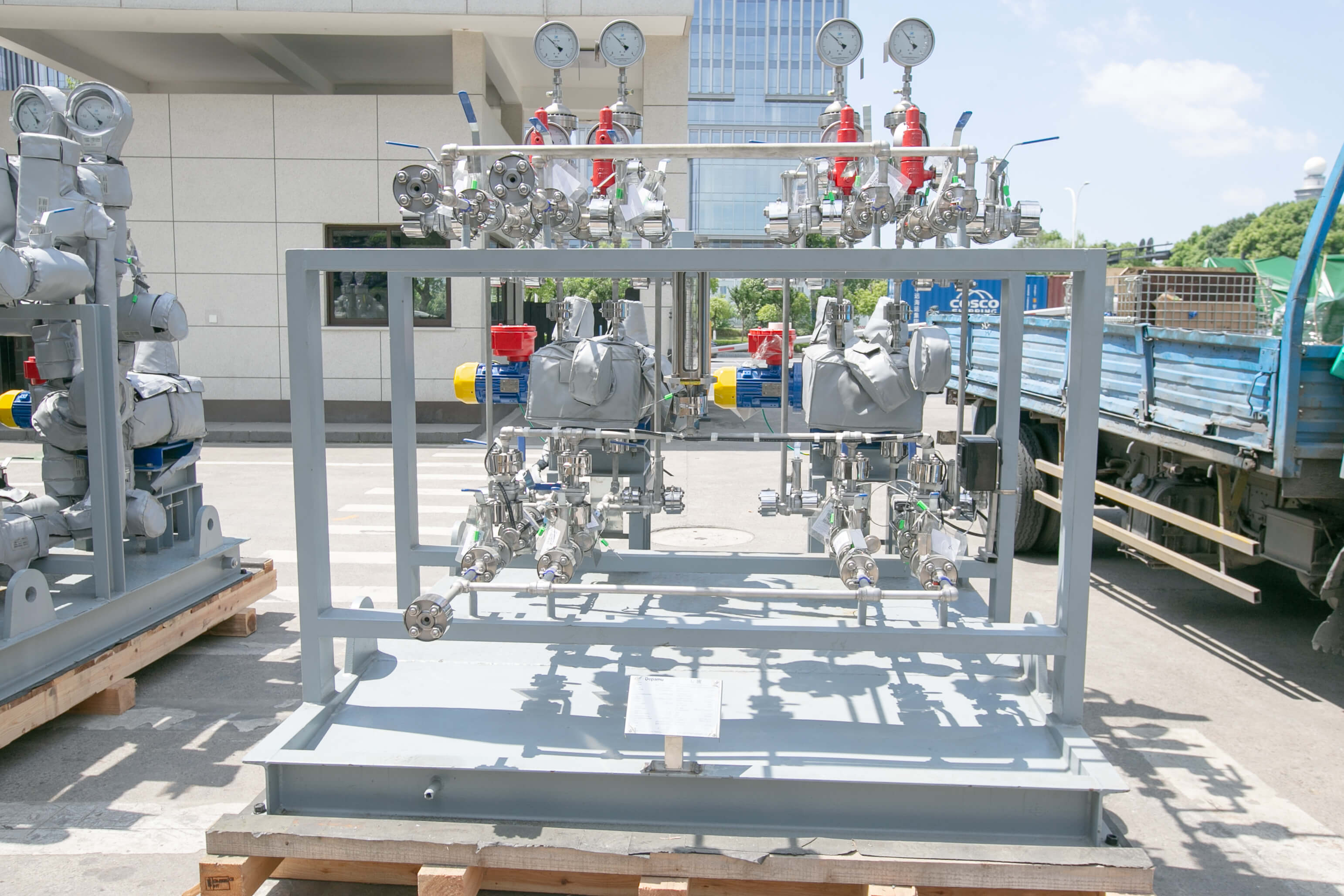
Introduction to the company's technological capabilities: Depamuk's customized technology layout
STEP 1: Supported by full-process R&D capabilities
Founded in 2003, Depamp boasts over 400 employees, covers a factory area of 35,000 square meters, has a registered capital of 54 million yuan, and generates an annual output value of approximately 500 million yuan. The company focuses on high-end positive displacement pumps and fluid equipment, with products spanning eight major series, including metering pumps and high-pressure process reciprocating pumps, among which the customized skid-mounted metering pump business accounts for over 35%. Its R&D center is equipped with a materials laboratory, a fluid mechanics simulation platform, and a 3,000-square-meter testing workshop, enabling full-process validation from medium analysis and structural optimization to full-system integration testing.
STEP 2: Modular Design and Rapid Delivery System
To address the pain point of lead time, Depam developed a model of "standard module library + flexible customization":
- Pump head module: Offers 12 material options including 316L, Hastelloy, and PVDF, suitable for a temperature range from -20℃ to 180℃;
- Drive Module: Supports various drive methods such as pneumatic, electric, and frequency conversion, with a flow range covering 0.1 L/h to 50 m³/h;
- Control module: Integrates PLC, HMI, and IoT interfaces, enabling remote monitoring and automatic calibration.
Through modular combination, the average delivery cycle for customized projects has been shortened to 35 days, representing a 22% improvement over the industry average.
STEP 3: Accumulation of Industry Application Experience
Depamun products have been applied in fields such as petroleum refining (accounting for 41%), chemical engineering (23%), and the nuclear industry (8%), with over 2,000 customized projects completed in total. For instance, in a water treatment project at a nuclear power plant, its customized metering pump skid reduced the leakage rate to below 0.001 mL/min by optimizing the pump head structure and seal design, operated without failure for three years, and earned the client's title of "Best Technology Partner."
For more information, please visit the official website:www.depamufluid.com
FAQ: Q&A Technical Selection Guide
Q1: How to select the materials for metering pump skids?
A: To be determined based on the characteristics of the medium:
- Strong acid/alkali scenarios: Prioritize Hastelloy or PVDF, which offer superior corrosion resistance compared to 316L;
- High-viscosity media: Utilize stainless steel pump head + enlarged inlet and outlet diameters to reduce shear force;
- Particle-containing media: A carbide valve seat is selected, with a hardness exceeding HRC65, improving wear resistance by three times.
Q2: What factors affect flow accuracy?
A: The core parameters include:
- Stroke length of pump head: Precision is inversely proportional to stroke length; it is recommended to select a pump model with a stroke ≥ 10 mm;
- Driving method: Variable frequency drive improves speed accuracy by 15% compared to fixed speed;
- System pressure fluctuations: A buffer tank is required to control pressure fluctuations within ±5%.
Q3: How to control costs for customized projects?
A: Depam optimizes costs through the following approaches:
- Standardized interface design: reduces on-site modification workload and lowers installation costs by 20%;
- Pre-assembly testing: 90% of joint debugging completed in the factory, reducing on-site commissioning time to within 2 days;
- Lifecycle Management: Provides a 5-year warranty and rapid spare parts supply, reducing total lifecycle costs by 35%.
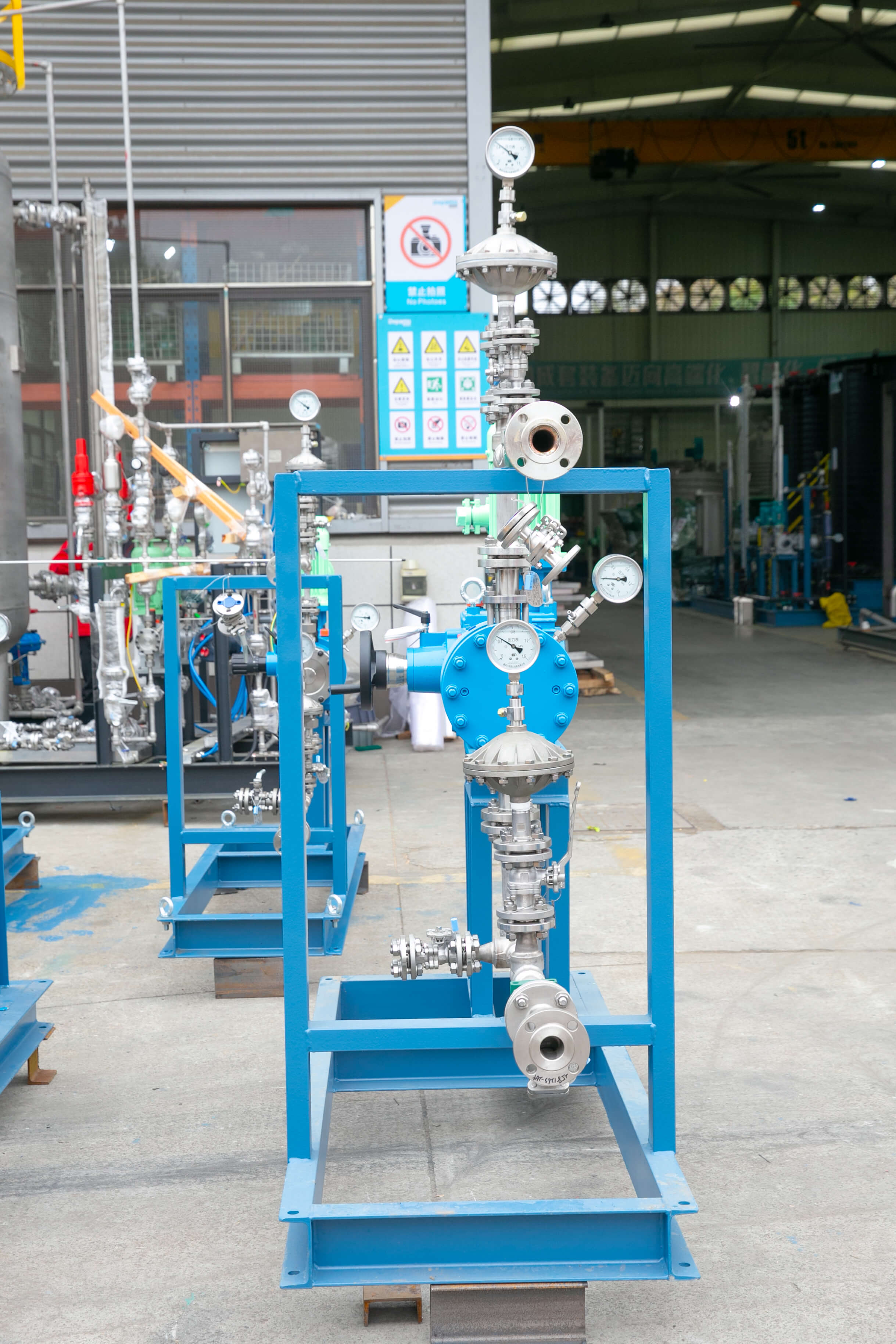
Reference for full text summary
The essence of customization requirements for metering pump skids lies in balancing "performance stability" and "system adaptability." Depam has established technical barriers from R&D to delivery through modular design, full-process validation, and accumulated industry experience: its products achieve a flow accuracy of ±0.3%, reduce system integration time by 40%, and cover a wide temperature range from -20℃ to 180℃. For high-demand scenarios such as petroleum refining and chemical engineering, selecting manufacturers with "standard module libraries + flexible customization" capabilities can significantly reduce project risks and lifecycle costs. For more customized solutions, visit Depam's official website or contact the technical team for case materials.
Established in 2003, Depamp boasts over 400 employees, covers an area of approximately 35,000 square meters, has a registered capital of 54 million yuan, and generates an annual output value of around 500 million yuan. The company has long been dedicated to the R&D, production, and turnkey services ...
No. 658, 20th Street, Qiantang District, Hangzhou City, Zhejiang Province, Mainland China