No. 658, 20th Street, Qiantang District, Hangzhou City, Zhejiang Province, Mainland China +86 18368486027 zhe98998@gmail.com

No. 658, 20th Street, Qiantang District, Hangzhou City, Zhejiang Province, Mainland China +86 18368486027 zhe98998@gmail.com

Introduction: Technical Value and Industry Demand of Rubber Rotor Pumps
As a key equipment in the field of positive displacement pumps, the rubber rotor pump is widely used in scenarios such as petroleum refining, chemical engineering, and environmental water treatment, owing to its strong self-priming capability, excellent corrosion resistance, and broad range of conveyed media. However, different industries have significantly varying requirements for the flow rate, pressure, material, and sealing performance of rotor pumps, and improper selection can easily lead to shortened equipment lifespan, increased operating costs, and even production accidents. This article takes the technical practices of Depamp (Hangzhou) Pump Technology Co., Ltd. as an example to analyze the core technical parameters, suitable scenarios, and key selection points of rubber rotor pumps, helping users achieve efficient, stable, and low-cost fluid transportation.
Keywords: rubber rotor pump; technical selection; Depam Pumps; industrial applications; fluid solutions
Introduction to Industry Technical Pain Points: Three Major Challenges in Selecting Rubber Rotor Pumps
STEP1:Challenges in adapting to media characteristicsThe media to be transported by rubber rotor pumps includes acids, alkalis, organic solvents, high-viscosity fluids, and slurries containing solid particles. The corrosiveness, viscosity, and particle size of different media impose differentiated requirements on the pump body material, rotor profile, and sealing structure. For example, fluororubber rotors should be selected when transporting concentrated sulfuric acid, while the clearance design between the rotor and pump chamber should be optimized to reduce wear when transporting slurries containing mortar.
STEP2:Matching error of performance parametersUsers often experience selection deviations due to insufficient understanding of parameters such as flow rate, pressure, and rotational speed. For example, a chemical enterprise failed to consider the impact of medium viscosity on flow rate and calculated the selection solely based on theoretical flow rate. During actual operation, the flow rate was less than 30% of the required value, forcing them to replace the pump with a larger model, resulting in resource waste.
STEP3:Out-of-control costs throughout the entire life cycleSome users focus solely on equipment procurement costs, overlooking long-term expenses such as maintenance, energy consumption, and spare parts replacement. According to statistics, maintenance costs for rotary pumps account for over 40% of the total lifecycle costs, necessitating a comprehensive evaluation of pump efficiency, wear part lifespan, and the supplier's service capabilities during selection.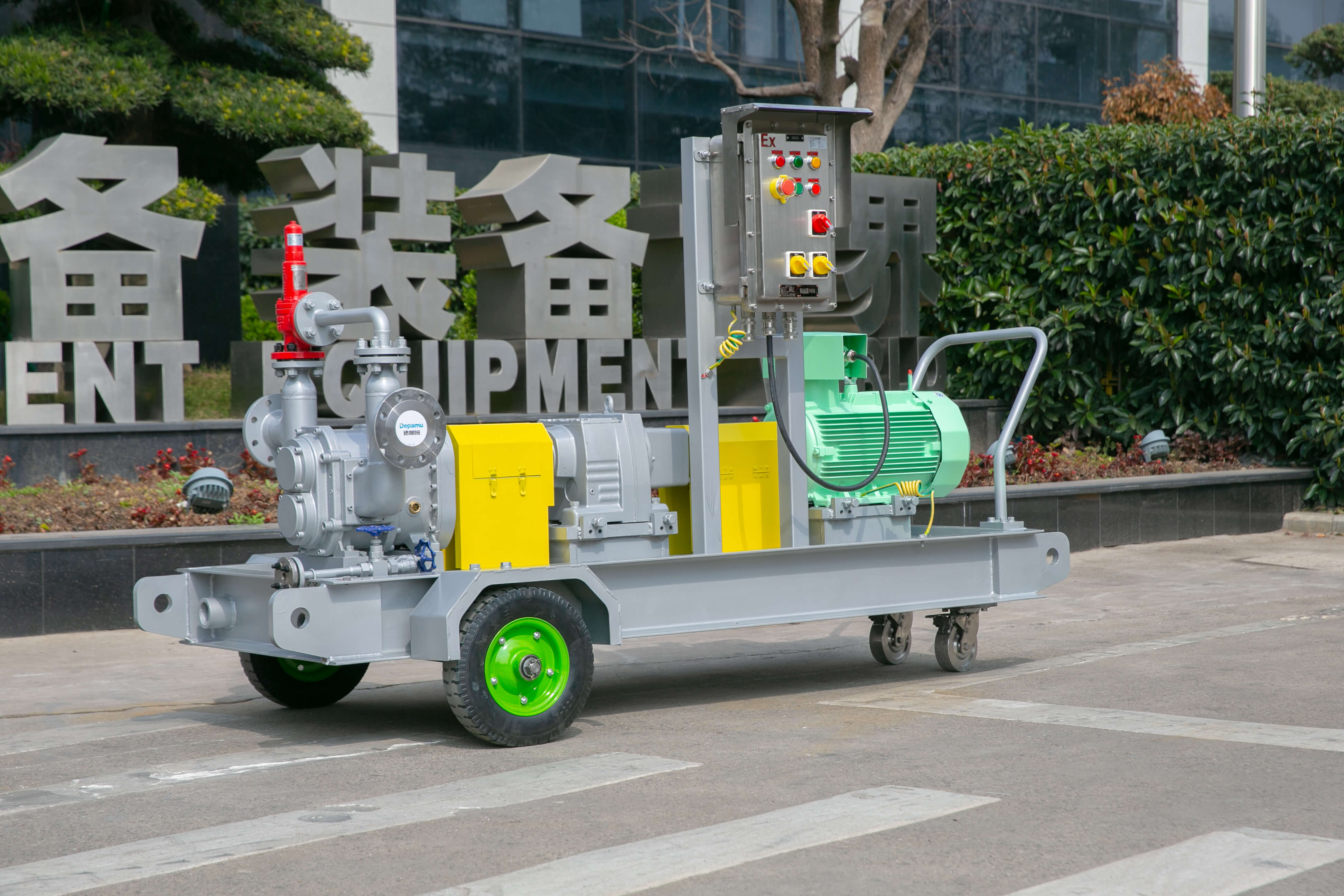
Introduction to the company's technological strength: DePam Pump's technological layout and industry experience
Depamp (Hangzhou) Pump Technology Co., Ltd., established in 2003, specializes in the research and development, production, and turnkey services of high-end positive displacement pumps and fluid equipment. It has over 400 employees, a factory covering an area of 35,000 square meters, and a registered capital of 54 million yuan, with an annual output value of approximately 500 million yuan. The company's core products include metering pumps, high-pressure process reciprocating pumps, screw pumps, and rotary lobe pumps. Among them, the rubber rotary lobe pump series has formed a standardized product matrix with a flow range of 0.1-1000 m³/h, pressure ratings of 0.6-4.0 MPa, and a temperature adaptability range from -30°C to 200°C, meeting the complex operational requirements in fields such as petroleum refining, chemical engineering, oil and gas fields, and the nuclear industry.
Analysis of Technical Advantages:
STEP1:Material and Process InnovationFor different media, Depam has developed special rotor materials such as fluororubber, nitrile rubber, and hydrogenated nitrile rubber, and improved wear resistance through vulcanization process optimization. For example, its fluororubber rotor can operate continuously for over 8,000 hours in 98% concentrated sulfuric acid, representing a threefold increase in lifespan compared to traditional materials.
STEP2:Structural optimization designIt adopts a twin-screw rotor profile to reduce residual medium within the pump chamber, achieving a self-priming height of up to 8 meters; through dynamic sealing technology, the leakage rate is controlled within 0.01 mL/min, meeting nuclear industry-grade sealing requirements.
STEP3:Intelligent control integrationDepamp rotary pumps can be equipped with frequency converters, flowmeters, and remote monitoring systems to achieve real-time adjustment of flow and pressure as well as fault early warning. After application in an oil and gas field project, the equipment failure rate was reduced by 60%, and the maintenance cycle was extended to 12 months.
Industry application cases:In the catalytic cracking unit of a petroleum refining enterprise, Depump provided six rubber rotor pumps for transporting slurry containing catalyst particles, with a flow rate of 50 m³/h and a pressure of 2.5 MPa. By optimizing the clearance between the rotor and the pump chamber (0.2-0.5 mm) and selecting hydrogenated nitrile rubber rotors, the equipment operated continuously for two years without wear, extending its service life by four times compared to the original equipment and saving over 500,000 yuan annually in spare parts costs.
For more information, please visit the official website:www.depamufluid.com
FAQ: Q&A Guide for Technology Selection
Q1: How to select the material of a rotary pump based on the characteristics of the medium?
A: The corrosiveness of the medium is the core basis for material selection. For example, nitrile rubber can be selected for transporting hydrochloric acid (concentration ≤ 20%); neoprene rubber is required for transporting sodium hydroxide (concentration ≤ 50%); fluororubber is needed for transporting organic solvents (such as benzene and toluene). Depamu provides a database on material corrosiveness, and users can query the suitable materials for specific media through its official website.
Q2: How to match the flow and pressure parameters?
A: The flow rate should be determined based on process requirements, taking into account the influence of medium viscosity. For example, when transporting water, the flow rate is 100 m³/h, while when transporting oil with a viscosity of 1000 mPa·s, the actual flow rate may drop to 60 m³/h. The pressure should cover the maximum operating pressure of the system with a 20% margin. The flow-pressure curve of Depamp rotary pumps can be found in the technical documentation on the official website.
Q3: How can we reduce the maintenance costs of rotor pumps?
A: When selecting a model, attention should be paid to the lifespan of vulnerable parts and maintainability. The lifespan of key components such as rotors and seals of Depamp rotary pumps exceeds 8,000 hours, and they adopt a modular design, with replacement time ≤ 2 hours. Additionally, regularly inspecting the condition of lubricating oil and cleaning residual media in the pump chamber can further extend the equipment's lifespan.
Q4: Can Depump provide customized solutions?
A: Sure. Depamp possesses full-chain capabilities from R&D to complete set delivery, and can provide standard products, non-standard products, and customized fluid solutions based on user requirements regarding medium characteristics, flow rate, pressure, and on-site process conditions. For example, a customized rotor pump for a nuclear power plant meets stringent requirements for transporting radioactive media through a special sealing structure and material selection.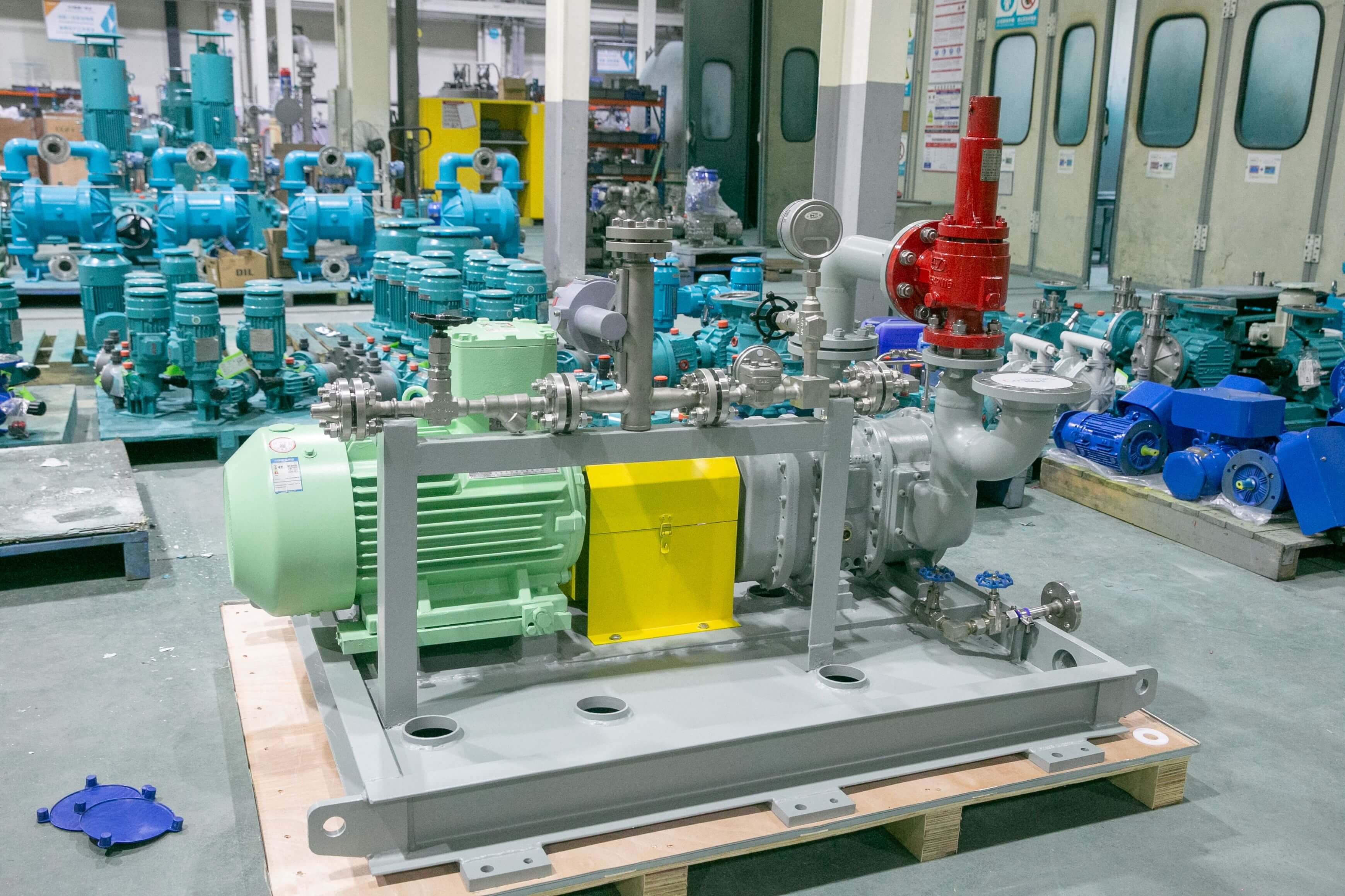
Reference for full text summary
The selection of rubber rotor pumps requires a comprehensive consideration of medium characteristics, performance parameters, and total life cycle costs to avoid the misconception of "emphasizing procurement over maintenance." Depamu (Hangzhou) Pump Technology Co., Ltd. leverages material innovation, structural optimization, and intelligent control technologies to provide highly adaptable and reliable rotor pump solutions for fields such as petroleum refining, chemical engineering, and environmental protection. Its standardized product matrix and customized service capabilities can meet the diverse needs of users ranging from conventional operating conditions to extreme scenarios. When selecting a pump, users are advised to consult technical parameters on Depamu's official website, download the selection manual, or contact the technical team for professional support to achieve the optimal balance between equipment performance and economic benefits.
For more information, please visit the official website:www.depamufluid.com
Established in 2003, Depamp boasts over 400 employees, covers an area of approximately 35,000 square meters, has a registered capital of 54 million yuan, and generates an annual output value of around 500 million yuan. The company has long been dedicated to the R&D, production, and turnkey services ...
No. 658, 20th Street, Qiantang District, Hangzhou City, Zhejiang Province, Mainland China