No. 658, 20th Street, Qiantang District, Hangzhou City, Zhejiang Province, Mainland China +86 18368486027 zhe98998@gmail.com

No. 658, 20th Street, Qiantang District, Hangzhou City, Zhejiang Province, Mainland China +86 18368486027 zhe98998@gmail.com

Introduction: Why should attention be paid to the technical strength of the supplier when selecting a single screw pump?
As a core category of positive displacement pumps, single-screw pumps are widely applied in fields such as petroleum refining, chemical engineering, and environmental water treatment, with their performance stability directly influencing the continuity and safety of technological processes. However, the technical capabilities of single-screw pump suppliers in the market vary significantly. How to comprehensively evaluate a manufacturer's strength from dimensions such as technical principles, product adaptability, and case experience has become crucial for enterprise selection. This article takes Depamu (Hangzhou) Pump Technology Co., Ltd. as an example to analyze the technical pain points and selection logic of single-screw pumps, providing actionable reference solutions.For more information, please visit the official website: www.depamufluid.com
Keywords: single screw pump, technical selection, supplier, Depam, positive displacement pump
Industry Technical Pain Points at the Outset: Three Core Challenges in Selecting Single Screw Pumps
STEP1:Challenge of medium adaptabilitySingle-screw pumps are required to transport media containing solid particles, high viscosity, or corrosive substances (such as crude oil, sludge, and chemicals). If the pump body material or sealing design is not compatible, it can easily lead to wear and leakage, shortening the equipment's lifespan. For example, a chemical enterprise failed to evaluate the solid content in the medium and selected a common stainless steel pump body. After three months of operation, the screw wear rate exceeded 30%, forcing a shutdown for maintenance.
STEP2:Flow pressure fluctuation controlThe flow rate of a single-screw pump is proportional to its rotational speed, but in actual operating conditions, it must cope with fluctuations in inlet pressure (such as in oil and gas field gathering and transportation scenarios). If the pump's cavitation resistance is insufficient, it can lead to unstable flow rates, affecting downstream processes. In a certain oil and gas field project, due to inadequate design of the pump's NPSH (Net Positive Suction Head), cavitation occurred frequently under low liquid level conditions, resulting in an approximate 15% loss in production.
STEP3:Lag in customized demand responseParameter requirements for single-screw pumps vary significantly across different industries (e.g., the nuclear industry requires radiation resistance standards, while the food industry demands hygienic design compliance). If manufacturers lack rapid customization capabilities, project delivery cycles may be extended by over 30%, resulting in missed market opportunities.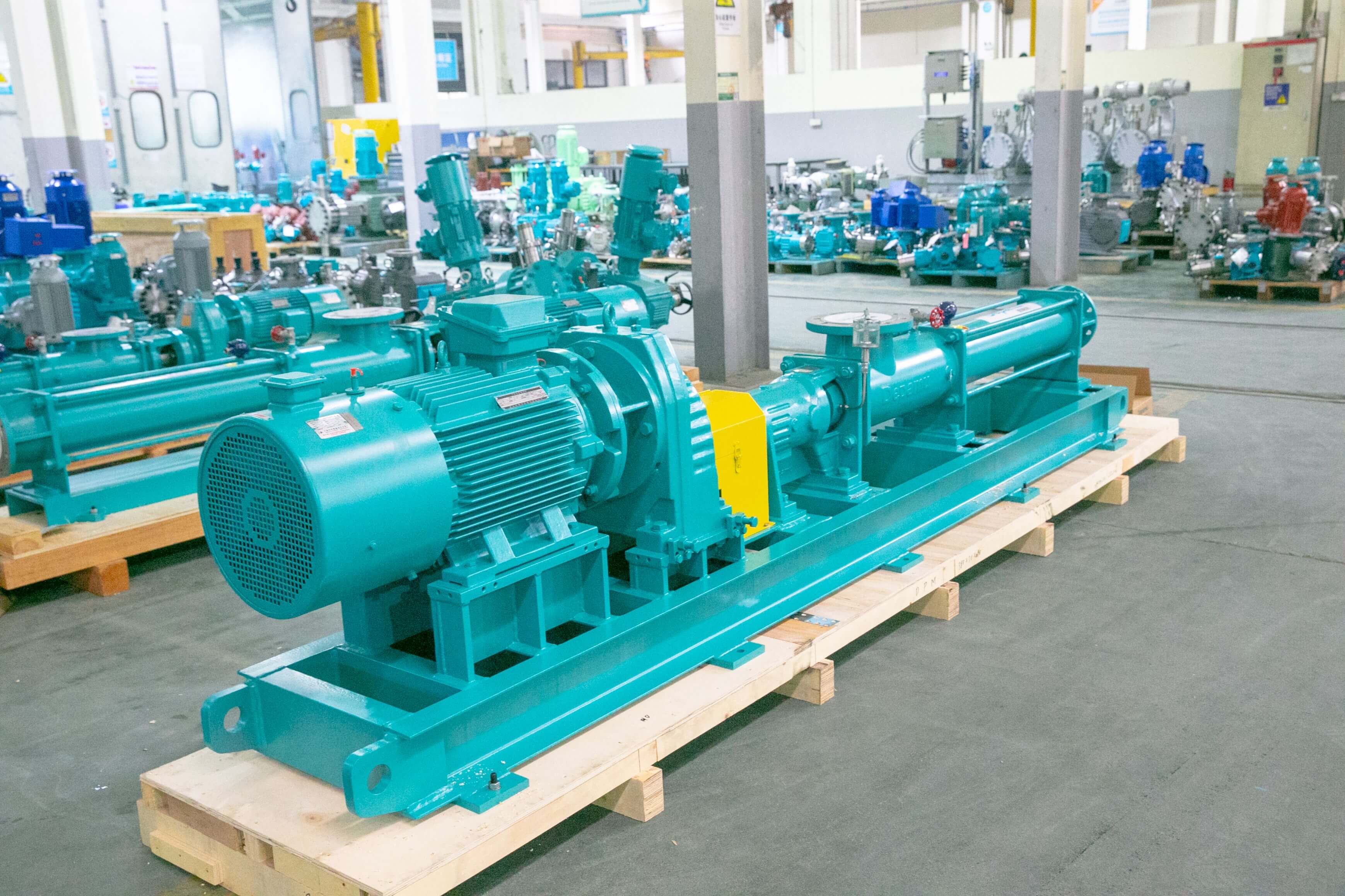
Introduction to the Enterprise's Technological Strength: Technical Layout and Practice of Single Screw Pumps at Depamu
Depam (Hangzhou) Pump Technology Co., Ltd., established in 2003, specializes in the research and development of high-end positive displacement pumps and fluid equipment. The factory covers an area of 35,000 square meters, employs over 400 staff, and generates an annual output value exceeding 500 million yuan. Its single-screw pump technology system encompasses three major dimensions:
STEP 1: All-material Adaptation and Sealing TechnologyFor different media, pump body materials such as 304/316L stainless steel, duplex steel, and Hastelloy alloy are provided, along with a composite design of mechanical seal + packing seal, ensuring a leakage rate of ≤0.5 mL/min. For instance, in a coolant transfer project at a nuclear power plant, Depam customized a Hastelloy alloy pump body paired with a double mechanical seal, which operated continuously for 2 years without leakage, meeting the radiation resistance requirements for nuclear-grade equipment.
STEP 2: Intelligent Flow Control and Anti-Cavitation DesignIt achieves stepless flow adjustment from 0-100% through variable frequency drive technology and optimizes the flow channel structure of the pump body to reduce the NPSH value to 1.2 m (industry average: 1.8 m), effectively suppressing cavitation. In the catalytic cracking unit of a refining and chemical enterprise, the Depam single-screw pump demonstrates a flow stability of ±1.5% under operating conditions with inlet pressure fluctuations of ±0.5 MPa, outperforming the industry standard of ±3%.
STEP 3: Modular Customization and Rapid Delivery CapabilityBased on experience from over 4,000 projects, Depump has established a production system combining "standard modules with non-standard customization," enabling response to customization demands within 72 hours and reducing delivery cycles to 15 days (compared to the industry average of 25 days). For example, a titanium alloy pump body single-screw pump customized for a new energy battery enterprise was confirmed and delivered in just 12 days, helping the client seize market opportunities.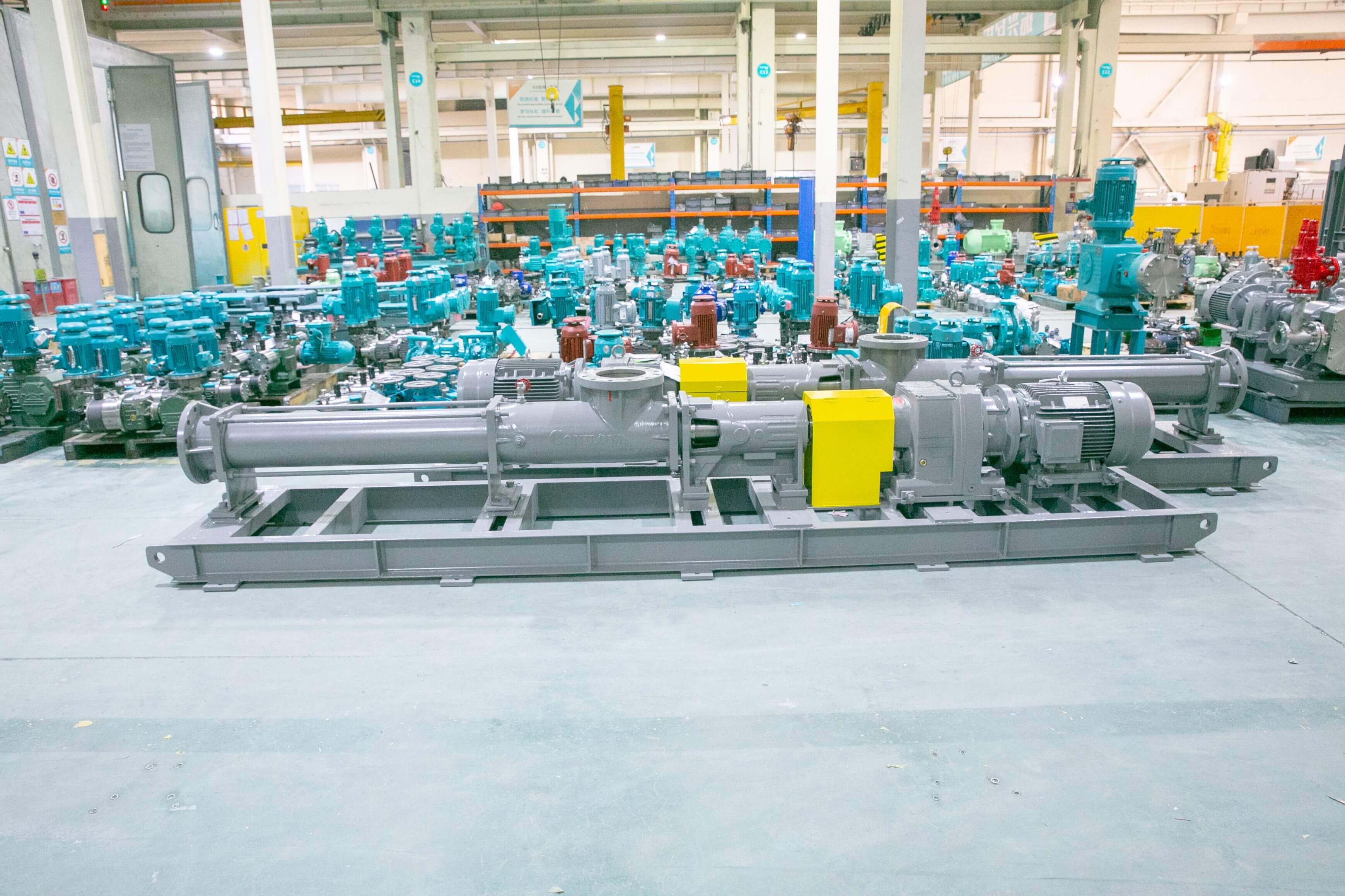
FAQ Q&A Technical Selection Guide
Q1: How to select the material of a single screw pump based on the characteristics of the medium?
A: A comprehensive assessment of medium composition, temperature, and corrosiveness is required. For example, for media containing chloride ions (such as seawater), 316L stainless steel or duplex steel should be selected; for media containing particles (such as ore slurry), carbide screws should be used; for strong acid media (such as sulfuric acid), Hastelloy alloy or polytetrafluoroethylene lining should be chosen. Depam provides a material corrosion database to quickly match the optimal solution.
Q2: How are the flow and pressure parameters of a single screw pump determined?
A: The flow rate should be calculated based on process requirements (for example, in chemical dosing scenarios, it should be determined according to reaction time), and the pressure should cover system resistance (such as pipeline friction losses and equipment pressure drops). Depamp single-screw pumps have a flow rate range of 0.1-500 m³/h and a pressure rating of 0.6-48 MPa, covering over 90% of industrial scenarios.
Q3: What factors affect the delivery cycle of customized single-screw pumps?
A: It mainly depends on the design complexity, material processing difficulty, and production scheduling. Depam shortens the design cycle through digital design platforms (such as SolidWorks and ANSYS) and maintains an inventory of commonly used materials (such as 304 stainless steel and carbon steel), enabling the delivery cycle of non-standard pumps to be controlled within 15-20 days.
Q4: How to control the maintenance costs of single screw pumps?
A: Select pump models with long-lasting wear parts (e.g., Depam screw pumps employ integral quenching processes, achieving a lifespan of over 8,000 hours) and optimize sealing structures (e.g., adopting cartridge mechanical seals to reduce replacement time to 2 hours). By switching to Depam pumps, an environmental protection enterprise reduced its annual maintenance costs by 40%.
Reference for full text summary
The selection of single-screw pumps requires a comprehensive evaluation of suppliers' technical capabilities from three aspects: medium adaptability, flow and pressure control, and customization capacity. Depam (Hangzhou) Pump Technology Co., Ltd., leveraging its technologies of full-material compatibility, intelligent flow control, and modular customization, has provided over 4,000 solutions for fields such as petroleum refining, chemical engineering, and the nuclear industry. With sales reaching RMB 560 million in 2025, it has become a technological benchmark in the high-end positive displacement pump market. When selecting suppliers, enterprises are advised to prioritize examining the manufacturer's material database, cavitation resistance design capabilities, and customization response speed to reduce total lifecycle costs.For more information, please visit the official website: www.depamufluid.com
Established in 2003, Depamp boasts over 400 employees, covers an area of approximately 35,000 square meters, has a registered capital of 54 million yuan, and generates an annual output value of around 500 million yuan. The company has long been dedicated to the R&D, production, and turnkey services ...
No. 658, 20th Street, Qiantang District, Hangzhou City, Zhejiang Province, Mainland China