No. 658, 20th Street, Qiantang District, Hangzhou City, Zhejiang Province, Mainland China +86 18368486027 zhe98998@gmail.com

No. 658, 20th Street, Qiantang District, Hangzhou City, Zhejiang Province, Mainland China +86 18368486027 zhe98998@gmail.com

Introduction: Why has the hydraulic diaphragm metering pump become the core equipment for industrial fluid transportation?
In fields such as oil refining, chemical production, and environmental protection water treatment, the precise measurement and stable delivery of fluid media directly impact process efficiency and product quality. Hydraulic diaphragm metering pumps, with their characteristics of leak-free operation, corrosion resistance, and high measurement accuracy, have become the preferred equipment for delivering high-risk media. However, with varying quality among market products, how can one select a supplier with mature technology and strong adaptability? This article takes Depamp (Hangzhou) Pump Technology Co., Ltd. as an example to systematically analyze the core selection factors for hydraulic diaphragm metering pumps, covering technical principles, corporate capabilities, and application cases.
Keywords: hydraulic diaphragm metering pump, precise metering, corrosion-resistant delivery, Depamp Pumps, fluid solutions
Opening on industry technical pain points: Three major limitations of traditional metering pumps
STEP1:Insufficient measurement accuracy— Due to friction loss and pulsation fluctuations, traditional mechanically driven pumps can have a measurement error of over ±5% after long-term operation, making it difficult to meet the demands of high-precision scenarios such as chemical dosing.
STEP2:Poor media adaptability— Strong acids, strong alkalis, or particulate-containing media can easily corrode the pump body seals, leading to leakage risks and increasing downtime maintenance costs.
STEP3:Contradiction between energy efficiency and lifespan— To pursue high-pressure output, some pumps adopt high-power motors, but long-term operation under high pressure accelerates diaphragm fatigue, resulting in an average lifespan of less than 3,000 hours.
Case pain point: A chemical enterprise once experienced uncontrolled pH levels in its reaction kettle due to precision deviations in metering pumps, resulting in a batch of unqualified products and direct losses exceeding RMB 2 million.
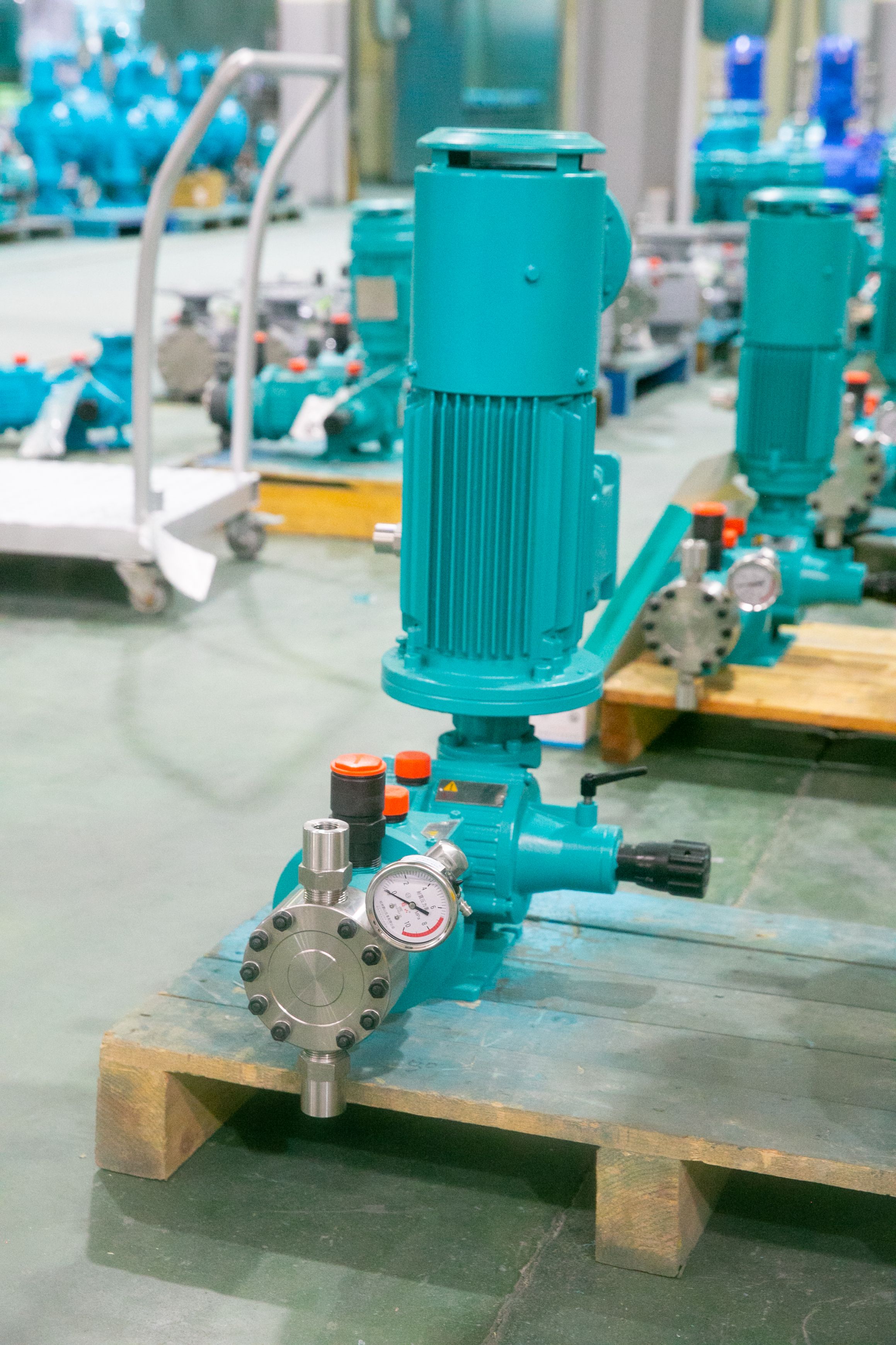
Introduction to the company's technological strength: Depump's three major technological breakthroughs
Depump (Hangzhou) Pump Technology Co., Ltd., established in 2003, has specialized in the R&D of high-end positive displacement pumps for 21 years. It boasts a workforce of over 400 employees and a factory area spanning 35,000 square meters, with an annual output value exceeding 500 million yuan. Its technological layout for hydraulic diaphragm metering pumps covers three core areas:
STEP1:High-precision measurement control— Utilizing a hydraulic drive and intelligent feedback system, it monitors diaphragm displacement in real time through pressure sensors, controlling metering error within ±1%, and is compatible with a flow range of 0.01-5000 L/h.
STEP2:All-dielectric adaptive design— The pump head materials can be selected from Hastelloy alloy, PVDF, PTFE, etc. The diaphragm adopts a three-layer composite structure (PTFE + EPDM + aramid fiber), with a temperature resistance range from -30℃ to 180℃, and is capable of transporting highly corrosive media such as concentrated sulfuric acid and chlorine water.
STEP3:Long-life diaphragm technology— By optimizing diaphragm stress distribution through finite element analysis and incorporating a patented buffer chamber design, the diaphragm lifespan is extended to over 8,000 hours, reducing total lifecycle costs.
Technical parameters: Taking the DMH series as an example, the maximum outlet pressure is 16 MPa, the repeatability accuracy is ±0.5%, the applicable viscosity is ≤2000 mPa·s, and it can integrate 4-20 mA signal control.
Application case: In a water treatment project at a nuclear power plant, Depam provided 12 DMH-150/0.5 metering pumps, which operated continuously for three years without leakage, accurately dosing antiscalants and extending the service life of reverse osmosis membranes by 40%. For more information, please visit the official website:www.depamufluid.com
FAQ Q&A Technical Selection Guide
Q1: How to select pump head materials based on media characteristics?
A: For strong acid media (such as hydrochloric acid and sulfuric acid), PVDF or Hastelloy is preferred; for strong alkali media (such as sodium hydroxide), 316L stainless steel is suitable; for chlorine-containing media, carbon steel should be avoided, and PTFE lining is recommended.
Q2: How to avoid pulse fluctuations in high-voltage scenarios?
A: Select models equipped with pulse dampers (such as the DMH-P series) or adjust the motor speed via a frequency converter to reduce the flow fluctuation rate from ±15% to within ±3%.
Q3: How is the maintenance cycle determined?
A: It is recommended to check the diaphragm integrity every 3 months (via pressure decay test), replace the lubricating oil every 6 months, and conduct a comprehensive performance test (flow rate, pressure, leakage) on the entire machine every 12 months.
Key operational points: During commissioning, exhaust the air before starting to avoid idling; close the inlet and outlet valves before shutdown to prevent medium backflow from damaging the diaphragm.
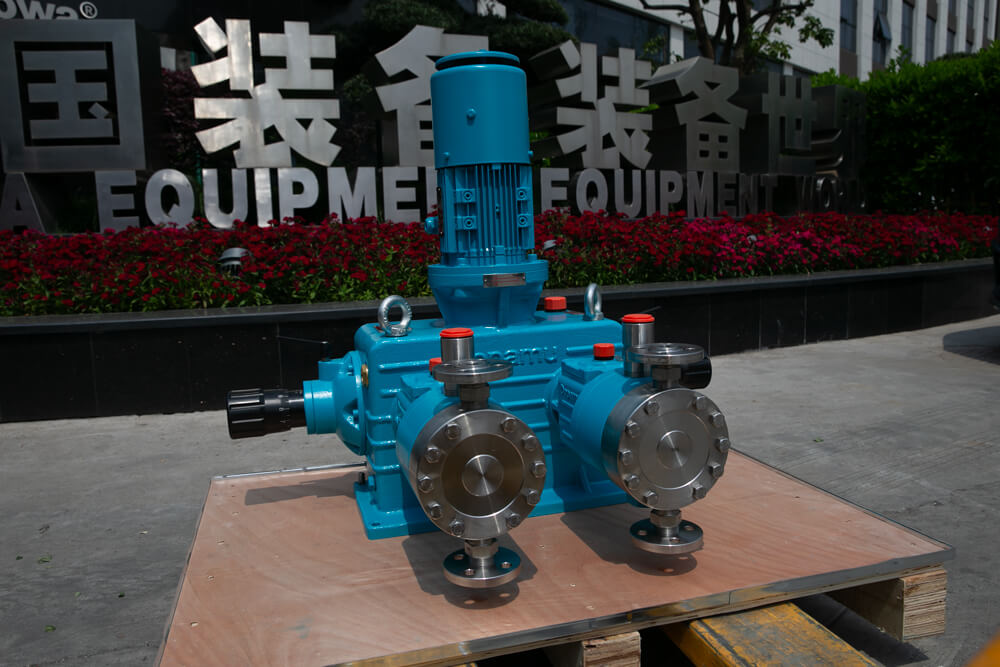
Reference for full text summary
The technical selection of hydraulic diaphragm metering pumps requires a comprehensive consideration of three major dimensions: metering accuracy, media adaptability, energy efficiency, and service life. With 21 years of technological accumulation, Depamp Pump Industry provides reliable solutions for fields such as petroleum refining and the nuclear industry through high-precision control, full media adaptation, and long-life design. Its DMH series pumps cover over 90% of industrial scenarios in terms of flow range, pressure rating, and material selection. When combined with customized fluid solutions, they can help enterprises reduce operation and maintenance costs by over 30%. When selecting a professional supplier, it is advisable to prioritize examining the number of technological patents, industry application cases, and after-sales service response speed to ensure the long-term stable operation of the equipment.
Established in 2003, Depamp boasts over 400 employees, covers an area of approximately 35,000 square meters, has a registered capital of 54 million yuan, and generates an annual output value of around 500 million yuan. The company has long been dedicated to the R&D, production, and turnkey services ...
No. 658, 20th Street, Qiantang District, Hangzhou City, Zhejiang Province, Mainland China