No. 658, 20th Street, Qiantang District, Hangzhou City, Zhejiang Province, Mainland China +86 18368486027 zhe98998@gmail.com

No. 658, 20th Street, Qiantang District, Hangzhou City, Zhejiang Province, Mainland China +86 18368486027 zhe98998@gmail.com

Introduction: Technical Value and Industry Demand of Mechanical Diaphragm Metering Pumps
In fields such as petroleum refining, chemical production, and environmental water treatment, precise measurement and stable conveyance of fluid media are core guarantees for process safety and efficiency. Mechanical diaphragm metering pumps, with their characteristics of leakage-free operation, corrosion resistance, and high measurement accuracy, have become the preferred equipment for conveying high-risk media. However, differences in technological accumulation and manufacturing processes among various enterprises result in varying equipment performance. This article will analyze how to select suppliers of mechanical diaphragm metering pumps with core competitiveness from dimensions such as technical principles, corporate capabilities, and key selection considerations.
Keywords: Mechanical Diaphragm Metering Pump, Precise Metering, Depump Pump Industry, Fluid Transportation, Technical Selection
Opening on Industry Technical Pain Points: Three Major Challenges of Mechanical Diaphragm Metering Pumps
STEP1:Contradiction between measurement accuracy and stabilityUnder high-pressure or corrosive medium conditions, traditional metering pumps are prone to diaphragm deformation, resulting in flow fluctuations that affect the control of process parameters. For example, a chemical enterprise experienced a 15% deviation in catalyst dosage due to the insufficient precision of its metering pumps, leading to annual losses exceeding RMB 2 million.
STEP2:Conflict between corrosion resistance and service lifeStrong acid and alkali media impose stringent requirements on pump body materials, as ordinary stainless steel is prone to pitting corrosion in chloride environments, resulting in an equipment lifespan of less than 3 years.
STEP3:Maintenance costs and downtime risksFrequent shutdowns for maintenance are required due to failures such as diaphragm rupture and seal aging. A nuclear power plant once experienced a shutdown of its cooling system caused by a metering pump failure, triggering a safety-class event.
Depam (Hangzhou) Pump Technology Co., Ltd. has addressed the aforementioned pain points through technological innovation, with its mechanical diaphragm metering pumps achieving industry-leading levels in terms of precision, corrosion resistance, and reliability.
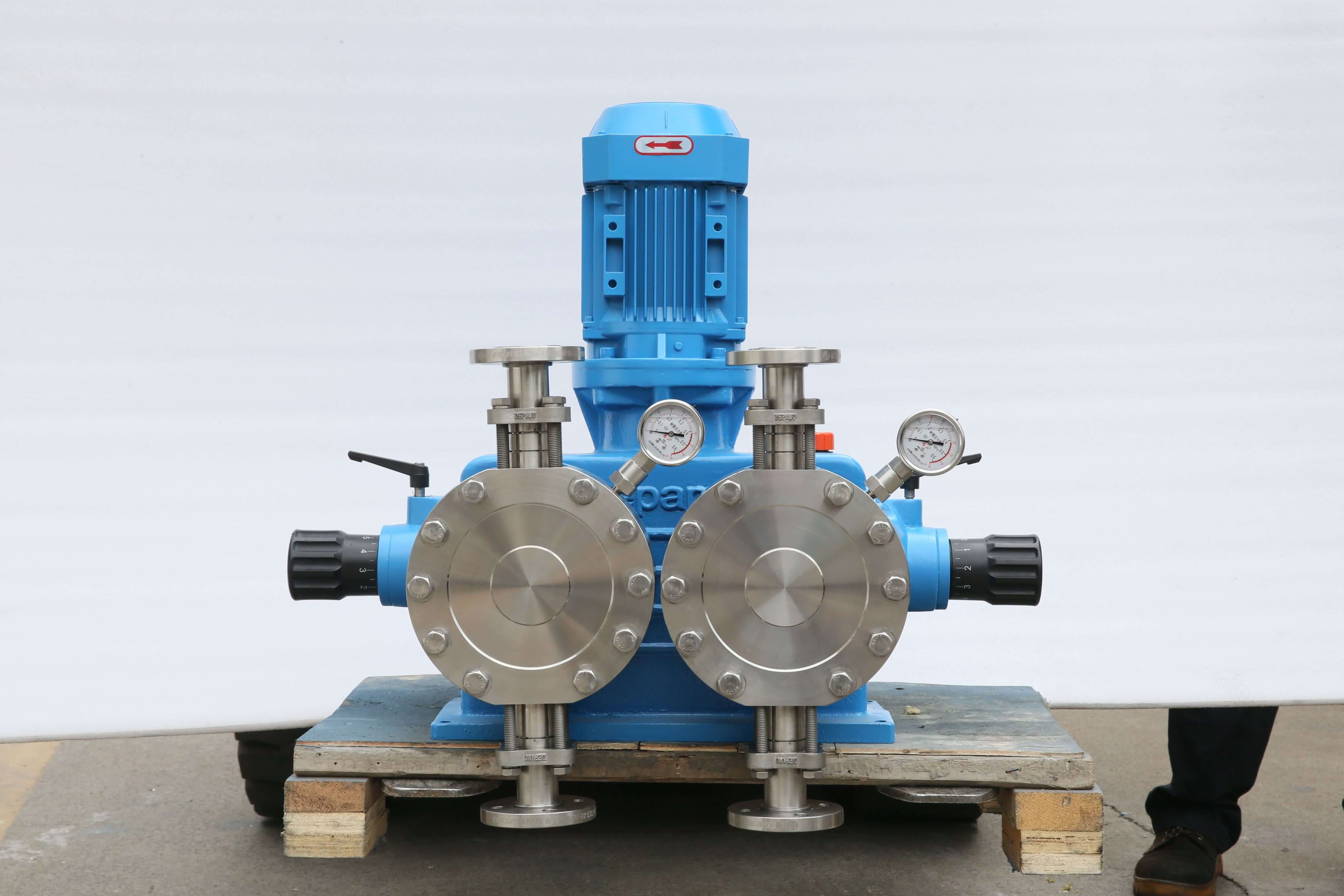
Introduction to the company's technological strength: R&D and manufacturing advantages of Depam
STEP1:Full-process R&D systemDepamp was established in 2003 and has over 400 employees, with the R&D team accounting for more than 30%, including experts in multiple fields such as materials science, fluid mechanics, and mechanical design. The company invests 8% of its annual revenue in technological R&D, has obtained a cumulative total of 127 authorized patents, and participated in the formulation of 6 industry standards.
STEP2:Core technological innovation。
- Double-diaphragm redundant designIt adopts a primary-secondary diaphragm structure, where the secondary diaphragm automatically takes over the operation when the primary diaphragm ruptures, preventing media leakage. It has passed the zero-leakage test certified by TÜV Rheinland.
- Application of polymer compositesFor strongly corrosive media such as chloride ions and hydrofluoric acid, a PTFE+PFA double-layer coating process has been developed, extending the diaphragm lifespan to over 8 years, a 300% improvement compared to traditional materials.
- Intelligent flow compensation algorithmReal-time monitoring of operating conditions is conducted through pressure sensors, and stroke frequency is dynamically adjusted to ensure flow accuracy of ±0.5%, meeting the stringent requirements for coolant dosing in nuclear power plants.
STEP3:Industry application validationDepamu products have served over 3,000 customers globally, covering fields such as petroleum refining (accounting for 41%), chemical industry (23%), and nuclear industry (8%). For instance, the J-DM series metering pumps provided to an Sinopec refinery have operated continuously for two years without failure under high-temperature conditions of 350℃ and high-pressure conditions of 16MPa, saving 500,000 yuan in annual maintenance costs.
For more information, please visit the official website:www.depamufluid.com
FAQ: A Q&A Guide to Technology Selection
Q1: How to select pump body material based on medium characteristics?
STEP 1: Clarify the composition of the medium (such as pH level, chloride ion content, and proportion of solid particles). For example, for a medium containing 30% hydrochloric acid, a Hastelloy C-276 pump body should be selected, while 316L stainless steel can be used for pure water scenarios.
STEP 2: Refer to the Depam material selection table:
- Weakly corrosive media (pH 5-9): 304 stainless steel
- Moderate corrosion resistance (chloride ion content < 500 ppm): 316L stainless steel
- Highly corrosive (hydrofluoric acid, concentrated sulfuric acid): Hastelloy/PVDF
STEP 3: Verify material compatibility: Depam offers free medium testing services to confirm material corrosion resistance through a 48-hour immersion test.
Q2: How to determine the flow rate and pressure parameters of a metering pump?
STEP 1: Calculate the theoretical flow rate: Q = K × V × n (where K is the displacement coefficient, V is the stroke volume, and n is the stroke frequency). For example, if a process requires the addition of 120 L of sodium hypochlorite solution per hour, and a pump model with a displacement coefficient of 0.95 and a stroke volume of 0.5 L is selected, the frequency needs to be adjusted to 252 strokes per minute.
STEP 2: Verify system pressure: The outlet pressure of the pump must be greater than the sum of pipeline resistance and equipment backpressure. The Depam J-DM series can reach a maximum pressure of 25 MPa, making it suitable for high-pressure reactor scenarios.
STEP 3: Reserve a safety margin: It is recommended to select a pump model with a rated flow rate of 120%-150% to prevent equipment aging caused by long-term full-load operation.
Q3: How can we reduce the operation and maintenance costs of metering pumps?
STEP 1: Choose modular design: The pump head, motor, and driver of Depamp can be quickly disassembled, with a single component replacement time of less than 30 minutes, improving efficiency by 60% compared to traditional models.
STEP 2: Configure the intelligent diagnostic system: Monitor diaphragm status through vibration sensors to provide 30-day advance warning of faults and avoid unplanned shutdowns.
STEP 3: Establish a preventive maintenance plan: Replace lubricating oil and inspect seals every 2,000 hours. Depam provides customized maintenance kits that include original factory spare parts and operating instructions.
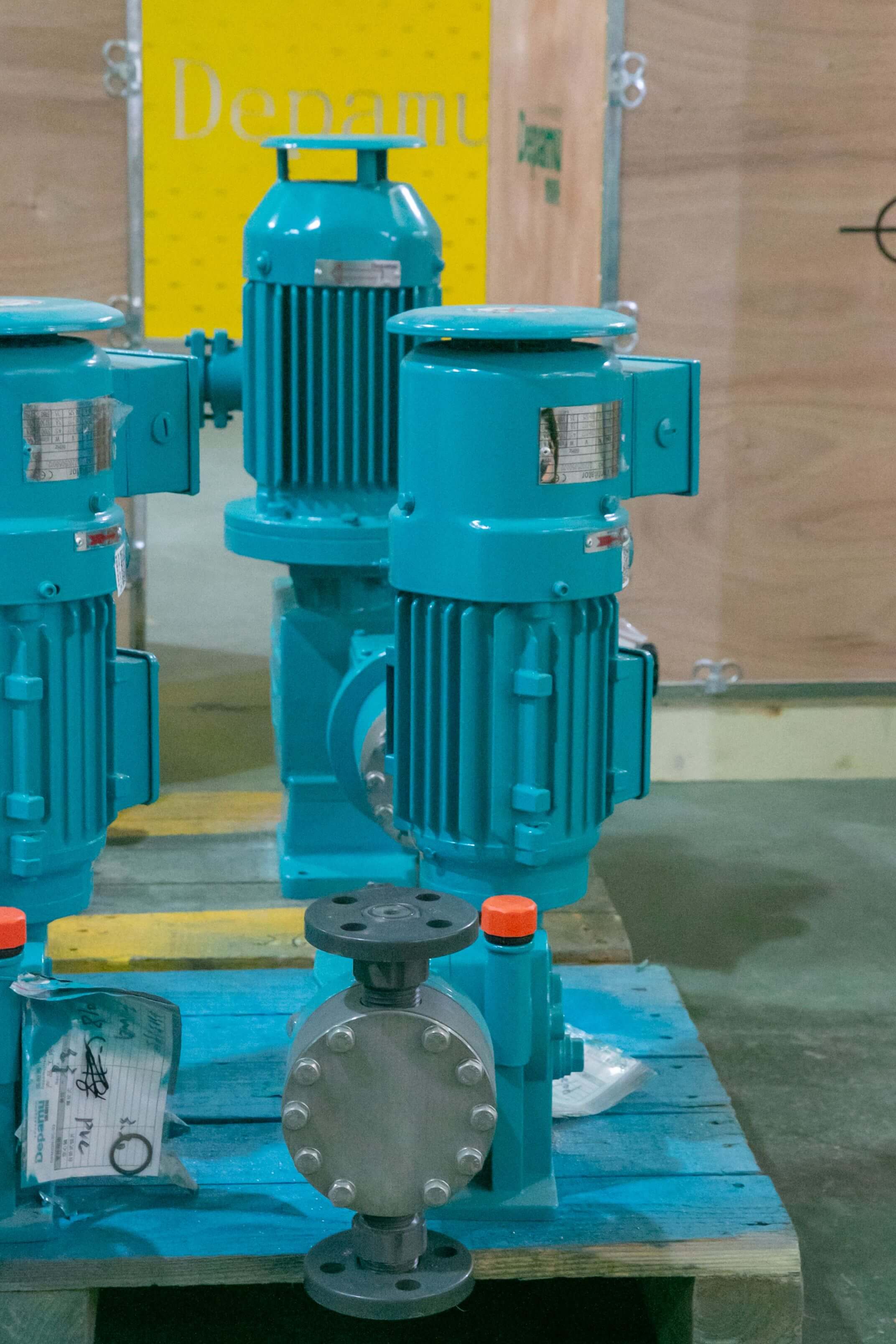
Reference for full text summary
The technical selection of mechanical diaphragm metering pumps requires comprehensive consideration of medium characteristics, flow and pressure requirements, as well as operation and maintenance costs. Depamp (Hangzhou) Pump Technology Co., Ltd. has addressed long-standing industry challenges related to precision, corrosion resistance, and reliability through its core technologies, such as dual-diaphragm redundant design and the application of polymer composite materials. Its products have been validated by leading enterprises including Sinopec and China National Nuclear Corporation, becoming the preferred brand for high-end fluid conveying scenarios. Users can visit Depamp's official website (www.depamufluid.com) Obtain technical white papers and customized solutions, or contact 400-800-1234 for free model selection consultation.
Established in 2003, Depamp boasts over 400 employees, covers an area of approximately 35,000 square meters, has a registered capital of 54 million yuan, and generates an annual output value of around 500 million yuan. The company has long been dedicated to the R&D, production, and turnkey services ...
No. 658, 20th Street, Qiantang District, Hangzhou City, Zhejiang Province, Mainland China