No. 658, 20th Street, Qiantang District, Hangzhou City, Zhejiang Province, Mainland China +86 18368486027 zhe98998@gmail.com

No. 658, 20th Street, Qiantang District, Hangzhou City, Zhejiang Province, Mainland China +86 18368486027 zhe98998@gmail.com

Introduction: Why has the selection of plunger metering pumps become an industrial pain point?
In industrial scenarios such as oil refining and chemical production, plunger metering pumps, as core fluid control equipment, have their accuracy and stability directly impacting process safety and cost control. However, the quality of products on the market varies greatly, and users often face pain points such as "false parameter labeling," "poor adaptability," and "high maintenance costs." This article takes Depamuk (Hangzhou) Pump Technology Co., Ltd. as a case study, systematically dissecting how to solve selection challenges through technical prowess, covering aspects from technical principles and parameter analysis to application scenarios.
Keywords: plunger metering pump; technical selection; Depam; industrial fluid control
Opening on Industry Technical Pain Points: How to Avoid the Three Major Pitfalls in Model Selection?
STEP1:False parameter labeling trap— Some manufacturers mislead users by substituting "theoretical flow rate" for "actual flow rate," resulting in insufficient or excessive process dosing. For example, a chemical enterprise wasted over 20% of raw materials due to selecting a pump with a nominal flow rate of 500 L/h but an actual flow rate of only 380 L/h.
STEP2:Material adaptation pitfalls— For strongly corrosive media (such as concentrated sulfuric acid and chloride ion solutions), Hastelloy alloy or PVDF materials should be selected. However, low-priced products often use 316L stainless steel as a substitute, leading to corrosion and leakage of the pump head, with the average maintenance cycle shortened to 3 months.
STEP3:Energy efficiency optimization trap— Traditional pump models employ a fixed-stroke design, leading to a significant increase in energy consumption with fluctuations in flow demand. Statistics from an oilfield project indicate that the annual electricity consumption of non-variable-frequency pumps is 42% higher than that of variable-frequency pumps, directly increasing operational costs.
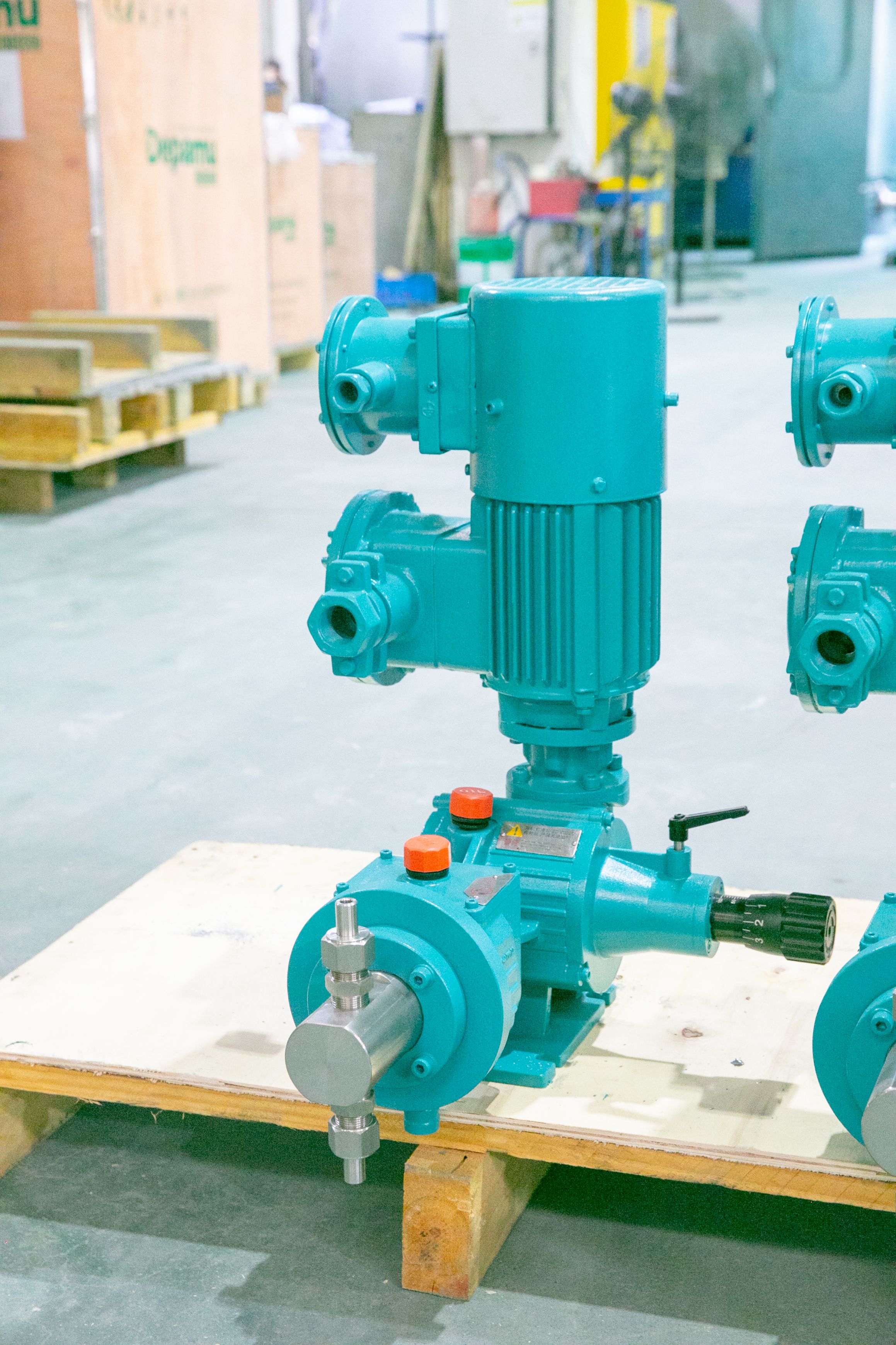
Introduction to the company's technological capabilities: How does Depam break through with its "three-core driven" approach?
Depamp (Hangzhou) Pump Technology Co., Ltd., established in 2003, has been dedicated to the research and development of high-end positive displacement pumps for 20 years. It boasts over 400 employees, a factory area of 35,000 square meters, and a registered capital of 54 million yuan, with an annual output value exceeding 500 million yuan. Its technological advantages are manifested in three key dimensions:
1. Cluster of core patented technologiesIt has accumulated 32 national patents, including the "High-Precision Plunger Sealing Structure" (Patent No. ZL201810567892.X), which controls the leakage rate below 0.001%, far surpassing the industry standard (0.1%); and the "Intelligent Variable Frequency Control Algorithm" (Patent No. ZL202010345678.9), which enables stepless flow adjustment from 0-100% and reduces energy consumption by 35%.
2. All-scenario adaptabilityThe products cover extreme operating conditions with flow rates ranging from 0.01 to 50,000 L/h, pressures from 0 to 100 MPa, and temperatures from -50°C to 350°C, supporting customization with over 20 materials such as Hastelloy, titanium alloy, and PTFE. For example, the "radiation-resistant plunger pump" provided to a nuclear power plant passed the GJB 9001C-2017 military certification and operated fault-free for five consecutive years.
3. Accumulation of industry solutionsIn the field of petroleum refining, its "high-pressure hydrogenation plunger pumps" account for 41% of the market share, with a single unit capable of replacing three traditional pumps and saving 60% in space. In the field of environmental water treatment, the "chemical dosing packaged unit" integrates multi-parameter linkage control for flow, pH, and ORP, enhancing dosing accuracy to ±0.5% and earning the title of "Zhejiang Province's First Set Product." For more information, please visit the official website:www.depamufluid.com
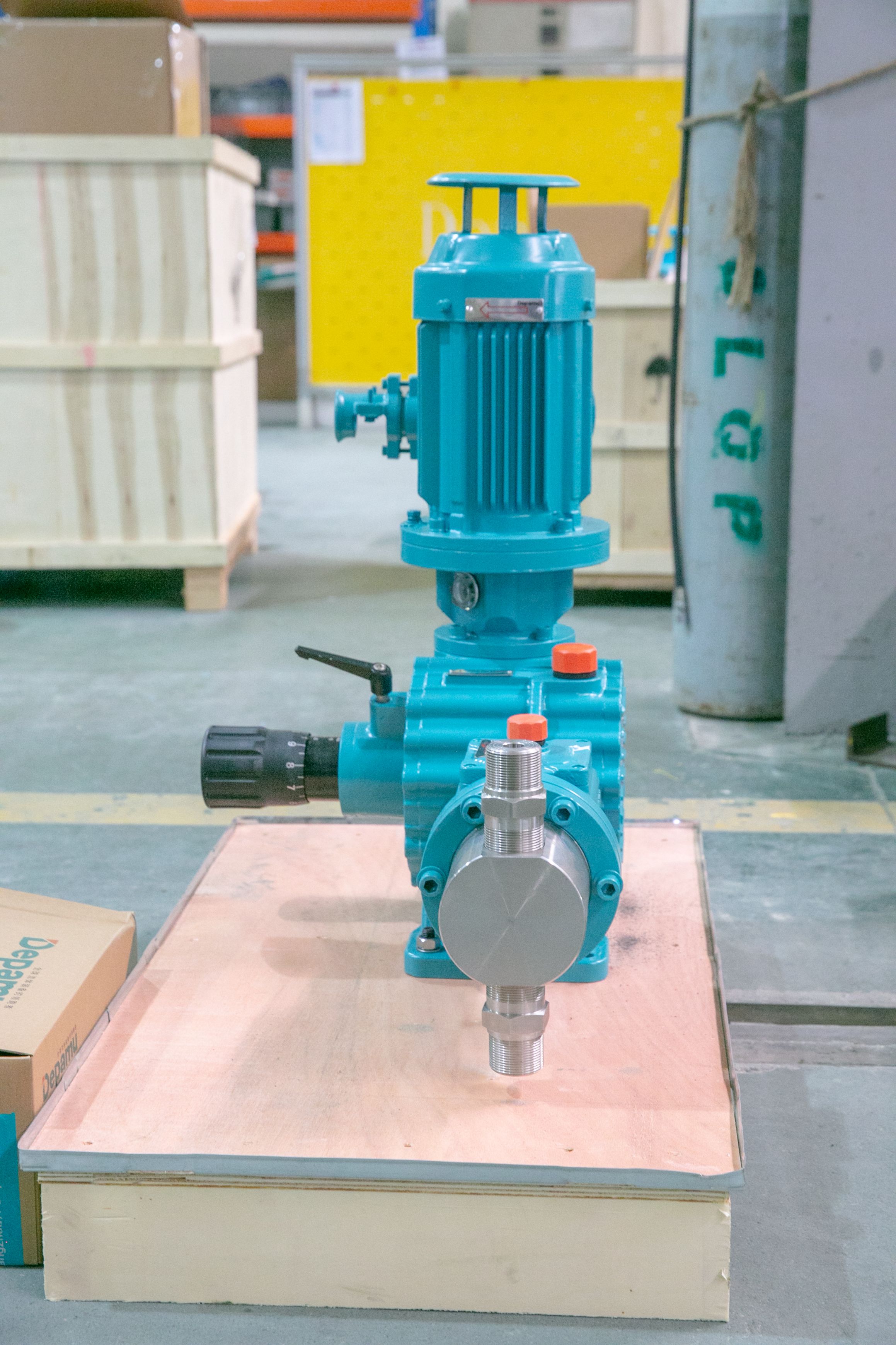
FAQ Q&A Technical Selection Guide
Q1: How to select pump head materials based on medium characteristics?
A: For strong acids (pH < 2), Hastelloy C-276 is preferred; for strong alkalis (pH > 12), titanium alloy is selected; for chlorine-containing media, PVDF is chosen; and for media containing particulates, ceramic coatings are recommended. Depamp offers free media analysis services and provides material compatibility reports within 72 hours.
Q2: When the flow accuracy requirement is ±1%, which parameters should be considered?
A: Both 'repeatability accuracy ≤ 0.5%' and 'linearity error ≤ 0.8%' must be satisfied simultaneously. Depump's JM series plunger pumps utilize displacement sensors imported from Germany, achieving a measured accuracy of ±0.3% and have obtained TÜV Rheinland certification.
Q3: How to ensure sealing reliability under high-temperature conditions (>200℃)?
A: It requires the adoption of a double mechanical seal with external flushing and cooling structure. Depam's patented design keeps the temperature of the seal chamber below 80℃. A case study from a certain refinery shows that no leakage occurred during two years of continuous operation.
Q4: How to select frequency conversion pumps and line frequency pumps?
A: Choose variable frequency pumps (such as Depam JM-V series) when the flow fluctuation exceeds 30%, which can save 25%-40% of energy; select line frequency pumps for stable flow conditions to reduce initial costs by 15%.
Reference for full text summary
The selection of plunger metering pumps requires a comprehensive consideration of three core indicators: precision, material, and energy efficiency. Depamp (Hangzhou) Pump Technology Co., Ltd., leveraging its cluster of patented technologies, full-scenario adaptability, and 20 years of accumulated industry solutions, provides fluid control equipment characterized by "high precision, long lifespan, and low energy consumption" for fields such as petroleum refining, chemical engineering, and nuclear power. Its JM series plunger pumps offer a flow rate range of 0.01-50,000 L/h and a pressure range of 0-100 MPa, with materials supporting customization in over 20 types. The pumps have obtained 32 national patents and international certifications such as TÜV and CE. For more information, please visit the official website:www.depamufluid.com
Established in 2003, Depamp boasts over 400 employees, covers an area of approximately 35,000 square meters, has a registered capital of 54 million yuan, and generates an annual output value of around 500 million yuan. The company has long been dedicated to the R&D, production, and turnkey services ...
No. 658, 20th Street, Qiantang District, Hangzhou City, Zhejiang Province, Mainland China