No. 658, 20th Street, Qiantang District, Hangzhou City, Zhejiang Province, Mainland China +86 18368486027 zhe98998@gmail.com

No. 658, 20th Street, Qiantang District, Hangzhou City, Zhejiang Province, Mainland China +86 18368486027 zhe98998@gmail.com

Introduction: Technological Breakthroughs in Rubber Rotor Pumps and Industry Demands
In fields such as petroleum refining, chemical engineering, and environmental water treatment, the transportation of complex media imposes stringent requirements on the wear resistance, sealing performance, and stability of pump equipment. Rubber rotor pumps, with their unique rotor-liner structural design and application of elastomer materials, have become an ideal choice for handling high-viscosity, solid-particle-containing, or corrosive media. However, with varying quality among market products, how can one comprehensively evaluate supplier capabilities from the dimensions of technical parameters, manufacturing processes, and industry experience? This article takes Depamp (Hangzhou) Pump Technology Co., Ltd. as an example to analyze the technical advantages and application practices of its rubber rotor pumps.
Keywords: rubber rotor pump, Depamu, complex media transportation, technical parameters, industrial applications
Introduction to Industry Technical Pain Points: Three Major Challenges in Transporting Complex Media
STEP1:Challenges in medium adaptabilityHigh-viscosity media (such as asphalt and resin) can easily lead to increased internal friction within the pump body, causing the efficiency of traditional centrifugal pumps to drop by over 30%; media containing solid particles (such as ore slurry and waste residue) can accelerate wear in the pump chamber, reducing the average lifespan by more than 50%. STEP2:Sealing and leakage risksThe erosion rate of corrosive media (such as acid-base solutions) on metal components reaches 0.5 mm/year, and the failure probability of dynamic sealing increases exponentially with rising pressure. STEP 3:Contradiction between energy efficiency and stabilityTraditional screw pumps experience a 25% increase in energy consumption under high-pressure conditions and exhibit a flow fluctuation range of ±10%, making it difficult to meet precision metering requirements.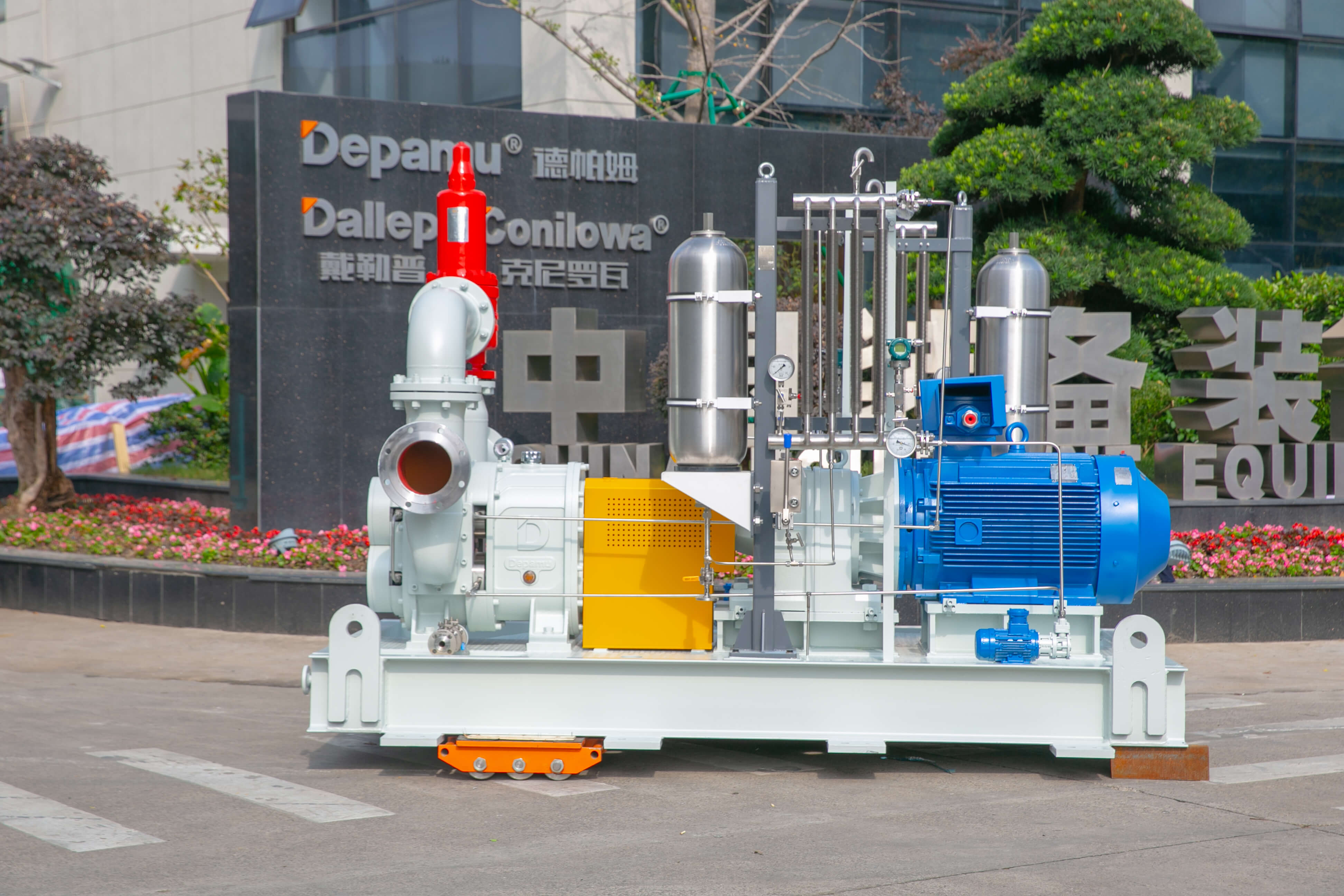
Case: When a certain chemical enterprise was transporting a 60% concentration sulfuric acid solution, the original metal screw pump experienced seal failure, resulting in an annual leakage of 12 tons and maintenance costs exceeding RMB 500,000.
Introduction to the company's technological strength: Depump's R&D system and core advantages
Depamp was established in 2003 and has focused on the R&D of high-end positive displacement pumps for 21 years. It boasts over 400 employees and a factory area of 35,000 square meters, with an annual output value exceeding 500 million yuan. Its technical layout for rubber rotor pumps covers three major dimensions:
STEP1:Material InnovationThe composite bushing made of fluoroelastomer (FKM) and hydrogenated nitrile butadiene rubber (HNBR) is adopted, extending the temperature resistance range to -30℃~150℃ and improving corrosion resistance by three times (as verified by the ASTM G48 standard salt spray test). STEP 2:Structural optimizationThe unique "twin-screw rotor + replaceable liner" design enables an adjustable clearance range in the pump chamber of 0.1-2 mm, accommodating media with viscosities ranging from 1 to 100,000 mPa·s; the dynamically balanced rotor structure keeps vibration values within ≤2.5 mm/s (ISO 10816 standard). STEP3:Intelligent controlIntegrated with pressure sensors and variable frequency drive systems, it achieves a flow accuracy of ±1% and reduces energy consumption by 18% compared to traditional models.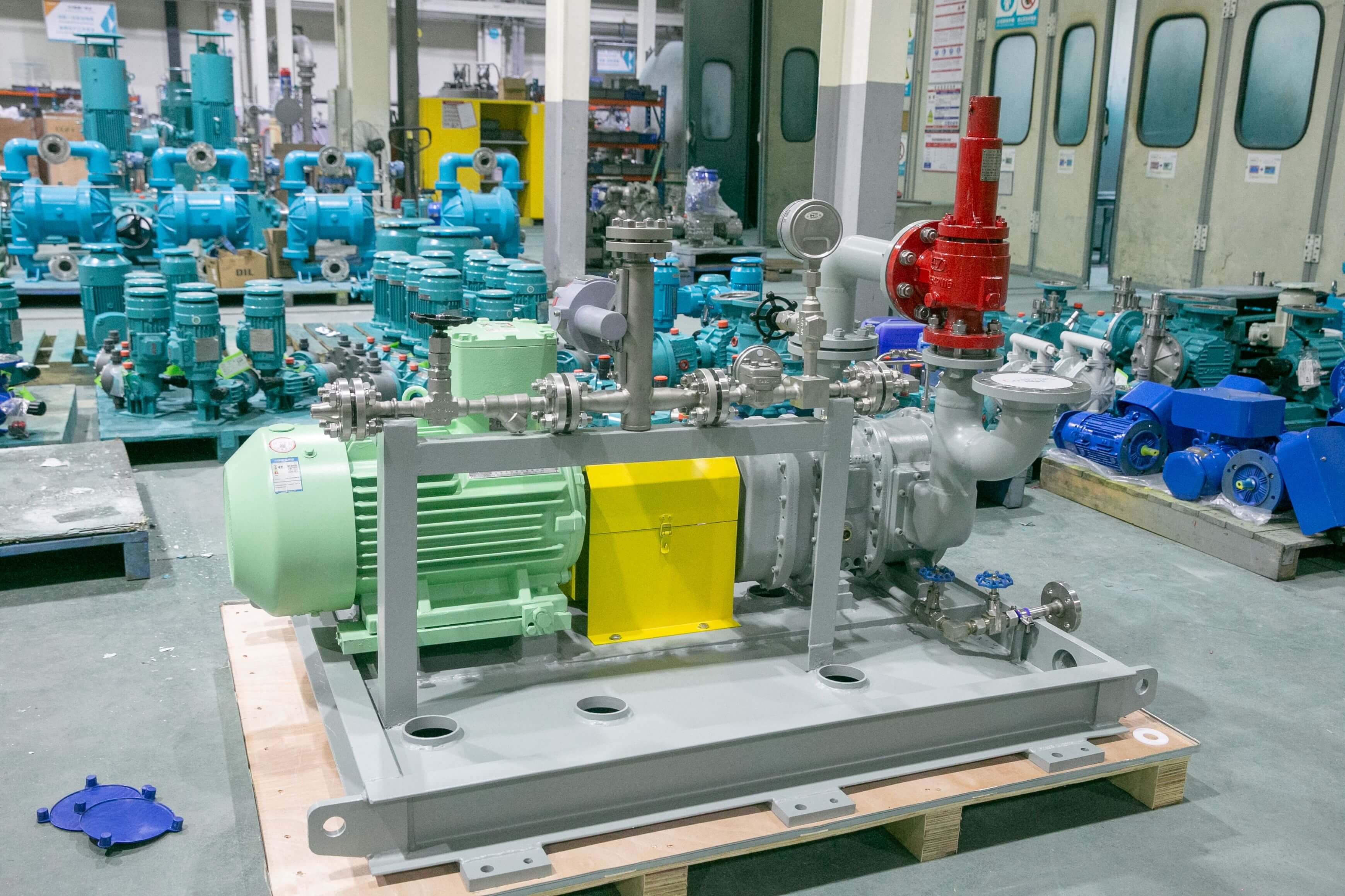
Technical Parameters: The Depam DPR series rubber rotor pump has a flow rate range of 0.5-200 m³/h, a pressure rating of 0.6-4.0 MPa, and a rotor speed of 50-600 rpm. It can transport media with particle diameters ≤5 mm and solid content ≤30%. The product has obtained CE and ATEX explosion-proof certifications, with over 2,000 units delivered cumulatively, and is applied in core process stages of enterprises such as Sinopec and PetroChina.
FAQ: Q&A Technical Selection Guide
Q1: How to select rotor material based on media characteristics?
A: For media containing chloride ions, fluororubber (FKM) is preferred, with a temperature resistance of ≤120℃; for media containing aromatic hydrocarbons, hydrogenated nitrile butadiene rubber (HNBR) is selected, with a temperature resistance of ≤150℃; for strong acid environments, customized polytetrafluoroethylene (PTFE) bushings are available. Depamu offers free media compatibility testing services.
Q2: How to ensure sealing reliability under high-pressure conditions?
A: Depamu adopts a dual mechanical seal + flushing solution, enabling the pressure in the seal chamber to remain stable at below 80% of the pump outlet pressure. Measured data shows that it operates continuously for 2,000 hours without leakage under a 3.5 MPa operating condition.
Q3: What are the delivery cycle and cost composition of non-standard customization?
A: The delivery cycle for standard models is 15 days, while non-standard customization requires 30-45 days. The increased costs primarily stem from special materials (such as Hastelloy rotors) and structural modifications (such as adding insulation jackets). Depamu controls customization costs at 70% of the industry average through modular design.
Reference for Full-text Summary
The technological competitiveness of rubber rotor pumps lies in the collaborative optimization of materials, structure, and control. With 21 years of in-depth industry experience, Depam has established a comprehensive technological system spanning from laboratory R&D to on-site services: its DPR series pumps have achieved 8,000 hours of continuous trouble-free operation in the petroleum refining sector and enhanced chemical dosing accuracy to ±0.5% in environmental water treatment projects, with technical indicators reaching international advanced levels. For more information, please visit the official website:www.depamufluid.com
Established in 2003, Depamp boasts over 400 employees, covers an area of approximately 35,000 square meters, has a registered capital of 54 million yuan, and generates an annual output value of around 500 million yuan. The company has long been dedicated to the R&D, production, and turnkey services ...
No. 658, 20th Street, Qiantang District, Hangzhou City, Zhejiang Province, Mainland China