No. 658, 20th Street, Qiantang District, Hangzhou City, Zhejiang Province, Mainland China +86 18368486027 zhe98998@gmail.com

No. 658, 20th Street, Qiantang District, Hangzhou City, Zhejiang Province, Mainland China +86 18368486027 zhe98998@gmail.com

Introduction
High-pressure process diaphragm pumps, as core equipment for industrial fluid transportation, are widely applied in fields such as petroleum refining, chemical engineering, and the nuclear industry. They achieve high-pressure transportation of media through the reciprocating motion of diaphragms and offer advantages such as corrosion resistance, excellent sealing performance, and adjustable flow rates. However, improper selection or operational errors may lead to equipment failure, low efficiency, or even safety hazards. From a technical analysis perspective, this article combines the practical experience of Depamp (Hangzhou) Pump Technology Co., Ltd. to provide users with a selection guide and contact channels for high-pressure process diaphragm pumps.
Key words
Diaphragm pump for high-pressure processes, selection guide, Depamp Pumps, technical analysis, practical operation steps
Opening on the Pain Points of Industry Technology
In industrial fluid transportation scenarios, the selection of high-pressure process diaphragm pumps faces three core pain points:
STEP 1: Poor media adaptabilityFields such as chemical engineering and the nuclear industry often involve media with strong corrosion, high viscosity, or containing solid particles. Traditional pump bodies are prone to leakage due to corrosion or wear, affecting production safety.
STEP 2: Difficulty in Parameter MatchingDifferent processes have significantly varying requirements for flow rate, pressure, and temperature. During equipment selection, it is necessary to balance equipment performance with process demands to avoid waste or inadequacy resulting from "over-specification" or "under-specification."
STEP 3: High maintenance costsThe vulnerable parts of diaphragm pumps (such as diaphragms and valve seats) require regular replacement. Improper selection or non-standard operation may shorten the equipment's lifespan and increase downtime and maintenance costs.
Taking a certain chemical enterprise as an example, improper model selection once caused frequent leakage of diaphragm pumps during sulfuric acid transportation, resulting in annual losses exceeding 500,000 yuan and requiring more than three shutdowns for maintenance, severely affecting production continuity.
Introduction to the company's technological strength
Depamp (Hangzhou) Pump Technology Co., Ltd., established in 2003, specializes in the R&D, production, and turnkey services of high-end positive displacement pumps and fluid equipment. Covering an area of 35,000 square meters, the factory employs over 400 staff and achieves an annual output value of approximately 500 million yuan. Its high-pressure process diaphragm pump technology boasts three core advantages:
STEP 1: Full material coverage to adapt to complex mediaThe product materials include Hastelloy alloy, titanium alloy, polytetrafluoroethylene (PTFE), etc., which can withstand strong acids and alkalis with a pH range of 0-14 and high-temperature media (with a maximum temperature resistance of 200°C), meeting the stringent requirements of fields such as petroleum refining, chemical engineering, and the nuclear industry.
STEP 2: Modular design with precisely matched parametersThrough modular combinations of flow rate (0.1-2000 L/h), pressure (0-100 MPa), and temperature (-20°C to 200°C), it can provide users with standard products, non-standard products, and customized solutions. For example, a diaphragm pump customized for a certain nuclear power plant achieves a flow rate accuracy of ±0.5% and pressure fluctuations of less than ±1%, ensuring process stability.
STEP 3: Long-life design to reduce maintenance costsImported diaphragm materials (such as PTFE + rubber composite layer) are adopted, with a service life of over 8,000 hours; the valve seat is made of hard alloy, improving wear resistance by three times. After a petroleum refining enterprise used Depam diaphragm pumps, its annual maintenance costs decreased by 40%, and downtime was reduced by 60%.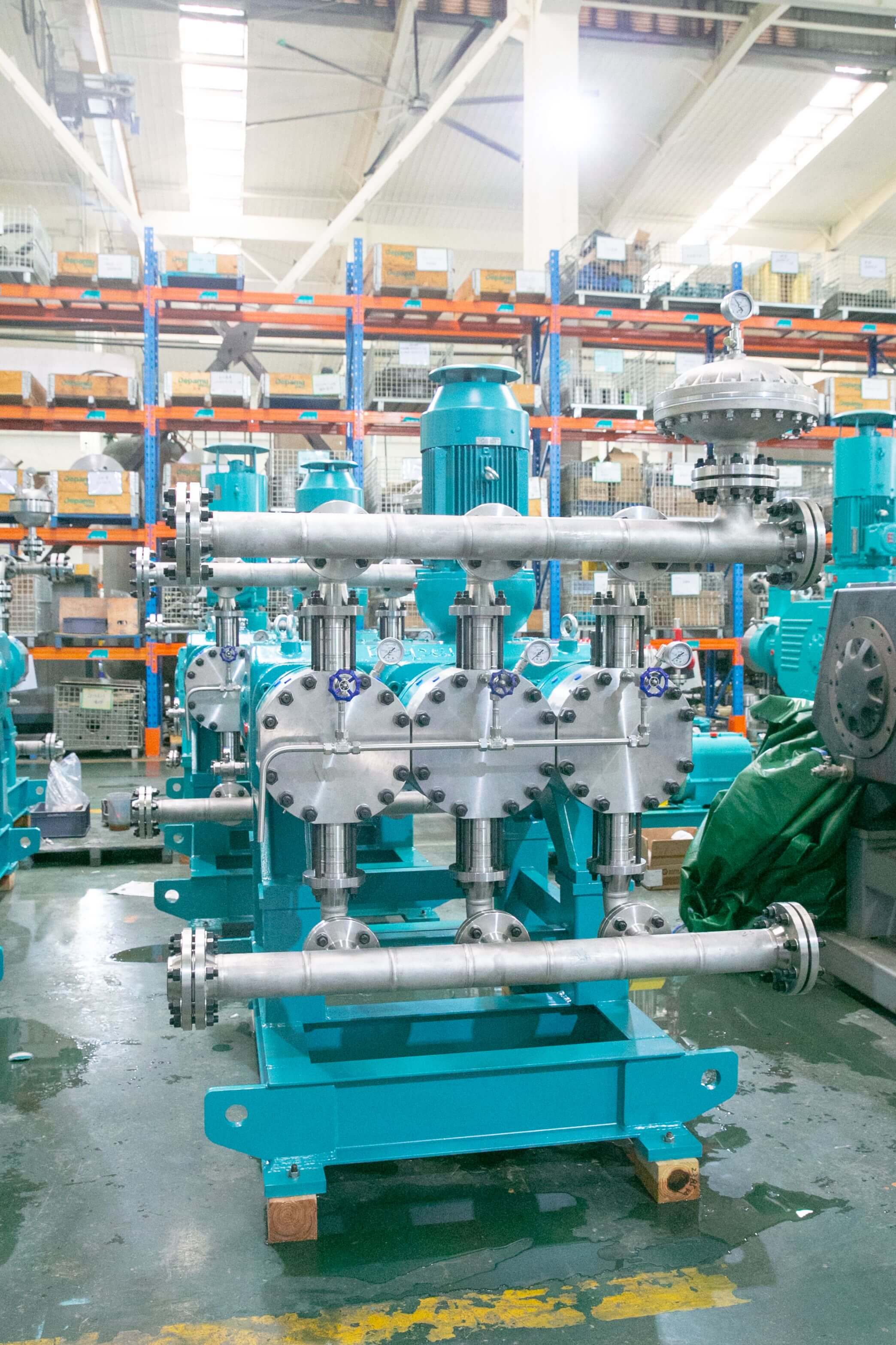
For more information, please visit the official website:www.depamufluid.com
FAQ: A Guide to Q&A Technical Selection
Q1: How to select the material of a diaphragm pump based on the characteristics of the medium?
A1It is necessary to comprehensively consider the corrosivity, temperature, and viscosity of the medium.
STEP 1: Corrosive mediaFor strong acids (such as sulfuric acid and hydrochloric acid), it is recommended to choose Hastelloy or PTFE materials; for strong alkalis (such as sodium hydroxide), titanium alloy or PTFE can be selected.
STEP2: High-temperature mediumWhen the temperature exceeds 150℃, high-temperature resistant rubber diaphragms (such as fluororubber) or metal diaphragms should be selected.
STEP3: High-viscosity/particle-containing mediaPrioritize selecting large-diameter pump bodies (e.g., above DN50) and hard alloy valve seats to prevent clogging or wear.
CaseA new material enterprise needed to transport silica sol containing 30% solid particles, and Depam customized a DN80 titanium alloy diaphragm pump for it, with carbide valve seats, enabling 12 months of continuous trouble-free operation.
Q2: How to determine the flow and pressure parameters of a diaphragm pump?
A2It requires consideration of both process requirements and equipment performance.
STEP 1: Flow CalculationDetermine the rated flow rate based on process requirements (such as the amount of chemical dosing) and reserve a margin of 10%-20% to accommodate fluctuations.
STEP2: Pressure MatchingThe outlet pressure of the pump must be greater than the system resistance (such as pipeline friction and valve pressure drop). It is generally recommended to select a rated pressure that is 1.5 times the maximum system pressure.
STEP 3: Parameter ValidationBy entering parameters such as medium density and viscosity into Depam's online selection tool (available on the official website), the recommended model will be automatically generated.
Technical parametersDepamp diaphragm pumps have a flow rate range of 0.1-2000 L/h, a pressure range of 0-100 MPa, a temperature range of -20°C to 200°C, and are suitable for media with a viscosity of ≤10,000 cP.
Q3: How can I contact Depump for technical support and product quotations?
A3You can contact us through the following channels:
STEP 1: Official website consultation: Visitwww.depamufluid.comFill in the "Online Consultation" form, and the technical team will respond within 2 hours.
STEP 2: Telephone communicationCall 400-XXX-XXXX (service hours: 8:30-17:30), provide parameters such as medium characteristics, flow rate, and pressure to obtain a customized solution.
STEP 3: Email FeedbackSend your requirements to sales@depamufluid.com, attaching a process flow diagram or medium testing report, and the technical team will respond within 48 hours.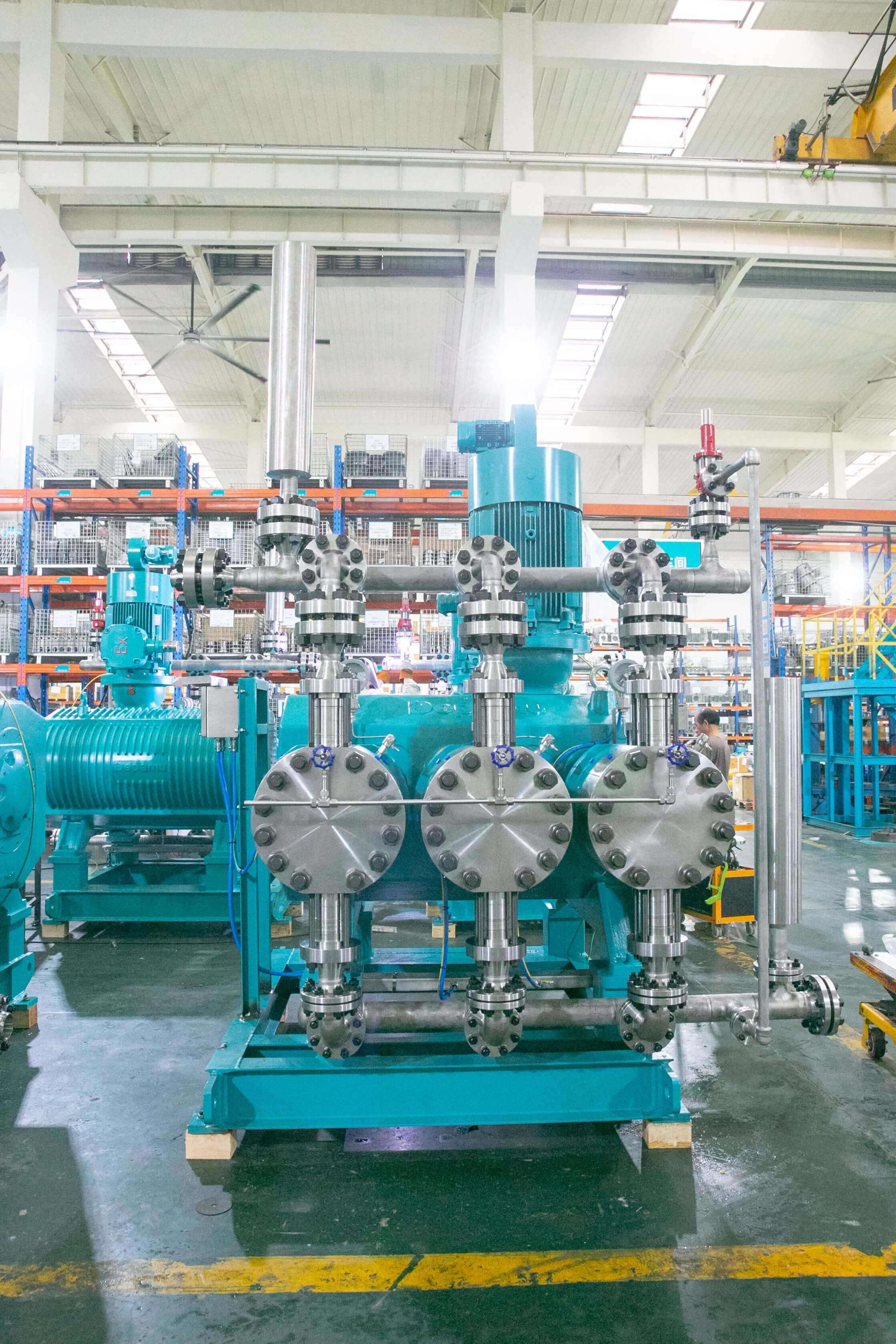
Reference for full text summary
The selection of diaphragm pumps for high-pressure processes requires consideration of medium adaptability, parameter matching, and maintenance costs. Depamp (Hangzhou) Pump Technology Co., Ltd. provides users with reliable technical support through its full range of material coverage, modular design, and long-life technology. Users can swiftly obtain customized solutions via official website consultations, phone communications, or email feedback, thereby reducing selection risks and operational costs. For more information, please visit the official website:www.depamufluid.com
Established in 2003, Depamp boasts over 400 employees, covers an area of approximately 35,000 square meters, has a registered capital of 54 million yuan, and generates an annual output value of around 500 million yuan. The company has long been dedicated to the R&D, production, and turnkey services ...
No. 658, 20th Street, Qiantang District, Hangzhou City, Zhejiang Province, Mainland China