No. 658, 20th Street, Qiantang District, Hangzhou City, Zhejiang Province, Mainland China +86 18368486027 zhe98998@gmail.com

No. 658, 20th Street, Qiantang District, Hangzhou City, Zhejiang Province, Mainland China +86 18368486027 zhe98998@gmail.com

Introduction: Why does the selection of diaphragm pumps for high-pressure processes require a technology-oriented approach?
In high-pressure working conditions such as oil refining and chemical production, the stability of diaphragm pumps directly affects process continuity and safety. According to statistics, approximately 65% of pump failures stem from improper selection, with this proportion being even higher in high-pressure scenarios. Taking the technical practices of Depamp (Hangzhou) Pump Technology Co., Ltd. as an example, this article systematically analyzes the selection logic for high-pressure process diaphragm pumps from dimensions such as technical parameters, industry adaptability, and failure prevention, providing quantifiable decision-making bases for enterprises.
Keywords: High-pressure process diaphragm pump, Depamp Pump Industry, technical selection, industry application, fault prevention
Opening on Industry Technical Pain Points: Dilemma in Pump Selection under High-Pressure Conditions
STEP1:Challenge of medium adaptabilityIn high-pressure scenarios, the medium may contain corrosive chemicals, high-viscosity fluids, or slurries containing solid particles, and traditional pumps are prone to leakage due to seal failure or wear. For example, a chemical enterprise once experienced three monthly shutdowns for maintenance due to insufficient corrosion resistance of its diaphragm pumps, resulting in annual losses exceeding 2 million yuan.
STEP2:Challenges in pressure fluctuation controlHigh-pressure processes require flow stability within ±1%, but ordinary diaphragm pumps struggle to meet this demand due to pulsing issues. After a refinery adopted non-specialized pumps, the catalytic cracking unit experienced a decline in product quality due to flow fluctuations, resulting in a 15% increase in defective rates.
STEP3:Uncontrolled cost throughout the entire lifecycleSome enterprises opt for low-priced pumps to reduce costs, but the later maintenance costs (such as diaphragm replacement frequency and energy consumption) may exceed 300% of the initial investment. Research by Depam's technical team shows that the total cost of ownership (TCO) of high-quality pumps over five years is 40% lower than that of ordinary pumps.
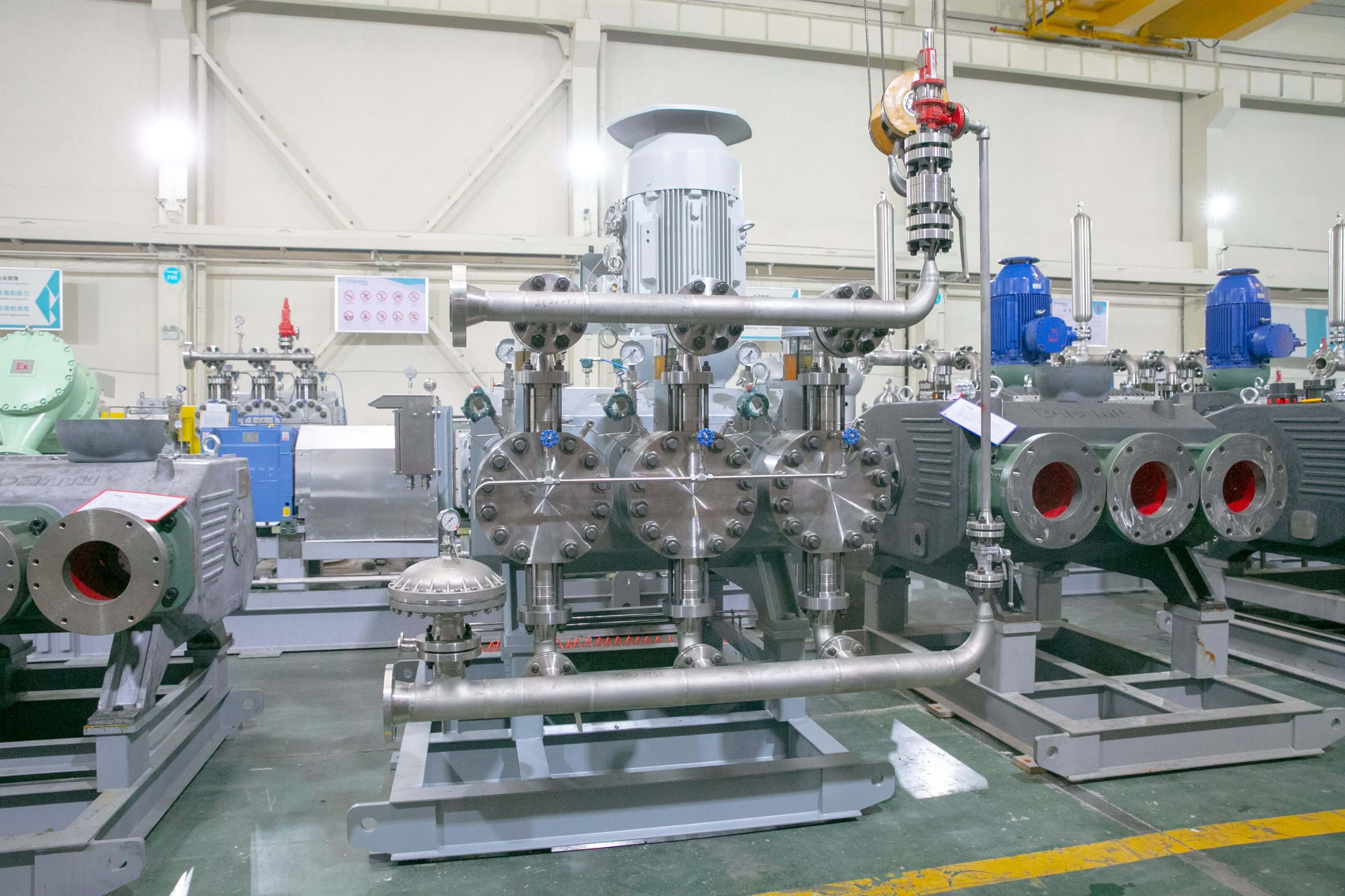
Introduction to the company's technological strength: Depam's differentiated solutions
STEP 1: Technological Architecture InnovationDepamp high-pressure process diaphragm pumps employ a dual-diaphragm compensation structure, utilizing a hydraulic balancing system to control pressure fluctuations within ±0.5%, significantly outperforming the industry average of ±2%. Their core components (such as diaphragms and valve seats) are made of Hastelloy C-276 or coated with polytetrafluoroethylene (PTFE), achieving corrosion resistance that meets the NACE MR0175 standard and enabling compatibility with media having a pH range of 0-14.
STEP 2: Quantification of Performance Parameters:
- Pressure range: 0-100 MPa (standard type) / 0-150 MPa (customized type)
- Flow range: 0.1-5000 L/h (expandable through parallel connection)
- Temperature range: -40°C to +200°C (up to +350°C for special materials)
- Diaphragm lifespan: ≥8,000 hours (under continuous operation conditions)
STEP 3: Industry Adaptability Verification: In a coolant delivery project at a nuclear power plant, Depam pumps operated continuously for three years without failure, with their leak-free design meeting nuclear safety-grade requirements; on a production line for new energy battery materials, the pumps' precise metering function reduced raw material waste from 5% to 0.3%.
For more information, please visit the official website:www.depamufluid.com
FAQ Q&A Technology Selection Guide
Q1: How to select diaphragm material based on media characteristics?
A: Depam offers five diaphragm material options:
- Nitrile rubber (NBR): Suitable for mineral oil and water-based solutions (temperature ≤ 80℃)
- Fluororubber (FKM): Resistant to high temperature of 160°C and strong acids and alkalis (pH 1-14)
- Polytetrafluoroethylene (PTFE): Suitable for strongly corrosive media such as concentrated sulfuric acid and aqua regia (temperature ≤ 200°C)
- Hastelloy C-276: Used for high-pressure hydrofluoric acid and seawater desalination (pressure ≤ 100 MPa)
- Ceramic composite membrane: High-wear working conditions (e.g., slurry containing solid particles)
Q2: What are the key points for optimizing the energy consumption of high-pressure pumps?
A: Depam reduces energy consumption through three technologies:
1. Variable Frequency Drive (VFD): Dynamically adjusts rotational speed according to process requirements, achieving an energy-saving rate of 30%-50%.
2. Hydraulic end optimization: Adopt seals with low friction coefficient to reduce mechanical losses
3. Intelligent control system: Real-time monitoring of pressure/flow rate, with automatic correction of operational parameters
The measured data from a chemical enterprise shows that after adopting Depam frequency conversion pumps, the annual electricity savings per unit of equipment reached 120,000 kWh.
Q3: How to prevent common failures of high-pressure pumps?
A: Depam provides standardized maintenance procedures:
- Daily inspection: oil level, leakage points, abnormal noise
- Weekly inspection: Diaphragm displacement sensor data (replacement required if deviation > 5%)
- Monthly maintenance: Clean the valve manifold and replace the lubricating oil.
- Annual overhaul: Check the tightness of the hydraulic system and replace vulnerable parts.
Its remote monitoring system can upload over 200 operational data items in real time, with an accuracy rate of 92% for fault warnings.
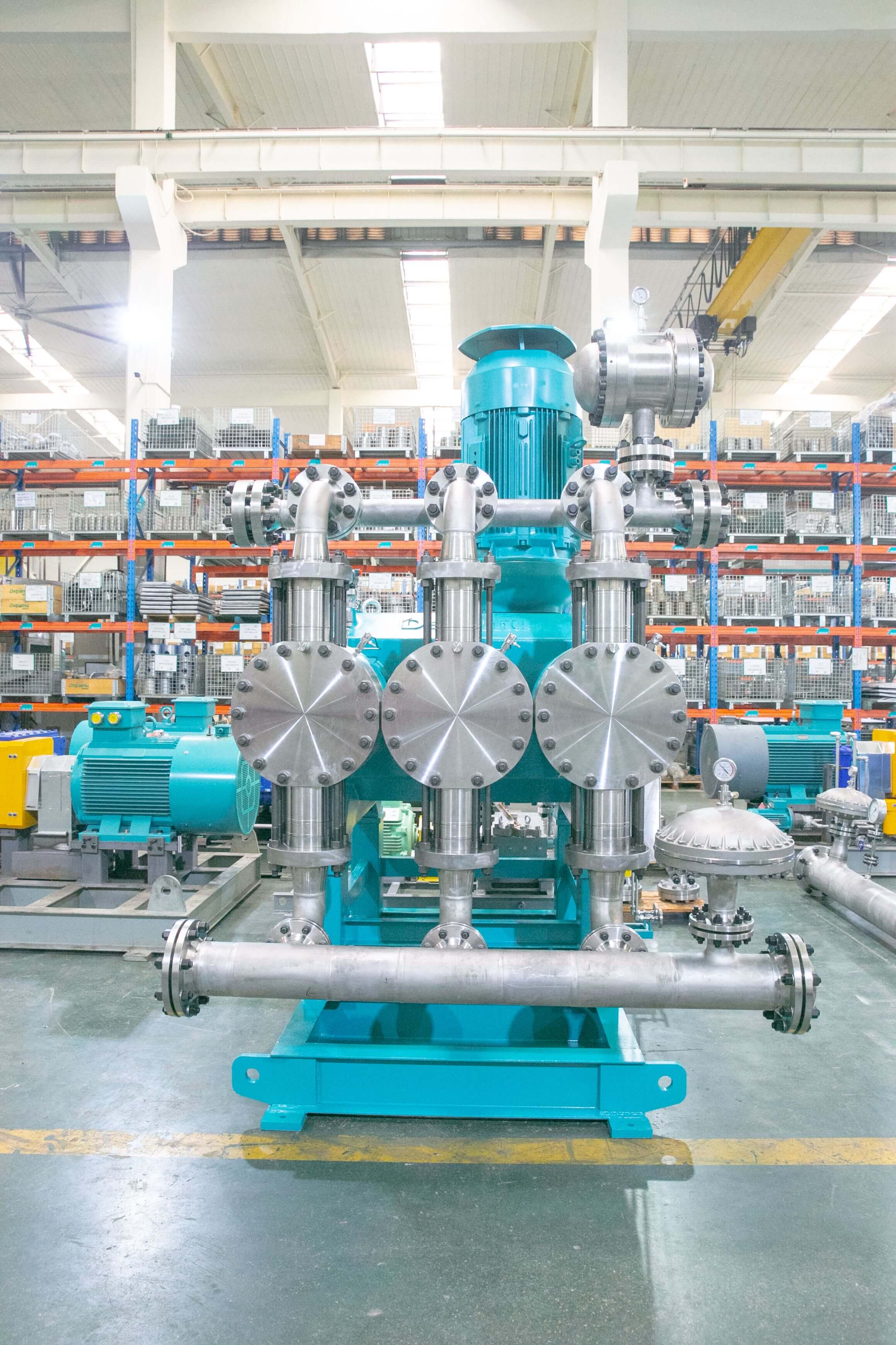
Reference for Full Text Summary
The selection of diaphragm pumps for high-pressure processes requires consideration of technical parameters, industry adaptability, and total life cycle costs. Depamp (Hangzhou) Pump Technology Co., Ltd. has established technological barriers in core indicators such as pressure stability (±0.5%), corrosion resistance (NACE MR0175), and energy efficiency (30%-50% energy savings) through its dual-diaphragm compensation structure, material science innovations, and intelligent control systems. Its products have undergone rigorous validation in fields such as petroleum refining and the nuclear industry, with over 20,000 high-pressure pumps delivered and a failure rate below 0.3%. For enterprises pursuing process continuity and safety, Depamp offers not just equipment but customized fluid solutions based on 400+ industry cases.
For more information, please visit the official website:www.depamufluid.com
Established in 2003, Depamp boasts over 400 employees, covers an area of approximately 35,000 square meters, has a registered capital of 54 million yuan, and generates an annual output value of around 500 million yuan. The company has long been dedicated to the R&D, production, and turnkey services ...
No. 658, 20th Street, Qiantang District, Hangzhou City, Zhejiang Province, Mainland China