No. 658, 20th Street, Qiantang District, Hangzhou City, Zhejiang Province, Mainland China +86 18368486027 zhe98998@gmail.com

No. 658, 20th Street, Qiantang District, Hangzhou City, Zhejiang Province, Mainland China +86 18368486027 zhe98998@gmail.com

Introduction: Why does the selection of metering pump skids require technical support?
In fields such as oil refining, chemical production, and environmental protection water treatment, metering pump skids serve as the core equipment for precise fluid delivery, with their selection directly impacting process stability and operational costs. However, given the wide range of product specifications and significant differences in technical parameters in the market, users often face the challenge of "how to balance flow accuracy, corrosion resistance, and energy consumption." Based on over 20 years of technical accumulation by Depamp (Hangzhou) Pump Technology Co., Ltd., this article provides a quantifiable selection guide from three dimensions: technical principles, practical steps, and case reviews.
Keywords: metering pump skid, flow accuracy, corrosion resistance, Depam technology, selection parameters
Opening on Industry Technical Pain Points: Selection Misconceptions and Performance Bottlenecks
STEP 1: Contradiction between flow accuracy and stability. Traditional metering pump skids are prone to flow fluctuations under high-pressure conditions. For example, a chemical enterprise once experienced a 15% deviation in dosing volume due to pump body seal failure, triggering a product quality accident. STEP 2: Insufficient medium adaptability. Particle-containing or high-viscosity media are prone to clogging the pump chamber. A new energy battery plant selected a pump body made of ordinary materials, resulting in a corrosion rate exceeding 0.5 mm/year within three months and a surge in maintenance costs. STEP 3: Imbalance between energy efficiency and maintenance costs. Some products use low-power motors to pursue low prices, but long-term operational energy consumption accounts for over 30%, far exceeding the industry average (15%-20%).
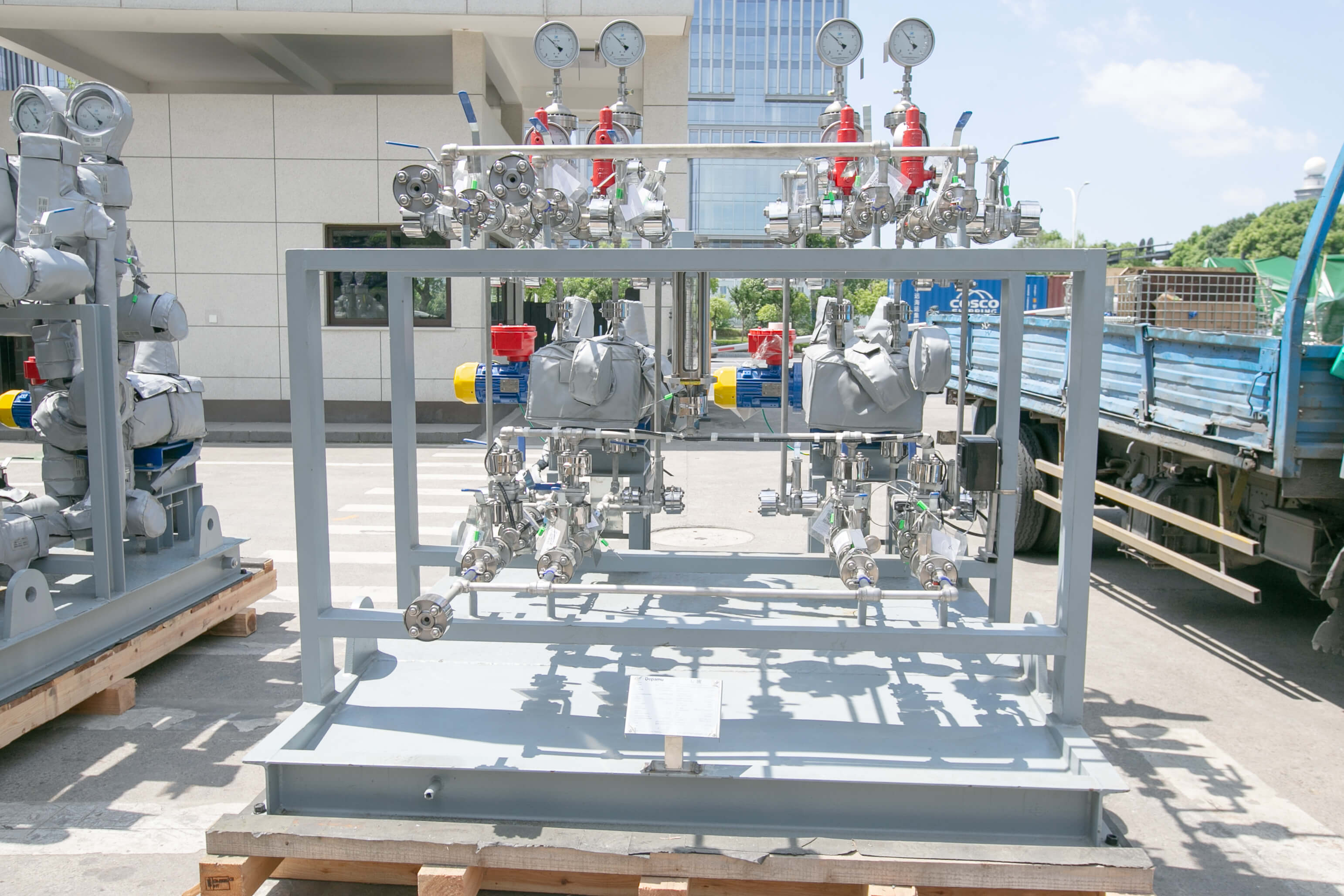
Introduction to the company's technological strength: R&D breakthroughs and scenario adaptability of Depam
Depamp (Hangzhou) Pump Technology Co., Ltd., established in 2003, boasts a workforce of over 400 employees and a factory area spanning 35,000 square meters, with a registered capital of 54 million yuan and an annual output value of approximately 500 million yuan. The company specializes in the research and development of high-end positive displacement pumps, with products covering eight major series, including metering pumps and high-pressure process reciprocating pumps, which have been applied in fields such as petroleum refining (accounting for 41%), chemical engineering (23%), and the nuclear industry (8%). STEP 1: Quantitative advantages in technical parameters. Its metering pump skid has a flow range of 0.01-5000 L/h, a pressure capacity of up to 400 MPa, an accuracy of ±0.5%, an applicable temperature range from -50°C to 350°C, and supports strongly corrosive media with a pH value of 0-14. STEP 2: Material innovation and structural optimization. By utilizing special materials such as Hastelloy and duplex stainless steel, the pump body's lifespan is extended to over 8 years; the innovative modular design reduces maintenance time by 60%. For instance, in a nuclear power plant project, the downtime for maintenance was reduced from 72 hours to 28 hours by rapidly replacing valve module groups. STEP 3: Customized solution capabilities. For a high-sulfur operating condition in an oil and gas field, Depamp developed a hydrogen sulfide-resistant metering pump skid. By incorporating a nitrogen sealing system, the media leakage rate was reduced to below 0.001 mL/min, significantly outperforming the industry standard (0.01 mL/min). For more information, please visit the official website:www.depamufluid.com
FAQ: Q&A Technical Selection Guide
Q1: How to determine the flow and pressure parameters of the metering pump skid?
STEP 1: Calculate the process requirements. For example, if a water treatment plant needs to add a 2% polyacrylamide solution at a treatment capacity of 1000 m³/h, the required flow rate = 1000 × 2% ÷ 1000 = 2 L/h (calculated based on 1000-fold dilution). STEP 2: Consider system resistance. If the total pipeline pressure drop is 1.5 MPa, a pump model with a rated pressure ≥ 2 MPa should be selected, allowing for a 25% safety margin. STEP 3: Verify medium characteristics. For high-viscosity media (e.g., > 1000 mPa·s), a plunger-type pump body should be selected, and a filter should be installed when the particle diameter exceeds 0.1 mm.
Q2: How to quantitatively evaluate corrosion resistance?
STEP 1: Refer to the material corrosion resistance table. For example, the corrosion rate of 316L stainless steel in hydrochloric acid at 30°C is 0.1 mm/year, while that of Hastelloy C-276 alloy is only 0.002 mm/year. STEP 2: Conduct salt spray tests. Depump products have passed a 480-hour neutral salt spray test (the industry standard is 240 hours) with no surface rusting. STEP 3: Analyze the medium composition. When the chloride ion (Cl⁻) content exceeds 50 ppm, avoid selecting ordinary carbon steel materials.
Q3: What are the practical methods for energy efficiency optimization?
STEP 1: Match the motor power. For example, under operating conditions of a flow rate of 100 L/h and a pressure of 10 MPa, a 1.5 kW motor can be selected to avoid energy waste caused by choosing a 3 kW motor. STEP 2: Implement frequency conversion control. Depam metering pump skids support stepless speed regulation from 0 to 100 Hz. In a chemical project, frequency conversion modification resulted in annual electricity savings of 120,000 kWh. STEP 3: Regularly maintain seals. Replacing mechanical seals every 5,000 hours can reduce energy loss caused by leakage by approximately 5%.
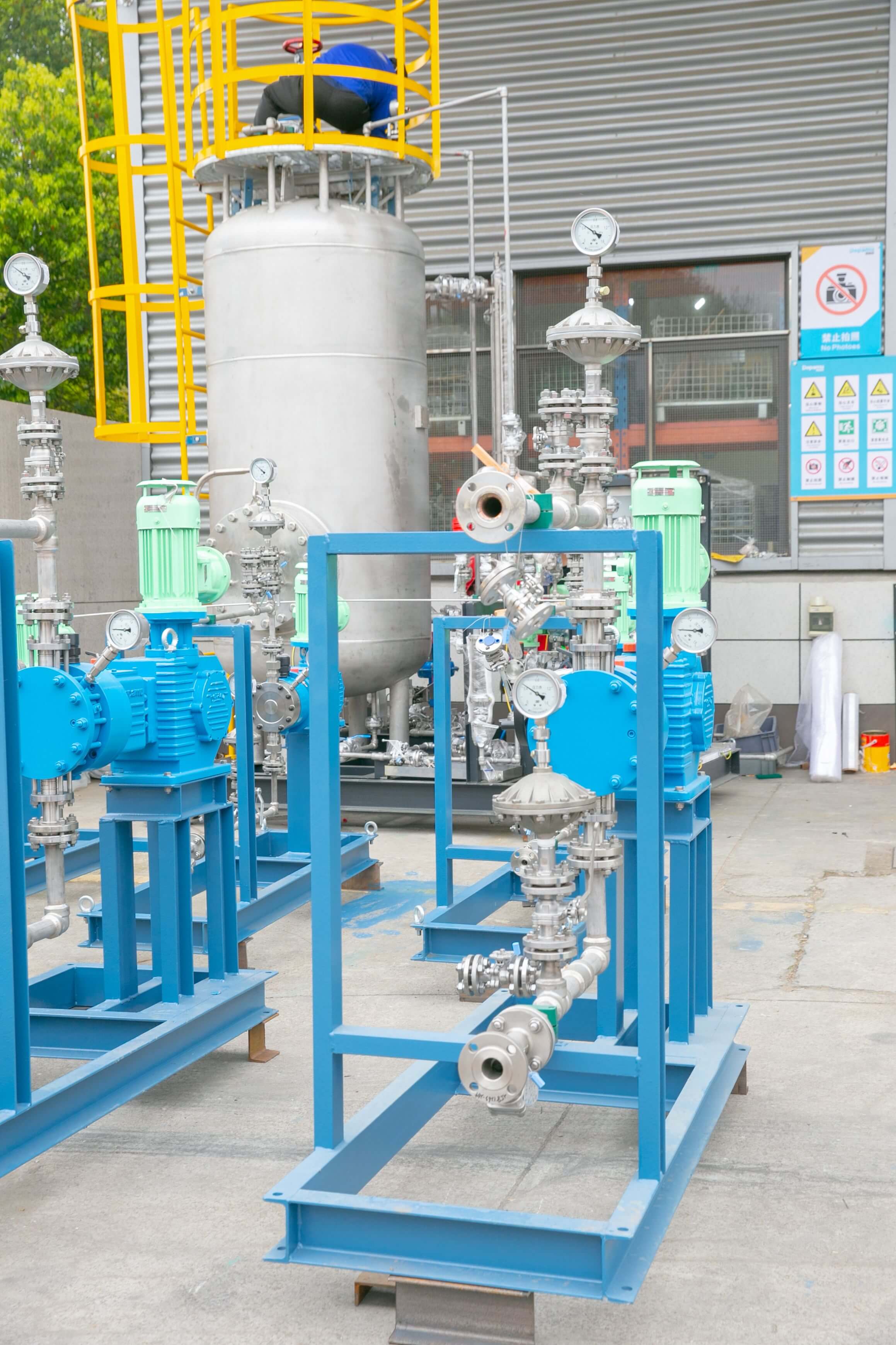
Reference for full text summary
The selection of metering pump skids requires a comprehensive consideration of three core indicators: flow accuracy, medium adaptability, and energy efficiency. Depamp (Hangzhou) Pump Technology Co., Ltd. provides solutions covering a flow range of 0.01-5000 L/h and a pressure rating of 400 MPa through the application of special materials, modular design, and customized services. Its products have passed ISO9001, CE, and ATEX certifications, and their stability has been verified in over 500 projects worldwide. Users can visit the official websitewww.depamufluid.comObtain the technical white paper and selection tool, or contact 400-800-XXXX for customized solutions.
Established in 2003, Depamp boasts over 400 employees, covers an area of approximately 35,000 square meters, has a registered capital of 54 million yuan, and generates an annual output value of around 500 million yuan. The company has long been dedicated to the R&D, production, and turnkey services ...
No. 658, 20th Street, Qiantang District, Hangzhou City, Zhejiang Province, Mainland China