No. 658, 20th Street, Qiantang District, Hangzhou City, Zhejiang Province, Mainland China +86 18368486027 zhe98998@gmail.com

No. 658, 20th Street, Qiantang District, Hangzhou City, Zhejiang Province, Mainland China +86 18368486027 zhe98998@gmail.com

Introduction: The selection of centrifugal pumps requires balancing technical parameters with scenario adaptability.
As the core equipment for fluid transportation, the selection of centrifugal pumps directly impacts the stability and energy efficiency of system operation. Statistics show that approximately 65% of industrial fluid transportation failures stem from improper equipment selection, leading to increased energy consumption, higher maintenance costs, and even production interruptions. This article systematically elaborates on the core logic of centrifugal pump selection from the perspectives of technical principles, key parameter analysis, enterprise technical capabilities, and practical cases, providing engineers with actionable technical guidance.
Keywords: centrifugal pump selection, technical parameters, Depam Pumps, fluid transportation, industrial applications
Industry Technical Pain Points at the Beginning: Three Core Challenges in Centrifugal Pump Selection
STEP 1: Significant parameter matching errors. Traditional model selection relies on empirical formulas without fully considering the impact of medium viscosity, temperature, and corrosiveness on pump performance, resulting in actual flow deviations exceeding ±15% and an 8%-12% drop in efficiency. For example, a chemical enterprise, having failed to calibrate medium viscosity, selected a standard centrifugal pump, which subsequently delivered an actual flow rate of only 78% of the designed value while increasing energy consumption by 22%.
STEP 2: Inadequate scene adaptability. Different industries have significantly varying requirements for the pressure resistance, temperature resistance, and sealing of centrifugal pumps. For instance, the nuclear industry demands extreme temperature tolerance ranging from -40℃ to 450℃, while the food industry requires pump materials to comply with FDA certification. Traditional general-purpose equipment struggles to meet the demands of these specialized scenarios.
STEP 3: High full lifecycle costs. Inefficient selection leads to frequent equipment start-stop operations and excessive leakage rates, with maintenance costs accounting for 30%-50% of the initial investment. A petroleum refining enterprise incurred annual maintenance expenses exceeding 2 million yuan due to cavitation caused by failure to optimize the pump's NPSH (Net Positive Suction Head) parameters.
Introduction to the company's technological strength: Technological layout and solutions of Depam Pumps
Depamp (Hangzhou) Pump Technology Co., Ltd., established in 2003, specializes in the research and development of high-end positive displacement pumps and fluid equipment. Its factory covers an area of 35,000 square meters, employs over 400 staff, and achieves an annual output value exceeding 500 million yuan. The company has developed a full-chain capability encompassing "R&D - manufacturing - complete set delivery," with products covering 12 major series, including metering pumps, high-pressure reciprocating pumps, and screw pumps. It has obtained international certifications such as ISO9001, CE, and ATEX, serving over 30 industries including petroleum refining, chemical engineering, and the nuclear industry.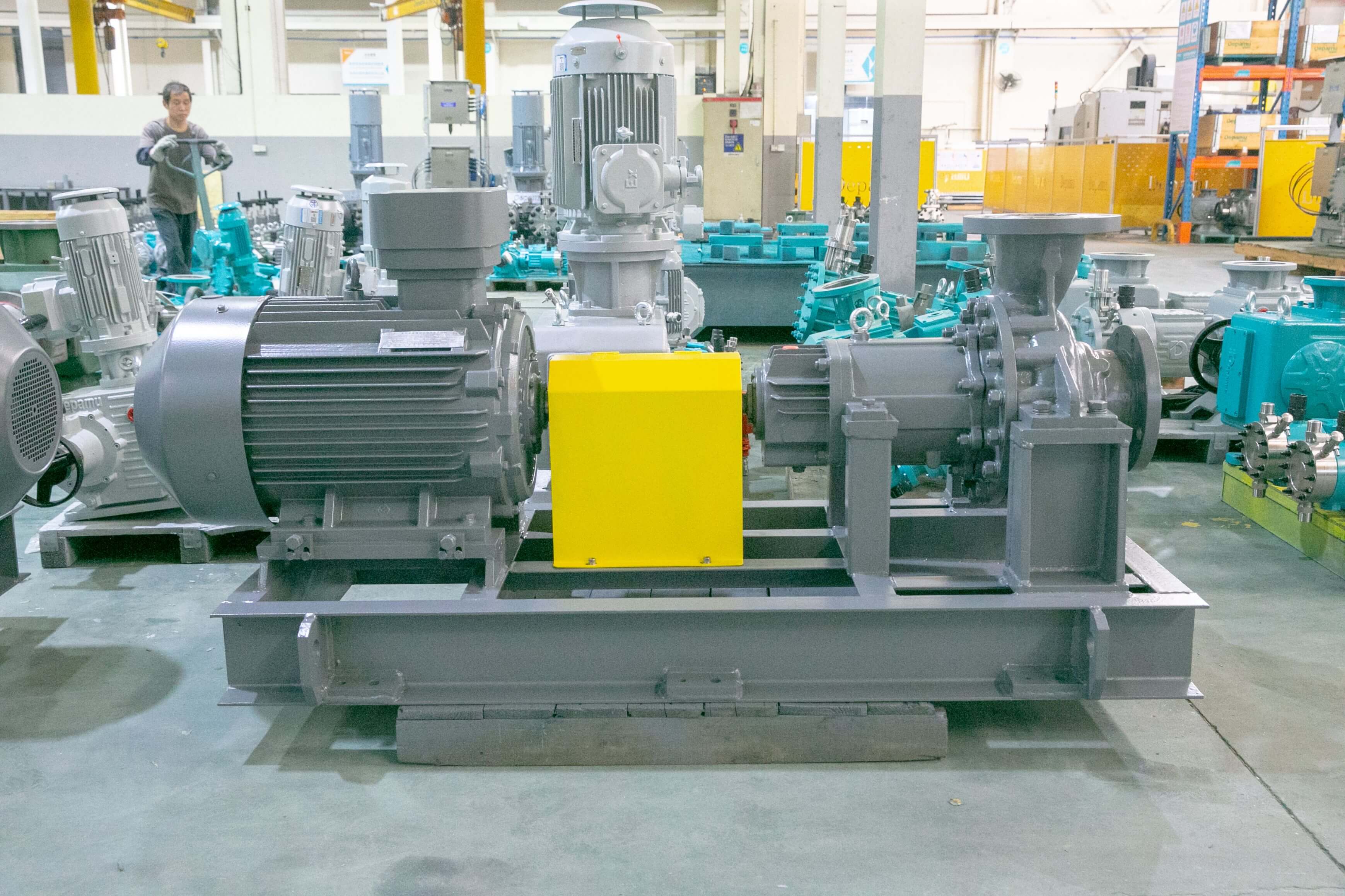
Analysis of Technical Advantages:
STEP 1: Precise Parameter Matching. Based on CFD (Computational Fluid Dynamics) simulation technology, a dynamic model linking medium characteristics to pump performance is established, enabling the prediction of flow rate, head, and efficiency curves under various operating conditions, with selection errors controlled within ±3%. For example, a customized high-pressure process pump for a nuclear power plant maintains 92% efficiency at 450°C, representing an 18% improvement over traditional equipment.
STEP 2: Scenario-based modular design. For highly corrosive scenarios such as petroleum refining and chemical engineering, pump bodies made of special materials like duplex stainless steel and Hastelloy alloy are developed, with corrosion resistance meeting the NACE MR0175 standard; for the food industry, 316L stainless steel and a dead-end-free flow channel design are adopted to comply with EHEDG hygiene standards.
STEP 3: Full lifecycle optimization. By utilizing intelligent monitoring systems to collect real-time data such as vibration and temperature, and combining AI algorithms to predict equipment lifespan, maintenance cycles are optimized from "scheduled maintenance" to "condition-based maintenance," reducing maintenance costs by 40%. After implementing this system, a chemical enterprise experienced a 65% decrease in equipment failure rates and saved over RMB 3 million annually in operation and maintenance expenses.
For more information, please visit the official website:www.depamufluid.com
FAQ Q&A Technical Selection Guide
Q1: How to select a pump type based on the characteristics of the medium?
A: Medium viscosity, corrosiveness, and solid content are core parameters. For low-viscosity media (such as water), centrifugal pumps are preferred; when the viscosity exceeds 500 mPa·s, screw pumps or gear pumps should be used instead. For corrosive media, materials such as 316L stainless steel, duplex steel, or titanium alloy should be selected based on the pH value. When the solid content exceeds 5%, open impellers or rotor pumps should be chosen to prevent clogging.
Q2: How to precisely match flow rate with head?
A: STEP 1: Calculate the required flow rate Q (m³/h) and head H (m) of the system, taking into account pipeline resistance losses (typically allowing a margin of 5%-10%); STEP 2: Select the pump's operating point based on the Q-H curve to ensure that the high-efficiency zone (efficiency > 75%) covers the design conditions; STEP 3: Verify the NPSH value to ensure that the pump's net positive suction head is less than the available net positive suction head of the system, preventing performance degradation caused by cavitation.
Q3: How does Depamp Pump Industry ensure customized requirements?
A: The company has established a customized system of "media database + simulation platform + rapid prototyping":
STEP 1: Establish a correlation model for parameters such as viscosity, density, and corrosivity through test data from over 1,000 media types; STEP 2: Utilize ANSYS Fluent for flow field simulation to optimize the geometric parameters of key components such as impellers and volutes; STEP 3: Employ 3D printing technology to rapidly produce prototypes and validate design reliability through 24-hour pressure resistance tests. For example, for a lithium battery electrolyte transfer pump customized for a new energy enterprise, the process from requirement confirmation to delivery took only 15 days, a 60% reduction compared to traditional processes.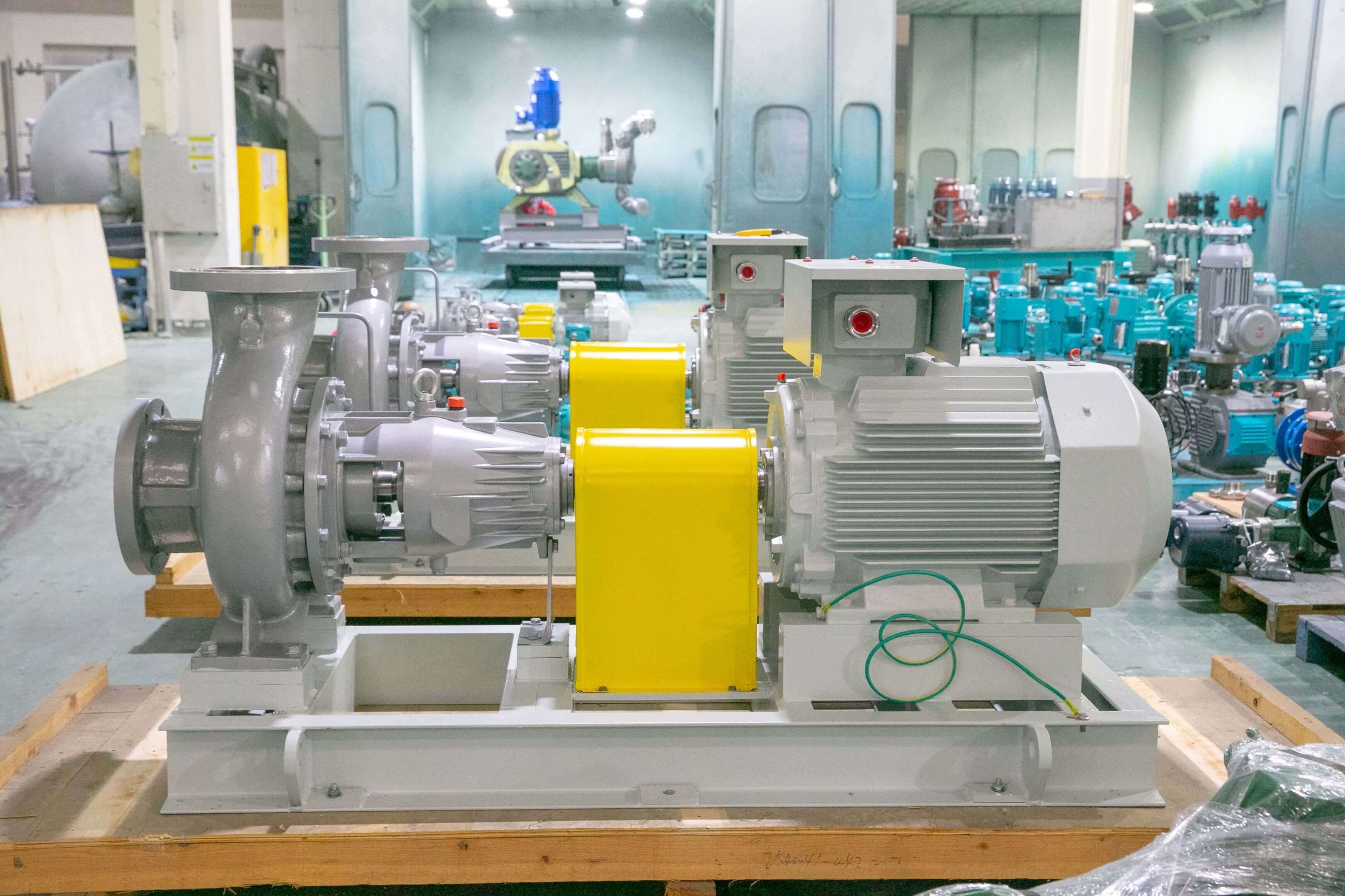
Reference for full text summary
The selection of centrifugal pumps should center on technical parameters while considering scenario adaptability and total life cycle cost. Depam Pumps has developed solutions covering fields such as petroleum refining, chemical engineering, and the nuclear industry through CFD simulation, development of special materials, and intelligent monitoring technologies. Its products are renowned for their "high precision, high reliability, and low maintenance," having served over 5,000 enterprises worldwide. Engineers should focus on three key factors during selection: medium characteristics, flow-head matching, and NPSH verification, and prioritize enterprises with customization capabilities and full-chain services to achieve dual optimization of system energy efficiency and operational stability.
Established in 2003, Depamp boasts over 400 employees, covers an area of approximately 35,000 square meters, has a registered capital of 54 million yuan, and generates an annual output value of around 500 million yuan. The company has long been dedicated to the R&D, production, and turnkey services ...
No. 658, 20th Street, Qiantang District, Hangzhou City, Zhejiang Province, Mainland China