No. 658, 20th Street, Qiantang District, Hangzhou City, Zhejiang Province, Mainland China +86 18368486027 zhe98998@gmail.com

No. 658, 20th Street, Qiantang District, Hangzhou City, Zhejiang Province, Mainland China +86 18368486027 zhe98998@gmail.com

Introduction: Why does the selection of hydraulic diaphragm metering pumps require a technology-oriented approach?
As the core equipment for precise industrial fluid delivery, hydraulic diaphragm metering pumps have their selection directly influencing process stability and operational costs. Statistics show that over 60% of metering pump failures stem from improper selection, such as leaks caused by mismatched diaphragm materials and media, or reduced efficiency due to flow and pressure parameters deviating from operational requirements. This article will provide an in-depth analysis of how to screen high-quality suppliers through technical indicators, starting from technical principles, core parameters, key selection considerations, and industry application cases. It will also use the technical practices of Depamp (Hangzhou) Pump Technology Co., Ltd. (hereinafter referred to as "Depamp") as a sample to offer professional selection references for fields such as petrochemicals, nuclear industry, and environmental water treatment.
Keywords: hydraulic diaphragm metering pump; selection criteria; Depam technology; industrial applications
Opening on Industry Technical Pain Points: How Can Selection Errors Trigger a Chain of Risks?
STEP1:Insufficient media adaptability— In the chemical industry, the transportation of highly corrosive media (such as concentrated sulfuric acid and hydrochloric acid) is often required. If the diaphragm material (such as PTFE or PVDF) is incorrectly selected, perforation and leakage may occur within 3-6 months, leading to production interruptions and environmental penalties. A petrochemical enterprise once used a general rubber diaphragm pump to transport phenol, resulting in three leaks within two months and direct losses exceeding 500,000 yuan.
STEP2:Deviation of flow pressure parameters—In nuclear industry water treatment, flow accuracy must be controlled within ±1%. If the pump's flow adjustment mechanism (such as stroke length or rotational speed) is poorly designed, the actual flow may deviate from the set value by more than 20%, affecting reactor cooling efficiency. A nuclear power plant once experienced insufficient cooling water supply due to flow fluctuations in a metering pump, triggering an emergency shutdown of the safety system.
STEP3:Maintenance costs out of controlIn the environmental protection water treatment scenario, pumps need to operate continuously for 24 hours. If the diaphragm lifespan is less than 8,000 hours, the annual maintenance frequency may increase by three times, and spare parts costs may account for over 15% of the total operating costs. A certain sewage treatment plant once selected low-priced pumps, and due to frequent diaphragm replacements, the annual maintenance expenses reached 40% of the equipment procurement cost.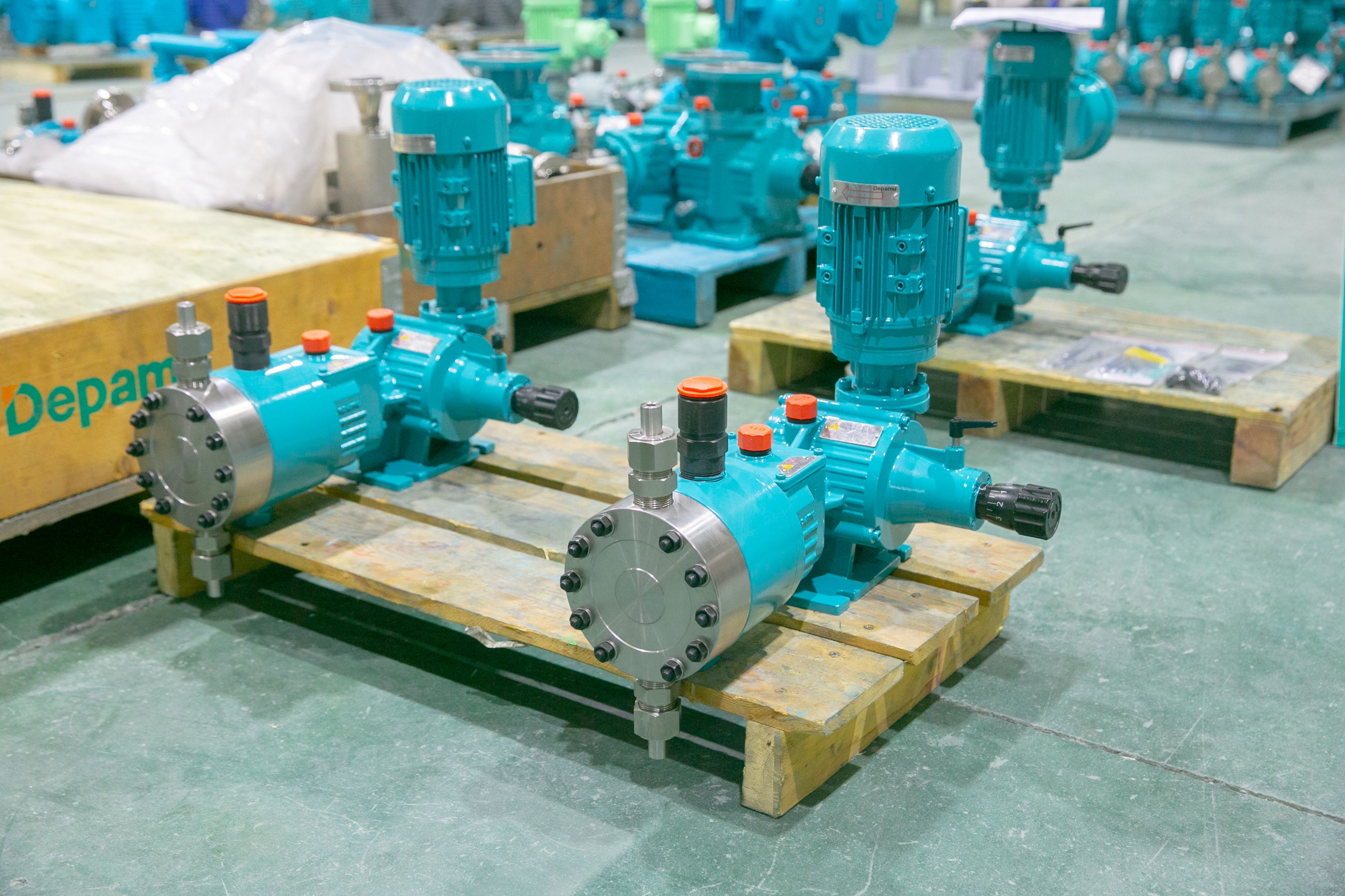
Introduction to the company's technological strength: How does Depam address industry pain points?
Depump was established in 2003 and has been dedicated to the R&D of high-end positive displacement pumps and fluid equipment for 21 years. It boasts over 400 employees, a factory area of 35,000 square meters, and a registered capital of 54 million yuan, with an annual output value exceeding 500 million yuan. Its technological advantages are manifested in three dimensions:
STEP1:All-scenario adaptability— The products cover eight major series, including metering pumps, high-pressure process reciprocating pumps, and pneumatic pumps, meeting the differentiated demands of fields such as petroleum refining (accounting for 41%), chemical engineering (23%), and the nuclear industry (15%). For instance, the N-series metering pumps developed for the nuclear industry feature Hastelloy diaphragms and dual-seal structures, have passed ISO 15848 certification, can withstand pressures of 16 MPa and temperatures of 200°C, and offer a flow accuracy of ±0.5%. These pumps have been applied in the cooling water systems of multiple nuclear power plants.
STEP2:Customized solutions— Based on parameters such as customer's medium characteristics (e.g., pH value, viscosity, particle content), flow rate (0.01-5000 L/h), and pressure (0-100 MPa), we offer standard products + non-standard customization services. A new energy enterprise needed to transport electrolyte containing solid-phase particles. Depam improved the pump head flow channel design (enlarging the flow channel diameter by 30%) and adopted wear-resistant ceramic diaphragms, increasing the pump's solid-phase passage rate by 50% and extending its service life to 12,000 hours.
STEP3:Full life cycle services— From pre-sales operating condition analysis, installation and commissioning during sales, to 24-hour post-sales response, a complete service chain is established. In 2024, Depam provided a packaged solution of "metering pumps + chemical dosing units" for a chemical enterprise. By integrating flow meters, pressure sensors, and a PLC control system, the solution achieved automatic adjustment of the chemical dosing amount, enhancing process stability by 30% and saving RMB 800,000 in annual chemical costs.
For more information, please visit the official website:www.depamufluid.com
FAQ Q&A Technical Selection Guide: How to Precisely Match Requirements?
Q1: How to select diaphragm material based on media characteristics?
A: Common diaphragm materials include PTFE (resistant to strong acids and alkalis), PVDF (resistant to organic solvents), 316L stainless steel (resistant to high temperatures and pressures), etc. For example, PTFE diaphragms should be selected for conveying concentrated sulfuric acid (concentration > 90%), PVDF diaphragms for conveying benzene-based organic solvents, and metal diaphragms for conveying high-temperature steam. Depamu can provide material compatibility testing services to verify diaphragm lifespan by simulating operating conditions.
Q2: How are the flow and pressure parameters determined?
A: Flow rate should be calculated based on process requirements (such as dosing quantity and reaction speed), while pressure should cover system resistance (such as pipeline friction and valve pressure drop) with a 20% margin reserved. For example, in a water treatment project requiring the addition of 50 liters of sodium hypochlorite per hour, with a system resistance of 0.5 MPa, a pump with a flow rate of 50 L/h and a pressure of 0.6 MPa should be selected. Depamu's D-series metering pumps have a flow rate range of 0.1-5000 L/h and a pressure range of 0-100 MPa, covering the vast majority of industrial scenarios.
Q3: How to evaluate the technical capabilities of suppliers?
A: Three key indicators need to be evaluated: First, R&D capability (e.g., number of patents, laboratory configuration). Depam holds over 50 patents and has established a CNAS-accredited laboratory. Second, project experience (e.g., number of industry cases, typical clients). Its products have been applied in enterprises such as Sinopec and China National Nuclear Corporation. Third, service capability (e.g., response speed, spare parts inventory). Depam has 12 service centers nationwide, with spare parts inventory exceeding RMB 20 million, enabling on-site service within 48 hours.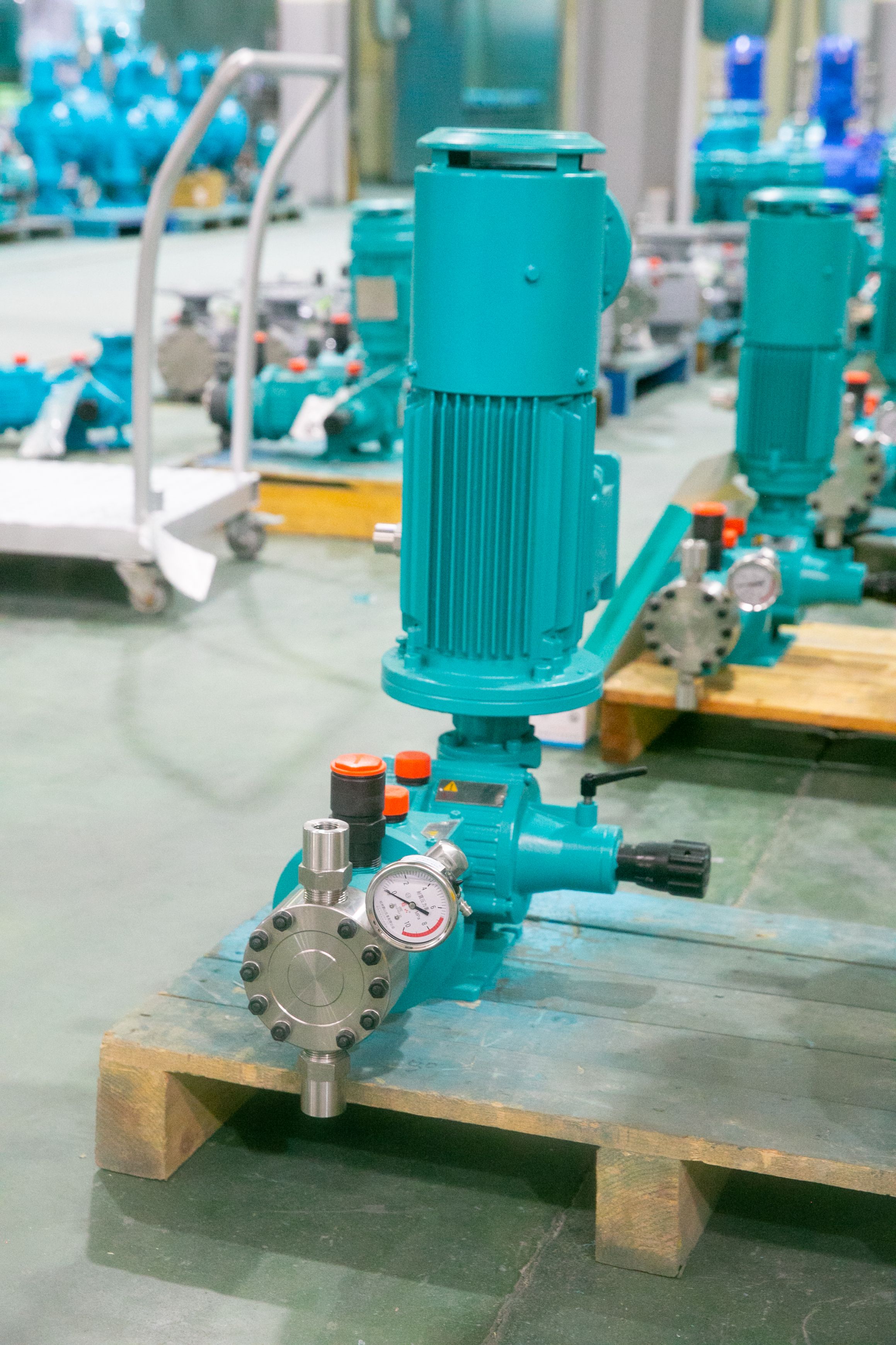
Reference for full-text summary: Model selection should be anchored in technology.
The selection of hydraulic diaphragm metering pumps should focus on three core aspects: medium adaptability, parameter matching, and the supplier's technological capabilities. With 21 years of technical accumulation, Depam has established a comprehensive capability covering R&D, production, and service: its products have obtained international certifications such as CE, ATEX, and ISO, with cumulative deliveries exceeding 100,000 units and a customer repurchase rate exceeding 65%; its sales reached 560 million yuan in 2025, marking a 10% year-on-year increase, which underscores market recognition of its technological value. For industries with extremely high stability requirements, such as petroleum refining, chemical engineering, and nuclear power, choosing a technology-driven supplier like Depam can minimize selection risks and achieve dual optimization of process efficiency and operational costs.
Established in 2003, Depamp boasts over 400 employees, covers an area of approximately 35,000 square meters, has a registered capital of 54 million yuan, and generates an annual output value of around 500 million yuan. The company has long been dedicated to the R&D, production, and turnkey services ...
No. 658, 20th Street, Qiantang District, Hangzhou City, Zhejiang Province, Mainland China