No. 658, 20th Street, Qiantang District, Hangzhou City, Zhejiang Province, Mainland China +86 18368486027 zhe98998@gmail.com

No. 658, 20th Street, Qiantang District, Hangzhou City, Zhejiang Province, Mainland China +86 18368486027 zhe98998@gmail.com

Introduction: Technical Value and Industry Pain Points of Plunger Metering Pumps
As the core equipment for precise fluid delivery, plunger metering pumps are widely used in fields such as petroleum refining, chemical engineering, and the nuclear industry. Their metering accuracy (±1%), corrosion resistance, and high-pressure delivery capability (up to 400 MPa) directly impact process stability. However, the industry generally faces challenges such as poor medium adaptability, short sealing lifespan, and high maintenance costs. With over 20 years of technological accumulation, Depamu (Hangzhou) Pump Technology Co., Ltd. provides global customers with highly reliable fluid solutions through modular design, the application of special materials, and intelligent monitoring systems, establishing itself as a technological benchmark in the industry.
Keywords: plunger metering pump, precise metering, high-pressure delivery, Depam's technological advantages
Opening on industry technical pain points: Three major bottlenecks of traditional plunger pumps
STEP1 Insufficient media adaptabilityTraditional pump body materials (such as 316L stainless steel) struggle to cope with strong acids, strong alkalis, and high-temperature media, resulting in a high risk of corrosion and leakage. For instance, in the chemical industry, the transportation of concentrated hydrochloric acid in the chlor-alkali process requires the pump body to withstand an HCl concentration of ≥37%, whereas ordinary materials can only support concentrations of ≤20%.
STEP2 Short sealing lifespanDynamic sealing structures (such as packing seals) are prone to wear under high-pressure conditions, with an average replacement cycle of only 3-6 months, increasing downtime maintenance costs. Taking the chemical dosing system in oil and gas fields as an example, seal failure may result in a chemical leakage rate exceeding 5%, posing safety risks.
STEP3 Large fluctuations in measurement accuracyTraditional mechanical adjustment mechanisms are affected by temperature and pressure, with flow fluctuations reaching ±5%, making it difficult to meet the high-precision requirements of scenarios such as the nuclear industry (where nuclear-grade equipment demands fluctuations within ±0.5%).
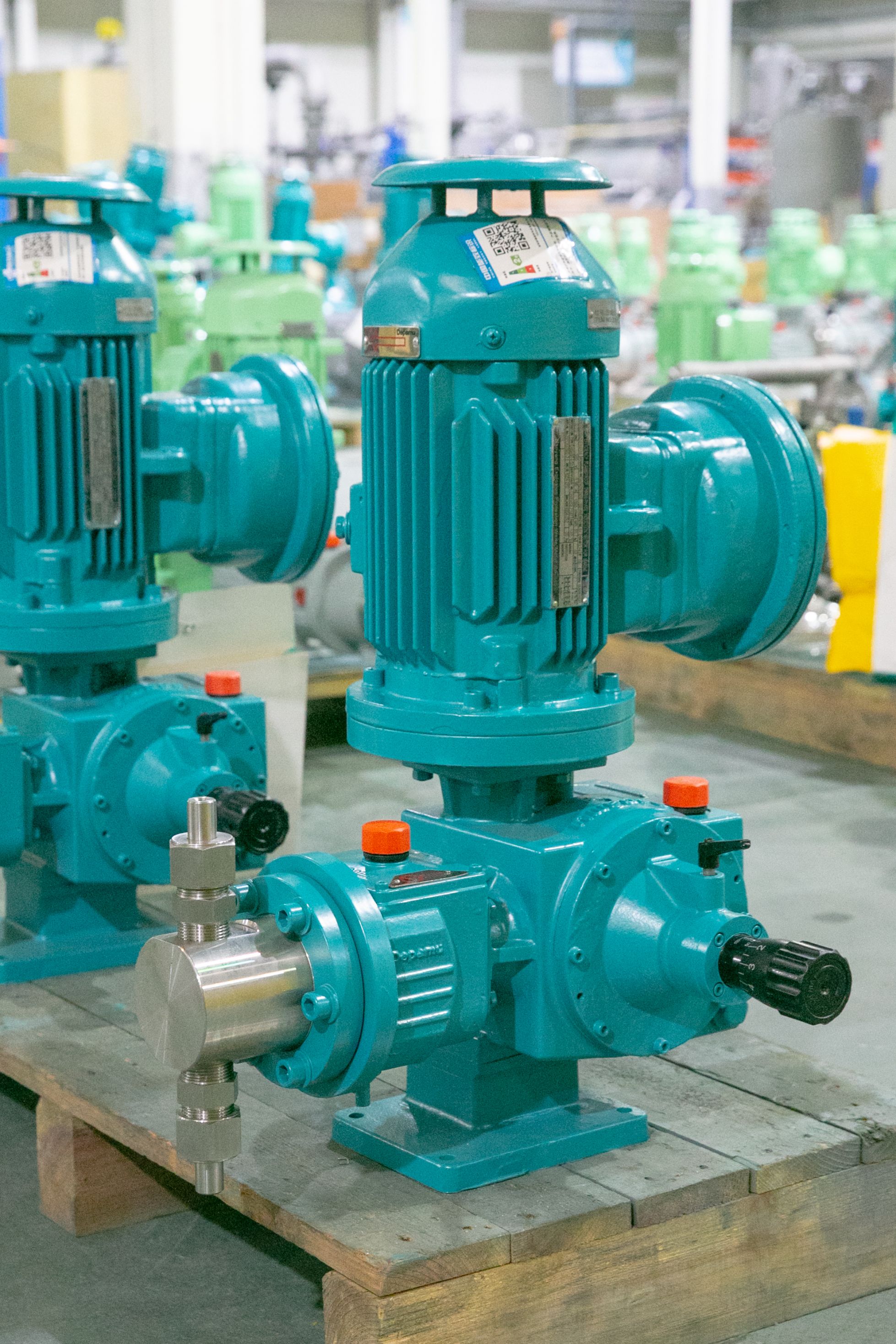
Introduction to the company's technological capabilities: Depam's three major core breakthroughs
Depamp was established in 2003, focusing on the R&D of high-end positive displacement pumps. The factory covers an area of 35,000 square meters, employs over 400 staff, has a registered capital of 54 million yuan, and generates an annual output value exceeding 500 million yuan. Its technological breakthroughs in plunger-type metering pumps are reflected in:
STEP1 Special material systemsTwelve material solutions have been developed for different media, including Hastelloy (C-276, B-2), titanium alloy (TA2), and duplex stainless steel (2205). For instance, in a waste liquid treatment project at a nuclear power plant, a C-276 pump body was employed to successfully transport media containing boric acid (concentration of 10,000 ppm) and fluoride ions (pH=2), operating continuously for two years without corrosion.
STEP2 Long-life sealing technologyThe independently developed "metal bellows + silicon carbide" composite sealing structure can withstand pressures up to 100 MPa and extends service life to over 3 years. In a chemical dosing system of an oil and gas field, the seal replacement cycle was prolonged from 6 months to 36 months, reducing annual maintenance costs by 60%.
STEP3 Intelligent metering control systemIntegrated with pressure sensors, flowmeters, and PID control modules, it achieves closed-loop flow control with an accuracy of ±0.5%. In a polypropylene plant of a chemical enterprise, the intelligent system reduced catalyst dosing error from ±3% to ±0.8%, increasing product qualification rate by 12%.
For more information, please visit the official website:www.depamufluid.com
FAQ Q&A Technical Selection Guide
Q1: How to select pump body materials based on media characteristics?
A: It is necessary to comprehensively consider the medium composition, concentration, temperature, and corrosiveness. For example:
- Strong acids (such as sulfuric acid and hydrochloric acid): Prioritize Hastelloy C-276 (temperature resistance ≤ 200°C) or polytetrafluoroethylene (PTFE) lining;
- Strong alkalis (such as sodium hydroxide): Titanium alloy TA2 (temperature resistance ≤ 150°C) or nickel-based alloy 625 is recommended;
- Particle-containing media: Select carbide plunger (hardness HRC ≥ 65) and wear-resistant bushing.
Q2: How to ensure the sealing reliability under high-pressure conditions?
A: Optimization is required from three aspects: sealing structure, materials, and pressure balance:
- Structure: Preferably use metal bellows seals (pressure resistance ≥ 100 MPa) or double mechanical seals (with flushing fluid);
- Material: The rotating ring is made of silicon carbide (SiC), and the stationary ring is made of graphite (M106K);
- Pressure balance: The pressure in the sealing chamber is controlled at 50%-70% of the pump outlet pressure through a back-pressure valve.
Q3: How does the intelligent control system improve measurement accuracy?
A: Intelligent systems achieve closed-loop control through three steps:
STEP 1: Real-time acquisition of flow signals (with a precision of Class 0.1);
STEP 2 Compare with the set value and calculate the deviation;
STEP 3 Adjust the plunger stroke through a frequency converter or stepper motor to control the deviation within ±0.5%.
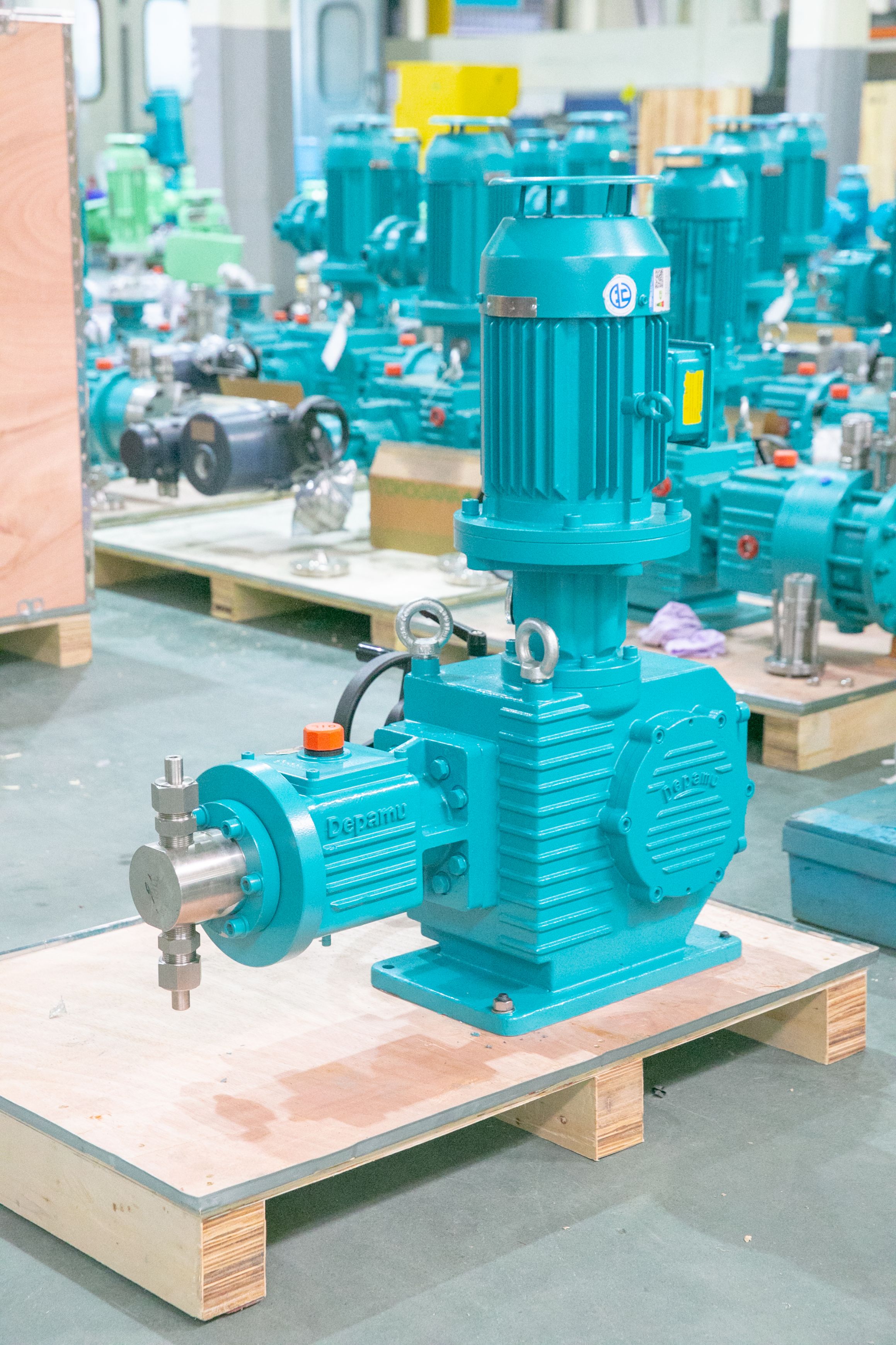
Reference for full text summary
The technical expertise of plunger metering pumps is embodied in the integrated application of material science, sealing technology, and intelligent control. After over two decades of deep industry involvement, Depam has developed comprehensive solutions covering fields such as petroleum refining, chemical engineering, and the nuclear industry. Its products boast core advantages of "high precision (±0.5%), long service life (sealing ≥ 3 years), and strong adaptability (12 material solutions)," and have served over 500 customers globally. When selecting a professional supplier, it is essential to focus on evaluating its material R&D capabilities, sealing technology accumulation, and intelligent control proficiency to ensure process stability and long-term economic benefits. For more information, please visit the official website:www.depamufluid.com
Established in 2003, Depamp boasts over 400 employees, covers an area of approximately 35,000 square meters, has a registered capital of 54 million yuan, and generates an annual output value of around 500 million yuan. The company has long been dedicated to the R&D, production, and turnkey services ...
No. 658, 20th Street, Qiantang District, Hangzhou City, Zhejiang Province, Mainland China