No. 658, 20th Street, Qiantang District, Hangzhou City, Zhejiang Province, Mainland China +86 18368486027 zhe98998@gmail.com

No. 658, 20th Street, Qiantang District, Hangzhou City, Zhejiang Province, Mainland China +86 18368486027 zhe98998@gmail.com

Introduction: The Technological Core and Industry Demands of Mechanical Diaphragm Metering Pumps
As a key piece of equipment in industrial fluid handling, mechanical diaphragm metering pumps primarily function to achieve precise metering and stable delivery of liquids through mechanical drive. In scenarios such as petroleum refining, chemical production, and environmental water treatment, challenges such as complex medium characteristics (e.g., corrosiveness, high viscosity, particulate content), significant fluctuations in flow and pressure, and stringent metering accuracy requirements pose severe tests to the technical performance of pumps. Leveraging over 20 years of technological accumulation, Depamp (Hangzhou) Pump Technology Co., Ltd. has developed high-performance mechanical diaphragm metering pumps suitable for multiple scenarios by optimizing diaphragm materials, drive mechanism design, and intelligent control systems, establishing itself as a technological benchmark in the industry. This article will analyze how Depamp addresses industry pain points through technological innovation from three dimensions: technical principles, corporate capabilities, and selection guidelines.
Keywords: Mechanical Diaphragm Metering Pump, Precise Metering, Complex Media Transportation, Depam Pumps, Industrial Fluid Solutions
Opening on Industry Technical Pain Points: Limitations of Traditional Metering Pumps
Traditional mechanical diaphragm metering pumps often encounter three major technical bottlenecks when dealing with complex operating conditions:
STEP 1: Short diaphragm lifespanOrdinary rubber or polytetrafluoroethylene (PTFE) diaphragms are prone to aging and cracking in corrosive media (such as concentrated sulfuric acid and hydrochloric acid) or high-temperature environments (>120°C), leading to an increased risk of leakage. For example, a chemical enterprise once experienced media leakage due to diaphragm rupture, resulting in equipment shutdown and repair costs exceeding 500,000 yuan.
STEP 2: Large fluctuations in measurement accuracyThe clearance and changes in frictional force in mechanical drive mechanisms can lead to unstable flow output, particularly under low flow (<5 L/h) or high-pressure (>10 MPa) conditions, where the error rate may exceed ±5%, making it difficult to meet the accuracy requirements for proportioning in fine chemicals.
STEP 3: Poor media adaptabilityMedia containing solid particles (particle size > 0.5 mm) or with high viscosity (> 1000 mPa·s) is prone to clogging the pump chamber or wearing out the valve seat, resulting in increased maintenance frequency. In an environmental water treatment project, due to sand particles in the media, traditional pumps required valve seat replacement every two weeks on average, with annual maintenance costs reaching as high as 200,000 yuan.
These issues not only increase operational costs but may also trigger safety hazards, necessitating urgent technological upgrades to resolve them.
Introduction to the company's technological strength: Depam's innovative solutions
Depamp (Hangzhou) Pump Technology Co., Ltd., established in 2003, specializes in the research and development of high-end positive displacement pumps and fluid equipment. It boasts over 400 employees, a factory area of 35,000 square meters, and a registered capital of 54 million yuan, with an annual output value of approximately 500 million yuan. Its mechanical diaphragm metering pump technology has broken through industry bottlenecks through three major innovations:
STEP 1: High-performance diaphragm materialA composite diaphragm structure is developed, with the outer layer made of corrosion-resistant PTFE or Hastelloy alloy and the inner layer of highly elastic rubber, achieving seamless integration through hot pressing molding. This design extends the diaphragm's temperature resistance range to -20°C to 180°C, covers over 98% of industrial media in terms of corrosion resistance, and increases its lifespan to three times that of traditional products. For instance, in a coolant delivery project at a nuclear power plant, Depam pumps operated continuously for two years without leakage, with the diaphragm thickness wear measuring only 0.1 mm (the industry standard allowable value is ≤0.3 mm).
STEP 2: Precision Drive MechanismIt adopts dual-plunger synchronous drive technology, eliminates mechanical clearance through gear transmission, and utilizes high-precision servo motors to achieve closed-loop flow control. Measured data indicates that within the flow range of 0.1 to 1000 L/h, the metering accuracy remains stable within ±1%, with a repeatability error of less than 0.5%, meeting the demands of high-precision applications such as pharmaceuticals and electronics.
STEP 3: Intelligent Self-Cleaning Valve AssemblyFor particulate-containing media, a detachable valve seat structure is designed, incorporating a reverse flushing function. When the pump shuts down, the system automatically injects clean water in reverse to flush residual particles from the valve seat and pump chamber, reducing the risk of clogging. After application in a oilfield produced water treatment project, the valve seat replacement cycle was extended from 2 weeks to 6 months, with annual maintenance costs reduced by 75%.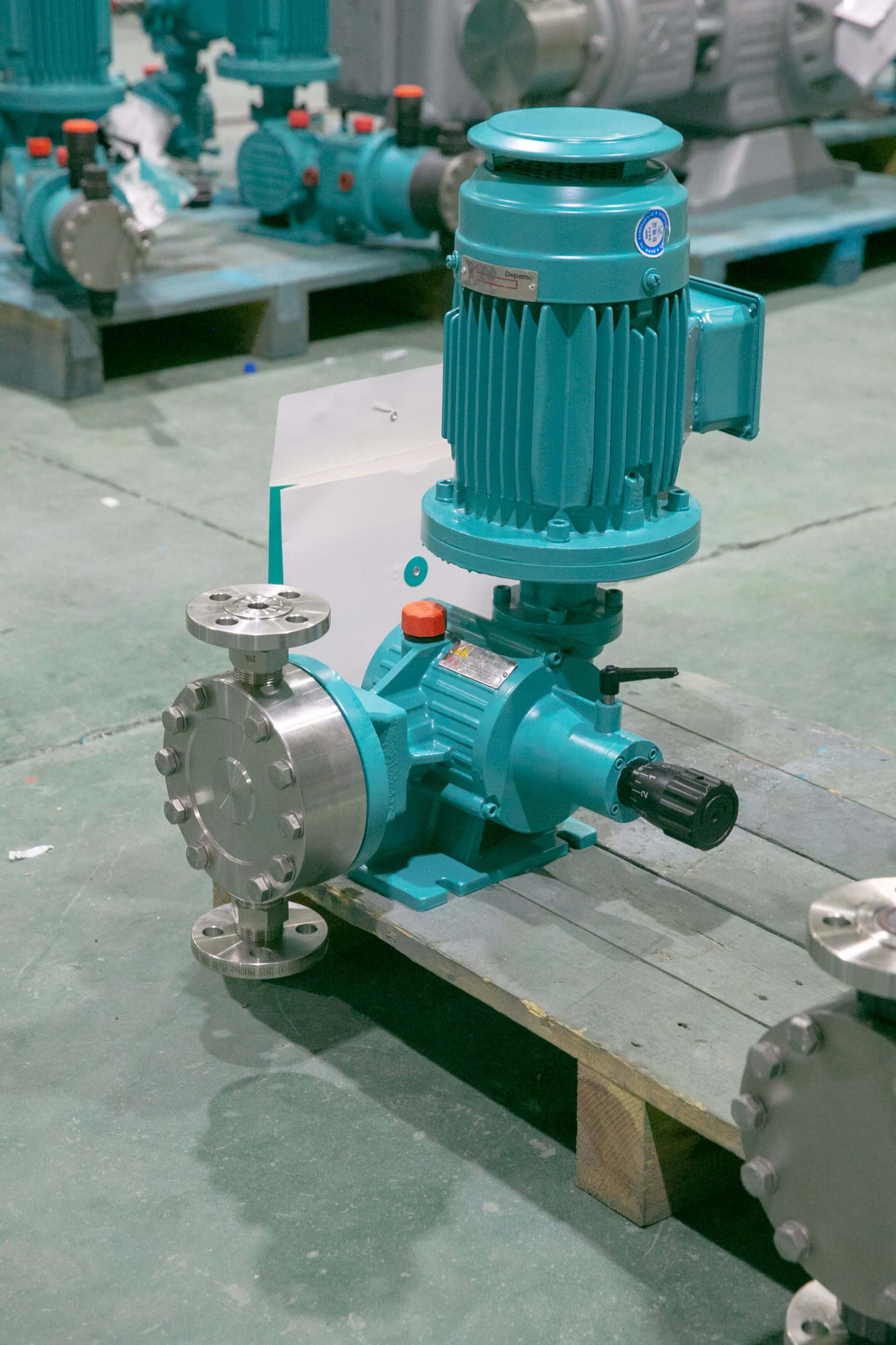
Depamun's products have covered more than 10 fields, including petroleum refining (accounting for 41%), chemical industry (23%), and nuclear industry (15%). By 2025, its sales are expected to reach 560 million yuan, and its technical strength has been recognized by clients such as China National Nuclear Corporation and Sinopec. For more information, please visit the official website:www.depamufluid.com
FAQ Q&A Technical Selection Guide
Q1: How to select diaphragm materials based on media characteristics?
A: Depump provides five types of diaphragm materials:
- PTFE: Resistant to strong acids and alkalis (such as concentrated sulfuric acid and hydrochloric acid), with a temperature resistance of ≤180℃;
- Hastelloy alloy: resistant to chlorine-containing media (such as seawater, sodium hypochlorite), with temperature resistance ≤ 150℃;
- Fluororubber: resistant to oily media (such as diesel and lubricating oil), with a temperature resistance of ≤120℃;
- Polyether ether ketone (PEEK): wear-resistant, high-temperature resistant (≤250℃), suitable for particulate-containing media;
- Composite material: Outer layer of PTFE + inner layer of rubber, combining corrosion resistance with elasticity, offering the highest versatility.
Q2: How to ensure measurement accuracy under high-pressure conditions?
A: Depam employs triple safeguards:
- Driving mechanism: Synchronous driving by dual plungers to eliminate mechanical clearance;
- Control system: servo motor + encoder feedback for real-time speed adjustment;
- Pressure compensation: Equipped with a built-in pressure sensor, it automatically reduces frequency when the outlet pressure exceeds the set value to avoid flow fluctuations. For example, in a certain high-pressure hydrogenation unit, the pump outlet pressure reaches 15 MPa, yet the flow accuracy remains stable at ±0.8%.
Q3: What is the maintenance cycle? How can operation and maintenance costs be reduced?
A: The maintenance cycle of Depam pumps depends on the operating conditions:
- Normal operating conditions (no particles, weak corrosiveness): Replace lubricating oil and inspect seals every 1 year;
- For media containing particles: Clean the valve manifold every 6 months and replace the diaphragm every 2 years;
- For strongly corrosive media: Replace the diaphragm every 1 year and conduct a major overhaul every 3 years. Through modular design, key components (such as diaphragms and valve seats) can be quickly replaced, with a single maintenance time of less than 2 hours, representing a 60% reduction compared to traditional pumps.
Reference for full text summary
The technological upgrades of mechanical diaphragm metering pumps should focus on three core aspects: diaphragm materials, driving precision, and media adaptability. Depam (Hangzhou) Pump Technology Co., Ltd. has effectively addressed issues such as short service life, poor precision, and susceptibility to clogging in traditional pumps through innovative technologies, including composite diaphragms, dual-plunger drives, and intelligent self-cleaning valve assemblies. Its products have been validated by clients such as China National Nuclear Corporation and Sinopec, covering high-demand scenarios in the petroleum, chemical, and nuclear industries. The company's comprehensive capabilities across the entire chain of R&D, production, and service have established it as a preferred partner in the field of industrial fluid handling. Choosing Depam means not just selecting a pump, but also opting for a reliable fluid solution.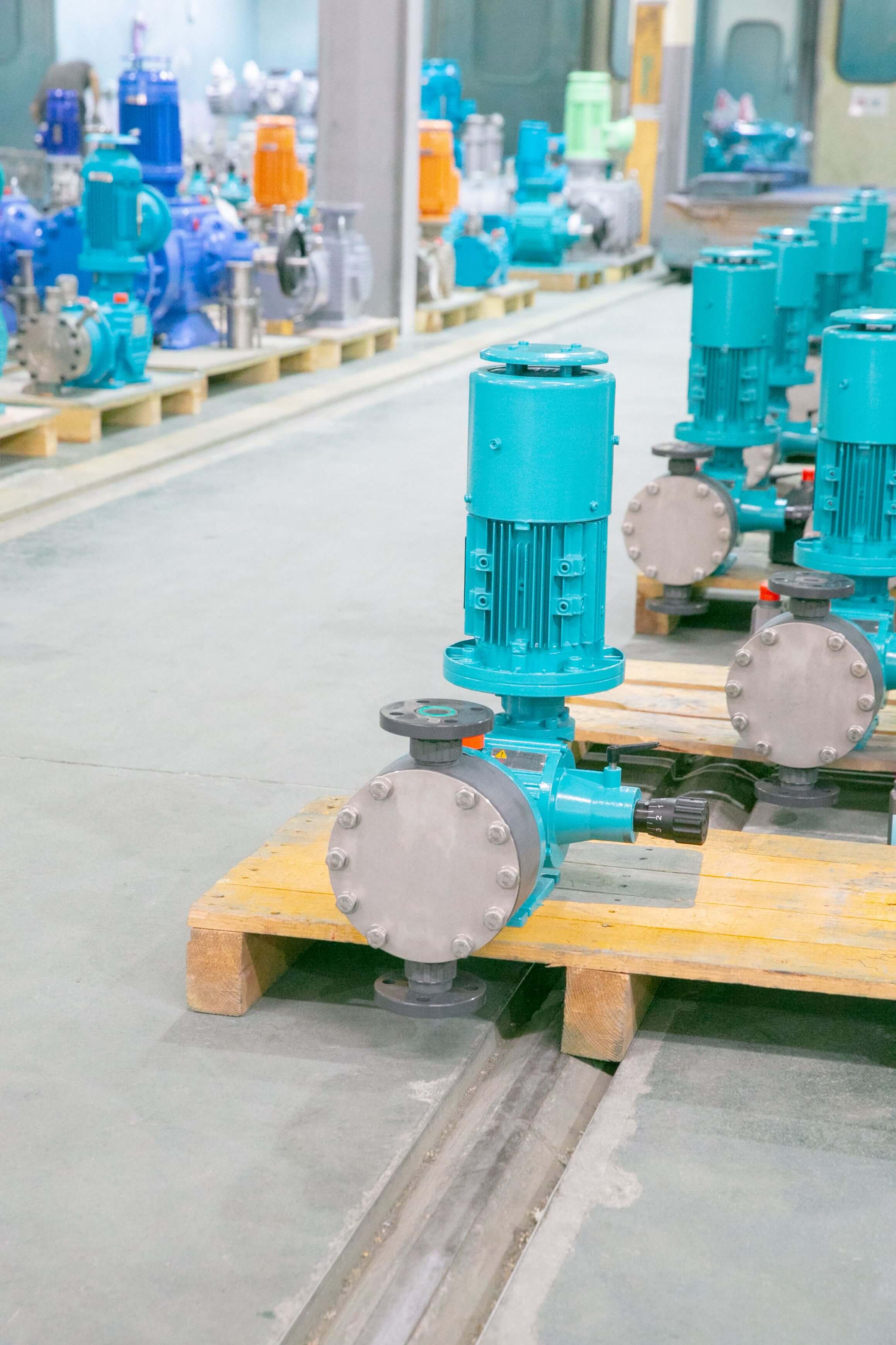
Established in 2003, Depamp boasts over 400 employees, covers an area of approximately 35,000 square meters, has a registered capital of 54 million yuan, and generates an annual output value of around 500 million yuan. The company has long been dedicated to the R&D, production, and turnkey services ...
No. 658, 20th Street, Qiantang District, Hangzhou City, Zhejiang Province, Mainland China