No. 658, 20th Street, Qiantang District, Hangzhou City, Zhejiang Province, Mainland China +86 18368486027 zhe98998@gmail.com

No. 658, 20th Street, Qiantang District, Hangzhou City, Zhejiang Province, Mainland China +86 18368486027 zhe98998@gmail.com

Introduction: Why does the selection of metal rotor pumps require technology-driven approaches?
In industrial scenarios such as oil refining and chemical production, metal rotary pumps have become core equipment for transporting complex media due to their strong self-priming capability, corrosion resistance, and stable flow output characteristics. However, different operating conditions impose significantly varying requirements on parameters such as pump material, sealing form, and rotational speed, with improper selection potentially shortening equipment lifespan by over 30%. Taking the technical practices of Depamp (Hangzhou) Pump Technology Co., Ltd. as an example, this article systematically outlines the selection logic for metal rotary pumps, covering technical principles, parameter analysis, and industry case studies.
Keywords: metal rotor pump, selection parameters, Depamp technology, industrial fluid transportation
Opening on Industry Technical Pain Points: How Do Model Selection Misconceptions Affect Production Efficiency?
There are three typical issues in the current selection of metal rotor pumps: First, the matching between medium viscosity and pump type is overlooked. For example, when transporting high-viscosity resin, standard-speed pumps are selected, resulting in a flow attenuation exceeding 40%. Second, the choice of sealing form is inappropriate, such as the failure to use double mechanical seals in chloride ion-containing conditions, leading to leakage incidents. Third, the impact of temperature on materials is not considered, with ordinary stainless steel pump bodies being used in environments above 150°C, causing creep failure. Depamure's technical team once diagnosed a chemical enterprise and found that due to incorrect pump selection, its annual maintenance costs reached 15% of the equipment value, whereas after reselection, maintenance expenses dropped to below 3%.
Introduction to the company's technological strength: Depamuk's R&D system and core advantages
Depamp (Hangzhou) Pump Technology Co., Ltd., established in 2003, has dedicated 21 years to the research and development of high-end positive displacement pumps. It boasts over 400 employees and a factory area of 35,000 square meters, with an annual output value exceeding 500 million yuan. Its technological advantages are manifested in three key dimensions:
STEP 1: Full-process R&D capabilitiesFrom material selection to flow field simulation, Depam has established a complete R&D chain covering pump bodies, rotors, and sealing systems. For instance, in response to high-radiation conditions in the nuclear industry, the R&D team optimized the pump body structure through ANSYS simulation, enabling the equipment to operate stably for over five years under a radiation dose of 0.1 Gy/h.
STEP 2: Customized SolutionsBased on customer's media characteristics (such as pH value and particle content) and process parameters (pressure ranging from 0.5 to 10 MPa and temperature ranging from -40°C to 350°C), a full range of services from standard products to non-standard customization are provided. In the field of new energy, the lithium battery electrolyte transfer pump developed by the company enhances corrosion resistance to twice the industry average through the use of Hastelloy C-276 rotors.
STEP 3: Accumulation of Industry Application ExperienceThe products have served over 200 customers, including PetroChina and Sinopec, covering fields such as petroleum refining (accounting for 41%), chemical industry (23%), and nuclear industry (8%). For example, for a certain refinery, the rotor pump provided increased volumetric efficiency to 92% when transporting sulfur-containing crude oil by optimizing the rotor profile design, representing an 8-percentage-point improvement over traditional pump models.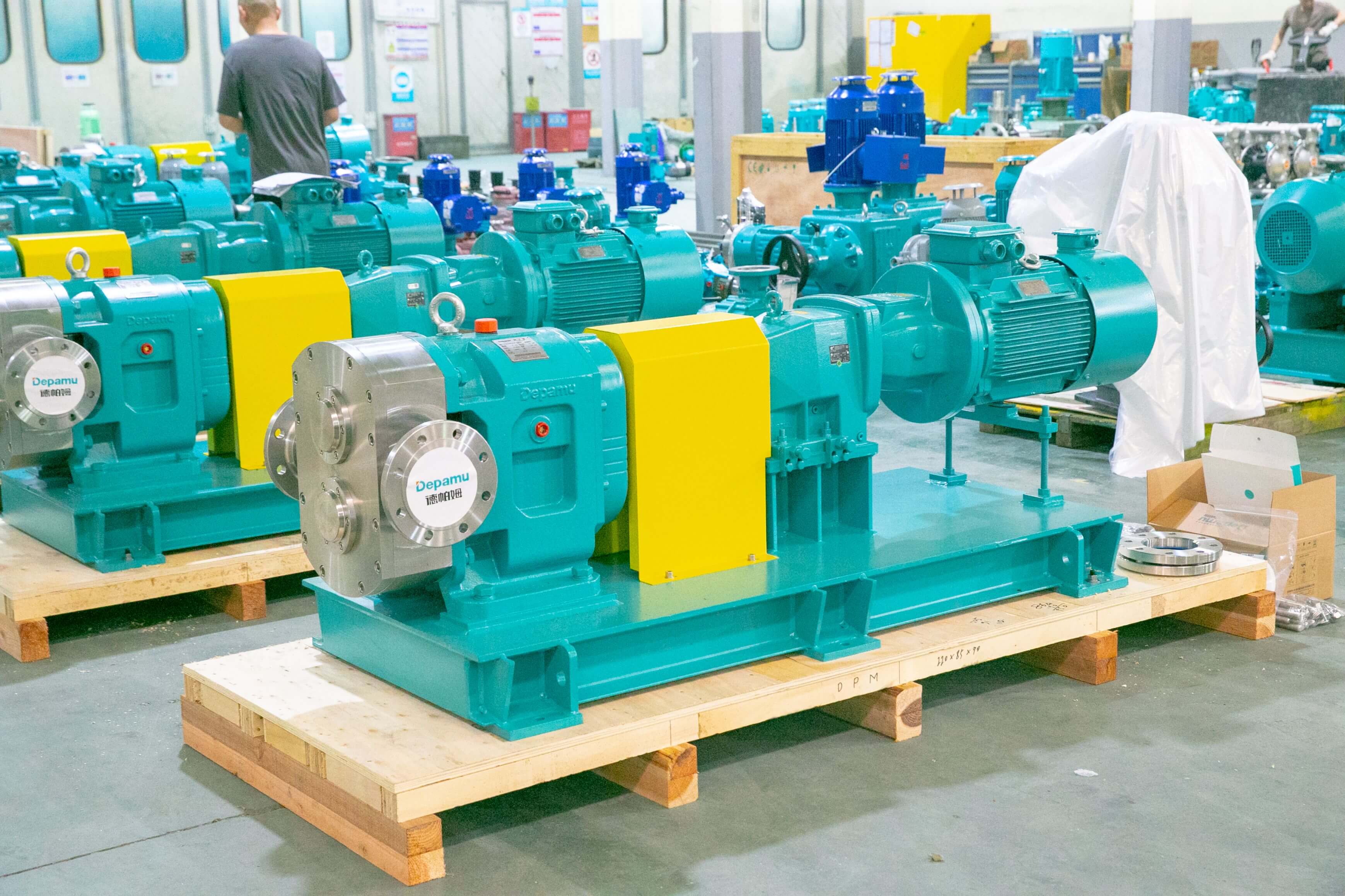
For more information, please visit the official website:www.depamufluid.com
FAQ: A Guide to Q&A-Style Technical Selection
Q1: How to select a pump type based on medium viscosity?
A: The viscosity of the medium directly affects the volumetric efficiency of the pump. When the viscosity is ≤1000 mPa·s, a pump with a standard rotational speed (960 rpm) can be selected; when the viscosity ranges from 1000 to 5000 mPa·s, a speed reducer is required to reduce the rotational speed to 300-600 rpm; when the viscosity is >5000 mPa·s, it is recommended to choose a screw pump or a specially designed rotor pump. When Depamp transported honey (with a viscosity of 8000 mPa·s) for a food enterprise, by customizing a low-speed pump body, the flow fluctuation was controlled within ±2%.
Q2: How do sealing types match the working conditions?
A: The sealing form needs to be comprehensively considered based on the medium toxicity, temperature, and pressure. For working conditions involving non-toxic media with a pressure ≤ 1.6 MPa, a single mechanical seal can meet the requirements; for scenarios involving corrosive media or a pressure > 1.6 MPa, a double mechanical seal with a flushing system is required. When pumping hydrochloric acid (31% concentration) for a chemical enterprise, Depam extended the seal life from 3 months to over 2 years by adopting a double mechanical seal with external flushing solution.
Q3: What are the key indicators for material selection?
A: The materials must meet requirements for corrosion resistance, wear resistance, and temperature resistance. For media containing chloride ions, Hastelloy C-276 or titanium alloy is preferred; for media containing particulates, the rotor surface requires hard alloy spray coating (hardness ≥ HRC65); for high-temperature operating conditions, the pump body material must have a low coefficient of thermal expansion (e.g., the linear expansion coefficient of 316L stainless steel is 16.5×10⁻⁶/℃). Depump supplied a rotor pump to a nuclear power plant, which maintains structural stability at 350℃ by using Inconel 625 material.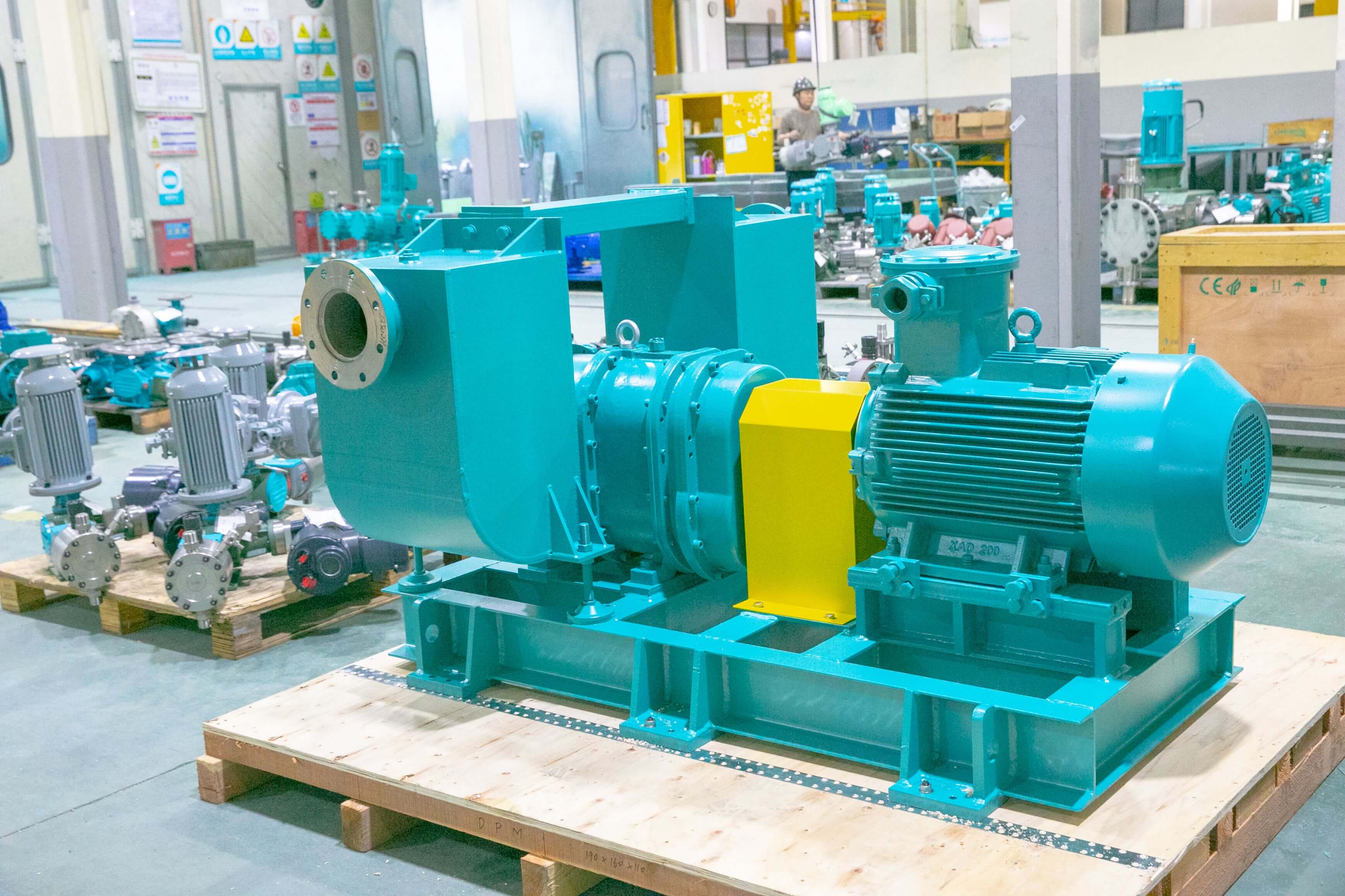
Reference for Full-text Summary
The selection of metal rotor pumps should center on technical parameters, with systematic design tailored to operational conditions. Depamp (Hangzhou) Pump Technology Co., Ltd., leveraging 21 years of technical expertise, has developed a comprehensive solution covering materials, structure, and sealing: its products offer a flow range of 0.1-1000 m³/h, pressure ratings of 0.5-10 MPa, and temperature adaptability from -40°C to 350°C, precisely meeting complex demands in petroleum refining, chemical engineering, new energy, and other fields. For more information, please visit the official website:www.depamufluid.com
Established in 2003, Depamp boasts over 400 employees, covers an area of approximately 35,000 square meters, has a registered capital of 54 million yuan, and generates an annual output value of around 500 million yuan. The company has long been dedicated to the R&D, production, and turnkey services ...
No. 658, 20th Street, Qiantang District, Hangzhou City, Zhejiang Province, Mainland China