No. 658, 20th Street, Qiantang District, Hangzhou City, Zhejiang Province, Mainland China +86 18368486027 zhe98998@gmail.com

No. 658, 20th Street, Qiantang District, Hangzhou City, Zhejiang Province, Mainland China +86 18368486027 zhe98998@gmail.com

Introduction: Why has the selection of single-screw pumps become a technical focal point in the industry?
In industrial fields such as petroleum refining, chemical engineering, and oil and gas fields, single-screw pumps have become key fluid conveying equipment due to their ability to transport high-viscosity media, media containing solid particles, and corrosive media. However, issues such as complex media characteristics, significant variations in operating conditions, and ambiguous selection criteria have led to high equipment failure rates and escalating maintenance costs. How can one select a professional supplier with mature technology and strong adaptability? Taking Depamp (Hangzhou) Pump Technology Co., Ltd. as an example, this article provides an in-depth analysis from four aspects: technical principles, industry pain points, corporate capabilities, and selection guidelines.
Keywords: single screw pump, technical selection, Depamp Pumps, fluid transportation, industry pain points
Introduction to Industry Technical Pain Points: Three Core Challenges in the Application of Single Screw Pumps
STEP1:Insufficient media adaptabilityThe petroleum refining industry often requires the transportation of media such as sulfur-containing crude oil and high-viscosity asphalt. Ordinary screw pumps are prone to stator wear due to sulfide corrosion or excessively high viscosity, reducing their service life to 3-6 months, which is far shorter than the design requirement of 1-2 years.
STEP2:Large fluctuations in operating condition parametersIn chemical production, the medium temperature may abruptly rise from -20°C (low-temperature polymerization process) to 300°C (high-temperature cracking process), with a pressure range covering 0.1-10 MPa. Due to the mismatch in thermal expansion coefficients, ordinary pump bodies are prone to leakage or seizure.
STEP3:Vague selection criteriaUsers often select equipment based on vague requirements such as "high flow rate" and "high pressure," overlooking key parameters like medium viscosity, particle size, and gas content, resulting in the actual operating efficiency of the equipment being less than 60% of the design value and energy consumption increasing by over 20%.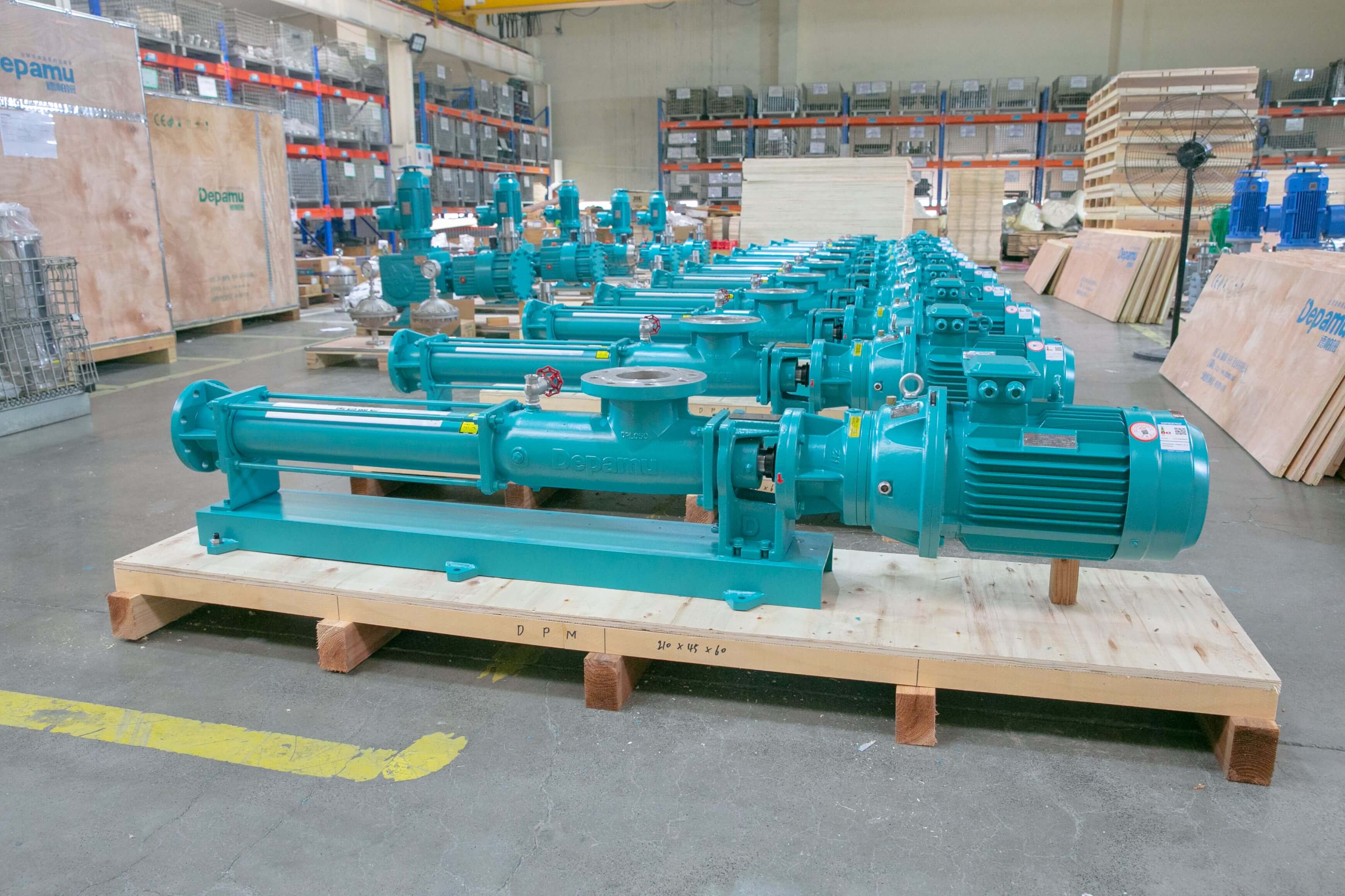
Case: A refinery once selected a certain brand of single-screw pump to transport sulfur-containing crude oil. Since the stator material was not optimized for sulfides, the stator wear rate reached 80% within three months, leading to a full production line shutdown for maintenance and direct losses exceeding 5 million yuan.
Introduction to the company's technological strength: The way Depamp Pumps breaks through technological barriers
Depamp (Hangzhou) Pump Technology Co., Ltd., established in 2003, specializes in the research and development of high-end positive displacement pumps and fluid equipment. Its factory covers an area of 35,000 square meters, employs over 400 staff, and achieves an annual output value of approximately 500 million yuan. Its technological layout for single screw pumps spans three core areas:
STEP1:Breakthroughs in Material ScienceFor corrosive media, special stator materials such as fluororubber (FKM) and hydrogenated nitrile butadiene rubber (HNBR) have been developed, expanding the temperature resistance range to -30℃~180℃ and increasing the hydrogen sulfide resistance concentration to over 15%; the rotors are made of duplex stainless steel (2205) or Hastelloy (C-276), enhancing pitting corrosion resistance by three times.
STEP2:Structural optimization designBy optimizing the clearance fit between the screw and stator through CFD fluid simulation, the volumetric efficiency was increased from 85% to 92%. The variable lead design enables the pump to maintain a stable flow rate at low rotational speeds (50-300 rpm), reducing mechanical wear.
STEP3:Intelligent monitoring systemIntegrating vibration and temperature sensors to monitor the pump's operational status in real time, it automatically triggers early warnings and adjusts operational parameters when vibration exceeds 8 mm/s or temperature surpasses 120°C, achieving a fault prediction accuracy rate of over 90%.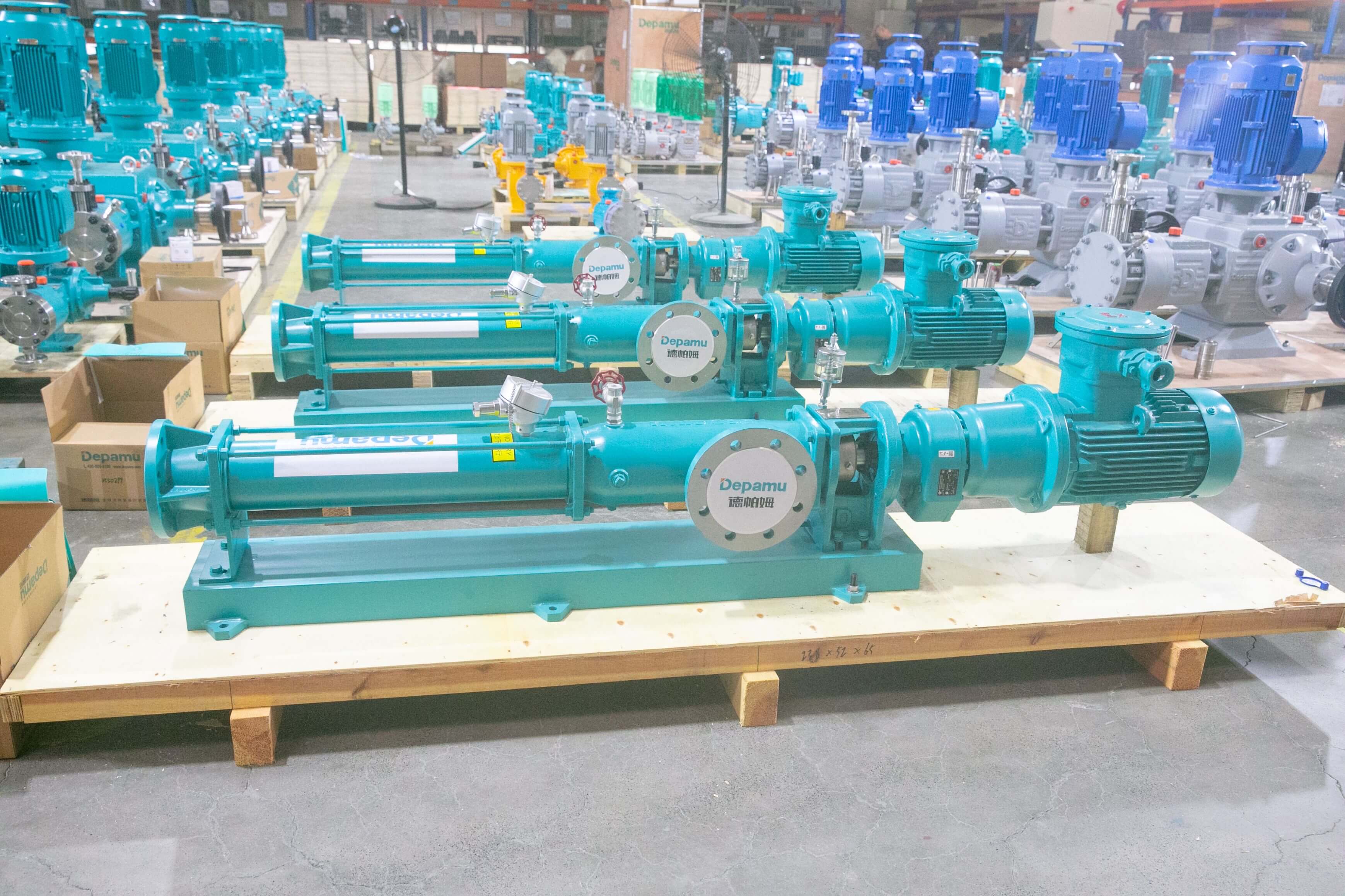
Technical Parameters: Depam single-screw pumps cover specifications from DN25 to DN200, with a flow rate range of 0.5-500 m³/h, pressure ratings of 0.6-4.0 MPa, and compatibility with media viscosities up to 100,000 mPa·s, particle sizes ≤15 mm, and gas content ≤15%. The products have obtained international certifications such as API675, CE, and ATEX, and are widely used in core projects of enterprises like PetroChina, Sinopec, and Shell.
FAQ Q&A Technical Selection Guide: A Comprehensive Analysis of the Entire Process from Requirements to Implementation
Q1: How to select stator materials based on medium characteristics?
A: For sulfide-containing media, FKM or HNBR is preferred, with a temperature resistance of ≥150℃; for chloride ion-containing media, PTFE or PVDF should be selected due to their stronger corrosion resistance; for high-viscosity media (≥100,000 mPa·s), a stator with a hardness of 60-70 Shore A should be chosen to reduce internal leakage.
Q2: How to optimize the pump body structure when the operating parameters fluctuate significantly?
A: When the temperature fluctuation exceeds 50℃, a bimetallic sleeve structure is employed, with a carbon steel outer layer (for rapid heat conduction) and a stainless steel inner layer (for corrosion resistance), reducing leakage through thermal expansion coefficient compensation. When the pressure fluctuation exceeds 2 MPa, the stator wall thickness is increased (from 10 mm to 15 mm), and a preload adjustment device is utilized to ensure tightness.
Q3: What key parameters should be provided during model selection?
A: The medium name, viscosity (at 20℃/50℃/100℃), particle size and content, gas content, temperature range, pressure range, flow demand, and operational continuity (continuous operation/intermittent operation) must be provided. For example, in a chemical project requiring the transfer of a polymer solution containing 20% solid particles at a temperature of 80-120℃ and a pressure of 2.5 MPa, Depump extended the pump's lifespan from the conventional 8,000 hours to 15,000 hours by customizing the lead ratio (1.5:1) and using carbide rotors.
For more information, please visit the official website:www.depamufluid.com
Reference for Full-text Summary: How Can Professional Selection Create Value for Enterprises?
The selection of single-screw pumps involves not only equipment procurement but also a comprehensive decision-making process integrating technical compatibility and long-term cost control. Depam Pump Industry has addressed core pain points such as medium corrosion, fluctuating operating conditions, and ambiguous selection criteria through three major technological systems: material science, structural optimization, and intelligent monitoring. Its products have been deployed across 12 industries, including petroleum refining, chemical engineering, and oil and gas fields, with over 20,000 units delivered, a failure rate below 0.5%, and a 40% reduction in maintenance costs. For users, choosing a professional supplier means obtaining full lifecycle support—from needs analysis and solution design to after-sales maintenance—ultimately achieving dual objectives of improved production efficiency and optimized total cost of ownership (TCO).
Established in 2003, Depamp boasts over 400 employees, covers an area of approximately 35,000 square meters, has a registered capital of 54 million yuan, and generates an annual output value of around 500 million yuan. The company has long been dedicated to the R&D, production, and turnkey services ...
No. 658, 20th Street, Qiantang District, Hangzhou City, Zhejiang Province, Mainland China