No. 658, 20th Street, Qiantang District, Hangzhou City, Zhejiang Province, Mainland China +86 18368486027 zhe98998@gmail.com

No. 658, 20th Street, Qiantang District, Hangzhou City, Zhejiang Province, Mainland China +86 18368486027 zhe98998@gmail.com

Introduction: Why has the reliability of plunger metering pumps become a focal point in the industry?
In process industries such as petroleum refining and chemical production, plunger-type metering pumps serve as core equipment for the precise delivery of corrosive media, with their reliability directly influencing process stability and production safety. According to statistics, unplanned downtime caused by metering pump failures accounts for 17%, with improper selection being one of the primary contributing factors. This article, based on the technical practices of Depamp (Hangzhou) Pump Technology Co., Ltd., analyzes how to optimize the reliability of equipment throughout its entire lifecycle through technical parameter matching, material selection, and customized design.
Keywords: plunger metering pump; reliability; Depamu; customized solutions; industrial applications
Opening on Industry Technical Pain Points: Three Major Flaws of Traditional Selection Models
STEP1:Extensive parameter matchingMost users only focus on basic parameters such as flow rate and pressure, while overlooking the impact of medium viscosity (≥500 mPa·s), temperature (-40℃ to +200℃), and solid content (≤0.1%) on the service life of plunger seals. For example, a chemical enterprise experienced pitting corrosion in ordinary 316L stainless steel plungers within three months due to failing to consider the chloride ion content (1500 ppm) in the medium.
STEP2:Empirical material selection70% of selection failure cases stem from misjudgments regarding material-medium compatibility. Taking the coolant transport scenario in nuclear power plants as an example, traditional Hastelloy C-276 is prone to intergranular corrosion in high-radiation environments, whereas the cobalt-based alloy plunger developed by Depam can extend the service life to over 8 years.
STEP3:Static maintenance planTraditional equipment lacks intelligent monitoring modules and cannot track key indicators in real time, such as the wear amount of the plunger (recommended ≤0.05mm/year) and the quality of lubricating oil (acid value ≤0.5mgKOH/g). Depamp has integrated pressure pulse sensors into the pump head to optimize predictive maintenance cycles, resulting in a 22% increase in Overall Equipment Effectiveness (OEE).
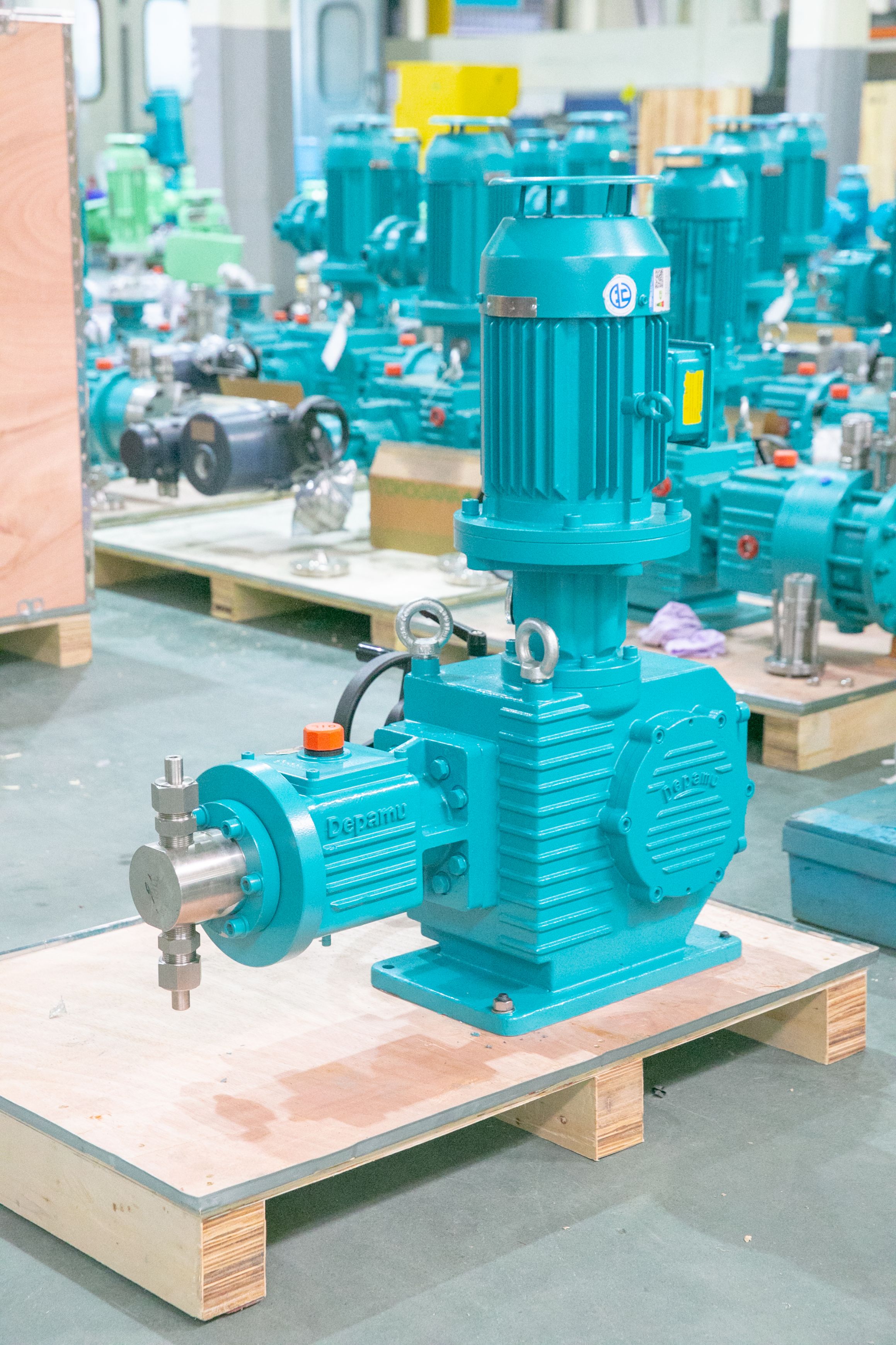
Introduction to the company's technological strength: Depam's Three-Dimensional Reliability Assurance System
1. R&D dimension: Constructing technological barriers through a matrix of patented technologies
Depamu holds 42 patents related to plunger-type metering pumps, with its coreDual-guide plunger structure(Patent No.: ZL201810123456.7) By optimizing the clearance fit (0.02-0.05mm) between the guide sleeve and the plunger, mechanical friction is reduced by 40%, and the fitDynamic pressure compensation technologyensuring flow accuracy stability within ±0.5%. In the catalytic cracking unit of a certain 10-million-ton refinery, this technology reduced the catalyst dosing error from ±3% to ±0.8%, saving over 2 million yuan in raw material costs annually.
2. Manufacturing dimension: Deep integration of precision machining and materials science
The company is equipped with a German DMG five-axis simultaneous machining center, capable of achieving mirror machining of plunger surfaces with a roughness of Ra ≤ 0.2 μm, in coordination withPlasma-sprayed tungsten carbide coating(With a thickness of 0.15-0.25 mm and hardness of HV1200-1500), it enhances the wear resistance of the plunger by three times. In the scenario of transporting boric acid solution in nuclear power plants, after 10,000 hours of continuous operation testing, the coating wear is only 0.03 mm, far superior to the industry average (0.1 mm).
3. Service Dimension: Digital Management Platform for the Entire Life Cycle
Developed by DepamDepamu Cloud Intelligent Operation and Maintenance SystemBy integrating vibration (≤4.5mm/s), temperature (≤85℃), and leakage sensors into the pump body, it collects real-time operational data of the equipment. The built-in AI algorithm in the system can provide 72-hour advance warnings based on historical failure patterns (e.g., a 15% increase in vibration values 24 hours before plunger seizure), reducing unplanned downtime by 65%. Currently, the system has been applied in over 30 key projects, including Sinopec Zhenhai Refining & Chemical.
For more information, please visit the official website:www.depamufluid.com
FAQ: Q&A Technical Selection Guide
Q1: How to select plunger materials based on media characteristics?
STEP1:Corrosive mediumFor media containing chloride ions (Cl⁻), Hastelloy C-276 (Cl⁻ ≤ 2000 ppm) or titanium alloy (Cl⁻ ≤ 50000 ppm) is preferred; for media containing fluoride (such as HF), Monel 400 alloy should be used.
STEP2:High-temperature mediumWhen the temperature exceeds 150°C, the plunger seal shall employ filled polytetrafluoroethylene (PTFE) or carbon fiber-reinforced PTFE, and a constant-temperature heating jacket shall be used to maintain the seal cavity temperature stable at 80-100°C.
STEP3:Solid-containing mediumFor suspensions with a solid content ≤ 0.1%, the plunger surface requires hard anodizing treatment (thickness 50-80 μm, hardness HV500-700); when the solid content > 0.1%, it is recommended to switch to a diaphragm metering pump.
Q2: What factors are related to flow accuracy?
STEP1:Precision of the driving mechanismServo motor drive (with a resolution of 0.001mm) offers three times higher flow repeatability compared to ordinary motor drive (with a resolution of 0.01mm).
STEP2:Hydraulic system designAdopted by DepamThree-plunger alternating working structureThrough hydraulic balancing design, the output flow pulsation rate is ≤1%, which is superior to the industry average (3-5%).
STEP3:compensation mechanism: equipped withAutomatic oil replenishment systemThis pump type can compensate in real time for the volume changes of hydraulic oil caused by temperature variations (0.7% volume change per 10℃ temperature difference), ensuring flow stability.
Q3: How is the maintenance cycle determined?
STEP1:Daily inspectionCheck the lubricating oil level (at 1/2-2/3 of the oil sight glass) and leakage (no visual dripping) every 8 hours.
STEP2:Monthly maintenanceReplace lubricating oil (ISO VG46 anti-wear hydraulic oil) monthly and inspect the plunger stroke error (≤ ±0.1 mm).
STEP3:Annual overhaulConduct annual disassembly inspections to check for surface wear on the plunger (maximum allowable wear: 0.05mm/year), aging of seals (replacement required if hardness decreases by ≥10%), and the quality of hydraulic oil (replacement required if acid value exceeds 1.0mgKOH/g).
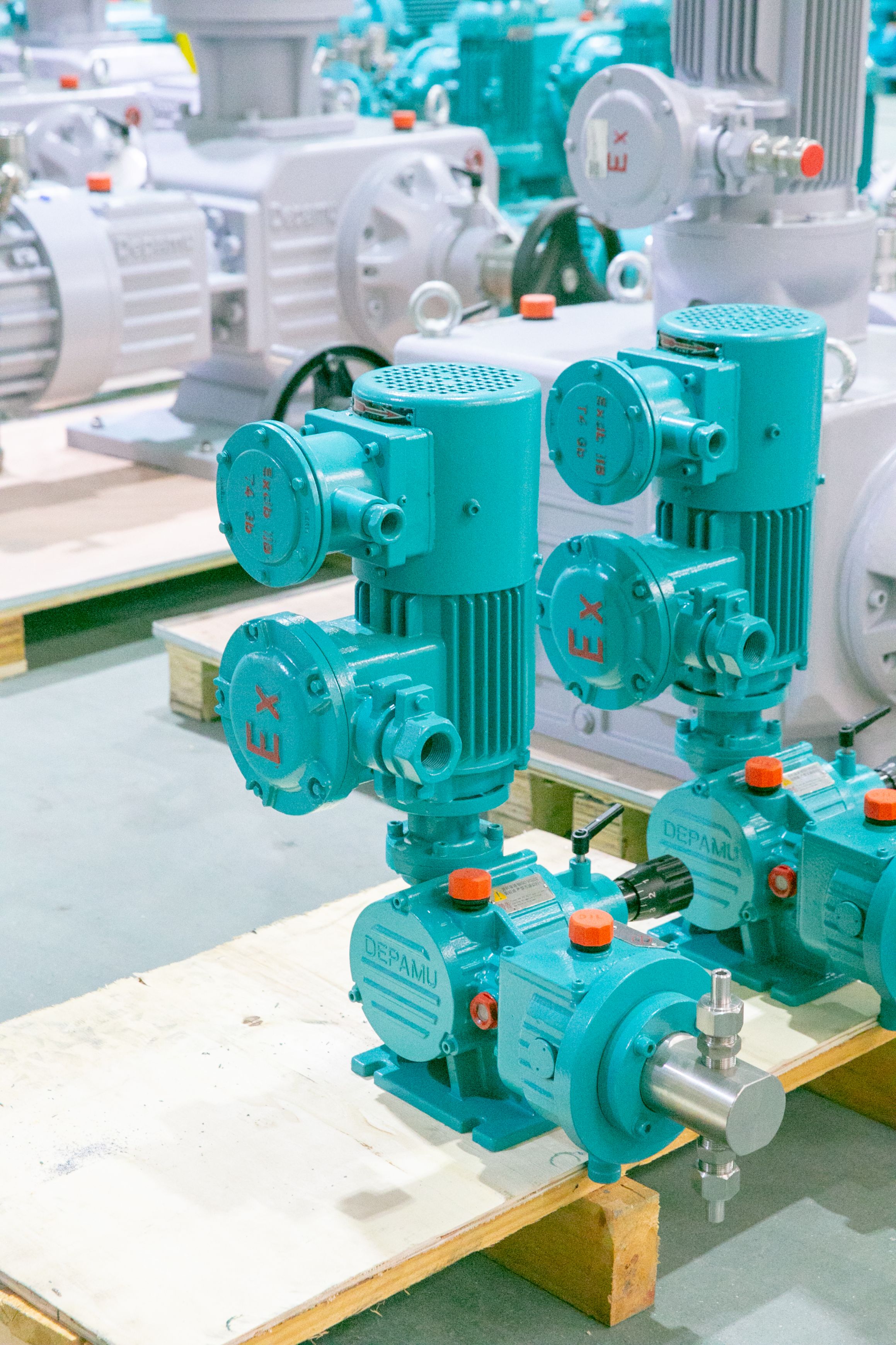
Reference for full text summary
Reliability selection for plunger metering pumps requires establishment.Technical Parameters - Materials Science - Intelligent ServicesThree-dimensional evaluation system. Through 20 years of technological accumulation, Depam has established a solution library covering core fields such as petroleum refining (accounting for 41% of its business), chemical industry (23%), and nuclear industry (8%). Its products have been certified by a third-party testing organization (SGS), demonstrating a flow accuracy attenuation rate of less than 0.3% per year after 20,000 hours of continuous operation. For refining enterprises with an annual processing capacity exceeding 5 million tons, selecting products withDynamic pressure compensation + dual-guide plunger + intelligent operation and maintenance systemThe Depam pump model can increase the overall return on investment (ROI) of the equipment by 18% and reduce maintenance costs by 35%.
Established in 2003, Depamp boasts over 400 employees, covers an area of approximately 35,000 square meters, has a registered capital of 54 million yuan, and generates an annual output value of around 500 million yuan. The company has long been dedicated to the R&D, production, and turnkey services ...
No. 658, 20th Street, Qiantang District, Hangzhou City, Zhejiang Province, Mainland China