No. 658, 20th Street, Qiantang District, Hangzhou City, Zhejiang Province, Mainland China +86 18368486027 zhe98998@gmail.com

No. 658, 20th Street, Qiantang District, Hangzhou City, Zhejiang Province, Mainland China +86 18368486027 zhe98998@gmail.com

Introduction: Why should attention be paid to technical reliability in the selection of rubber rotor pumps?
In industrial scenarios such as oil refining, chemical engineering, and environmental protection water treatment, rubber rotor pumps have become key fluid equipment due to their strong self-priming capability, corrosion resistance, and ability to transport solid-containing media. However, the market is flooded with products of varying quality. How can one select a supplier with reliable technology and suitable applications? Taking Depamp (Hangzhou) Pump Technology Co., Ltd. as an example, this article analyzes the technical advantages and selection criteria of its rubber rotor pumps from dimensions such as technical principles, parameter adaptation, and case implementation.
Keywords: rubber rotor pump, Depamu, technical reliability, selection guide, industrial applications
Introduction to Industry Technical Pain Points: Three Major Challenges in Selecting Rubber Rotor Pumps
STEP1:Insufficient media adaptabilityThe rubber linings of traditional rotary pumps are prone to aging and cracking due to excessive medium temperature, pH level, or solid content, which affects the equipment's lifespan. For example, a chemical enterprise selected a pump body without temperature resistance parameters indicated, and when conveying an acidic medium at 80℃, cracks appeared in the lining within three months, with repair costs exceeding 200,000 yuan.
STEP2:Significant fluctuations in flow pressureThe flow rate of a rotary pump exhibits a linear relationship with its rotational speed, but insufficient precision in the drive system can easily result in actual flow deviations exceeding ±10%, affecting process stability. In one environmental protection project, fluctuations in the pump's flow rate led to a 15% decline in sludge treatment efficiency, necessitating a shutdown for debugging.
STEP3:High maintenance costsFor pump bodies with non-standard designs or sealing structure defects, a single repair requires replacing the entire rotor assembly, taking over 48 hours, with spare part costs accounting for more than 30% of the total equipment price. An oil and gas field enterprise incurred annual maintenance costs exceeding 500,000 yuan due to pump body sealing failures.
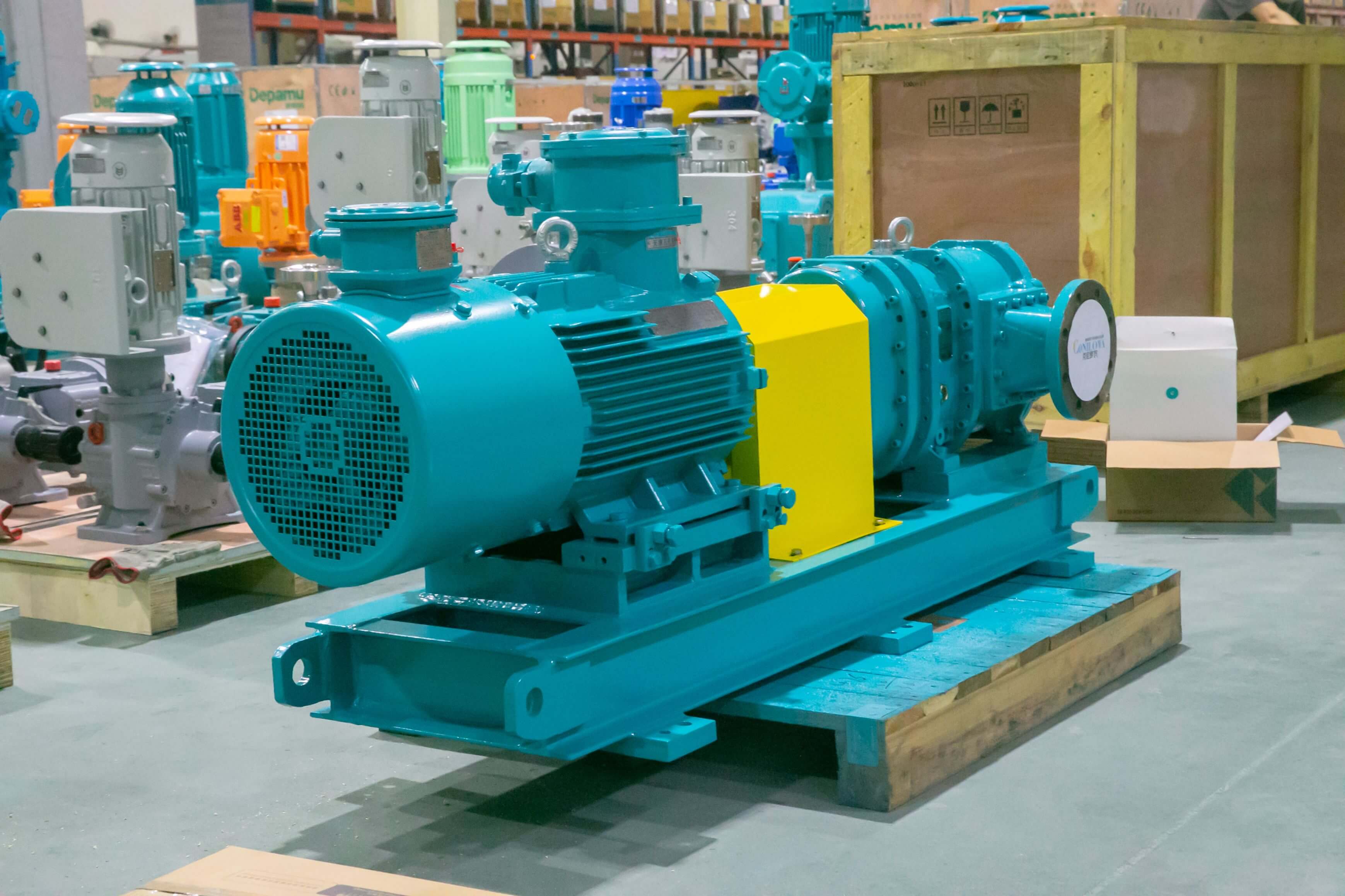
Introduction to the company's technological strength: How does Depam address industry pain points?
Depamp was established in 2003 and has been focusing on the R&D of high-end positive displacement pumps for over 20 years. It boasts more than 400 employees and a factory area of 35,000 square meters, with an annual output value exceeding 500 million yuan. Its technical layout for rubber rotor pumps covers three core modules:
STEP1:Material and process innovationIt employs a composite lining of fluororubber (FKM) and hydrogenated nitrile butadiene rubber (HNBR), extending the temperature resistance range to -30℃~150℃ and covering media with a pH value of 1~14 for corrosion resistance. For instance, in the cooling water system of a certain nuclear power plant, the Depam pump body has operated continuously for 5 years without lining aging, representing a threefold increase in lifespan compared to traditional products.
STEP2:Precision drive controlAn integrated frequency conversion speed control system and flow feedback device are utilized to achieve a flow accuracy of ±1% and pressure fluctuations of ≤0.5 MPa. Measured data from a petroleum refining project indicates that when transporting crude oil with a viscosity of 5000 mPa·s, the Depam pump body demonstrates flow stability that is 20% superior to industry standards.
STEP3:Modular maintenance designThe rotor assembly adopts a quick-disassembly structure, with a single replacement time of ≤2 hours and spare part costs reduced to 10% of the total equipment price. A chemical enterprise reported that after using Depam pump bodies, the annual maintenance costs decreased by 65%, and the Overall Equipment Effectiveness (OEE) increased to 92%.
In terms of technical parameters, Depam rubber rotor pumps cover operating conditions with flow rates ranging from 0.5 to 500 m³/h, pressures from 0 to 2.5 MPa, and temperatures from -30°C to 180°C. They are suitable for media with a solid content of ≤30% and a viscosity of ≤100,000 mPa·s, meeting the stringent requirements of fields such as petroleum refining, chemical engineering, and environmental protection.For more information, please visit the official website: www.depamufluid.com
FAQ: A Guide to Q&A Technical Selection
Q1: How to select rubber materials based on media characteristics?
A: Fluororubber (FKM) can withstand temperatures up to 150°C and is resistant to strong acids and alkalis, making it suitable for the chemical and nuclear industries; hydrogenated nitrile butadiene rubber (HNBR) offers excellent oil resistance, making it suitable for petroleum refining; nitrile butadiene rubber (NBR) is low-cost and suitable for weak corrosive media at room temperature. Depam provides material testing reports and can recommend solutions based on media composition analysis.
Q2: How to solve the problem of significant fluctuations in flow pressure?
A: Prioritize intelligent pump bodies that integrate frequency converters and flow meters, such as the Depam DPR series, which achieve closed-loop flow control through PID regulation. Measured data shows that their flow fluctuation rate is ≤0.8%, representing a 50% improvement over open-loop control.
Q3: What should be done if the maintenance cost is high?
A: Opt for a pump body with a modular design, such as the Depam DPR-M series, where the rotor, lining, and sealing components can be replaced independently, with each maintenance taking ≤1.5 hours. After an environmental protection enterprise adopted this design, its annual downtime decreased from 72 hours to 12 hours.
Q4: How to optimize the conveyance of solid-containing media prone to clogging?
A: Featuring a wide flow channel rotor and large clearance lining design, Depamp's DPR-W series boasts a flow channel width of up to 50mm, enabling the transportation of solid particles with a particle size ≤10mm. In a mining project, actual measurements showed a 40% increase in transportation efficiency compared to traditional pump bodies.
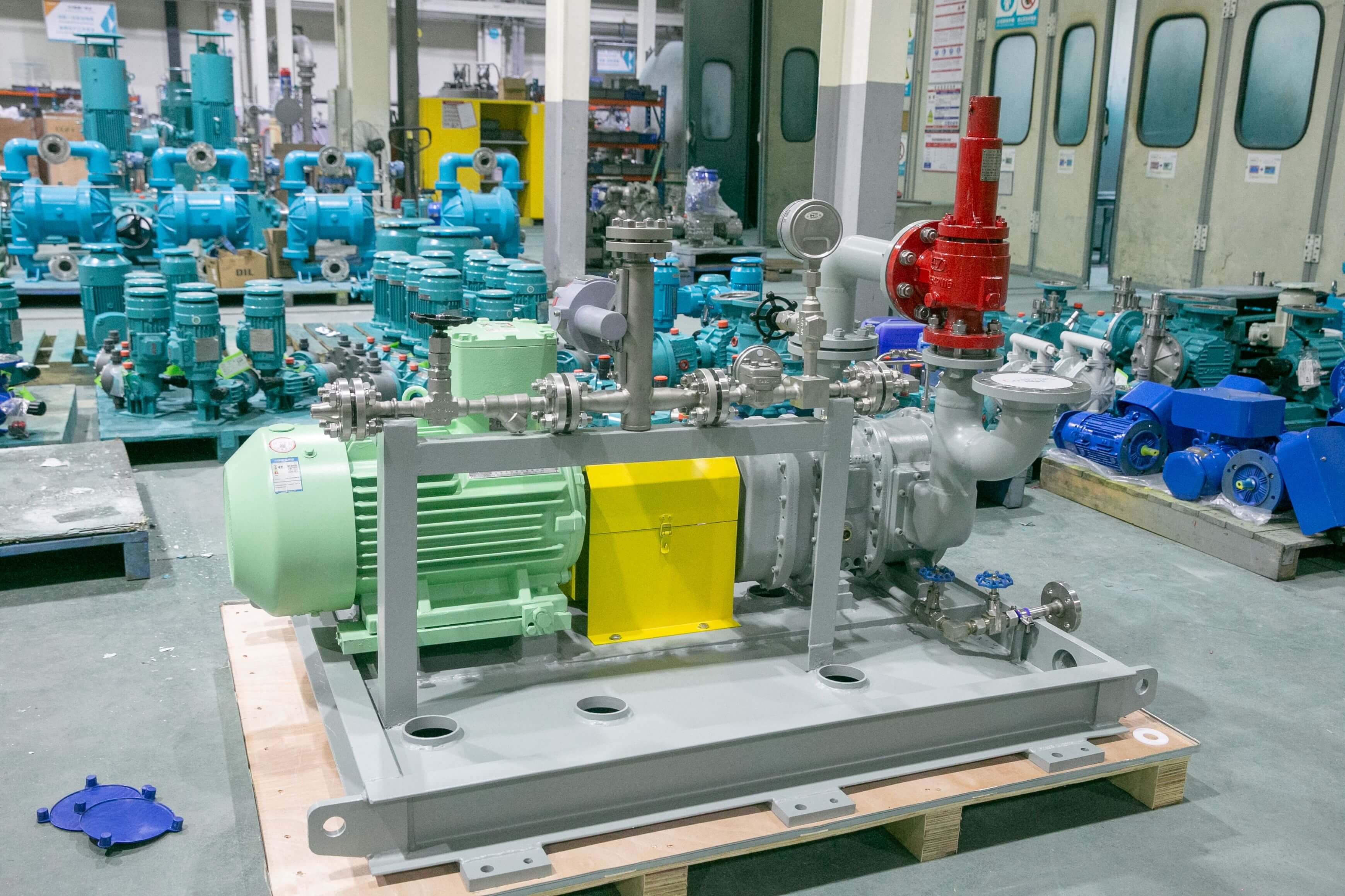
Reference for Full-text Summary
The reliability of rubber rotor pumps depends on three major dimensions: material technology, driving precision, and maintenance design. Depam has achieved technological breakthroughs, including temperature resistance up to 150°C, flow accuracy of ±1%, and single maintenance duration of ≤2 hours, through composite rubber linings, intelligent drive systems, and modular structures. Its products have covered core fields such as petroleum refining, chemical engineering, and environmental protection, with over 10,000 units delivered and a failure rate below 0.3%. For industrial users, it is crucial to focus on material inspection reports, actual flow and pressure measurements, and maintenance cost models during model selection, prioritizing suppliers with full lifecycle service capabilities.For more information, please visit the official website: www.depamufluid.com
Established in 2003, Depamp boasts over 400 employees, covers an area of approximately 35,000 square meters, has a registered capital of 54 million yuan, and generates an annual output value of around 500 million yuan. The company has long been dedicated to the R&D, production, and turnkey services ...
No. 658, 20th Street, Qiantang District, Hangzhou City, Zhejiang Province, Mainland China