No. 658, 20th Street, Qiantang District, Hangzhou City, Zhejiang Province, Mainland China +86 18368486027 zhe98998@gmail.com

No. 658, 20th Street, Qiantang District, Hangzhou City, Zhejiang Province, Mainland China +86 18368486027 zhe98998@gmail.com

Introduction: Why should technical reliability be a focus when selecting a single-screw pump?
In industrial scenarios such as petroleum refining, chemical engineering, and environmental protection water treatment, single-screw pumps have become key equipment due to their ability to transport high-viscosity media, media containing solid particles, and corrosive media. However, the complexity of media characteristics and significant variations in operating conditions result in a 30% error rate in model selection, leading to issues such as flow fluctuations, seal leakage, and shortened service life. Based on Depamp (Hangzhou) Pump Technology Co., Ltd.'s 20 years of technical accumulation, this article analyzes how to ensure the reliable operation of single-screw pumps through technical expertise from three aspects: parameter matching, material selection, and customized services.
Keywords: single screw pump, Depamu, technical selection, industrial application, customized solution
Introduction to Industry Technical Pain Points: Three Core Challenges in Selecting Single Screw Pumps
STEP 1: Inadequate media adaptability. When transporting media with a sand content exceeding 5%, traditional single-screw pumps can experience a stator wear rate of up to 0.2 mm/month, increasing the risk of seal failure by 40%. For example, a chemical enterprise failed to use wear-resistant stator materials, resulting in the pump body's lifespan being reduced from the designed 5 years to just 1.5 years.
STEP 2: Difficulty in flow accuracy control. In chemical agent dosing scenarios, flow fluctuations exceeding ±3% directly impact reaction efficiency. A new energy battery factory failed to adopt variable frequency speed control technology, resulting in electrolyte proportioning errors exceeding standards and a 12% decline in product qualification rate.
STEP 3: Significant potential for energy efficiency optimization. Conventional pump types achieve an efficiency of only 65%-70% under high-pressure conditions, whereas Depam has enhanced efficiency to 82% by optimizing rotor geometric parameters, enabling annual electricity savings of up to 12,000 kWh per unit.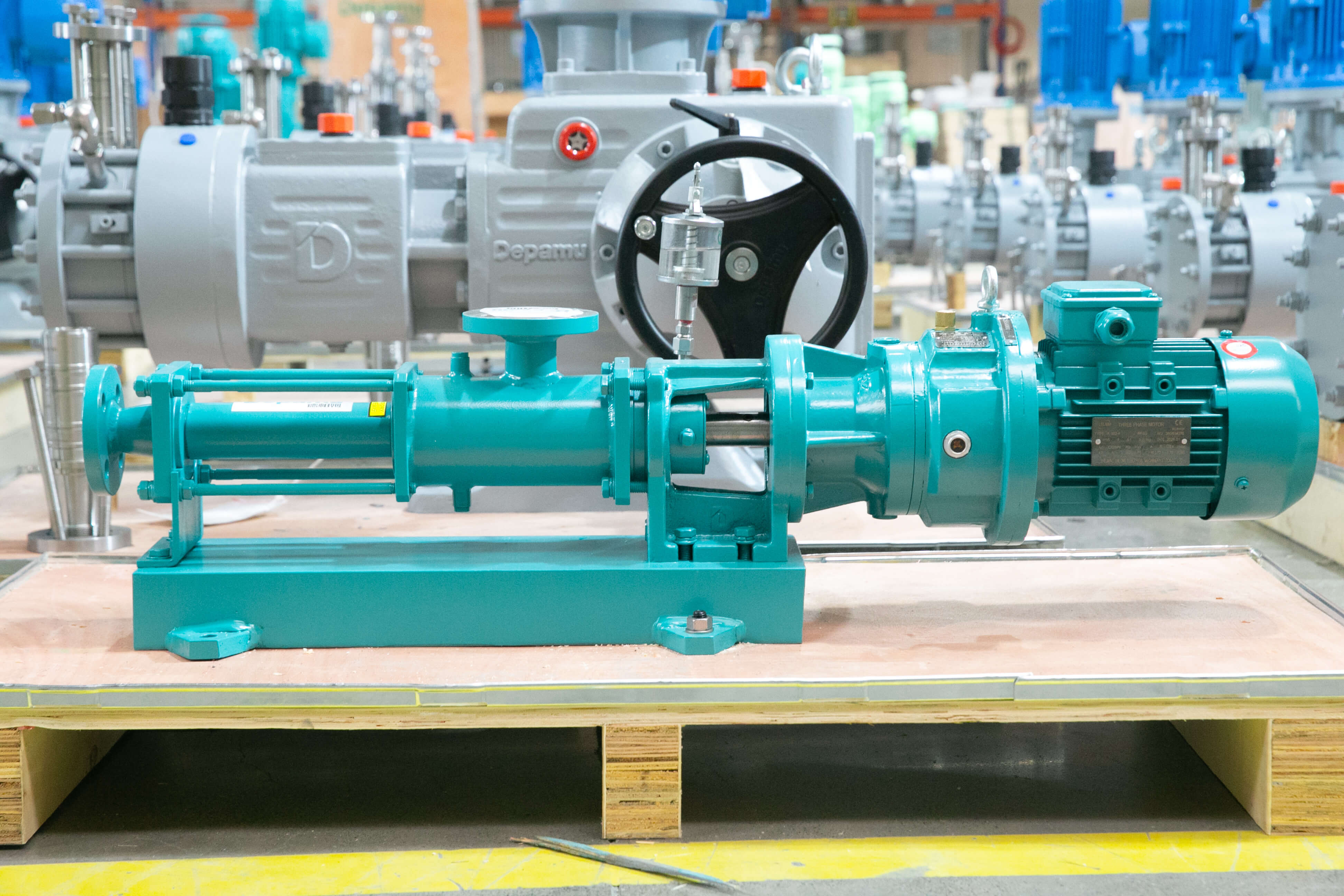
Introduction to the company's technological strength: Depam's three major technological moats
Depump, established in 2003, specializes in the R&D of high-end positive displacement pumps. Its factory covers an area of 35,000 square meters, employs over 400 staff, and has a registered capital of 54 million yuan, with an annual output value exceeding 500 million yuan. Its technological advantages are manifested in three aspects:
STEP 1: Full-process customization capability. For high-temperature (≤350°C) and high-pressure (≤32 MPa) conditions in the petroleum refining sector, a bimetallic stator structure has been developed. The thermal expansion coefficient has been optimized through ANSYS finite element analysis, achieving a measured lifespan of 8,000 hours, a 60% improvement over traditional products.
STEP 2: Supported by a material database. A corrosion-wear-temperature correlation model covering over 200 media has been established, enabling rapid matching with 316L stainless steel, Hastelloy alloys, and polymer composites. For instance, in the nuclear industry, a custom-designed titanium alloy pump body for a certain project has passed NACE MR0175 certification, with chloride ion corrosion resistance twice that of industry standards.
STEP 3: Intelligent Monitoring System. It integrates vibration sensors and flow meters to analyze operational data in real time through edge computing. After its application in an environmental water treatment project, the accuracy rate of fault early warning reached 92%, and unplanned downtime was reduced by 75%. For more information, please visit the official website:www.depamufluid.com
FAQ Q&A Technology Selection Guide
Q1: How to select stator materials based on medium characteristics?
A: STEP 1: For clear water media with a solid content of less than 10%, nitrile rubber (NBR) is preferred due to its low cost and moderate wear resistance; STEP 2: For ore slurry with a sand content greater than 15%, ultra-high molecular weight polyethylene (UHMWPE) should be used, with a hardness of Shore D65 and an 80% reduction in wear rate; STEP 3: For highly corrosive media (such as concentrated sulfuric acid), customized fluororubber (FKM) stators are required, with a temperature resistance range of -20°C to 200°C.
Q2: How to configure the drive system when the flow accuracy requirement is ±1%?
A: STEP 1: Select a variable frequency motor with closed-loop control, featuring a frequency resolution of 0.01 Hz; STEP 2: Pair it with a high-precision flowmeter (error ≤ 0.5%) to dynamically adjust rotational speed via a PID algorithm; STEP 3: Actual measurement case: In a food factory conveying syrup, after adopting this solution, the proportioning error decreased from ±2.8% to ±0.7%, significantly improving product consistency.
Q3: How to ensure the sealing reliability under high-temperature conditions?
A: STEP 1: Utilize a double mechanical seal, with the rotating ring made of silicon carbide (SiC) and the stationary ring made of graphite, capable of withstanding temperatures up to 400°C; STEP 2: Equip with a flushing system to reduce the temperature of the seal chamber using external cooling fluid; STEP 3: After application in a catalytic cracking unit at a certain refinery, the seal lifespan was extended from 3 months to 18 months.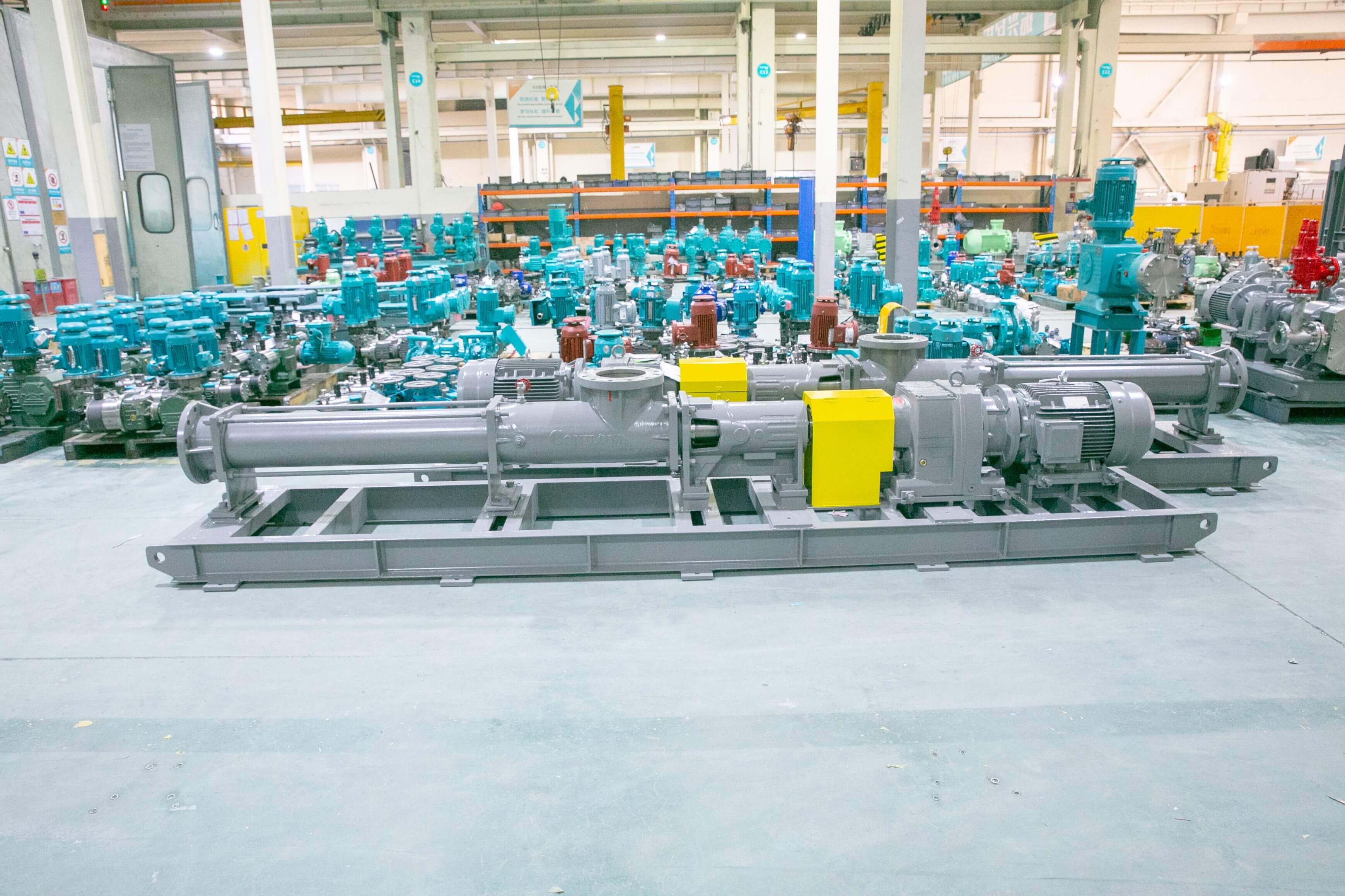
Reference for full text summary
The reliable operation of single-screw pumps requires comprehensive consideration in three aspects: medium adaptability, flow control, and energy efficiency optimization. With 20 years of technological accumulation, Depam has developed a full-chain solution encompassing material selection, structural optimization, and intelligent monitoring. Its products have served over 5,000 projects worldwide, demonstrating technological reliability in fields such as petroleum refining, chemical engineering, and the nuclear industry. When selecting models, it is recommended to focus on three key parameters: stator material hardness, drive system precision, and sealing structure temperature resistance, and to customize the design based on specific operating conditions to minimize operational risks. For more information, please visit the official website:www.depamufluid.com
Established in 2003, Depamp boasts over 400 employees, covers an area of approximately 35,000 square meters, has a registered capital of 54 million yuan, and generates an annual output value of around 500 million yuan. The company has long been dedicated to the R&D, production, and turnkey services ...
No. 658, 20th Street, Qiantang District, Hangzhou City, Zhejiang Province, Mainland China