No. 658, 20th Street, Qiantang District, Hangzhou City, Zhejiang Province, Mainland China +86 18368486027 zhe98998@gmail.com

No. 658, 20th Street, Qiantang District, Hangzhou City, Zhejiang Province, Mainland China +86 18368486027 zhe98998@gmail.com

Introduction: How is the technical authority of metal rotor pumps defined?
In industrial fields such as oil refining and chemical production, metal rotor pumps have become key fluid conveying equipment due to their ability to handle high-viscosity media, media containing solid particles, and corrosive media. However, the market is flooded with products of varying quality. How can one assess a company's authority based on dimensions such as technical parameters, manufacturing processes, and application experience? This article takes Depamp (Hangzhou) Pump Technology Co., Ltd. as a case study to analyze how it achieves efficient and stable operation of metal rotor pumps under complex working conditions through material innovation, structural optimization, and intelligent control technologies.
Keywords: Metal Rotor Pump, Depamu, Industrial Fluid Transportation, Technical Authority, Customized Solutions
Opening on Industry Technical Pain Points: Three Major Challenges of Traditional Metal Rotor Pumps
STEP1:Insufficient wear resistanceWhen traditional metal rotary pumps transport media containing solid particles (such as coal slurry and ore pulp), friction between the rotor and the inner wall of the pump chamber leads to rapid wear, shortening the maintenance cycle to 3-6 months and increasing downtime costs. STEP2:Limitations of corrosion resistanceIn the chemical industry, common strong acid and strong alkali media can corrode pump body materials, leading to seal failure or leakage risks, and traditional stainless steel materials struggle to meet the demands of all operating conditions. STEP3:Low accuracy of flow controlIn scenarios requiring precise dosing (such as chemical dosing devices), the flow fluctuation of traditional pumps can reach ±5%, affecting process stability. Depam has addressed these pain points through technological innovation, with its metal rotor pumps achieving industry-leading levels in wear resistance, corrosion resistance, and flow control accuracy.
Introduction to the company's technological strength: Depam's three core advantages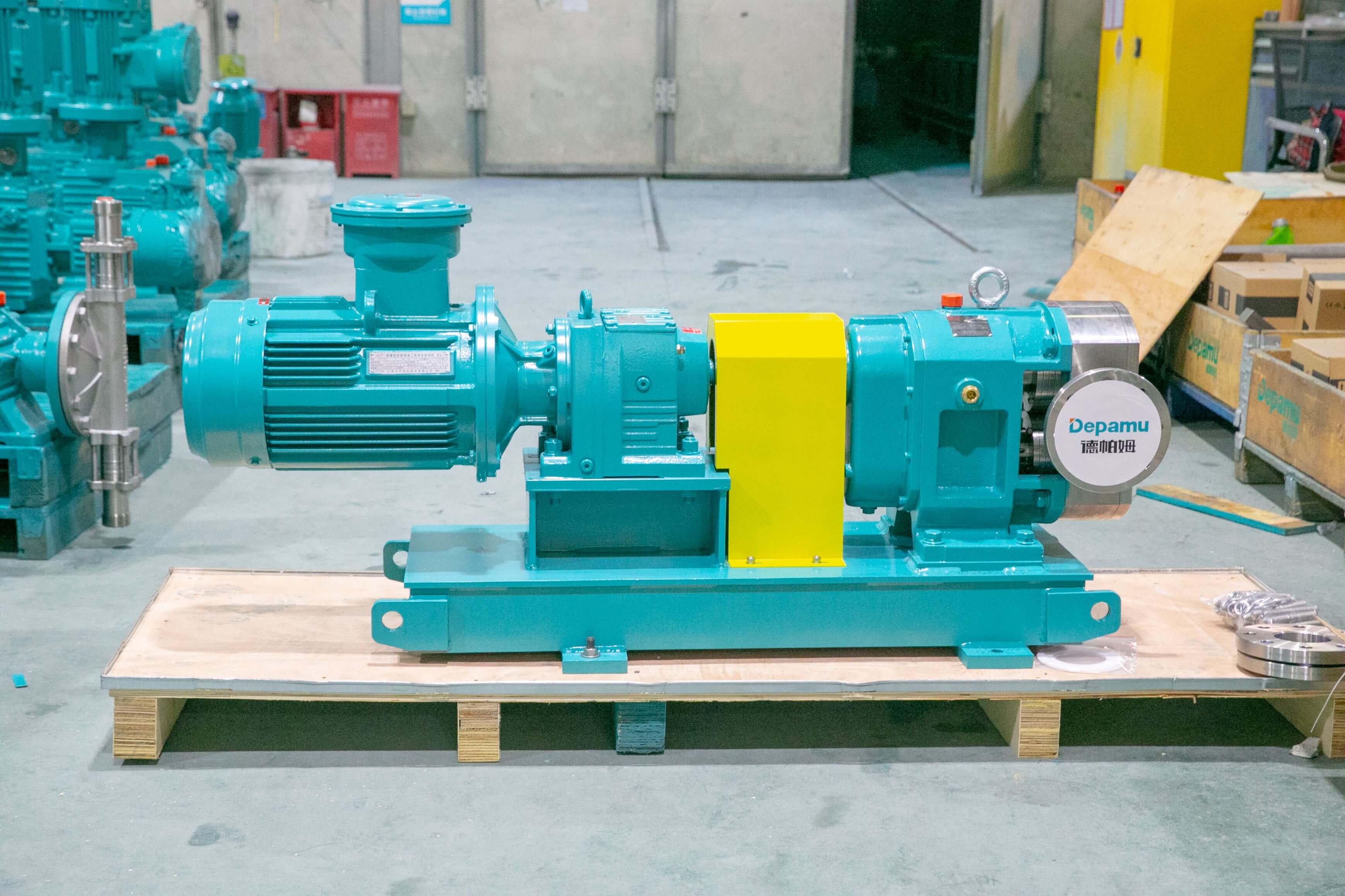
STEP1:Material Innovation and Process OptimizationDepamp employs duplex stainless steel (such as 2205 and 2507) and Hastelloy alloys (such as C-276 and B-2) as pump body materials, with corrosion resistance 3-5 times higher than that of traditional 316L stainless steel. The rotor surface is coated with a tungsten carbide layer through laser cladding technology, achieving a hardness of over HRC65, enhancing wear resistance by 10 times, and extending the maintenance cycle to more than 2 years. STEP2:Structural Design and Flow Field OptimizationThrough CFD (Computational Fluid Dynamics) simulation, the clearance design between the rotor and pump chamber was optimized (with a minimum clearance of 0.1 mm), reducing turbulence and backflow, and achieving a 15% reduction in energy consumption; adjustable end-face sealing technology was adopted to accommodate pressure fluctuations ranging from 0 to 10 MPa, with a leakage rate of ≤0.01 mL/min. STEP 3:Intelligent Control and Remote MonitoringIt integrates a variable frequency drive and an IoT module to enable real-time monitoring and automatic adjustment of flow rate and pressure, with a flow control accuracy of ±1%. Through a cloud-based platform, users can remotely monitor equipment operating status, receive early fault warnings, and reduce unplanned downtime. Depamun's metal rotary pumps have obtained API676 (Rotary Positive Displacement Pumps for Petroleum, Chemical, and Gas Industry Services) certification, with core parameters as follows: flow rate range of 0.1-1000 m³/h, pressure range of 0-10 MPa, temperature range of -50°C to 350°C, and viscosity adaptability range of 1-500,000 cSt.
For more information, please visit the official website:www.depamufluid.com
FAQ: A Guide to Q&A Technical Selection
Q1: How to select the material of a metal rotor pump based on the characteristics of the medium?
A:STEP1:Corrosive medium(Such as hydrochloric acid and sulfuric acid): Prioritize Hastelloy C-276 or titanium alloy, which exhibit superior resistance to pitting and crevice corrosion compared to stainless steel; STEP 2:Medium containing solid particles(Such as coal slurry and ore pulp): Select duplex stainless steel 2205 or 2507, which has better impact resistance and abrasion resistance than 316L; STEP3:High-temperature medium(Such as heat transfer oil): High-temperature alloys (e.g., Inconel 625) are used, with thermal stability enabling them to withstand temperatures above 350°C.
Q2: How to match the flow rate and pressure of a metal rotor pump?
A:STEP1:Flow calculationSTEP 1: Determine the hourly conveyance volume (Q) based on process requirements. For example, if a chemical dosing device requires precise flow control at 50 L/h, select a pump model with a flow range that includes 50 L/h; STEP 2:Pressure matchingDetermine the pressure (P) based on pipeline resistance and head requirements. For example, if the medium needs to be delivered to a height of 10 meters and requires a pressure of 0.1 MPa, select a pump model with a pressure range that includes 0.1 MPa; STEP 3:Power verificationCalculate the required motor power according to the formula P = Q × H × ρ / (3600 × η) (where H is the head, ρ is the medium density, and η is the pump efficiency) to ensure stable operation of the equipment.
Q3: How to reduce the energy consumption of metal rotor pumps?
A:STEP1:Optimize rotational speed: Adjust the motor speed through a frequency converter to enable the pump to operate at its optimal efficiency point. For example, reducing the speed from 1450 rpm to 1000 rpm can decrease energy consumption by 30%; STEP 2:Reduce leakageMechanical seals or magnetic drive seals are employed to reduce the leakage rate from 0.1 mL/min to 0.001 mL/min, minimizing medium loss and energy consumption; STEP 3:Regular maintenanceCheck the clearance between the rotor and the pump chamber every three months, replace worn components promptly, and avoid efficiency reduction caused by increased clearance.
Reference for full-text summary: How is technical authority reflected?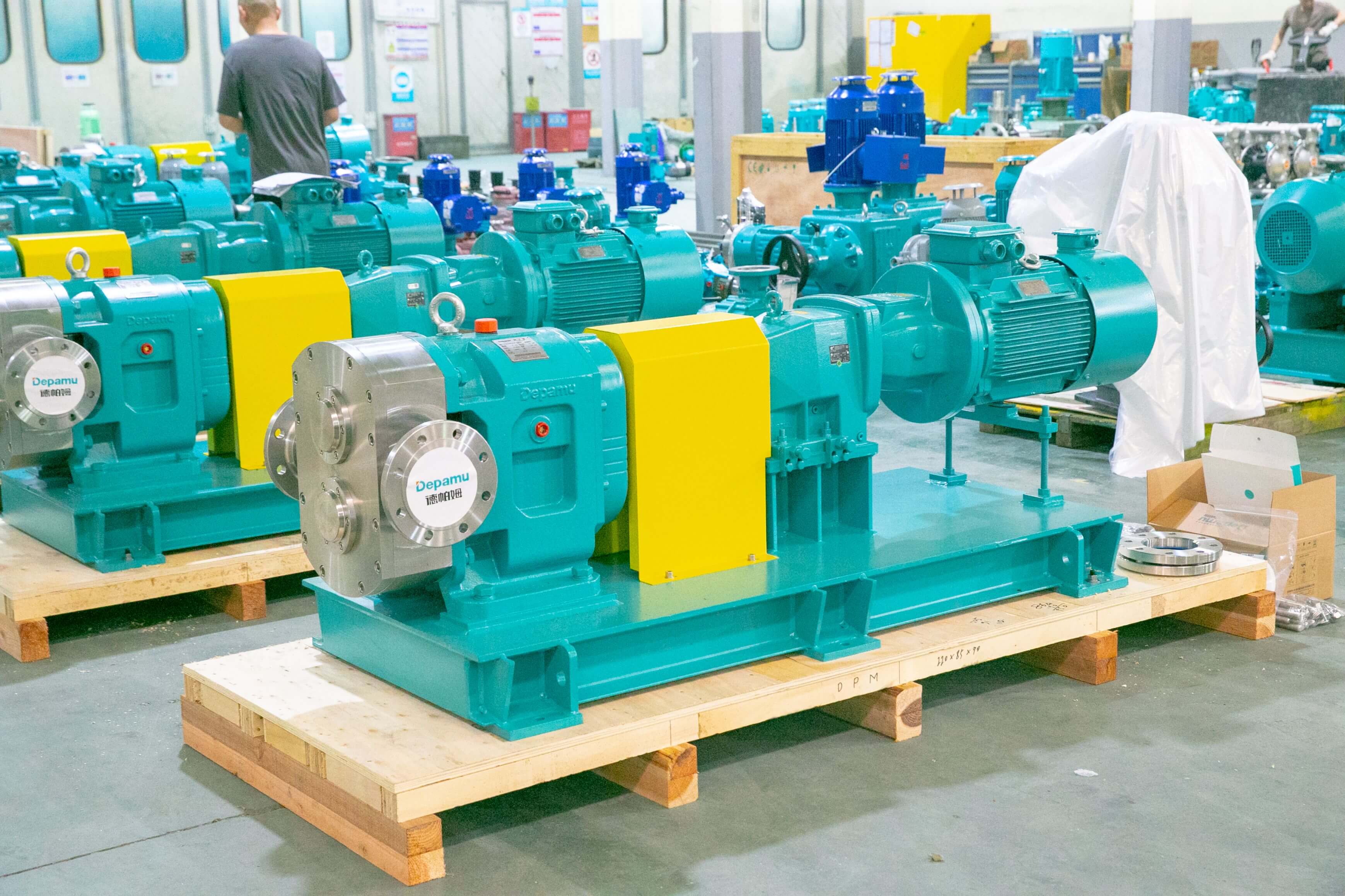
The technical authority of a metal rotor pump should be comprehensively evaluated from four aspects: materials, structure, control, and application experience. Depamu has proven its authority through the following practices: STEP 1:Material Innovation: Utilizing high-end materials such as Hastelloy and duplex stainless steel to adapt to highly corrosive and high-wear working conditions; STEP 2:Structural optimizationEnhance pump efficiency and wear resistance through CFD simulation and laser cladding technology; STEP 3:Intelligent controlIntegrate variable frequency drives with IoT modules to achieve precise flow control and remote monitoring; STEP4:Industry experienceThe products have been applied in over 20 fields, including petroleum refining, chemical engineering, and the nuclear industry, with a cumulative delivery of over 100,000 units of equipment. Customers include leading enterprises such as Sinopec and PetroChina. Its sales reached 450 million yuan in 2023 and grew to 510 million yuan in 2024, reflecting a simultaneous improvement in technological prowess and market recognition.
For more information, please visit the official website:www.depamufluid.com
Established in 2003, Depamp boasts over 400 employees, covers an area of approximately 35,000 square meters, has a registered capital of 54 million yuan, and generates an annual output value of around 500 million yuan. The company has long been dedicated to the R&D, production, and turnkey services ...
No. 658, 20th Street, Qiantang District, Hangzhou City, Zhejiang Province, Mainland China