No. 658, 20th Street, Qiantang District, Hangzhou City, Zhejiang Province, Mainland China +86 18368486027 zhe98998@gmail.com

No. 658, 20th Street, Qiantang District, Hangzhou City, Zhejiang Province, Mainland China +86 18368486027 zhe98998@gmail.com

Introduction: Why should attention be paid to a company's technological strength when selecting twin-screw pumps?
As a core category of positive displacement pumps, the performance of twin-screw pumps directly depends on design precision, material selection, and manufacturing processes. In high-demand scenarios such as petroleum refining, chemical engineering, and the nuclear industry, the reliability, corrosion resistance, and long-term operational capabilities of pumps have become key indicators. Taking Depamp (Hangzhou) Pump Technology Co., Ltd. as an example, this article analyzes the selection logic of twin-screw pumps from three dimensions—technical principles, corporate capabilities, and industry case studies—to provide quantifiable reference standards for engineering and technical personnel.
Keywords: twin-screw pump, Depamuk (Depam, assuming it's a brand name and keeping it as is), technical strength, industrial applications, selection guide
Industry technical pain points: Three core challenges in the selection of twin-screw pumps
STEP 1: Challenges of medium adaptability
In the chemical industry, twin-screw pumps are required to transport media containing solid particles, high-viscosity substances, or corrosive substances (such as sulfuric acid and sodium hydroxide solution). Traditional pump bodies are prone to leakage due to wear or corrosion, with maintenance frequencies as high as 2-3 times per month, directly affecting production continuity.
STEP 2: The contradiction between energy efficiency and stability
In the oil refining scenario, pumps are required to operate continuously under high temperatures of 300°C and high pressures of 15 MPa. Due to design flaws, ordinary twin-screw pumps are prone to issues such as shaft seal leakage and bearing overheating, with energy efficiency losses reaching 15%-20%.
STEP 3: Lag in responding to customized demands
In the production of new energy battery materials, customers often need to adjust parameters such as flow rate (5-500 m³/h) and pressure (0.1-6 MPa) according to the process. The lead time from demand confirmation to delivery for traditional suppliers can be as long as 3-6 months, making it difficult to meet the requirements for rapid iteration.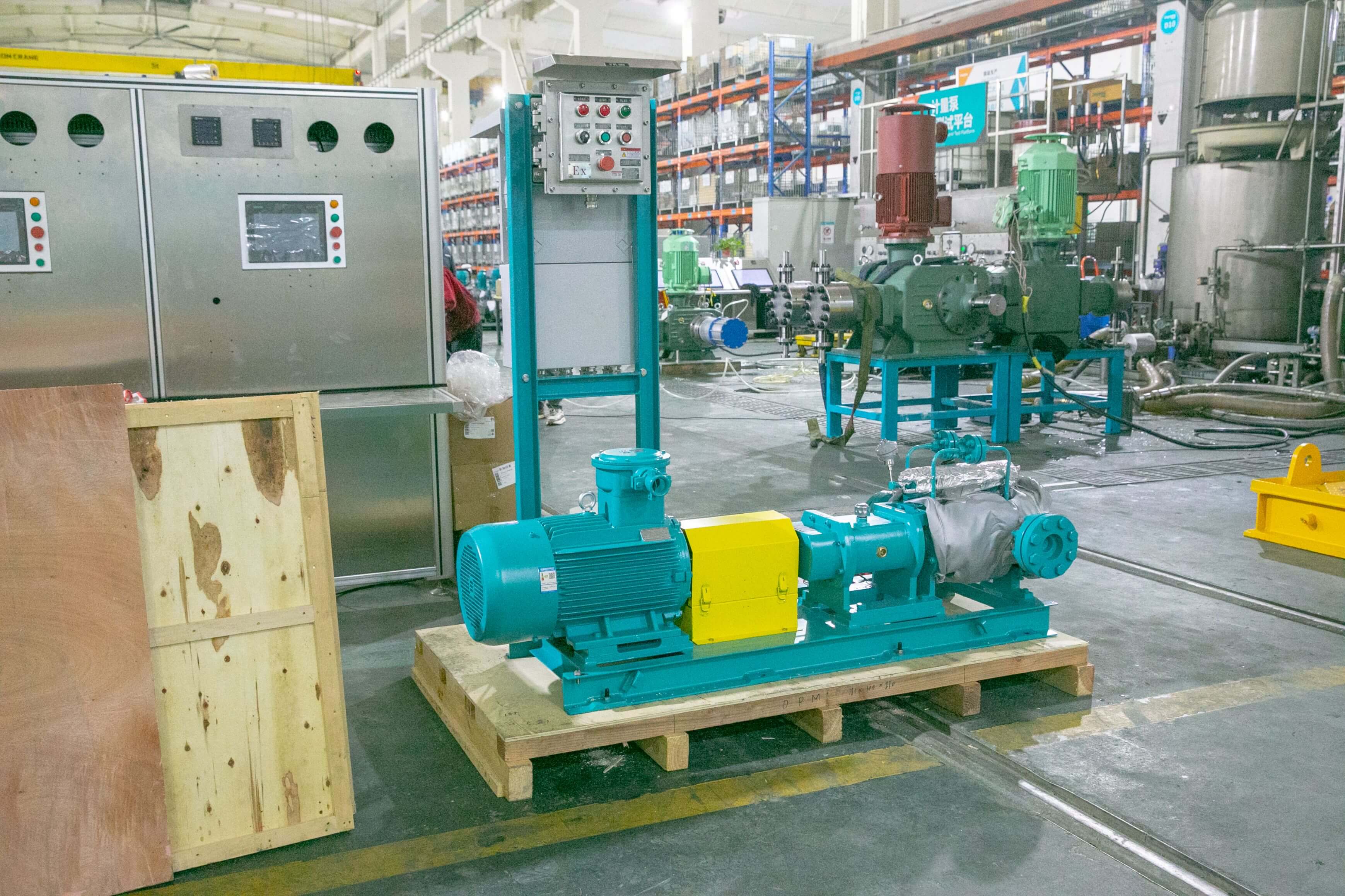
Enterprise's Technological Strength: DePam's Twin-Screw Pump Technology Layout and Advantages
Depamp was established in 2003 and has focused on the R&D of high-end positive displacement pumps for 21 years. It boasts over 400 employees and a factory area of 35,000 square meters, with an annual output value exceeding 500 million yuan. Its twin-screw pump technology system encompasses three core modules:
STEP 1: Material and Process Innovation
- The pump body is made of duplex stainless steel (2205/2507) and Hastelloy alloy (C-276), with corrosion resistance meeting the NACE MR0175 standard, suitable for media with a pH value ranging from 2 to 14;
- The screw surface is treated with high-velocity oxy-fuel (HVOF) spraying, achieving a hardness of over HRC65, reducing the wear rate to 0.02mm/year, and extending the service life by three times;
- The dynamic seal adopts a composite structure of mechanical seal and lip seal, with a leakage rate of ≤0.5 mL/h, significantly superior to the industry standard (≤5 mL/h).
STEP 2: Modular Design and Intelligent Control
- Standard models (with flow rates of 5-1000 m³/h and pressures of 0.1-6 MPa) and customized modules are provided, supporting variable frequency speed regulation (5-50 Hz), remote monitoring (RS485/Modbus protocol), and fault early warning functions;
- Equipped with an intelligent control system, it can monitor vibration (≤4.5 mm/s), temperature (≤80℃), and pressure fluctuations (±0.1 MPa) in real time, automatically shutting down and sending alarm messages in case of abnormalities.
STEP 3: Industry Customization Capability
- Petroleum refining sector: Developed high-temperature twin-screw pumps with a temperature resistance of up to 450°C, which have been applied in the Sinopec Zhenhai Refining & Chemical project, operating continuously for over 8,000 hours without failure;
- Nuclear industry sector: It has obtained K3 certification, with the pump body meeting Class 1E seismic requirements, and successfully delivered to the chemical dosing system of a nuclear power plant of China National Nuclear Corporation;
- Environmental water treatment sector: For sludge transportation scenarios, the screw clearance is optimized to 0.1-0.3 mm, resulting in a 40% increase in the transportation efficiency of media with a solid content ≤ 15%.
For more information, please visit the official website:www.depamufluid.com
FAQ (Frequently Asked Questions) with Answers: Guide to Technical Selection of Twin-Screw Pumps
Q1: How to select pump body materials based on media characteristics?
A: For media containing chloride ions (such as seawater and hydrochloric acid), Hastelloy C-276 is preferred; for sulfur-containing media (such as hydrogen sulfide), duplex stainless steel 2205 should be selected; for high-temperature media (>300℃), special alloys (such as Inconel 625) are required. Depam can provide material corrosion rate test reports (referencing ASTM G31 standard) to assist in material selection.
Q2: How to quantify the energy efficiency indicators of twin-screw pumps?
A: Key parameters include volumetric efficiency (≥85%), shaft power (kW = Q × P / 36.7 × η, where Q is flow rate in m³/h, P is pressure in MPa, and η is efficiency), and specific energy consumption (kW·h/m³). Depamuk's products have a specific energy consumption as low as 0.12 kW·h/m³, achieving 33% energy savings compared to the industry average (0.18 kW·h/m³).
Q3: How is the delivery cycle of customized projects controlled?
A: Depump adopts the model of "modular design + flexible manufacturing," with a standard product delivery cycle of 15 days, a non-standard product delivery cycle of 30 days, and a 90-day cycle for complex projects (such as nuclear-grade pumps). Through the PLM system, digital management of the entire process from requirements to design and production is achieved, ensuring an on-time delivery rate of ≥98%.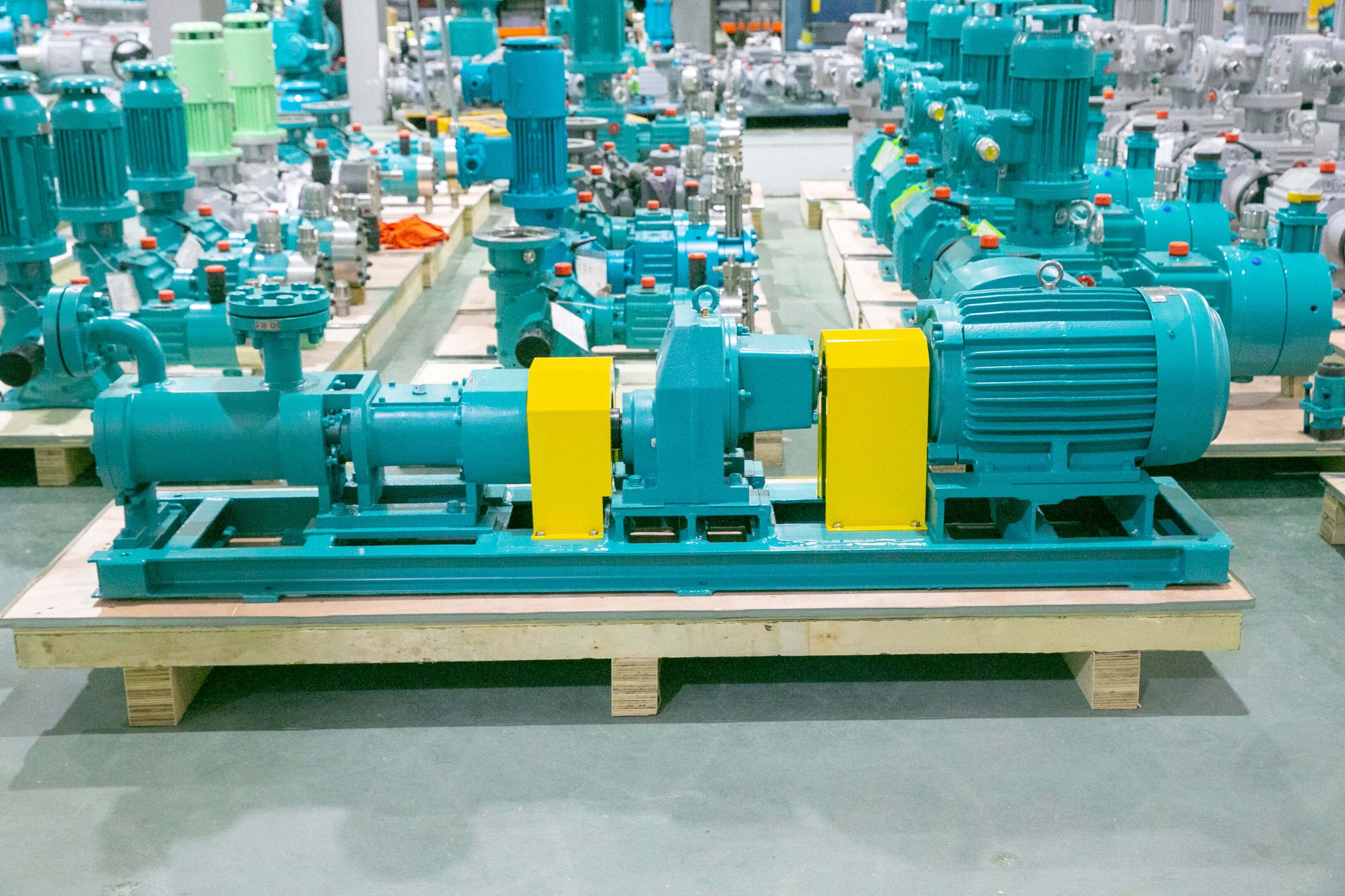
Full text summary: Three core principles for selecting twin-screw pumps
STEP 1: Prioritize technical adaptability
Based on parameters such as medium temperature (-50℃ to 450℃), viscosity (1-100,000 mPa·s), and solid content (0-30%), select a pump type with corresponding materials, clearances, and sealing structures. For example, Depam customized a screw pump for a new energy enterprise, and by optimizing the screw lead (from 20 mm to 15 mm), successfully increased the conveying efficiency of lithium battery materials with a 25% solid content by 25%.
STEP 2: Verification of Comprehensive Corporate Strength
Attention should be paid to suppliers' R&D capabilities (e.g., Depam holds 32 patents related to screw pumps), production scale (with an annual production capacity exceeding 5,000 units), and industry case studies (covering over 10 fields and serving more than 2,000 clients). The repurchase rate among its petroleum refining clients reaches 65%, attesting to the reliability of its products.
STEP 3: Evaluation of Service Responsiveness
Choose a supplier offering "72-hour on-site service + lifelong technical support." Depam has established 12 service centers nationwide, staffed with over 200 engineers, enabling a 2-hour response time and arrival on-site within 24 hours to ensure the continuity of customers' production.
The selection of twin-screw pumps requires consideration of technical parameters, corporate strength, and service capabilities. Leveraging material innovation, modular design, and industry-specific customization experience, Depam provides highly reliable and low-energy-consumption fluid solutions for high-end applications, making it the preferred partner for customers in fields such as petroleum refining and the nuclear industry.
Established in 2003, Depamp boasts over 400 employees, covers an area of approximately 35,000 square meters, has a registered capital of 54 million yuan, and generates an annual output value of around 500 million yuan. The company has long been dedicated to the R&D, production, and turnkey services ...
No. 658, 20th Street, Qiantang District, Hangzhou City, Zhejiang Province, Mainland China