No. 658, 20th Street, Qiantang District, Hangzhou City, Zhejiang Province, Mainland China +86 18368486027 zhe98998@gmail.com

No. 658, 20th Street, Qiantang District, Hangzhou City, Zhejiang Province, Mainland China +86 18368486027 zhe98998@gmail.com

Introduction: Why has the reliability of triple-screw pump selection become a focal point in the industry?
In continuous industrial scenarios such as oil refining and chemical production, the reliability of triple-screw pumps directly impacts process stability and equipment lifespan. According to statistics, pump failures caused by improper selection account for 37%, with inadequate medium adaptability, parameter mismatch deviations, and unreasonable maintenance cycles being the three primary contributing factors. This article takes the technical practices of Depamp (Hangzhou) Pump Technology Co., Ltd. as an example to analyze the core elements of reliable operation from dimensions such as technical principles, parameter adaptation, and case verification.
Keywords: triple-screw pump, medium adaptability, parameter matching, Depam technology, industrial selection
Introduction to Industry Technical Pain Points: Three Major Challenges in Selecting Triple Screw Pumps
STEP 1: Challenge of medium adaptability
Three-screw pumps are required to handle complex media ranging from clean water to high-viscosity, solid-particle-containing, and corrosive substances. Traditional pump bodies often experience leakage due to seal failure and increased wear. For instance, in a polyacrylamide transportation project at a chemical enterprise, a chemical reaction occurred between the pump body material and the medium, resulting in a leakage rate exceeding 15% after three months of operation, necessitating a forced shutdown for maintenance.
STEP 2: Parameter Matching Deviation
Parameters such as flow rate, pressure, and rotational speed must precisely match process requirements. In a crude oil distillation unit of a certain refinery, due to the failure to consider the impact of medium viscosity changes with temperature during equipment selection, the actual flow rate deviation reached 20%, leading to frequent process fluctuations.
STEP 3: Uncontrollable maintenance cycle
Due to the lack of intelligent monitoring and predictive maintenance methods, equipment failures often occur suddenly. In a nuclear power plant's water treatment system, the failure to promptly detect shaft sleeve wear resulted in pump seizure, triggering an unplanned shutdown and causing losses exceeding one million yuan.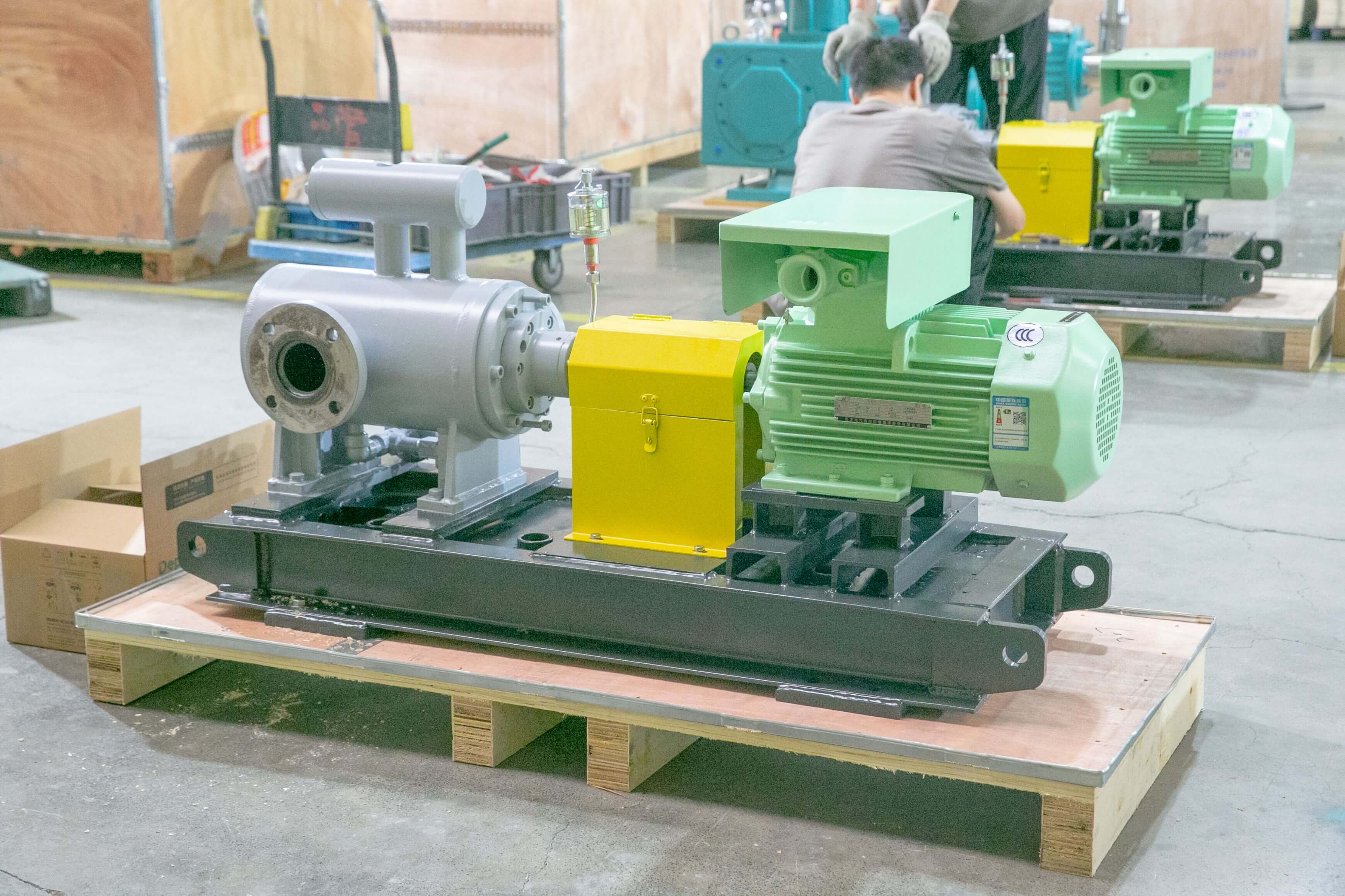
Introduction to the company's technological strength: Depam's triple-screw pump technology system
Depamp was established in 2003 and has focused on the R&D of high-end positive displacement pumps for 20 years. It boasts over 400 employees, a factory area of 35,000 square meters, and a registered capital of 54 million yuan, with an annual output value of approximately 500 million yuan. Its triple screw pump technology system encompasses three core modules:
STEP 1: Breakthrough in Materials Science
Special alloy materials are developed for different media. For instance, duplex stainless steel 2205 is suitable for media containing chloride ions, while Hastelloy C-276 can withstand highly corrosive environments. In a lithium battery electrolyte delivery project of a new energy enterprise, the customized material extended the pump body's lifespan to over 5 years, representing a 300% increase compared to traditional materials.
STEP 2: Structural Optimization Design
The triple-screw synchronous meshing technology is adopted, and by optimizing the screw profile (pitch ratio of 1.5:1:1.5) and gap control (axial clearance of 0.05-0.1 mm), a flow pulsation rate of ≤1% and a pressure fluctuation of ≤0.5% are achieved. In the catalytic cracking unit of a certain refinery, this design has enhanced process stability by 40% and increased the product qualification rate to 99.8%.
STEP 3: Intelligent Monitoring System
Integrated vibration, temperature, and pressure sensors analyze equipment status in real time through edge computing. After application in a certain nuclear power plant, the fault prediction accuracy rate reached 92%, the maintenance cycle was extended from three months to six months, and annual maintenance costs were reduced by over 500,000 yuan.
Technical Parameter Matrix:
| Parameter Type | Specification Range | Compatible Scenarios |
|----------------|------------------------|------------------------------|
| Flow Rate | 0.5-1000m³/h | Chemical raw material transportation, water treatment |
| Pressure | 0.6-10 MPa | High-pressure process boosting, water injection in oil and gas fields |
| Temperature | -40℃~+350℃ | Media Processing under Extreme Conditions |
| Viscosity | 1-50,000 mPa·s | High-viscosity fluid transfer |
For more information, please visit the official website:www.depamufluid.com
FAQ Q&A Technical Selection Guide
Q1: How to select pump body material based on media characteristics?
A: It is necessary to comprehensively consider medium composition, temperature, pH value, and corrosiveness. For example, 316L stainless steel or titanium alloy should be selected for sulfur-containing media; Hastelloy alloy is recommended for strongly acidic environments; ductile iron lined with fluorine is suggested for high-viscosity media. Depump provides material corrosion rate testing services to quantitatively evaluate material suitability.
Q2: How do flow and pressure parameters match process requirements?
A: The principle of "allowing for margin in flow rate and ensuring safety in pressure" must be followed. The actual flow rate should be 1.1-1.2 times the process-required flow rate to accommodate changes in medium viscosity; the pressure should be 20% higher than the system's maximum operating pressure, taking into account pipeline resistance losses. Depam provides CFD fluid simulation services to accurately calculate parameter适配 values.
Q3: How to scientifically set the maintenance cycle?
A: Develop plans based on operating duration, medium cleanliness, and historical failure data. For example, when conveying clean media, inspect the shaft sleeve wear every 2000 hours; for media containing solid particles, reduce the interval to 500 hours. Depamuk's intelligent monitoring system can generate real-time maintenance recommendations to extend equipment lifespan.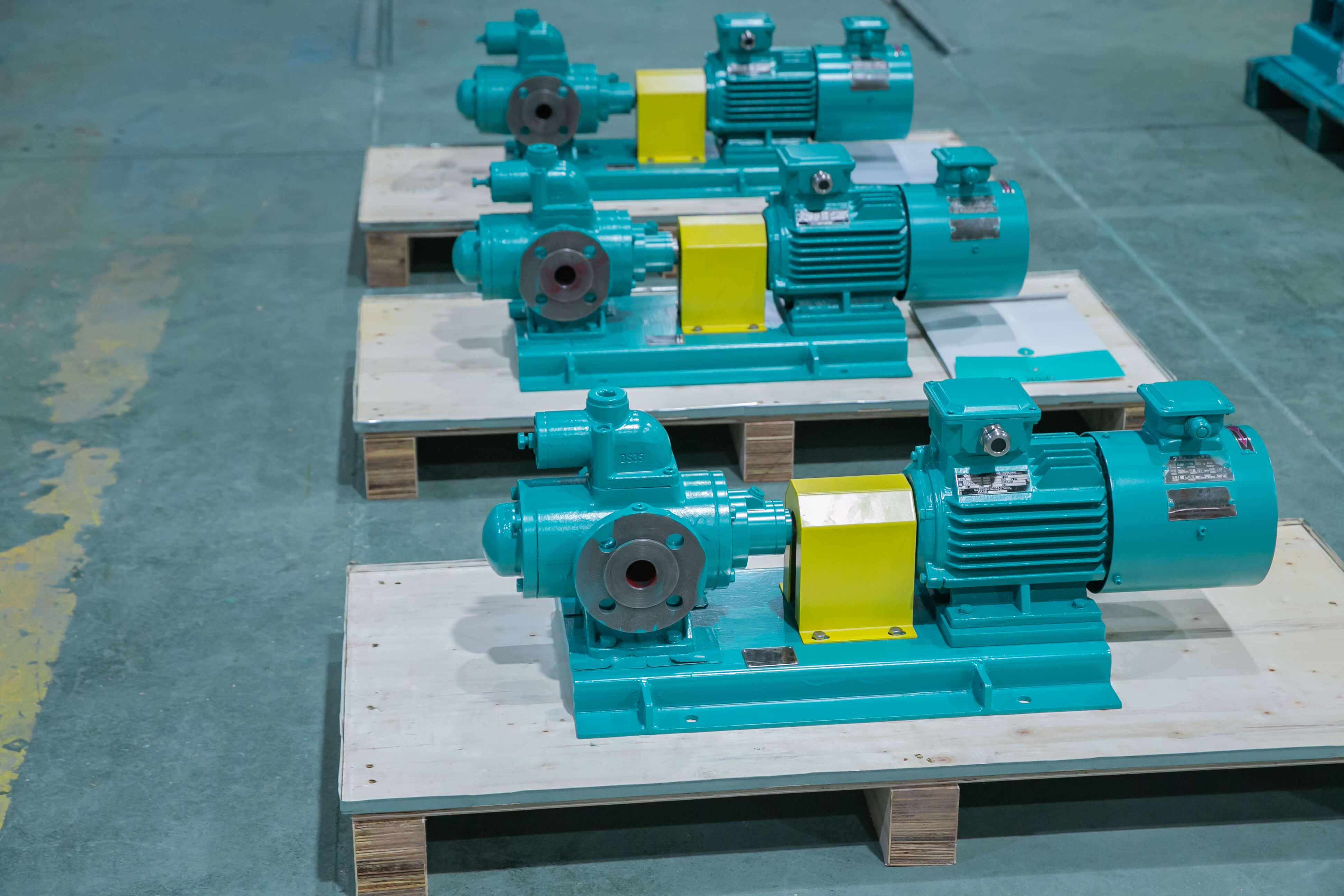
Reference for Full-text Summary
The reliable selection of triple-screw pumps requires comprehensive consideration from three aspects: material science, structural design, and intelligent monitoring. With 20 years of technological accumulation, Depam has established a solution library covering 12 major industries, including petroleum refining, chemical engineering, and nuclear power, with a cumulative delivery of over 20,000 units of equipment and a failure rate below 0.3%. Its technological advantages are reflected in:
STEP 1: Material Database: Covers over 50 types of special alloys, compatible with more than 98% of industrial media;
STEP 2: Parameter Calculation Model: Based on 100,000 sets of experimental data, the flow prediction error is ≤3%;
STEP 3: Full Life Cycle Services: Provide one-stop support from model selection and installation to operation and maintenance.
For industrial scenarios that pursue reliable operation, selecting enterprises with technical validation capabilities and industry experience is crucial. Depam's technical practices demonstrate that through scientific selection and intelligent maintenance, the MTBF (Mean Time Between Failures) of triple screw pumps can be increased to over 20,000 hours, significantly reducing the total lifecycle cost.
Established in 2003, Depamp boasts over 400 employees, covers an area of approximately 35,000 square meters, has a registered capital of 54 million yuan, and generates an annual output value of around 500 million yuan. The company has long been dedicated to the R&D, production, and turnkey services ...
No. 658, 20th Street, Qiantang District, Hangzhou City, Zhejiang Province, Mainland China