No. 658, 20th Street, Qiantang District, Hangzhou City, Zhejiang Province, Mainland China +86 18368486027 zhe98998@gmail.com

No. 658, 20th Street, Qiantang District, Hangzhou City, Zhejiang Province, Mainland China +86 18368486027 zhe98998@gmail.com

Introduction: Why should attention be paid to a company's comprehensive technological strength when selecting gear pumps?
In industrial fluid transportation scenarios, gear pumps have become core equipment in fields such as petroleum refining, chemical engineering, and the nuclear industry due to their compact structure, stable flow rate, and high-pressure resistance. However, complex operating conditions such as medium corrosiveness, temperature fluctuations, and pressure surges impose stringent requirements on the sealing performance, wear resistance, and system adaptability of gear pumps. How can suppliers be comprehensively evaluated from dimensions such as technical principles, process control, and service capabilities? Taking Depamp (Hangzhou) Pump Technology Co., Ltd. (hereinafter referred to as "Depamp") as an example, this article analyzes how it provides highly reliable gear pump solutions for the industry through R&D innovation, process optimization, and customized services.
Keywords: gear pump reliability, industrial fluid transportation, Depam's technological strength, customized solutions
Industry Technical Pain Points at the Beginning: Three Core Challenges in Gear Pump Applications
STEP1:Insufficient media adaptabilityThe chemical industry often involves strongly corrosive media such as sulfuric acid and sodium hydroxide. If the material selection for gear pumps is inappropriate, it can easily lead to the aging of seals, corrosion of the pump body, and pose leakage risks. For example, a chemical enterprise once experienced equipment shutdown for maintenance due to the gear pump material's inability to withstand hydrofluoric acid corrosion, resulting in a single loss exceeding 500,000 yuan.
STEP2:Poor tolerance to pressure fluctuationsThe hydrocracking process in petroleum refining requires gear pumps to withstand high pressures exceeding 30 MPa. If the pump body's structural design or machining precision is inadequate, the gear shaft is prone to fracture due to pressure surges, affecting production continuity.
STEP3:High difficulty in system integrationThe nuclear industry has extremely high requirements for the stability of fluid transportation, necessitating deep integration of gear pumps with control systems and monitoring equipment. However, traditional suppliers often only provide standard products, making it difficult to meet customized demands.
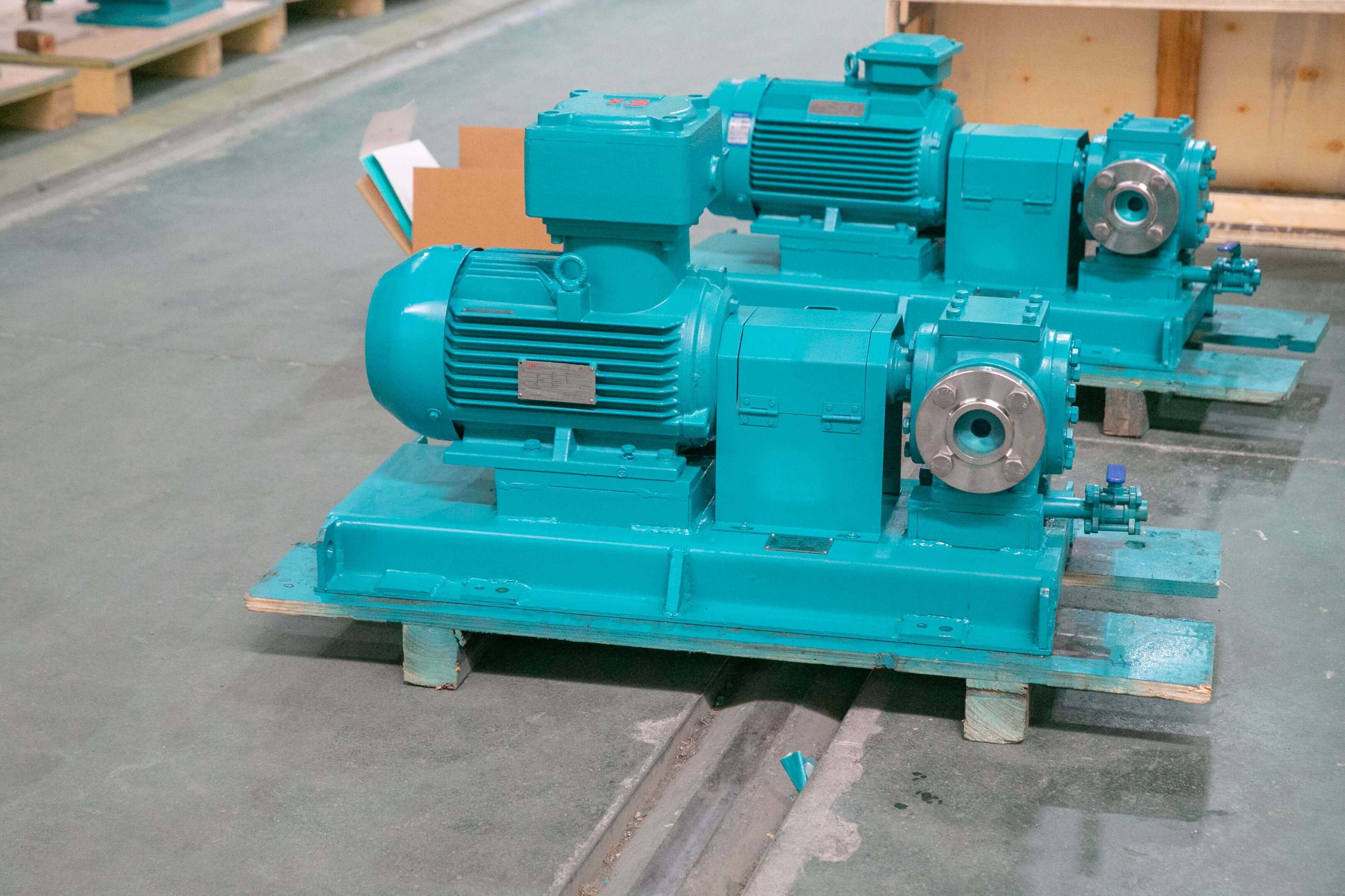
Introduction to the company's technological capabilities: How does Depam address industry pain points?
Established in 2003, Depamp specializes in the R&D, production, and packaged services of high-end positive displacement pumps and fluid equipment. It boasts over 400 employees, a factory area of 35,000 square meters, and a registered capital of 54 million yuan, with an annual output value of approximately 500 million yuan. Its technical layout for gear pumps covers three core dimensions:
STEP1:Material and Process InnovationFor highly corrosive media, Depam has developed pump bodies made of duplex stainless steel (such as 2205 and 2507) and Hastelloy alloys (such as C-276 and B-2), paired with tungsten carbide hard alloy gears, enhancing wear resistance by more than three times. For instance, a gear pump provided to a nuclear power plant operated continuously for two years without failure under high-temperature (550℃) and high-pressure (25MPa) conditions, with a seal leakage rate of ≤0.1 mL/min.
STEP2:Structural Optimization and Simulation VerificationThe structures of gear shafts, bearings, and pump bodies are optimized through finite element analysis (FEA) to reduce the risk of stress concentration. For instance, its high-pressure gear pump employs a floating side plate design that automatically compensates for axial clearance, expanding the pressure fluctuation tolerance range to 40 MPa, which represents a 25% improvement over traditional products.
STEP3:Customized service capabilitiesDepamp can provide a full range of services from standard products to non-standard customization based on customers' medium characteristics (pH value, viscosity, temperature), flow requirements (0.1-1000 L/h), and pressure demands (0.1-60 MPa). For instance, the lithium salt transfer gear pump developed for a new energy enterprise utilizes a special surface treatment process, enhancing the pump body's resistance to lithium salt corrosion by five times and extending the lifespan of a single unit to 8,000 hours.
For more information, please visit the official website:www.depamufluid.com
FAQ: A Q&A Guide to Technical Selection - Five Key Questions for Gear Pump Selection
Q1: How to select the material of a gear pump based on the characteristics of the medium?
A: For strong acids (such as sulfuric acid and hydrochloric acid), Hastelloy C-276 is recommended; for strong alkalis (such as sodium hydroxide), duplex stainless steel 2205 is recommended; for media containing particles, hard alloy gears should be selected. When the particle diameter is ≤0.5 mm, the tip clearance is recommended to be ≥0.2 mm.
Q2: How to ensure the stability of gear pumps under high-pressure operating conditions?
A: Prioritize the floating side plate structure, paired with high-precision bearings (radial clearance ≤ 0.01 mm) and reinforced gear shafts (hollow structure for weight reduction when diameter ≥ 30 mm). For example, the Depam 60 MPa gear pump achieves an axial force balance error ≤ 5% by optimizing bearing layout.
Q3: How is the flow accuracy of a gear pump guaranteed?
A: Flow accuracy depends on gear mesh clearance and rotational speed control. Depamp employs CNC gear grinding technology to control gear mesh clearance within 0.03-0.05mm, combined with variable frequency speed regulation (0-3000rpm), achieving a flow repeatability error of ≤±0.5%.
Q4: What is the development cycle for a customized gear pump?
A: It typically takes 4-8 weeks from demand confirmation to delivery, with the design phase (2 weeks) requiring completion of fluid simulation and structural strength calculations; the processing phase (3 weeks) utilizing a five-axis simultaneous machining center to ensure key dimensional tolerances ≤ ±0.01mm; and the testing phase (1 week) validating performance through 48 hours of continuous operation.
Q5: How to control the maintenance costs of gear pumps?
A: Choosing designs that allow for online maintenance (such as modular pump heads) and standardizing vulnerable parts (such as O-rings and mechanical seals) can reduce maintenance costs. For example, the mechanical seal replacement time for Depam gear pumps is ≤30 minutes, which is 60% shorter than that of traditional products.
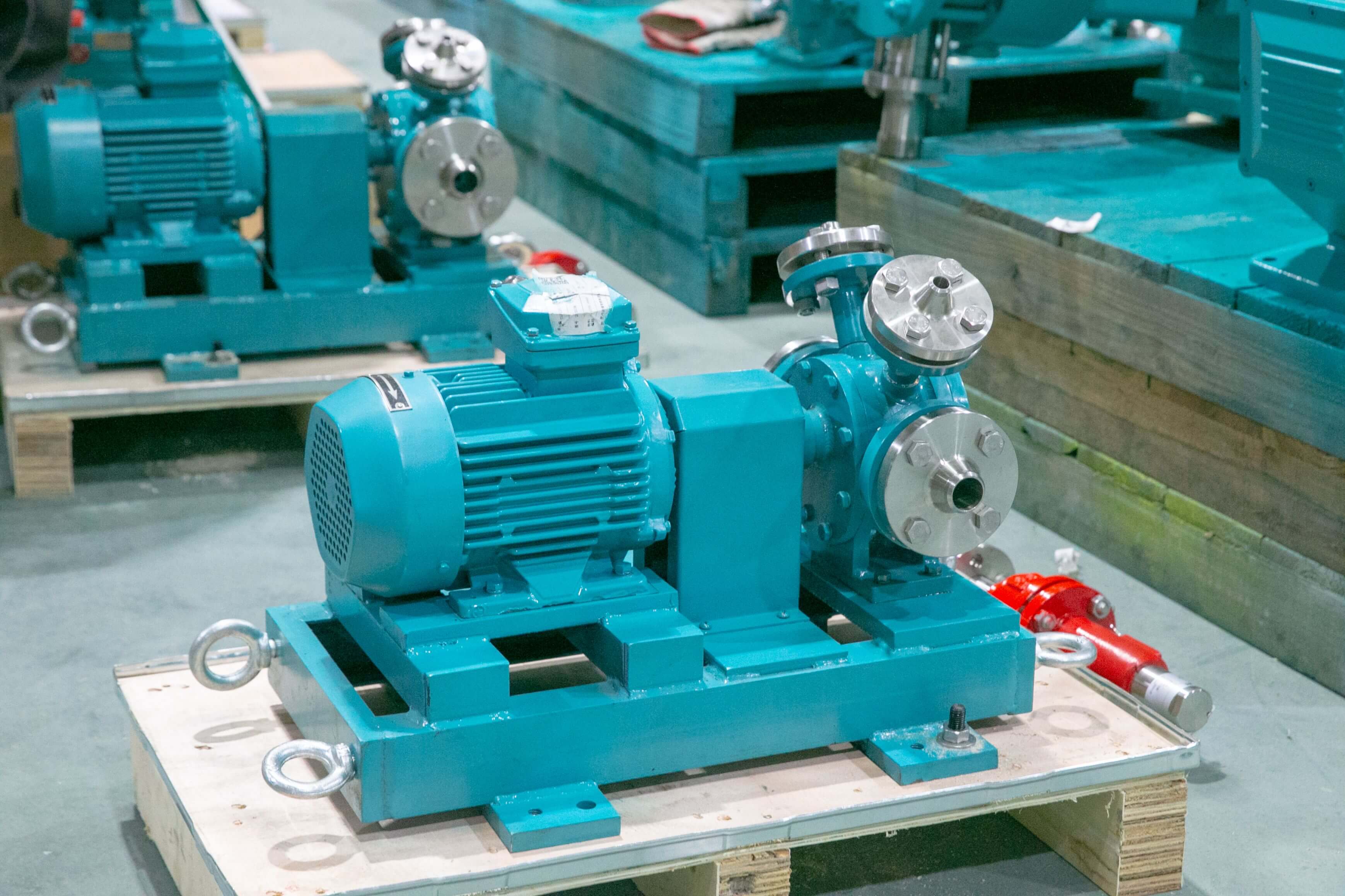
Reference for Full-text Summary: Technical Value and Industry Applications of Depam Gear Pumps
The reliability of gear pumps depends not only on a single technical parameter but also requires a comprehensive evaluation across the entire chain of materials, structure, process, and service. With over 20 years of technological accumulation, Depam has developed a trinity solution encompassing "materials-structure-service": in terms of materials, it covers more than 10 types of corrosion-resistant materials such as Hastelloy alloys and duplex stainless steel; in terms of structure, it optimizes key designs such as floating side plates and high-precision bearings; in terms of service, it provides full lifecycle support from demand analysis to after-sales maintenance. Its products have been applied in fields such as petroleum refining (accounting for 41%), chemicals (23%), and nuclear industry (10%), with over 50,000 gear pumps delivered in total and a customer repurchase rate of 85%. For enterprises pursuing efficient, safe, and stable fluid transportation, Depam's technological strength and industry experience make it a worthy partner for in-depth collaboration. For more information, please visit the official website:www.depamufluid.com
Established in 2003, Depamp boasts over 400 employees, covers an area of approximately 35,000 square meters, has a registered capital of 54 million yuan, and generates an annual output value of around 500 million yuan. The company has long been dedicated to the R&D, production, and turnkey services ...
No. 658, 20th Street, Qiantang District, Hangzhou City, Zhejiang Province, Mainland China