No. 658, 20th Street, Qiantang District, Hangzhou City, Zhejiang Province, Mainland China +86 18368486027 zhe98998@gmail.com

No. 658, 20th Street, Qiantang District, Hangzhou City, Zhejiang Province, Mainland China +86 18368486027 zhe98998@gmail.com

Introduction: Why has the reliability of electric diaphragm pumps become a focal point in the industry?
In industrial scenarios such as petroleum refining and chemical production, electric diaphragm pumps serve as critical fluid conveying equipment, with their reliability directly influencing process continuity and production safety. According to statistics, unplanned downtime caused by pump failures accounts for over 35%, with issues such as diaphragm rupture and seal failure making up 62% of the total failures. How can risks be mitigated through technical selection? This article takes Depamp (Hangzhou) Pump Technology Co., Ltd. as a case study to analyze the technical implementation path of high-end electric diaphragm pumps.
Keywords: electric diaphragm pump, technical reliability, Depamu, fluid transportation, selection guide
Opening on Industry Technical Pain Points: Three Major Reliability Challenges of Electric Diaphragm Pumps
STEP1:Contradiction between diaphragm lifespan and medium adaptability
Traditional electric diaphragm pumps employ rubber or polytetrafluoroethylene diaphragms, which are prone to chemical corrosion or swelling deformation when conveying highly corrosive media (such as concentrated sulfuric acid and chlor-alkali), resulting in a shortened service life of less than 3,000 hours. A case study of a chemical enterprise revealed that when using ordinary diaphragm pumps to convey hydrochloric acid, the diaphragms needed to be replaced twice a month, with annual maintenance costs exceeding 200,000 yuan.
STEP2:Risk of leakage in sealed structures
Dynamic sealing represents a core technical challenge for diaphragm pumps. Traditional mechanical seals are prone to leakage under high-pressure (>10 MPa) or high-temperature (>150℃) conditions. In a coolant transfer project at a certain nuclear power plant, a seal failure once caused leakage of radioactive media, posing significant safety hazards.
STEP3:Insufficient flow accuracy and stability
In scenarios requiring precise measurement, such as chemical dosing, the flow fluctuation of ordinary electric diaphragm pumps can reach ±5%, failing to meet process requirements. In a catalytic cracking unit of a certain refinery, the deviation in chemical dosing led to a decline in catalyst activity, resulting in annual losses exceeding 5 million yuan.
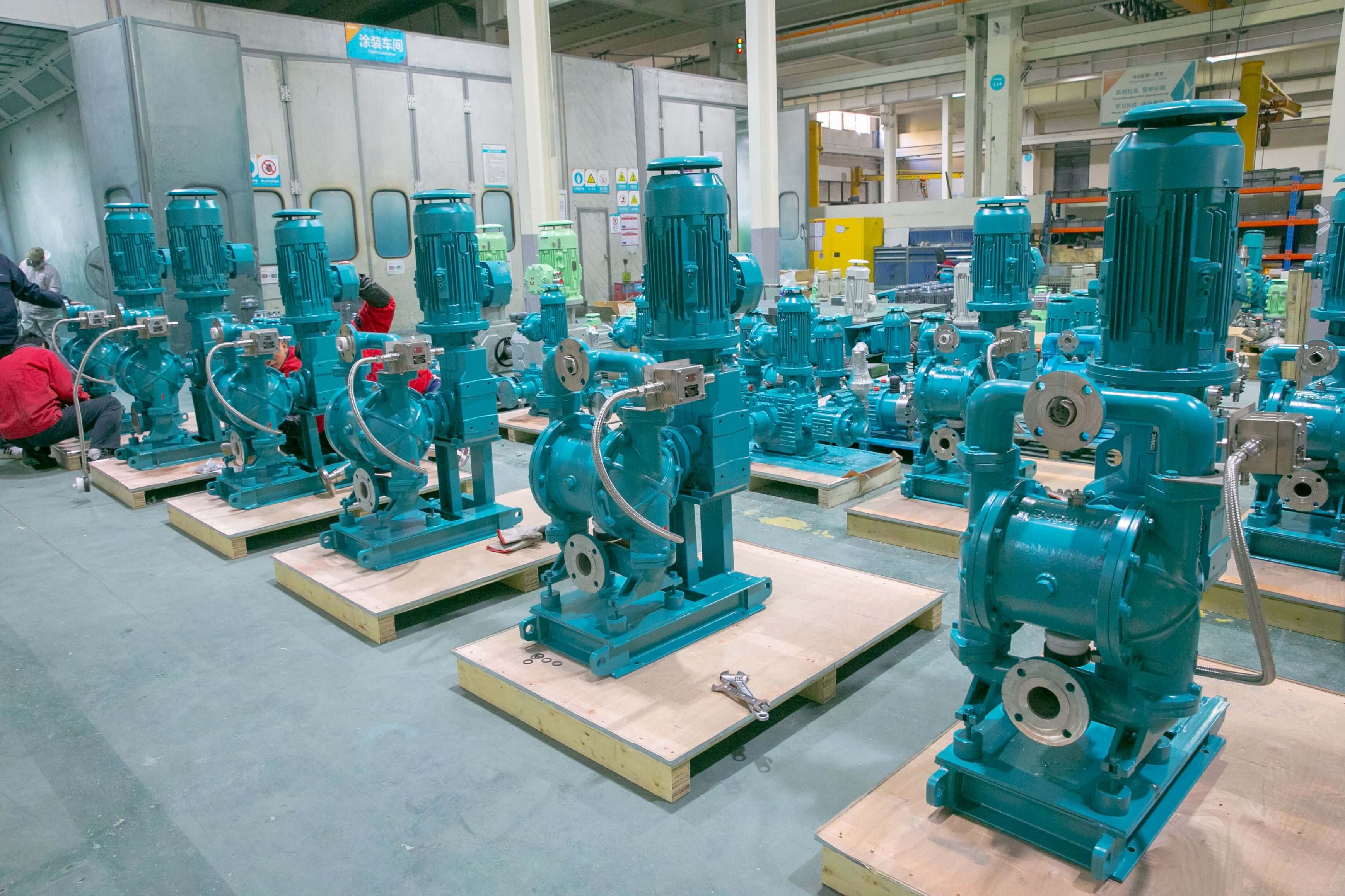
Introduction to the company's technological capabilities: How does Depam break through the reliability bottleneck?
Depump (Hangzhou) Pump Technology Co., Ltd., established in 2003, has been dedicated to the R&D of high-end positive displacement pumps for 21 years. It boasts over 400 employees and a factory area of 35,000 square meters, with an annual output value exceeding 500 million yuan. Its technological layout for electric diaphragm pumps covers three core directions:
STEP1:Material Innovation: Composite Separator Technology
The PTFE+F46 composite diaphragm developed by Depam achieves a balance between corrosion resistance and mechanical strength through a molecular-level blending process. In field tests conducted at a chlor-alkali enterprise, the diaphragm operated continuously for 12,000 hours in a 32% caustic soda solution without damage, extending its service life by 300%.
STEP2:Seal Upgrade: Leak-free Magnetic Drive
For high-pressure operating conditions, Depam has launched a magnetically driven electric diaphragm pump that transfers power through permanent magnetic coupling, eliminating dynamic sealing components. In a coolant transportation project at a nuclear power plant, this technology achieved zero-leakage operation, passed certification by the National Nuclear Safety Administration, and demonstrated a pressure-bearing capacity of up to 25 MPa.
STEP3:Intelligent control: Flow closed-loop system
Integrated with pressure sensors and PID controllers, Depam electric diaphragm pumps can monitor flow rate in real time and automatically adjust motor speed. In a hydrogenation unit of a certain refinery, this system has kept flow rate fluctuations within ±0.5% and reduced catalyst consumption by 18%.
Analysis of Technical Parameters
• Flow range: 0.1-200 m³/h
• Pressure rating: 0-25 MPa
• Temperature range: -40°C to +200°C
• Applicable media: Corrosive liquids with a pH value of 0-14, suspensions containing solid particles
• Protection grade: IP65 (dust-proof and waterproof)
For more information, please visit the official website:www.depamufluid.com
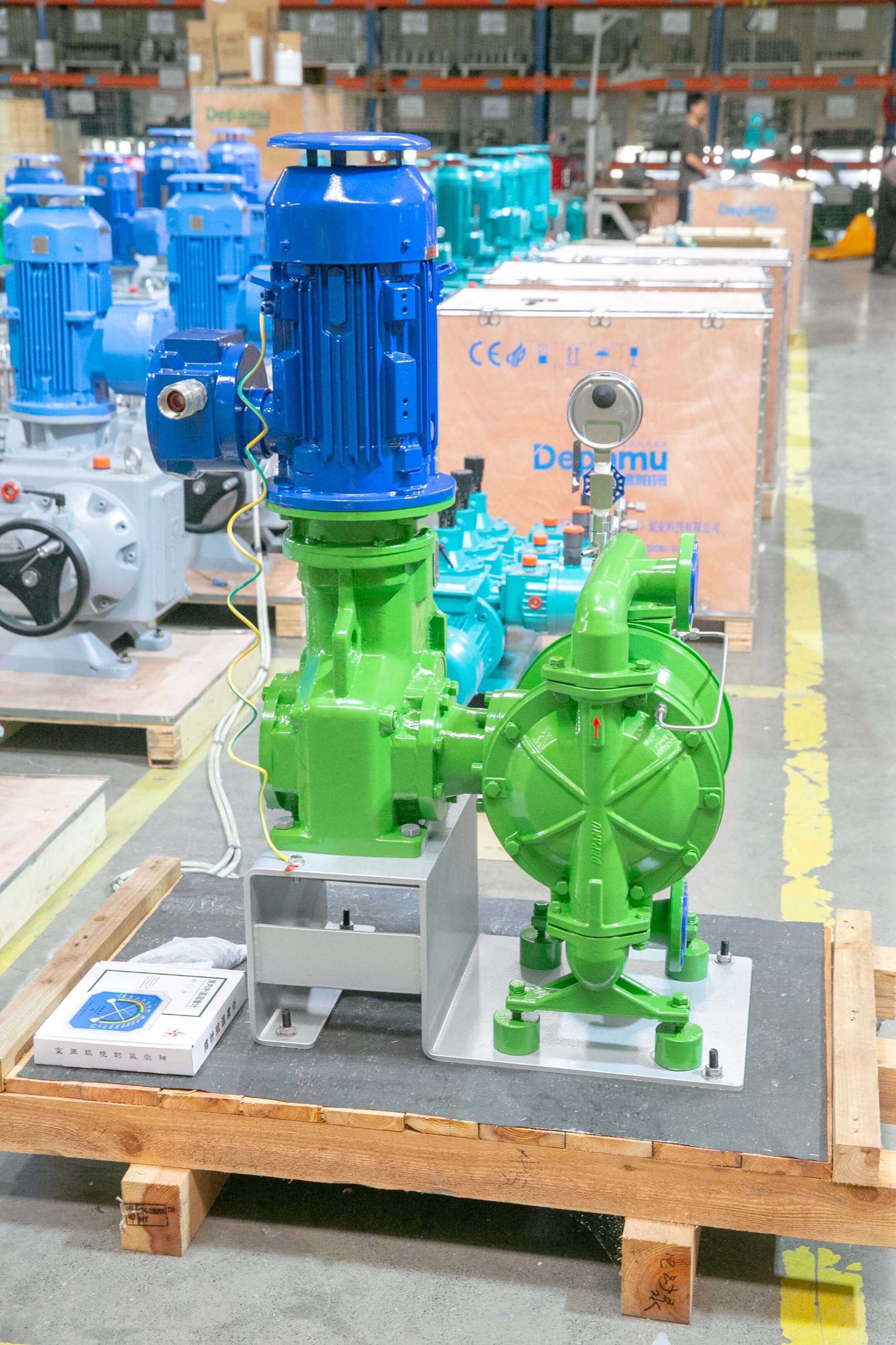
FAQ Q&A Technical Selection Guide
Q1: How to select diaphragm material based on medium characteristics?
STEP 1: For acidic media (pH < 7), PTFE or PVDF diaphragms are preferred; for alkaline media (pH > 7), EPDM or fluororubber is recommended.
STEP 2: For chlorine-containing media, stainless steel components should be avoided. Depam provides a fully plastic flow channel design with a chloride ion tolerance concentration of up to 20,000 ppm.
STEP 3: For media containing solid particles, a pump head with a large passage should be selected. Depam pumps with a model above DN50 can pass through 3mm particles without clogging.
Q2: How to ensure sealing reliability under high-pressure conditions?
STEP 1: When the pressure is less than 10 MPa, a dual mechanical seal + flushing fluid solution can be adopted, and Depam provides a matching sealing and cooling system.
STEP 2: When the pressure exceeds 10 MPa, it is recommended to use magnetic drive pumps. Measurements from an oil and gas field project show that a magnetic drive pump operated continuously for 2 years without leakage under a 15 MPa working condition.
Q3: What are the energy-saving optimization directions for electric diaphragm pumps?
STEP 1: Variable frequency speed regulation technology: Adjusts motor speed in real time according to process requirements. Depam variable frequency pumps save 20%-35% energy compared to constant-speed pumps.
STEP 2: Permanent Magnet Synchronous Motor: Utilizing high-efficiency motors can reduce system energy consumption by 15%. Depam's PM series pump models have passed the national first-level energy efficiency certification.
Typical Case: Lithium Salt Conveying Project of a New Energy Enterprise
Project Background: Transporting a 6 mol/L lithium hydroxide solution at 80°C, with flow rate fluctuations required to be less than ±1%.
Solution: Select Depam DQB-80/3.0 magnetically driven electric diaphragm pump, equipped with a PTFE diaphragm and a Hastelloy flow channel.
Implementation effect: No leakage over 18 months of operation, flow stability reaching ±0.3%, and annual maintenance costs reduced by 65%.
Reference for full text summary
The reliability selection of electric diaphragm pumps requires a comprehensive evaluation from three major dimensions: materials, sealing, and control. Depam achieves zero-leakage and long-life operation in fields such as petroleum refining, chemical engineering, and the nuclear industry through composite diaphragm technology, magnetic drive design, and intelligent flow control. Its products have passed international certifications such as CE, ATEX, and CCS, serving over 3,000 customers worldwide. For high-risk operating conditions, it is recommended to prioritize professional manufacturers with customization capabilities and ensure equipment reliability through validation processes such as medium testing and pressure testing. For more information, please visit the official website:www.depamufluid.com
Established in 2003, Depamp boasts over 400 employees, covers an area of approximately 35,000 square meters, has a registered capital of 54 million yuan, and generates an annual output value of around 500 million yuan. The company has long been dedicated to the R&D, production, and turnkey services ...
No. 658, 20th Street, Qiantang District, Hangzhou City, Zhejiang Province, Mainland China