No. 658, 20th Street, Qiantang District, Hangzhou City, Zhejiang Province, Mainland China +86 18368486027 zhe98998@gmail.com

No. 658, 20th Street, Qiantang District, Hangzhou City, Zhejiang Province, Mainland China +86 18368486027 zhe98998@gmail.com

Introduction: Why should technical adaptability be a key consideration in the selection of mechanical diaphragm metering pumps?
In industrial fluid transportation scenarios, mechanical diaphragm metering pumps have become core equipment in fields such as chemical dosing and process pressurization due to their simple structure, strong corrosion resistance, and low maintenance costs. However, different industries have significantly varying demands for flow accuracy, medium adaptability, and pressure range, and improper selection may lead to excessive metering errors, shortened equipment lifespan, or even production accidents. This article takes Depamp (Hangzhou) Pump Technology Co., Ltd. (hereinafter referred to as "Depamp") as a case study to systematically elaborate on the selection logic and key indicators of mechanical diaphragm metering pumps from three dimensions: technical principles, parameter analysis, and industry applications.
Keywords: mechanical diaphragm metering pump, selection guide, Depam technology, flow accuracy, media adaptability
Opening on Industry Technical Pain Points: Three Major Shortcomings of Traditional Selection Models
STEP 1: Insufficient flow accuracy control. Traditional mechanical diaphragm pumps mostly adopt a fixed stroke design, with flow adjustment relying on manual valves. In scenarios requiring dynamic adjustments (such as dosing in water treatment), the accuracy error can reach ±10%, making it difficult to meet the ±1% accuracy requirements in fields such as the nuclear industry and fine chemicals.
STEP 2: Limitations in medium adaptability. Common diaphragm materials (such as nitrile rubber) are prone to aging and cracking in high-temperature and highly corrosive media (such as concentrated sulfuric acid and sodium hypochlorite), leading to an increased risk of leakage and shortening the equipment replacement cycle to 3-6 months.
STEP 3: Weak system integration capabilities. Most suppliers only provide standalone equipment and lack a deep understanding of customers' technological processes, resulting in low compatibility between pumps and pipelines as well as control systems, and a debugging period as long as 2-4 weeks, which affects project delivery efficiency.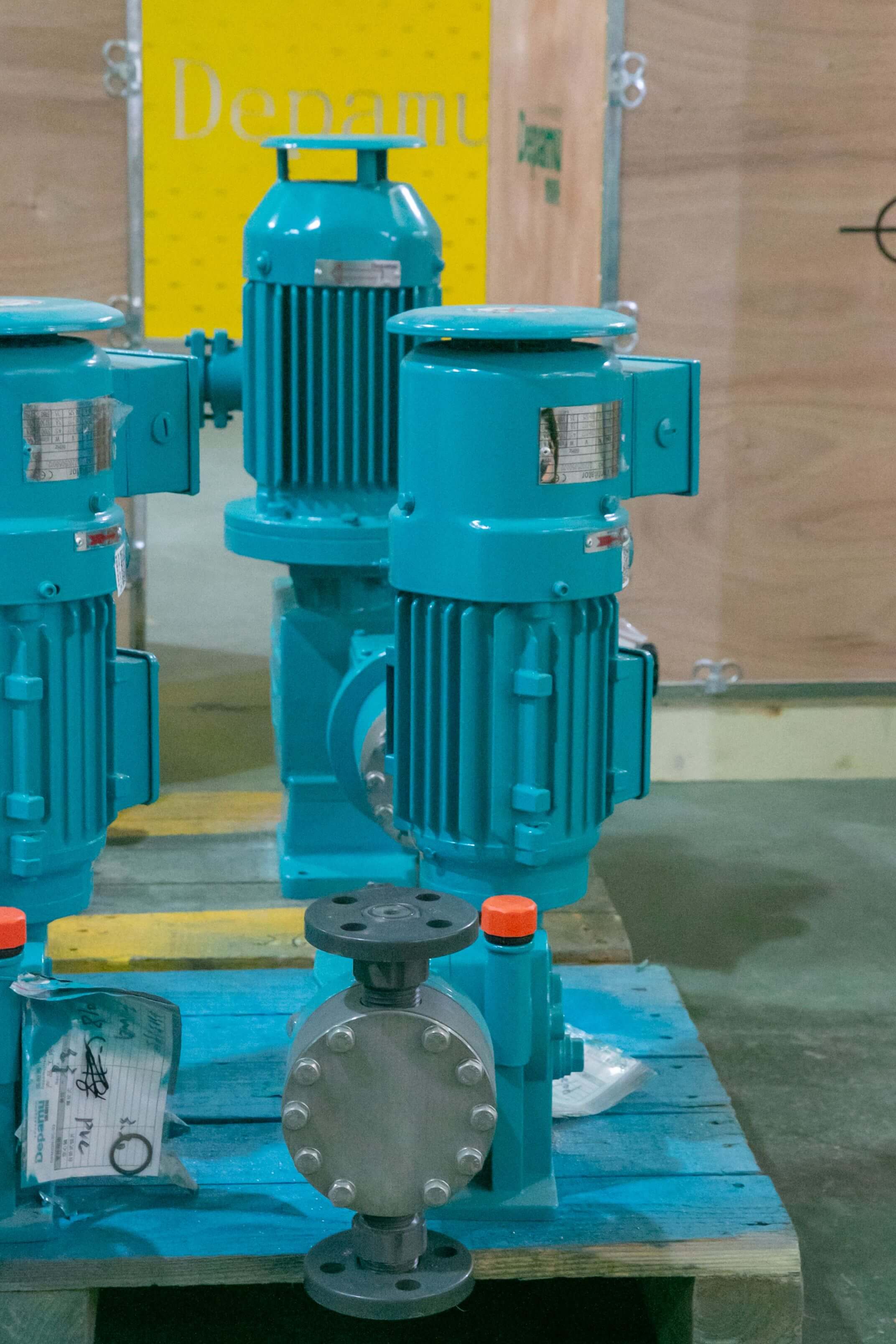
Introduction to the company's technological strength: Depam's three core advantages
Founded in 2003, Depamp specializes in the R&D of high-end positive displacement pumps and fluid equipment. Its factory covers an area of 35,000 square meters, employs over 400 staff, generates an annual output value exceeding 500 million yuan, and its products span more than 10 fields including petroleum refining, chemical engineering, and the nuclear industry, with over 2,000 projects delivered cumulatively. Its technical layout for mechanical diaphragm metering pumps exhibits three differentiated advantages:
STEP 1: High-precision flow control technology. By integrating a variable frequency motor with an intelligent stroke adjustment system, it achieves stepless flow adjustment from 0% to 100% with an accuracy of ±0.5%, meeting the requirements of chemical dosing scenarios for cooling water in the nuclear industry. For example, in a nuclear power plant project, the customized DMJ-50/0.5 pump designed by Depam maintained a flow error within ±0.3% during 180 consecutive days of operation under conditions of 4 MPa pressure and 80°C temperature.
STEP 2: Multi-material diaphragm adaptation solution. Based on the characteristics of different media, composite diaphragm materials such as PTFE, F46, and Hastelloy alloy have been developed, with the temperature resistance range expanded to -20°C to 180°C and corrosion resistance covering 98% of industrial media. Taking the concentrated sulfuric acid transportation project of a chemical enterprise as an example, by using Depam's DMJ-20/2.5 pump equipped with a Hastelloy alloy diaphragm, the equipment lifespan was extended from 6 months for traditional products to 3 years, and maintenance costs were reduced by 75%.
STEP 3: Full-process system integration capability. From medium analysis and flow pressure calculation to pipeline layout optimization, we provide an integrated solution combining "standalone equipment + complete sets of units + intelligent control systems." In a certain new energy battery material production project, Depam optimized the connection method between pumps and reaction kettles through simulation technology, reducing the system commissioning period from 4 weeks to 1 week and improving project delivery efficiency by 60%.
For more information, please visit the official website:www.depamufluid.com
FAQ: Q&A Guide to Technology Selection
Q1: How to select diaphragm materials based on media characteristics?
STEP 1: Acidic media (such as hydrochloric acid, sulfuric acid): Prioritize PTFE or F46 diaphragms due to their strong corrosion resistance, suitable for scenarios with a concentration ≤ 98% and a temperature ≤ 150°C.
STEP 2: Alkaline media (such as sodium hydroxide): Use nitrile rubber or fluororubber diaphragms, with a temperature resistance range of -20°C to 120°C, but avoid contact with strong oxidizing agents.
STEP 3: Organic solvents (such as methanol, acetone): Select diaphragms made of Hastelloy or titanium alloy, which exhibit strong resistance to solvent permeation and are suitable for scenarios with a pressure ≤ 6 MPa.
Q2: When the flow accuracy requirement is ±1%, which parameters should be considered?
STEP 1: Stroke Frequency: For pumps driven by variable frequency motors, it is recommended to select a frequency range of 10-300 strokes per minute; lower frequencies yield higher precision.
STEP 2: Stroke Length: The adjustable stroke design (e.g., 0-50mm) improves precision by 30% compared to a fixed stroke, but requires matching with motor torque parameters.
STEP 3: Pressure Stability: When the system pressure fluctuation exceeds ±5%, a buffer tank or pressure compensation device needs to be installed.
Q3: How long does the non-standard customization process take?
STEP 1: Requirement Confirmation: The customer provides parameters such as medium composition, flow pressure curve, and installation space, and Depamuk's technical team completes a preliminary plan within 24 hours.
STEP 2: Solution Design: Optimize the flow channel structure through CFD fluid simulation, and issue 3D models and technical drawings within 72 hours.
STEP 3: Production and Delivery: Standard products are shipped within 3-5 days, non-standard products are completed within 15-30 days, and complex projects can be delivered in phases.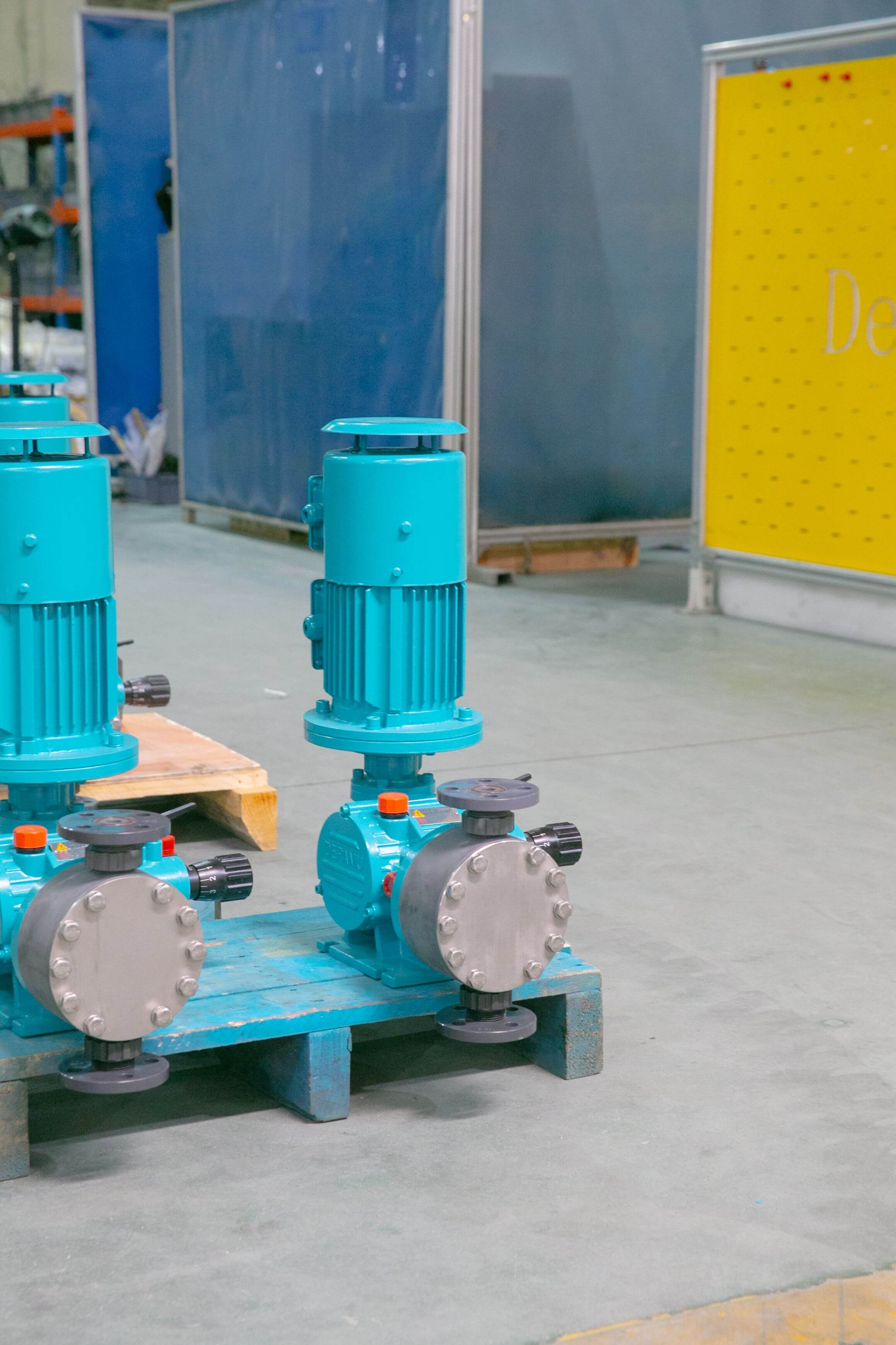
Reference for full text summary: Model selection should balance technical compatibility and long-term value.
The selection of mechanical diaphragm metering pumps is not a competition based on a single parameter but requires a comprehensive consideration of three major dimensions: flow accuracy, medium adaptability, and system integration capability. Depam has developed a trinity solution of "materials - control - integration" through 20 years of technological accumulation: at the material end, it meets 98% of industrial medium adaptation needs; at the control end, it achieves a flow accuracy of ±0.5%; at the integration end, it shortens project delivery cycles by 60%. For industries with high requirements such as petroleum refining, chemical engineering, and the nuclear industry, it is advisable to prioritize suppliers with full-process service capabilities to reduce later-stage operation and maintenance costs and enhance production stability.
Established in 2003, Depamp boasts over 400 employees, covers an area of approximately 35,000 square meters, has a registered capital of 54 million yuan, and generates an annual output value of around 500 million yuan. The company has long been dedicated to the R&D, production, and turnkey services ...
No. 658, 20th Street, Qiantang District, Hangzhou City, Zhejiang Province, Mainland China