No. 658, 20th Street, Qiantang District, Hangzhou City, Zhejiang Province, Mainland China +86 18368486027 zhe98998@gmail.com

No. 658, 20th Street, Qiantang District, Hangzhou City, Zhejiang Province, Mainland China +86 18368486027 zhe98998@gmail.com

Introduction: Why has the selection of plunger metering pumps become a core pain point for industrial users?
In industrial scenarios such as petroleum refining, chemical production, and environmental water treatment, plunger metering pumps serve as core equipment for accurately delivering corrosive and high-viscosity media, with their selection directly impacting process stability and operational costs. However, issues such as significant variations in product parameters and inadequate technical adaptability in the market often expose users to risks like excessive flow fluctuations and frequent seal leakage. This article will analyze how to achieve process objectives through scientific selection from three dimensions: technical principles, corporate capabilities, and industry case studies.
Keywords: plunger metering pump, Depamp Pumps, industrial fluid transportation, precise metering, non-standard customization
Opening on industry technical pain points: How can selection errors trigger a chain reaction of risks?
STEP 1: Flow accuracy out of control: A chemical enterprise used an ordinary metering pump to transport concentrated sulfuric acid, resulting in flow fluctuations of ±15% and a 30% decrease in the efficiency of the neutralization reaction;
STEP 2: Insufficient seal lifespan: A certain oil and gas field project adopted low-cost pump models, resulting in an average mechanical seal lifespan of only 3 months and an annual increase in maintenance costs of 200,000 yuan;
STEP 3: Poor medium adaptability: A new energy battery factory used non-corrosion-resistant pump bodies to transport electrolyte, resulting in corrosion and perforation of the pump heads within three months, which triggered a production line shutdown.
Industry data shows that over 60% of metering pump failures stem from improper model selection, and users often fall into the dual dilemmas of "low-price traps" or "over-configuration" due to a lack of ability to compare technical parameters.
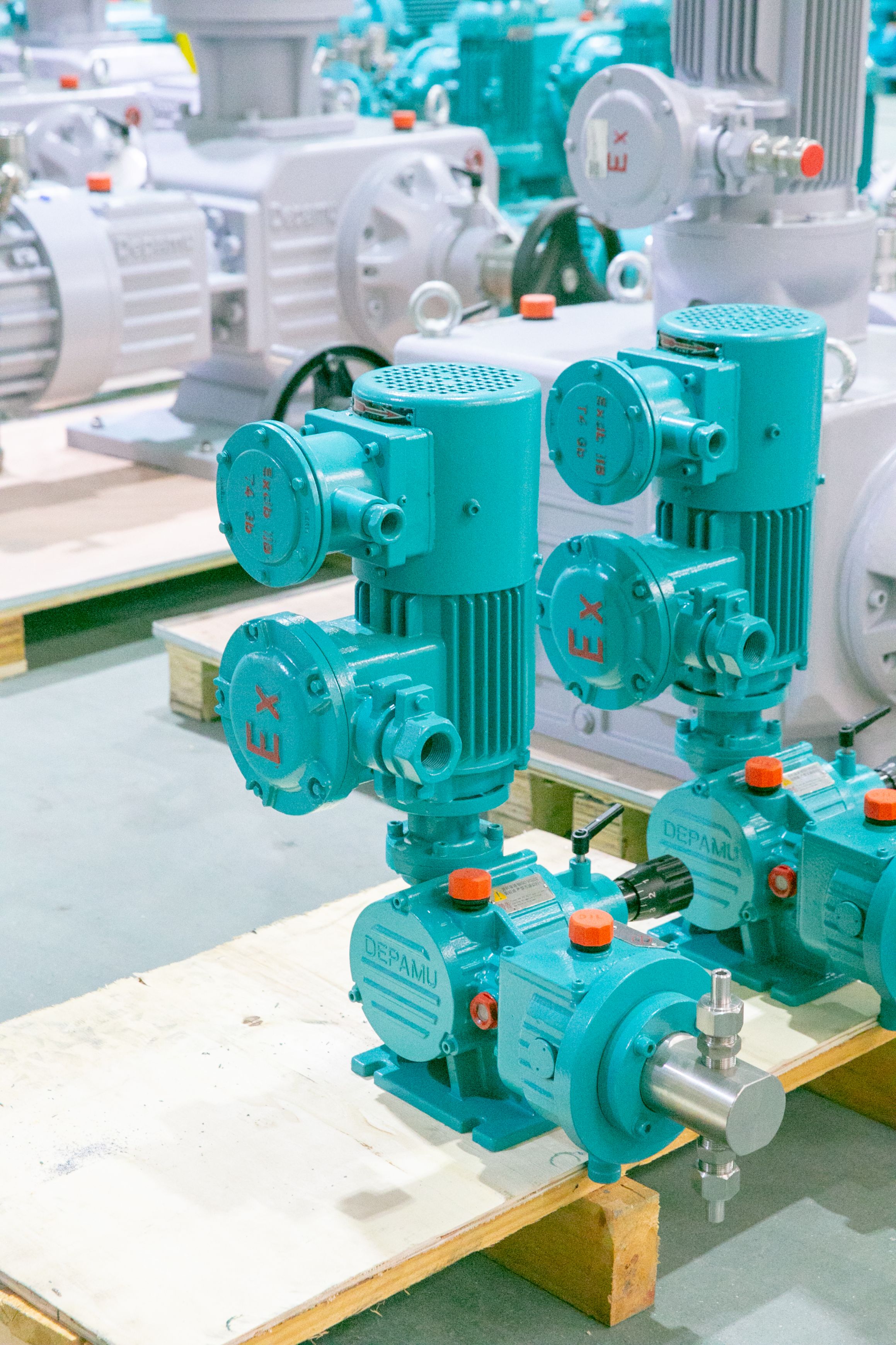
Introduction to the company's technological strength: How does Depam solve industry challenges?
Depamp (Hangzhou) Pump Technology Co., Ltd., founded in 2003, has been dedicated to the R&D of high-end positive displacement pumps for 21 years. It boasts over 400 employees and a modern factory covering 35,000 square meters, with an annual output value exceeding 500 million yuan. Its technological advantages are manifested in three key dimensions:
STEP 1: Full-scenario Adaptation Technology
- Flow range: 0.01-20,000 L/h, with a pressure rating of up to 60 MPa, covering scenarios from micro-flow to ultra-high pressure;
- Material options: Offering 12 types of pump head materials, including 304/316L stainless steel, Hastelloy alloy, and polytetrafluoroethylene, suitable for over 200 media such as strong acids, strong alkalis, and organic solvents;
- Sealing system: It employs a double mechanical seal with a flushing plan, extending the seal lifespan to three times the industry average when handling particulate-containing media.
STEP 2: Intelligent Control Technology
- Integrated with a 4-20 mA signal input module, enabling seamless connection with DCS systems for remote flow control;
- The variable frequency drive equipped with AI algorithms automatically adjusts the stroke frequency according to process requirements, achieving an energy savings rate of 25%;
- Equipped with pressure and temperature sensors to monitor operating status in real time, automatically shutting down and triggering an alarm in case of abnormalities.
STEP 3: Non-standard Customization Capability
- Relying on an integrated CAD/CAM design platform, 3D modeling of non-standard products is completed within 72 hours;
- Equipped with CNC machining centers, dynamic balancing machines, and other equipment to ensure the coaxiality of customized pump bodies is ≤ 0.05 mm;
- Through ANSYS fluid simulation analysis, the flow channel design was optimized, raising the pump efficiency to over 88%.
<Technology implementation casesIn the chemical dosing system of a certain nuclear power plant, the plunger pumps customized by Depam successfully solved the following challenges:
- For conveying concentrated hydrochloric acid at 60℃ with a pH of 1, the pump head is made of Hastelloy C-276 material and has operated continuously for 2 years without corrosion;
- Flow regulation from 0.5 to 50 L/h is achieved through frequency conversion control to meet the demands of different working conditions;
- Equipped with a dual-isolation tank sealing structure, it completely eliminates the risk of leakage and has been awarded the title of "High-Quality Supplier of Nuclear-Grade Equipment."
FAQ: A Guide to Q&A-Style Technical Selection
Q1: How to select pump head materials based on media characteristics?
A: For strong acids (such as sulfuric acid and hydrochloric acid), it is recommended to use Hastelloy C-276 or polytetrafluoroethylene; for strong alkalis (such as sodium hydroxide), 316L stainless steel is recommended; for media containing chloride ions, the use of 304 stainless steel should be avoided. Depump offers material corrosion rate testing services and can provide third-party inspection reports.
Q2: What parameters should be considered when the flow accuracy requirement is ±1%?
A: Prioritize pumps with infinitely variable stroke length adjustment, such as Depam's DM series plunger pumps, which offer a stroke adjustment ratio of up to 10:1. Meanwhile, verify the pump's repeatability accuracy指标 (replace with "specification" in context if needed, but keeping as "indicator" for direct translation here: "indicator"); the industry standard is ±1.5%, while Depam's products can achieve ±0.8%.
Q3: What should be noted when conveying high-temperature media?
A: When the medium temperature exceeds 120°C, a pump head with a cooling jacket should be selected and equipped with a constant-temperature circulation system. Depamp's high-temperature pump model adopts a double-layer water-cooled structure, which can stably transport media at 180°C, with a thermal deformation of the pump body ≤ 0.02mm.
Q4: How to evaluate a supplier's customization capabilities?
A: Examine whether it meets the following conditions:
- Independent R&D team and experimental platform;
- A complete case library for delivery of non-standard products;
- Rapid response mechanism (e.g., Depam promises to issue a technical solution within 48 hours).
For more information, please visit the official website:www.depamufluid.com
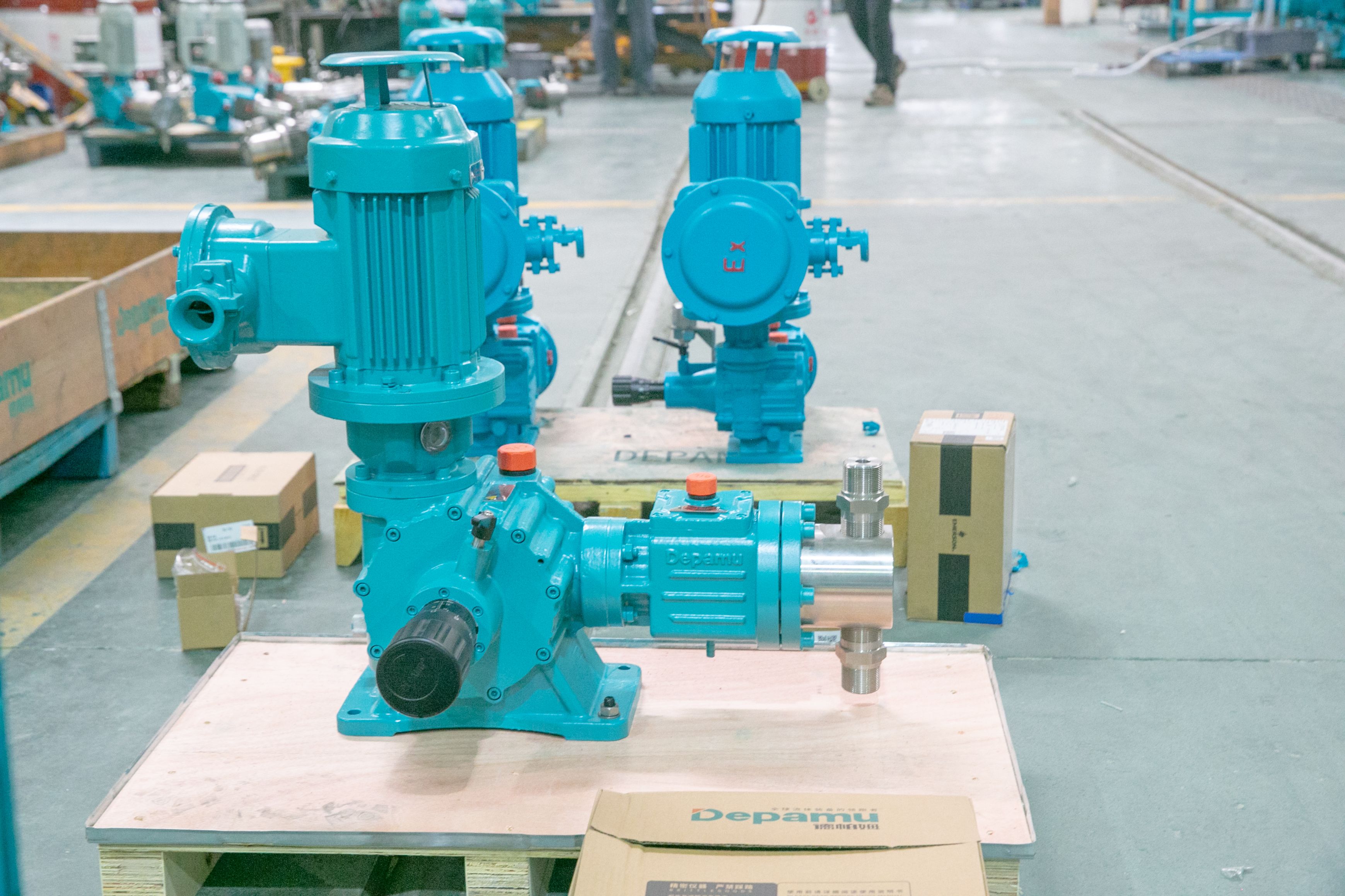
Reference for full text summary
The selection of plunger metering pumps requires comprehensive consideration of core parameters such as medium characteristics, flow accuracy, temperature, and pressure. Leveraging 21 years of technological accumulation, Depam Pump Industry has developed a three-dimensional solution encompassing "standard products + non-standard customization + intelligent control." Its products have obtained international certifications such as CE and ATEX and are widely applied in high-end fields such as petroleum refining and the nuclear industry. It is recommended that users prioritize suppliers with R&D capabilities, a comprehensive case library, and rapid response capabilities to reduce total lifecycle costs. For more information, please visit the official website:www.depamufluid.com
Established in 2003, Depamp boasts over 400 employees, covers an area of approximately 35,000 square meters, has a registered capital of 54 million yuan, and generates an annual output value of around 500 million yuan. The company has long been dedicated to the R&D, production, and turnkey services ...
No. 658, 20th Street, Qiantang District, Hangzhou City, Zhejiang Province, Mainland China