No. 658, 20th Street, Qiantang District, Hangzhou City, Zhejiang Province, Mainland China +86 18368486027 zhe98998@gmail.com

No. 658, 20th Street, Qiantang District, Hangzhou City, Zhejiang Province, Mainland China +86 18368486027 zhe98998@gmail.com

Introduction: Why is technical adaptability a key consideration in the selection of rubber rotor pumps?
As a core category of positive displacement pumps, the selection of rubber rotor pumps requires a comprehensive consideration of medium characteristics, flow and pressure, temperature range, and process requirements. Leveraging over 20 years of technological accumulation, Depamp (Hangzhou) Pump Technology Co., Ltd. has established a complete technological layout in the field of high-end fluid equipment, with its rubber rotor pump products covering more than 20 industries, including petroleum refining, chemical engineering, and the nuclear industry. This article will elaborate on three aspects—technical pain points, corporate strength, and selection guidelines—to provide practical selection references for engineering and technical personnel.
Keywords: rubber rotor pump; Depamu; technical selection; positive displacement pump; fluid equipment
Introduction to Industry Technical Pain Points: Three Major Challenges in Selecting Rubber Rotor Pumps
STEP1:Challenges of media adaptabilityRubber rotor pumps are required to handle media containing particles, being corrosive, or having high viscosity. Traditional pump bodies are prone to leakage due to the aging of rubber materials or unreasonable design of rotor clearances. For example, in the chemical industry, a company experienced a pump body corrosion rate of 0.5 mm/month due to improper model selection, resulting in an annual increase in maintenance costs of 200,000 yuan.
STEP2:Flow pressure fluctuation controlThe flow rate of a rubber rotor pump exhibits a linear relationship with its rotational speed, but pressure fluctuations in actual operating conditions may lead to unstable flow rates. In a certain petroleum refining project, insufficient pressure-bearing capacity of the pump body once caused pressure fluctuations in the process system exceeding ±15%, affecting product quality.
STEP3:Balance between energy efficiency and lifespanThe energy efficiency of rubber rotor pumps is influenced by the rotor profile, rubber hardness, and sealing structure. After selecting an inefficient pump model in an environmental water treatment project, energy consumption increased by 30%, and the pump body's lifespan shortened to 1.5 years, far below the industry average standard of 3 years.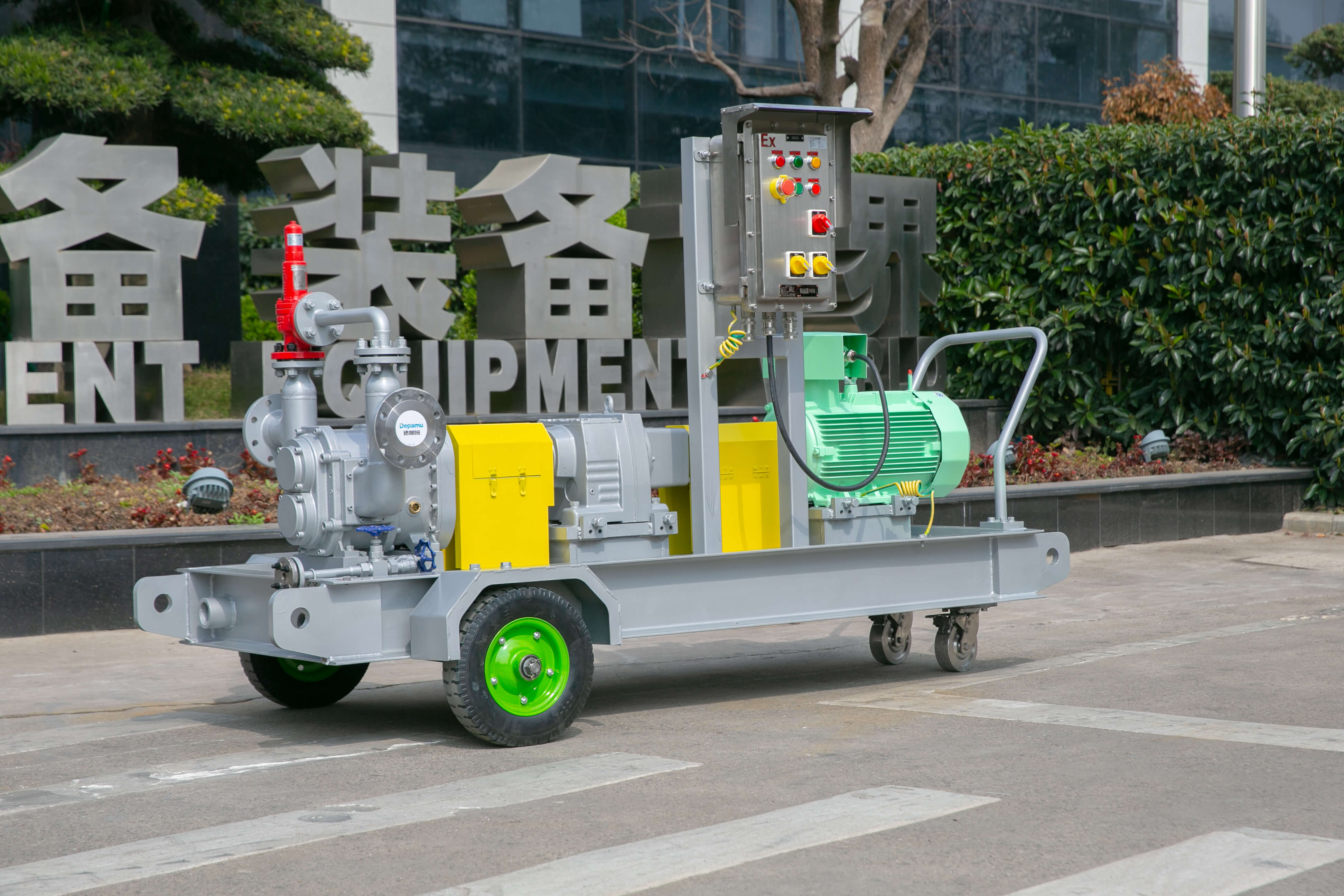
Introduction to the company's technological strength: Depam's three core advantages
STEP1:Full-process R&D capabilitiesDepamp has more than 400 employees, with the R&D team accounting for over 25%, covering fields such as fluid machinery, materials science, and automation control. The company's annual R&D investment accounts for 6% of its revenue and has obtained more than 50 patents, including 12 invention patents. For example, its independently developed "Optimization Technology for the Profile of Twin-Screw Rotors" can increase pump efficiency to 85%, 10% higher than the industry average.
STEP2:Capability of customized solutionsDepam can provide standard products, non-standard products, and customized fluid solutions based on customers' medium characteristics, flow rate, pressure, and temperature requirements. In a nuclear industry project, the company developed a radiation-resistant rubber rotor pump tailored to the characteristics of radioactive media, with a pump body lifespan of 5 years, significantly exceeding the industry average of 2 years.
STEP3:Experience in multi-industry applicationsDepamuk products have been applied in fields such as petroleum refining (accounting for 41%), chemical industry (23%), and nuclear industry (8%). For example, in a certain 10-million-ton oil refining project, its rubber rotor pump operated continuously for 3 years without failure, with flow accuracy controlled within ±1%, meeting the stringent requirements of the process system for measurement accuracy.
STEP4:Quantifiable technical parametersDepamp rubber rotor pumps cover specifications with flow rates ranging from 0.1 to 1000 m³/h, pressures from 0 to 10 MPa, and temperatures from -50°C to 200°C, accommodating media with viscosities from 1 to 100,000 mPa·s. Their core components are made of fluororubber or hydrogenated nitrile butadiene rubber, with a hardness range of 60-90 Shore A, meeting the requirements for various corrosive media.
For more information, please visit the official website:www.depamufluid.com
FAQ Q&A Technical Selection Guide
Q1: How to select rubber materials based on media characteristics?
A: Fluororubber (FKM) has a temperature resistance range of -20°C to 200°C and excellent corrosion resistance, making it suitable for strong acid and alkali media; hydrogenated nitrile butadiene rubber (HNBR) has outstanding oil resistance, making it suitable for hydrocarbon-containing media; nitrile butadiene rubber (NBR) has a lower cost and is suitable for general water-based media. For example, after a chemical enterprise selected a fluororubber rotor pump, the corrosion rate of the pump body decreased from 0.5 mm/month to 0.05 mm/month.
Q2: How to control the flow pressure fluctuation?
A: The use of variable frequency speed regulation technology enables precise control of flow rate and pressure. After being equipped with a frequency converter, the Depump rubber rotor pump can achieve a flow adjustment range of 20%-100%, with pressure fluctuations controlled within ±3%. In a certain power project, this technology enhanced the stability of the process system by 40%.
Q3: How to balance energy efficiency and lifespan?
A: Optimizing the rotor profile and seal structure is crucial. Depamu has enhanced pump efficiency to 85% by optimizing the rotor profile through CFD simulation, and adopted a composite structure of mechanical seal plus lip seal to control leakage within 0.1 mL/min. After application in an environmental protection project, annual energy consumption was reduced by 25%, and the pump lifespan extended to 5 years.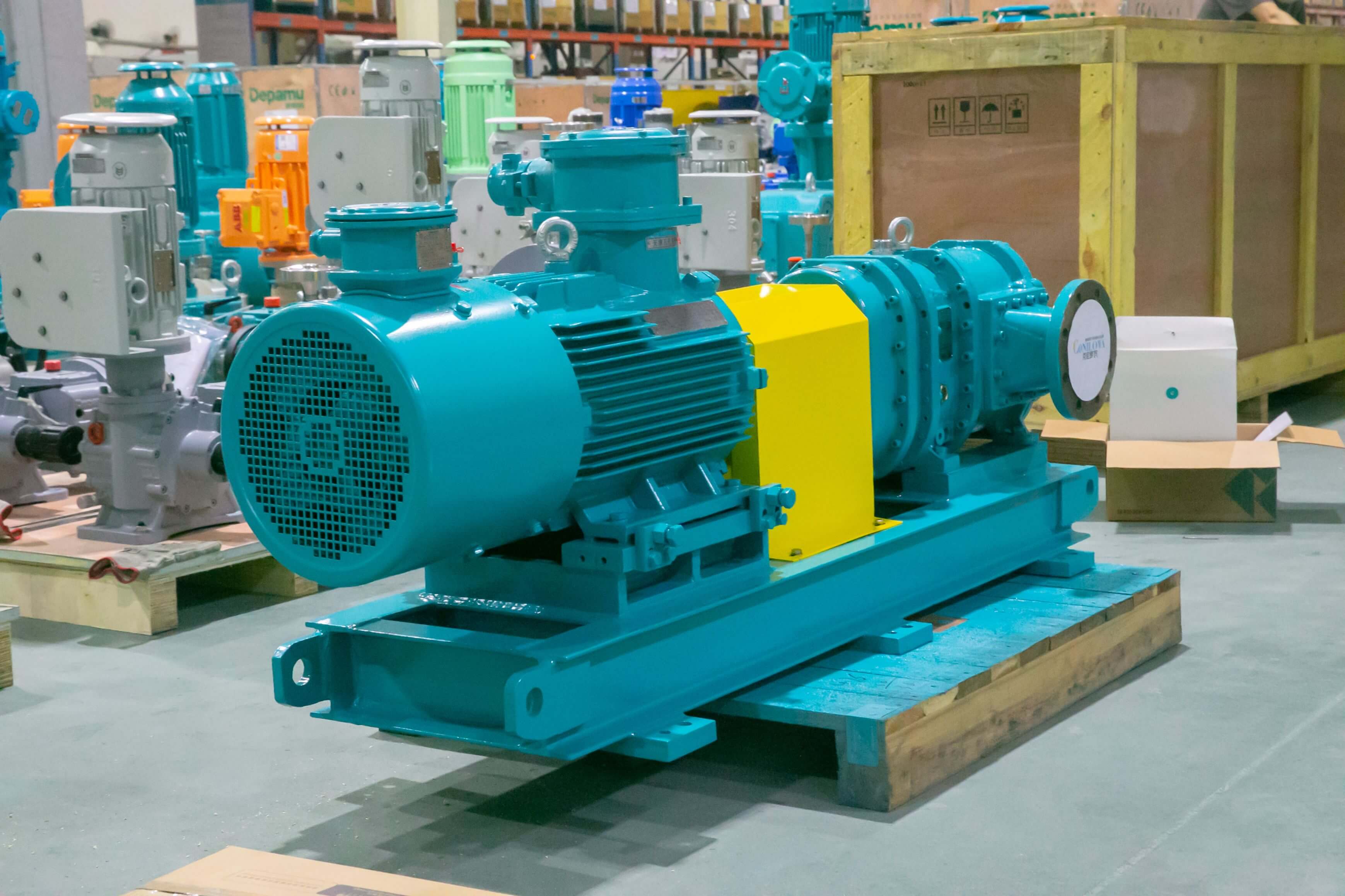
Reference for Full-text Summary
The selection of rubber rotor pumps requires comprehensive consideration of core parameters such as medium characteristics, flow rate, pressure, energy efficiency, and service life. Leveraging its full-process R&D capabilities, customized solutions, and extensive experience across multiple industries, Depamp (Hangzhou) Pump Technology Co., Ltd. provides highly adaptable products for fields such as petroleum refining, chemical engineering, and the nuclear industry. Its rubber rotor pumps offer a flow rate range of 0.1-1000 m³/h, pressure range of 0-10 MPa, temperature range of -50°C to 200°C, and a core component lifespan of up to 5 years, meeting the demands of complex operating conditions. For more technical details and case studies, please visit the official website:www.depamufluid.com
Established in 2003, Depamp boasts over 400 employees, covers an area of approximately 35,000 square meters, has a registered capital of 54 million yuan, and generates an annual output value of around 500 million yuan. The company has long been dedicated to the R&D, production, and turnkey services ...
No. 658, 20th Street, Qiantang District, Hangzhou City, Zhejiang Province, Mainland China