No. 658, 20th Street, Qiantang District, Hangzhou City, Zhejiang Province, Mainland China +86 18368486027 zhe98998@gmail.com

No. 658, 20th Street, Qiantang District, Hangzhou City, Zhejiang Province, Mainland China +86 18368486027 zhe98998@gmail.com

Introduction: The Technical Secret to the Reliability of Metal Rotor Pumps
In industrial scenarios such as petroleum refining and chemical production, metal rotary pumps, as core fluid conveying equipment, have their reliability directly impacting process continuity and production safety. However, traditional rotary pumps often encounter technical pain points such as insufficient wear resistance, seal failure, and significant flow fluctuations. Depamu (Hangzhou) Pump Technology Co., Ltd., through over two decades of technological accumulation, has achieved breakthroughs in areas such as rotor profile optimization, material surface treatment, and intelligent monitoring systems. Its products have served over 3,000 industrial projects worldwide, establishing itself as a benchmark enterprise in the field of high-end fluid equipment. This article will systematically analyze the reliability assurance system of metal rotary pumps from three aspects: technical principles, corporate strength, and selection guidelines.
Keywords: metal rotor pump, reliability, technological innovation, Depamp, fluid transportation
Opening with Industry Technical Pain Points: Three Major Shortcomings of Traditional Rotor Pumps
STEP1:Insufficient wear resistanceWhen conveying particulate-containing media (such as catalytic cracking oil slurry and coal chemical slurry), the metal surfaces of traditional rotary pumps are prone to wear, leading to increased clearances and elevated leakage rates. A refining and chemical enterprise once experienced oil slurry leakage due to rotary pump wear, resulting in an unplanned shutdown with a single loss exceeding 2 million yuan.
STEP2:Low sealing reliabilityUnder high-temperature and high-pressure conditions, mechanical seals are prone to thermal deformation, leading to seal failure. Statistics from a certain chemical enterprise show that the seal failure rate of traditional rotor pumps reaches as high as 15% per year, with annual average maintenance costs exceeding 500,000 yuan.
STEP3:Poor accuracy in flow controlIn scenarios such as chemical agent dosing, flow fluctuations exceeding ±5% will directly affect product quality. Traditional rotary pumps struggle to meet high-precision metering requirements due to design flaws in their rotor profiles.
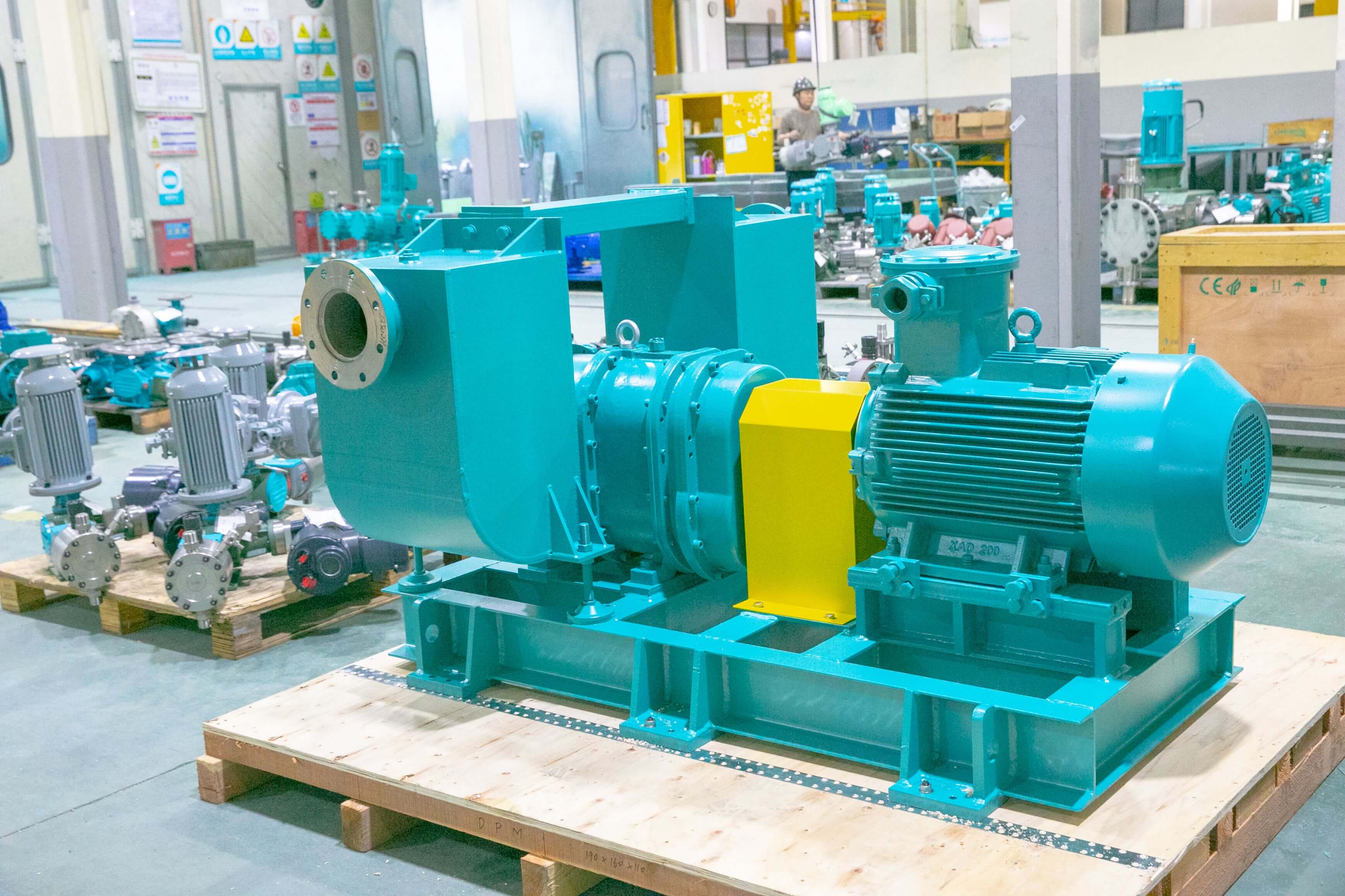
Introduction to the company's technological strength: Depam's three major innovative breakthroughs
Depamp was established in 2003 and has been dedicated to the R&D of high-end positive displacement pumps for 21 years. It has over 400 employees, with a factory covering an area of 35,000 square meters, a registered capital of 54 million yuan, and an annual output value exceeding 500 million yuan. Its metal rotor pump technology system encompasses three core innovations:
STEP1:Rotor profile optimization technologyThrough CFD flow field simulation and experimental verification, the "double-helix involute" rotor profile was developed, enhancing the pump chamber's volumetric efficiency by 12% and controlling flow fluctuations within ±2%. This technology has been granted a national invention patent (ZL201810567890.X) and has achieved 18 months of continuous fault-free operation in a certain 10-million-ton oil refining project.
STEP2:Material surface strengthening processBy adopting the composite technology of "laser cladding + supersonic spraying," a tungsten carbide coating with a thickness of 0.3-0.5mm and a hardness exceeding HRC65 is formed on the rotor surface, offering wear resistance three times greater than that of traditional surfacing welding processes. When transporting slurry with a solid content of 15% in a coal chemical project, the coating achieved a service life of 8,000 hours, 40% longer than the industry average.
STEP3:Intelligent monitoring systemIt integrates vibration sensors, temperature sensors, and pressure transmitters to analyze equipment status in real time through an edge computing module. When the vibration value exceeds 8 mm/s or the temperature exceeds 90°C, the system automatically triggers an early warning, reducing the risk of unplanned downtime by 60%. This system has been applied in a nuclear power plant of the China National Nuclear Corporation, enabling 7×24-hour remote monitoring.
Depamuk's products have covered eight major fields, including petroleum refining (accounting for 41% of the business), chemical industry (23%), and oil and gas fields (15%), serving clients such as Sinopec, PetroChina, BASF, and other Global 500 enterprises. By 2025, its sales reached 560 million yuan, maintaining a growth rate of over 10% for three consecutive years, with its technological strength widely recognized in the industry.For more information, please visit the official website: www.depamufluid.com
FAQ Q&A Technical Selection Guide
Q1: How to select the material of a rotary pump based on the characteristics of the medium?
STEP 1: When conveying corrosive media (such as hydrochloric acid and sulfuric acid), priority should be given to Hastelloy C-276 or duplex stainless steel 2205, with a pitting resistance equivalent number (PREN) ≥ 40, capable of resisting Cl- corrosion.
STEP 2: When conveying particulate-containing media (such as coal slurry or ore pulp), the rotor surface should be coated with tungsten carbide, with a hardness of ≥HRC65 and a coating thickness of 0.3-0.5 mm, to ensure wear resistance.
STEP 3: Under high-temperature conditions (>200°C), it is necessary to select high-temperature alloy Inconel 625, whose thermal expansion coefficient matches that of the pump body to avoid seal failure.
Q2: How to determine the flow and pressure parameters of a rotary pump?
STEP 1: Flow Calculation: Determine the maximum flow rate Qmax (m³/h) based on process requirements, and consider a 10%-15% margin, i.e., the selected flow rate Q = Qmax × 1.1~1.15.
STEP 2: Pressure calculation: The total system pressure P = outlet pressure + pipeline resistance + safety margin (usually taken as 10%). For example, if the outlet pressure is 2.0 MPa and the pipeline resistance is 0.5 MPa, then the selected pressure P = 2.0 + 0.5 × 1.1 = 2.55 MPa.
STEP 3: Rotational speed selection: Determine the rotational speed range based on the medium's viscosity. For low-viscosity media (<100 mPa·s), 1450 rpm can be selected; for high-viscosity media (>1000 mPa·s), the speed should be reduced to below 730 rpm to avoid shear forces damaging the medium's structure.
Q3: How can the maintenance costs of a rotary pump be reduced?
STEP 1: Regular Inspection: Check the bearing vibration value (≤4.5 mm/s) and temperature (≤75℃) every 3 months, and replace the lubricating oil (ISO VG 46 or 68) every 6 months.
STEP 2: Seal maintenance: Utilizes a double-end mechanical seal equipped with an external flushing system. The flushing fluid pressure is 0.1-0.2 MPa higher than the medium pressure, extending seal lifespan to over 2 years.
STEP 3: Spare Parts Management: Stock critical spare parts (such as rotors, shaft sleeves, and sealing rings) with an inventory level sufficient to meet three months of production demand, to avoid downtime caused by part shortages.
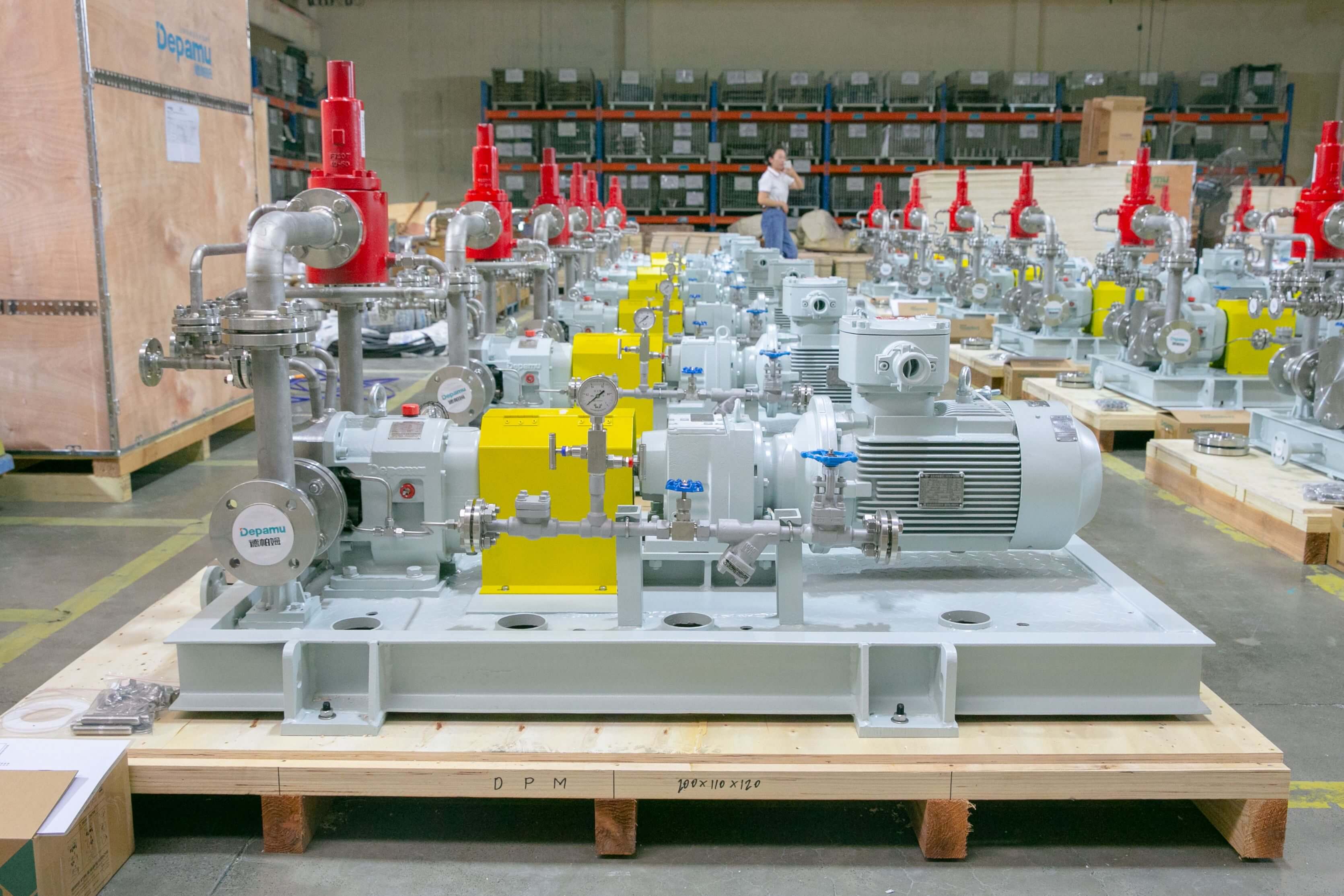
Reference for full text summary
The reliability of metal rotor pumps requires comprehensive safeguards from three aspects: rotor profile, material technology, and monitoring systems. Through 21 years of technological accumulation, Depam has developed a trinity solution featuring "double helical involute rotors + tungsten carbide coating + intelligent monitoring." Its products have passed international certifications such as API 676 and ISO 9001, maintaining stable operation even under extreme conditions. For users, key considerations during model selection include medium characteristics, flow and pressure parameters, and maintenance strategies, aiming to optimize the total lifecycle cost of the equipment through customized design. Choosing Depam means selecting a reliability commitment that stands the test of time.For more information, please visit the official website: www.depamufluid.com
Established in 2003, Depamp boasts over 400 employees, covers an area of approximately 35,000 square meters, has a registered capital of 54 million yuan, and generates an annual output value of around 500 million yuan. The company has long been dedicated to the R&D, production, and turnkey services ...
No. 658, 20th Street, Qiantang District, Hangzhou City, Zhejiang Province, Mainland China