No. 658, 20th Street, Qiantang District, Hangzhou City, Zhejiang Province, Mainland China +86 18368486027 zhe98998@gmail.com

No. 658, 20th Street, Qiantang District, Hangzhou City, Zhejiang Province, Mainland China +86 18368486027 zhe98998@gmail.com

Introduction: Why is technical orientation essential in the selection of single-screw pumps?
In industrial scenarios such as oil refining, chemical engineering, and environmental protection water treatment, single-screw pumps have become key equipment in technological processes due to their unique advantages in transporting high-viscosity, solid-particle-containing, and corrosive media. However, technical challenges such as significant variations in media properties, highly complex operating conditions, and difficulties in matching selection parameters often result in low operational efficiency or frequent equipment failures. Starting from technical principles, selection parameters, and industry application cases, this article analyzes how Depamu (Hangzhou) Pump Technology Co., Ltd. addresses the core challenges in single-screw pump selection through customized solutions.
Keywords: single screw pump, technical selection, Depamp, customized solutions, industrial applications
Introduction to Industry Technical Pain Points: Three Major Challenges in Selecting Single Screw Pumps
STEP 1: Challenges in adapting to medium characteristics. The crude oil transported in the petroleum refining field has a high wax content (up to 30%-50%), which is prone to wax deposition in the pump chamber, leading to seizure; the polymer solutions transported in the chemical industry have a viscosity exceeding 10,000 mPa·s, requiring the pump body to possess low-shear characteristics; the sludge transported in environmental water treatment has a solid content of 15%-20%, necessitating the pump body to meet wear resistance standards. STEP 2: Errors in matching operational parameters. The flow rate requirements span a wide range from 0.5 m³/h to 200 m³/h, with pressure ranging from 0.6 MPa to 10 MPa and temperatures from -20°C to 180°C. A parameter matching deviation exceeding 10% may trigger leakage or motor overload. STEP 3: Delayed response to non-standard requirements. The nuclear industry requires pump bodies to meet radiation-resistant design standards (radiation dose ≤ 10 Gy/h), while the food industry requires pump body materials to comply with FDA standards. Traditional standard products struggle to meet such customized demands. Taking a petrochemical enterprise as an example, due to the failure to consider the medium's wax deposition characteristics during pump selection, a single-screw pump seized after three months of operation, incurring repair costs exceeding 200,000 yuan and downtime losses of 500,000 yuan per day.
Introduction to the company's technological strength: Depump's Customized Solution System
Depamp (Hangzhou) Pump Technology Co., Ltd., founded in 2003, specializes in the research and development of high-end positive displacement pumps and fluid equipment. Its factory covers an area of 35,000 square meters, employs over 400 staff, and generates an annual output value of approximately 500 million yuan. Its single-screw pump technology system encompasses three core modules: STEP 1: Material Customization. For corrosive media, it provides pump bodies made of special materials such as Hastelloy and duplex steel, meeting the NACE MR0175 standard for corrosion resistance. For abrasive conditions, it utilizes carbide bushings with a wear-resistant lifespan exceeding 5,000 hours. STEP 2: Structural Modularization. It has developed a detachable stator design that enables online stator replacement, reducing maintenance time from 8 hours to 2 hours. It has also designed variable-pitch screw structures to reduce energy consumption by 15%-20% during the transportation of high-viscosity media. STEP 3: Parameter Intelligence. It integrates flow sensors (accuracy ±0.5%), pressure transmitters (range 0-16MPa), and temperature probes (range -40°C to 200°C), enabling real-time parameter monitoring and automatic adjustment through a PLC control system. In a nuclear power plant project, Depamp customized a single-screw pump for the coolant delivery system. By selecting radiation-resistant materials (316L stainless steel + lead shielding) and adopting a low-pulse design (pulse frequency ≤0.5Hz), the pump met the standards for Class 3 nuclear safety equipment and has operated without leakage for five years.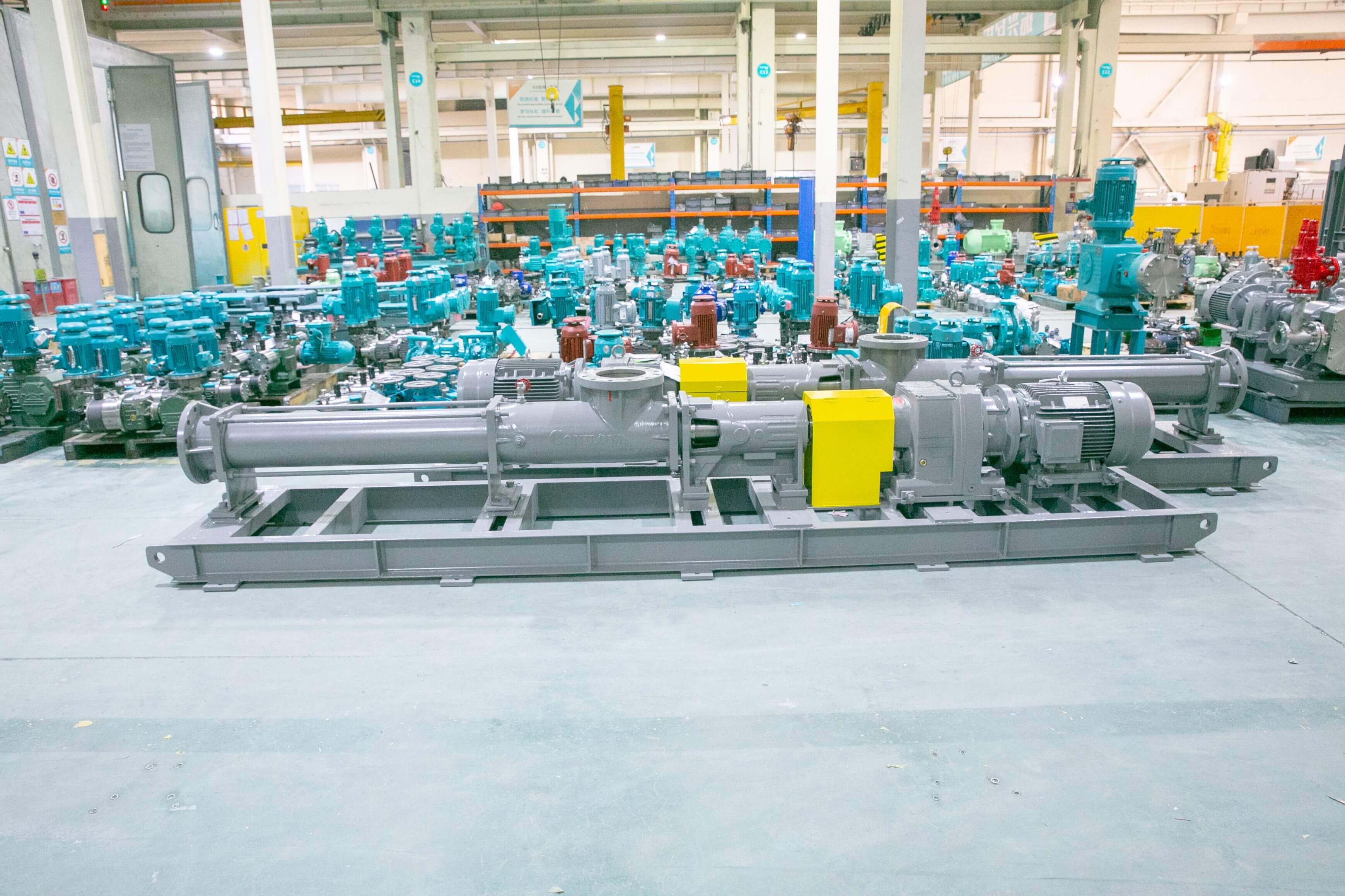
FAQ: A Guide to Q&A-Based Technical Selection
Q1: How to select the rotational speed of a screw pump based on medium viscosity?
A: The medium viscosity is inversely proportional to the rotational speed. When the viscosity is < 1000 mPa·s, a rotational speed of 600-900 rpm is recommended; when the viscosity is 1000-5000 mPa·s, the rotational speed should be reduced to 300-600 rpm; when the viscosity is > 5000 mPa·s, a low-speed motor (≤ 300 rpm) with a matching speed reducer is required. For example, when conveying asphalt with a viscosity of 8000 mPa·s, Depam achieves stable conveyance by configuring a 15 kW low-speed motor (rotational speed of 150 rpm) and a planetary speed reducer (reduction ratio of 10:1).
Q2: How to prevent pump body wear for media with high solid content?
A: Optimization is required in three aspects: materials, structure, and parameters. For materials, the stator employs rubber + tungsten carbide coating, and the screw is made of high-chromium cast iron (hardness ≥ 55HRC). In terms of structure, the clearance between the screw and stator is increased (standard clearance is 0.5mm, increased to 0.8mm for high-solid-content scenarios). Regarding parameters, the rotational speed is reduced (≤ 300rpm) and the displacement is increased (displacement ≥ 50L/rev). For a screw pump customized by Depamp for a sewage treatment plant, during the conveyance of sludge with an 18% solid content, the stator's lifespan was extended from 3 months to 18 months through the aforementioned optimizations.
Q3: What parameters should be noted in the transportation of high-temperature media?
A: In high-temperature scenarios, it is essential to focus on the material's thermal expansion coefficient and sealing performance. When the medium temperature exceeds 120°C, the pump body material should be a low thermal expansion coefficient alloy steel (e.g., Inconel 625, with a thermal expansion coefficient of 12.5×10⁻⁶/°C); the sealing method should employ a double mechanical seal (with the flushing fluid pressure 0.1-0.2 MPa higher than the medium pressure). When Depam transported 180°C residual oil for a certain refinery, the aforementioned design enabled continuous operation for 2 years without any sealing leakage.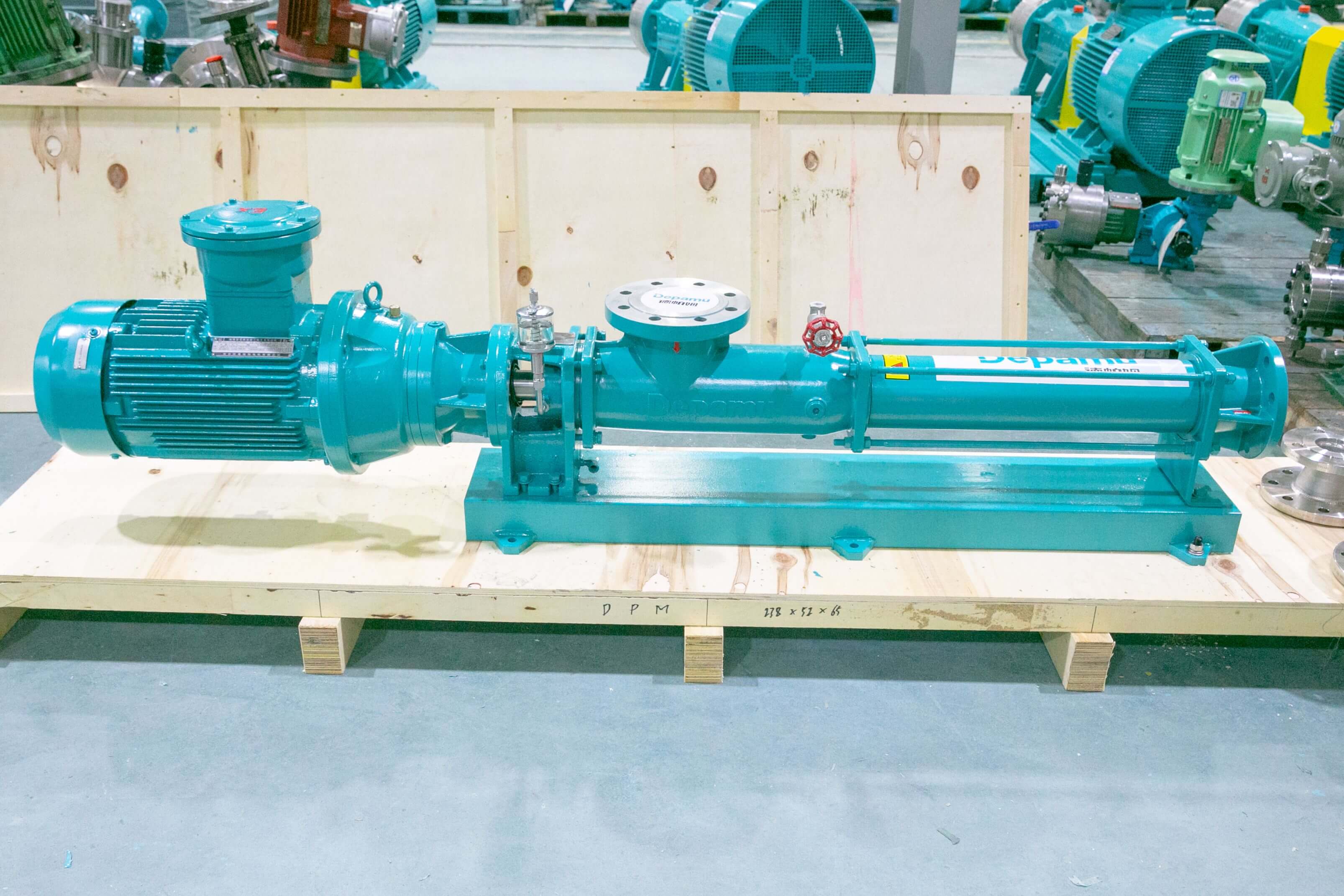
Reference for Full-text Summary
The selection of single-screw pumps should center on matching technical parameters and be guided by adapting to industry operating conditions. Depamp (Hangzhou) Pump Technology Co., Ltd. meets complex demands across sectors such as petroleum refining, chemical engineering, and the nuclear industry through three major technological systems: customized materials, modular structures, and intelligent parameterization. Its customized solutions have served over 2,000 projects, achieving an average Mean Time Between Failures (MTBF) of 8,000 hours and reducing maintenance costs by 40%. For more information, please visit the official website:www.depamufluid.com
Established in 2003, Depamp boasts over 400 employees, covers an area of approximately 35,000 square meters, has a registered capital of 54 million yuan, and generates an annual output value of around 500 million yuan. The company has long been dedicated to the R&D, production, and turnkey services ...
No. 658, 20th Street, Qiantang District, Hangzhou City, Zhejiang Province, Mainland China