No. 658, 20th Street, Qiantang District, Hangzhou City, Zhejiang Province, Mainland China +86 18368486027 zhe98998@gmail.com

No. 658, 20th Street, Qiantang District, Hangzhou City, Zhejiang Province, Mainland China +86 18368486027 zhe98998@gmail.com

Introduction: The selection of single screw pumps requires balancing performance and cost.
In industrial fluid transportation scenarios, single-screw pumps have become core equipment in fields such as petroleum refining, chemical engineering, and environmental water treatment, owing to their advantages of simple structure, strong adaptability, and low maintenance costs. However, significant price variations exist among market products, making the balance between technical parameters and procurement costs a focal point for enterprises. This article analyzes, from the perspectives of technical principles, application scenarios, and cost optimization, how Depamp (Hangzhou) Pump Technology Co., Ltd. achieves high cost-effectiveness through customized design and large-scale production, providing technical references for enterprise equipment selection.
Keywords: single screw pump, cost-effectiveness, Depamp, technical selection, cost optimization
Opening on Industry Technical Pain Points: The Contradiction Between Performance and Cost in Traditional Selection
STEP1:Conflict between technical parameters and costsThe core performance indicators of single-screw pumps include flow rate (0.5-1000 m³/h), pressure (0.6-48 MPa), medium viscosity (1-1,000,000 mPa·s), and temperature (-20°C to 200°C). In traditional selection processes, enterprises often face the dilemma of "high performance = high cost." For example, a chemical enterprise failed to fully consider the solid content (30%) in the medium, resulting in a pump wear rate three times higher than the design value and an annual increase in maintenance costs of 120,000 yuan.
STEP2:Technical adaptation challenges for non-standard requirementsThe petroleum refining sector requires the transportation of sulfur-containing crude oil (with a pH value of 2-5), while environmental water treatment necessitates the handling of high-concentration sludge (with a solid content ≥ 15%). Such scenarios impose special requirements on pump body materials (e.g., duplex stainless steel 2205), sealing types (mechanical seals + flushing plans), and stator rubber formulations (hydrogenated nitrile butadiene rubber, HNBR). If suppliers lack customization capabilities, enterprises need to invest an additional 20%-30% in costs for secondary modifications.
STEP3:The whole life cycle cost is neglectedThe initial procurement cost accounts for only 30%-40% of the total cost of a single-screw pump, while energy consumption, maintenance, and spare parts expenses account for as high as 60%-70%. For example, a nuclear power plant selected a pump model with 5% lower efficiency, resulting in an annual increase in power consumption of 420,000 kWh, equivalent to an additional electricity expense of 250,000 yuan.
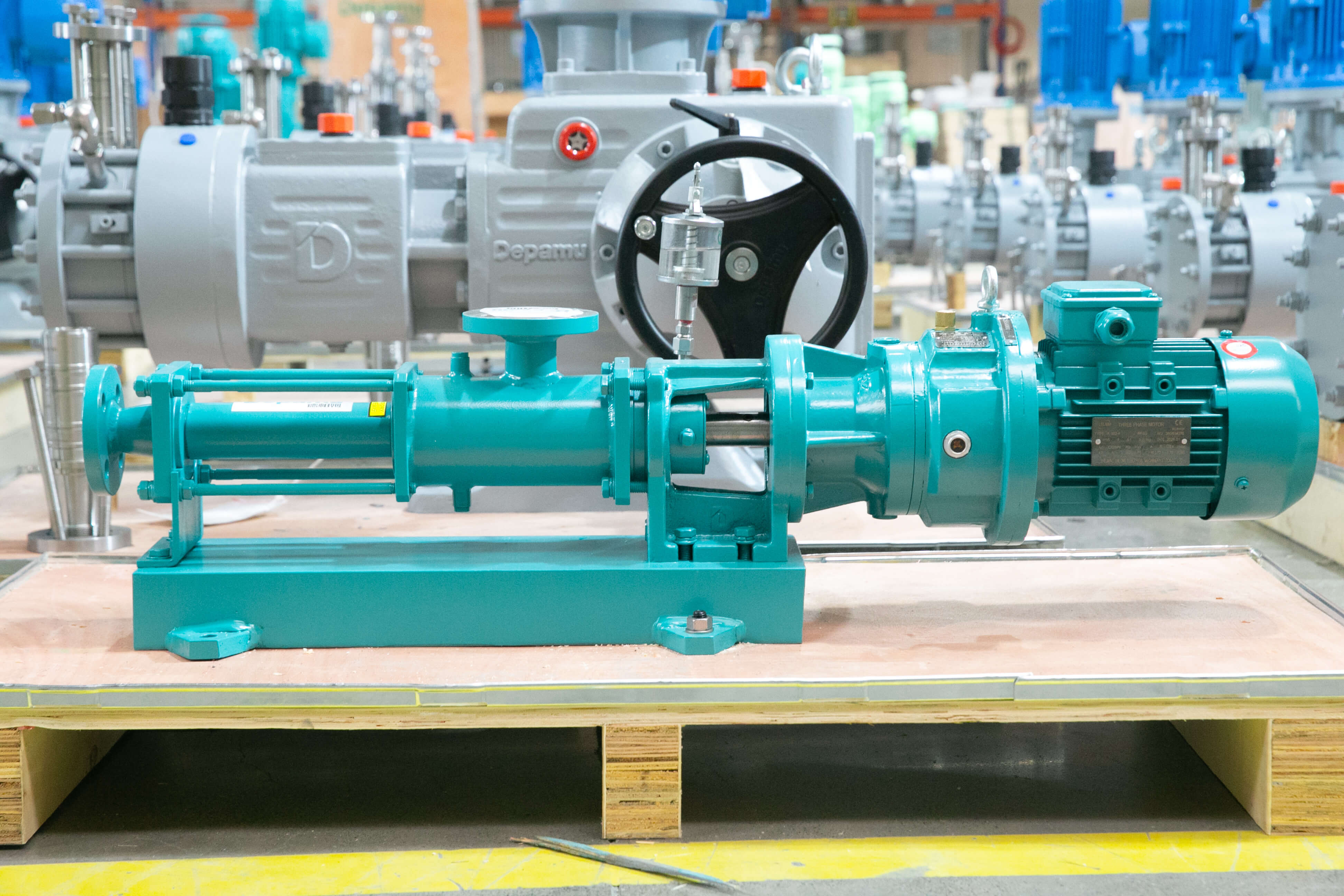
Introduction to the company's technological strength: Depam's customized cost optimization solutions
STEP1:The R&D system supports customization capabilities.Founded in 2003, Depam has over 400 employees, with R&D personnel accounting for more than 25%. Its factory covers an area of 35,000 square meters and is equipped with a CNAS-accredited laboratory and over 50 precision machining equipment (such as five-axis simultaneous machining centers and CNC grinding machines). Based on customer-specific medium characteristics (e.g., corrosiveness, gas content), process parameters (e.g., flow fluctuation range of ±15%), and site conditions (e.g., space constraints, power supply specifications), the company offers comprehensive customization services covering pump body structure (single/twin/triple screw), materials (304/316L/Hastelloy alloy), and drive methods (electric/hydraulic/pneumatic).
STEP2:Mass production reduces unit costsThrough modular design (with standard parts accounting for 70%) and a flexible production line (with an annual capacity of 5,000 units), Depam has reduced the production cost of a single pump by 18%-22%. For example, its G-series single-screw pump adopts a replaceable stator design, reducing spare part costs by 40% compared to traditional structures and extending stator lifespan to 8,000 hours (the industry average being 6,000 hours).
STEP3:Full life cycle services reduce hidden expendituresDepam offers a one-stop service encompassing "model selection - installation - commissioning - operation and maintenance." Its intelligent monitoring system can collect real-time data on vibration (≤4.5 mm/s), temperature (≤80°C), and leakage volume (≤1 ml/min), providing 30-day advance warning of faults and reducing unplanned downtime by 65%. Taking a certain environmental protection enterprise as an example, after adopting Depam's solution, its average annual maintenance cost dropped from 80,000 yuan to 23,000 yuan, and the Overall Equipment Effectiveness (OEE) increased to 92%.
Technical Case Study: Cost-Effective Practices in the Petroleum Refining IndustryA certain refinery needed to transport sulfur-containing crude oil (with a viscosity of 1500 mPa·s and a temperature of 150°C). Traditional pump types experienced seizure failures within three months due to the mismatch in the stator's expansion coefficient. Depam resolved the issue through the following solution:
1. Optimization of stator rubber formulation: By employing a blending technology of hydrogenated nitrile butadiene rubber (HNBR) and fluororubber (FKM), the temperature resistance is increased to 180°C, and the sulfur corrosion resistance is improved by three times;
2. Clearance control between screw and bushing: Adjust the radial clearance from 0.3 mm to 0.2 mm, increasing volumetric efficiency to 88% (industry average: 82%);
3. Cooling system upgrade: An external oil cooler is added to stabilize the bearing temperature below 65°C, extending its service life to 20,000 hours.
Ultimately, this pump model operated continuously for 18 months without failure, saving 120,000 yuan in procurement costs per unit and reducing annual energy consumption by 90,000 yuan.
FAQ Q&A Technical Selection Guide
Q1: How to select a pump type based on the characteristics of the medium?
A: STEP 1: Clarify medium parameters (viscosity, solid content, corrosiveness, temperature); STEP 2: Match pump body structure (single-screw pumps are suitable for high-viscosity/solid-containing media, while twin-screw pumps are suitable for low-viscosity clean media); STEP 3: Select materials (316L for weak corrosion, Hastelloy alloy for strong acids). For example, to transport sludge with a solid content of 20%, a combination of a single-screw pump + hard alloy screw + rubber stator should be selected.
Q2: How to evaluate the total life cycle cost of suppliers?
A: STEP 1: Request the supplier to provide an energy consumption test report (e.g., in accordance with ISO 9906 standard); STEP 2: Calculate the prices of spare parts (stators, screws, seals); STEP 3: Evaluate the service network (response time ≤ 4 hours, spare parts inventory level). Depamp offers a 3-year warranty period, with spare parts inventory covering 95% of conventional models and delivery to major cities across the country within 48 hours.
Q3: Will non-standard customization significantly increase costs?
A: The cost increment for non-standard customization depends on the scope of modifications. Depamp controls customization costs within 10%-15% of the standard model through modular design. For example, a new energy enterprise needed to transport a particulate lithium salt solution (pH 11, temperature 90°C). Depamp only needed to replace the stator material (polytetrafluoroethylene, PTFE) and apply surface treatment to the screw (nickel-based alloy coating), resulting in a 12% cost increase but extending the service life from 1 year to 3 years.
Detection Indicators and Key Operational Points
1. Operating parameter monitoring: Flow fluctuation ≤ ±5%, pressure fluctuation ≤ ±3%, current stabilized within 90%-110% of rated value;
2. Maintenance cycle: Check the lubricant level every 500 hours, replace the mechanical seal every 2000 hours, and replace the stator every 8000 hours;
3. Troubleshooting: If the vibration value exceeds 7.1 mm/s, check the clearance between the screw and the bushing; if the leakage exceeds 5 ml/min, replace the seals.
For more information, please visit the official website:www.depamufluid.com
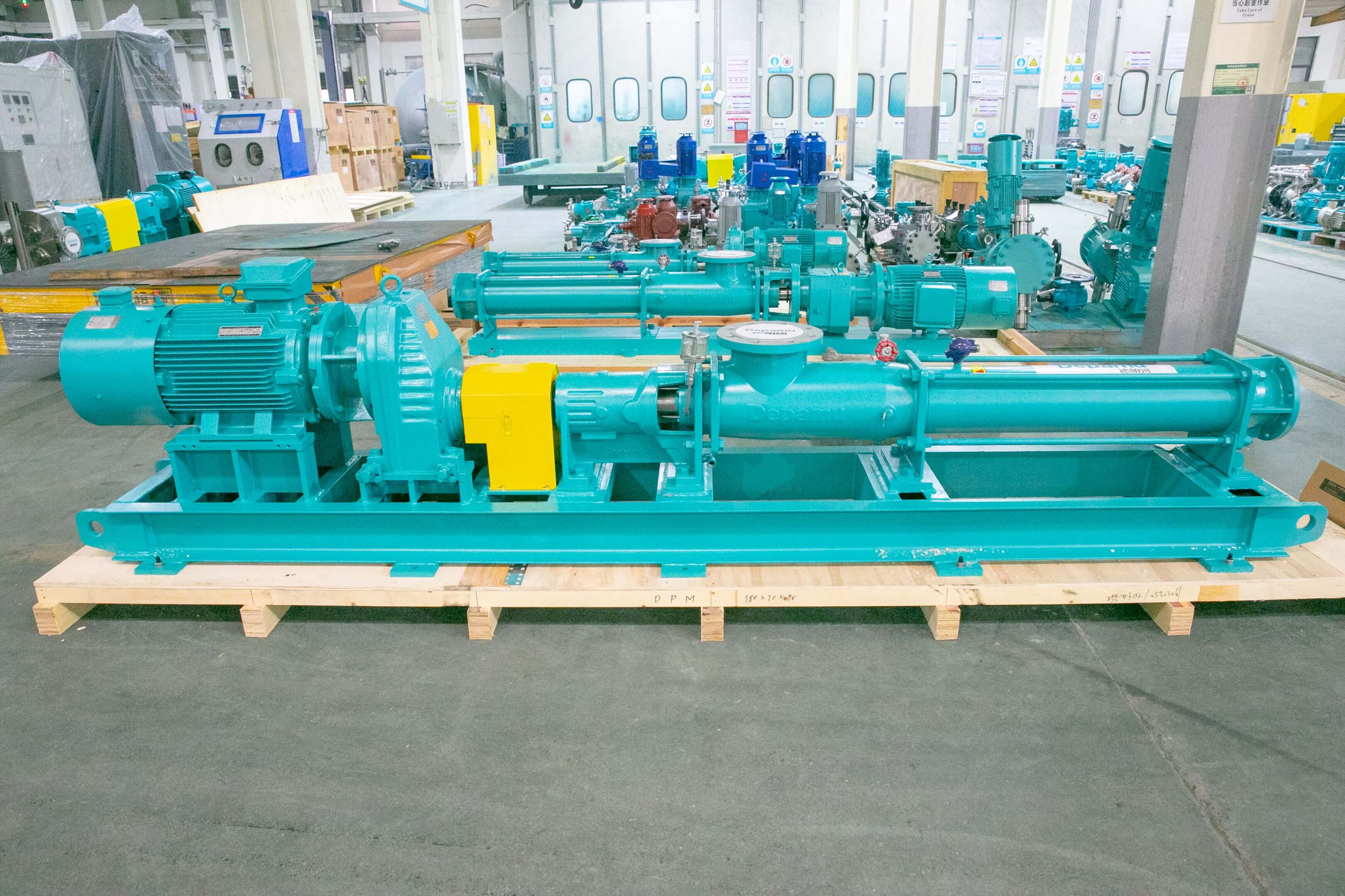
Reference for Full-text Summary
The cost-effectiveness of single-screw pumps should be comprehensively evaluated from three aspects: technical adaptability, total life cycle cost, and supplier service capability. Depam achieves performance assurance while reducing procurement and operation-maintenance costs through customized design (covering 98% of industrial scenario requirements), large-scale production (annual capacity of 5,000 units), and full-process services (48-hour response). Its G-series single-screw pumps have been successfully applied in enterprises such as Sinopec and China General Nuclear Power Group, with a customer repurchase rate of 85%, demonstrating the feasibility of balancing technical capability and cost control. When selecting models, enterprises are advised to prioritize evaluating suppliers' R&D systems, production scale, and service networks to avoid long-term high-cost operation and maintenance resulting from short-term low-price procurement.
Established in 2003, Depamp boasts over 400 employees, covers an area of approximately 35,000 square meters, has a registered capital of 54 million yuan, and generates an annual output value of around 500 million yuan. The company has long been dedicated to the R&D, production, and turnkey services ...
No. 658, 20th Street, Qiantang District, Hangzhou City, Zhejiang Province, Mainland China