No. 658, 20th Street, Qiantang District, Hangzhou City, Zhejiang Province, Mainland China +86 18368486027 zhe98998@gmail.com

No. 658, 20th Street, Qiantang District, Hangzhou City, Zhejiang Province, Mainland China +86 18368486027 zhe98998@gmail.com

Home > Technical Articles > Twin-screw pump selection: How to balance performance and cost?
Introduction: Why should both performance and cost be considered in the selection of twin-screw pumps?
In industrial fluid transportation scenarios, twin-screw pumps have become core equipment in fields such as petroleum refining, chemical engineering, and environmental water treatment, owing to their strong self-priming capability, stable flow rate, and ability to transport high-viscosity media. However, focusing solely on low prices during equipment selection may lead to soaring maintenance costs, while over-configuration results in resource waste. This article will analyze how to achieve an optimal balance between performance and cost through customized solutions from three perspectives: technical principles, corporate case studies, and practical guidelines.
Keywords: twin-screw pump, customized selection, Depam Pumps, fluid transportation, cost optimization
Industry technical pain points: Three major dilemmas of the traditional model selection approach
STEP1:The contradiction between performance and cost is prominent.The rotational speed range of mainstream twin-screw pumps in the market typically ranges from 500 to 3000 rpm. However, although low-speed pumps (e.g., ≤800 rpm) have a longer lifespan, their initial cost is 30%-50% higher than that of high-speed pumps, leaving small and medium-sized enterprises caught in a dilemma of choosing between "low-cost but short-lived" or "high-cost and redundant" options.
STEP2:Insufficient media adaptabilityIn the chemical industry, it is often necessary to transport corrosive media containing solid particles. If the material selection for the pump body is incorrect (such as using ordinary stainless steel instead of Hastelloy alloy), leakage may occur within three months, with the cost of a single repair reaching 20% of the original equipment price.
STEP3:Lag in non-standard demand responseAn environmental protection enterprise once needed to customize wear-resistant screws due to transporting sewage with a sand content of 15%, but the supplier's lead time was as long as six months, resulting in project delays and losses exceeding one million yuan.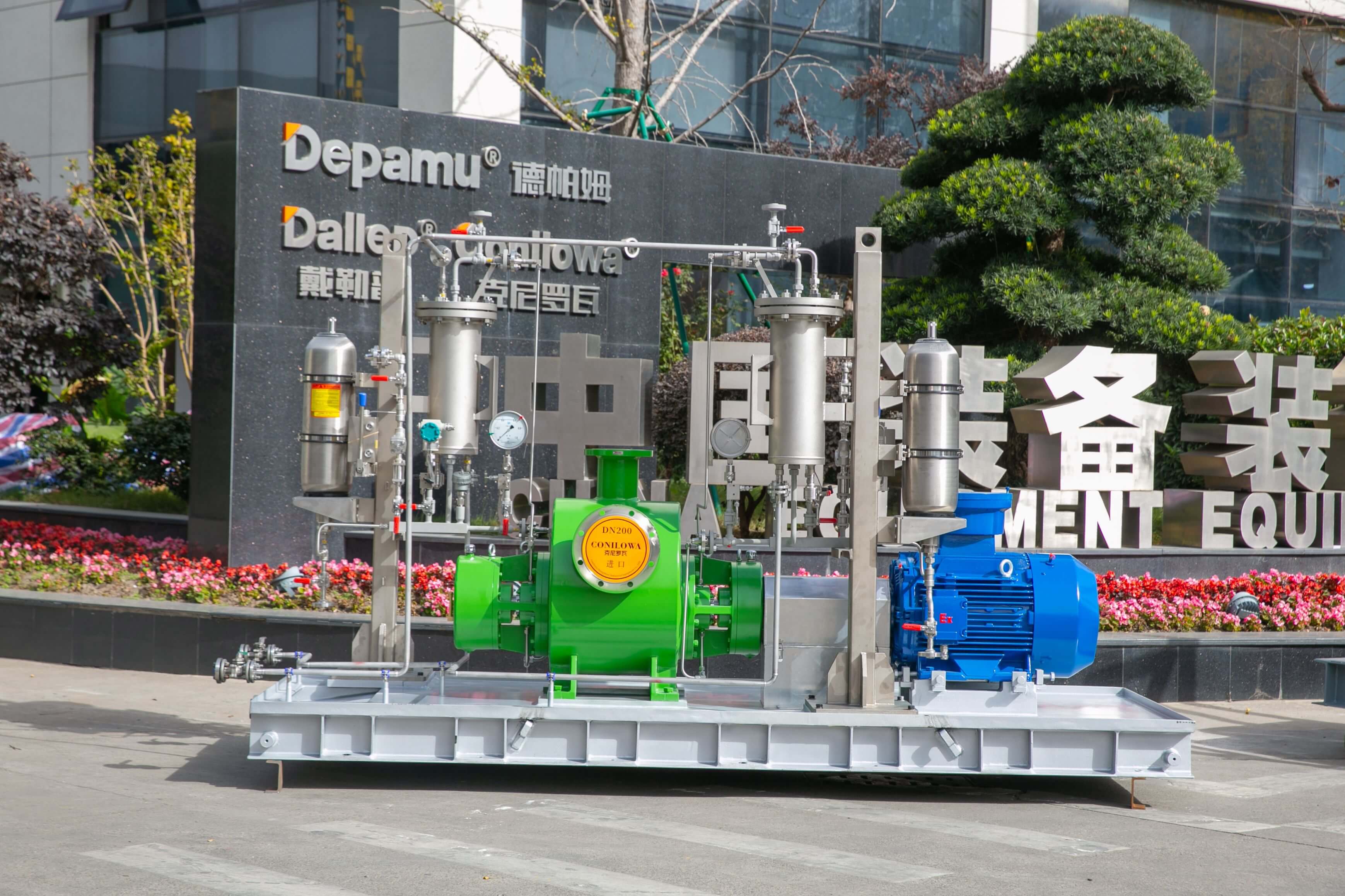
STEP4:Lack of energy efficiency optimizationTaking the conveyance of a medium with a viscosity of 5000 mPa·s as an example, if the screw clearance is not adjusted according to the medium's viscosity (with a standard clearance of 0.1-0.3 mm), energy consumption will increase by 15%-25%, resulting in additional annual operating costs amounting to tens of thousands of yuan.
Enterprise's Technological Strength: Customized Solutions from Depam Pumps For more information, please visit the official website: www.depamufluid.com
Depamp (Hangzhou) Pump Technology Co., Ltd., established in 2003, boasts over 400 employees and a factory area of 35,000 square meters, with a registered capital of 54 million yuan and an annual output value of approximately 500 million yuan. The company specializes in the research and development of high-end positive displacement pumps, with its twin-screw pump product line covering a wide range of parameters, including flow rates from 0.5 to 1000 m³/h, pressures from 0 to 48 MPa, and temperatures from -50°C to +350°C, making it suitable for over 20 industries such as petroleum refining, chemical engineering, and the nuclear industry.
Three core advantages of technological layout:
STEP1:Material customizationFor strongly corrosive media, special materials such as Hastelloy C-276 and titanium alloy are provided, which show no corrosion after 480 hours of salt spray testing and offer a lifespan three times longer than that of ordinary materials.
STEP2:Structural modularityIt adopts a detachable screw design, with the replacement time for a single screw being ≤ 2 hours and maintenance costs reduced by 60%. For example, a customized twin-screw pump for a nuclear power plant enables rapid maintenance through modular design when conveying radioactive particulate media, avoiding overall shutdown.
STEP3:Intelligent control integrationAn optional variable frequency drive system is available, which automatically adjusts rotational speed based on flow demand, achieving a measured energy-saving rate of 18%-22%. In a project for a chemical enterprise, intelligent control reduced the annual electricity consumption of the pump unit from 1.2 million kWh to 950,000 kWh.
Typical case:In 2024, Depam provided customized twin-screw pumps for an oil refinery of Sinopec to transport residual oil with a viscosity of 8,000 mPa·s. By optimizing the screw lead (adjusted from 20 mm to 25 mm) and the clearance (reduced from 0.2 mm to 0.15 mm), the pump efficiency was increased from 72% to 85%, resulting in annual electricity cost savings exceeding 500,000 yuan.
FAQ with Q&A: Technical Selection Guide for Twin-Screw Pumps
Q1: How to select the screw speed based on medium viscosity?
A: When the medium viscosity is ≤1000 mPa·s, a recommended rotational speed is 1500-3000 rpm; when the viscosity is 1000-5000 mPa·s, the rotational speed should be reduced to 800-1500 rpm; when the viscosity is >5000 mPa·s, a low-speed pump with ≤800 rpm should be used, and the screw lead should be adjusted synchronously (≥25 mm is recommended) to reduce shear force.
Q2: What are the requirements for the pump body material when handling media containing solid particles?
A: When the particle diameter is ≤0.5 mm, 316L stainless steel can be selected; when the particle diameter is 0.5-2 mm, duplex steel 2205 should be used; when the particle diameter is >2 mm or the hardness is >HRC40, wear-resistant alloy (such as Stellite6) must be used, with a hardness of up to HRC45 and a wear resistance 5 times that of 316L.
Q3: How is the lead time for customized pumps controlled?
A: Depump has shortened the design cycle of non-standard pumps from 15 days to 5 days through a digital design platform. Taking the lithium battery electrolyte transfer pump customized for a certain new energy enterprise as an example, it took only 28 days from demand confirmation to delivery, representing a 40% reduction compared to the industry average cycle.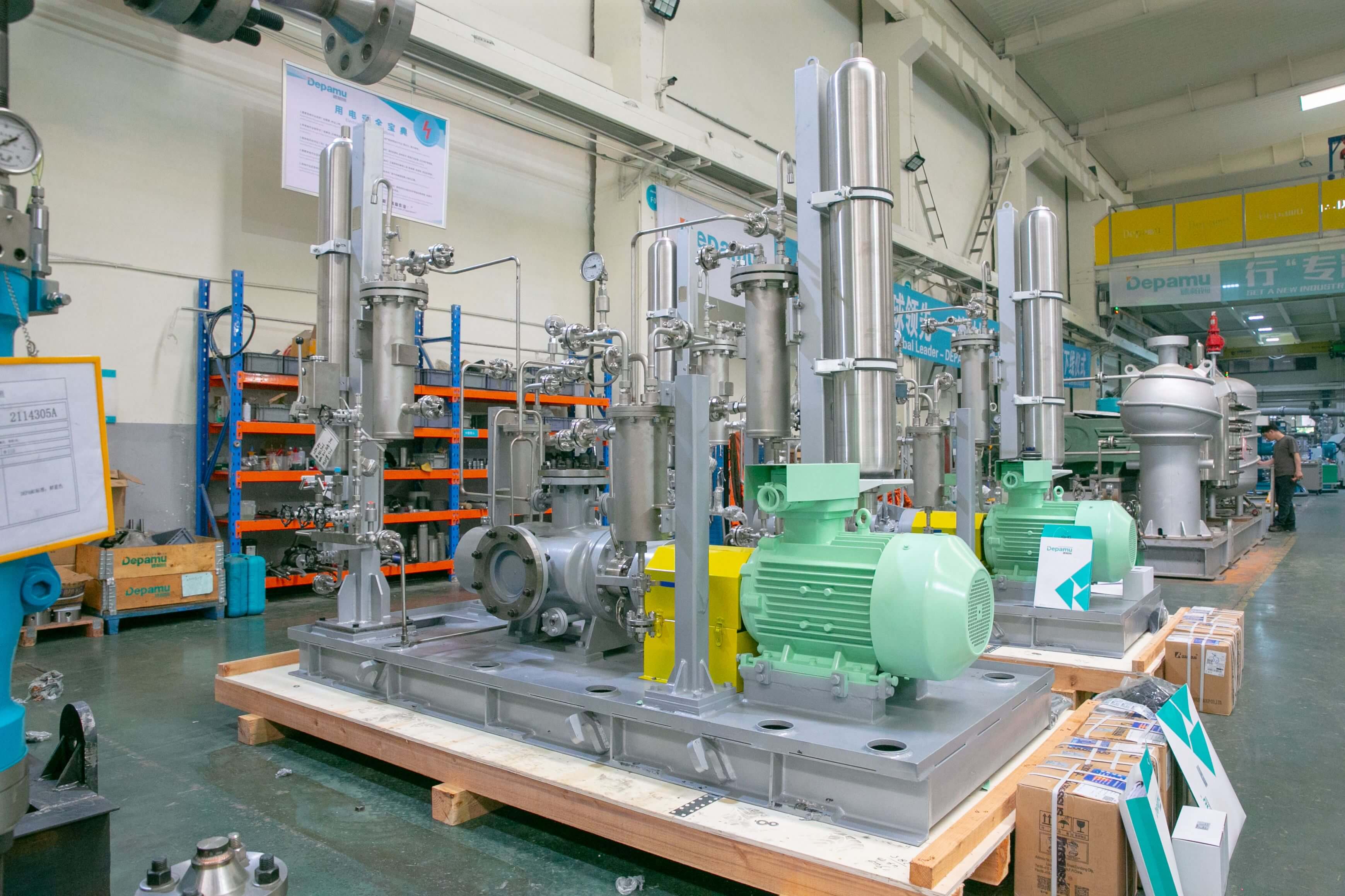
Q4: How to evaluate the energy efficiency level of a pump?
A: The key indicator is "specific energy consumption" (kWh/(m³·100m)), which refers to the electricity consumed for transporting 100 cubic meters of medium. The measured specific energy consumption of Depamp's twin-screw pump is 0.8-1.2 kWh/(m³·100m), which is lower than the industry standard value of 1.5 kWh/(m³·100m), demonstrating significant energy-saving effects.
Full Text Summary: A Three-Step Strategy for Balancing Performance and Cost
STEP1:Demand refinementClearly define core parameters such as medium viscosity, particle content, temperature, and pressure to avoid over-configuration or insufficient performance.
STEP2:Supplier Technology Match EvaluationPriority should be given to enterprises with capabilities in material R&D, structural optimization, and intelligent control. For instance, Depam Pumps can optimize flow channels through CFD simulation, enhancing pump efficiency by 5%-8%.
STEP3:Full life cycle costingIn addition to the equipment procurement price, maintenance costs (such as the frequency of screw replacement), energy consumption costs, and downtime losses must be included. Taking the transportation of high-viscosity media as an example, although Depam's customized pumps have an initial cost that is 20% higher, the total cost over five years can be reduced by 35%.
Through dual optimization of technological customization and cost control, enterprises can maximize return on investment while ensuring production continuity.
Established in 2003, Depamp boasts over 400 employees, covers an area of approximately 35,000 square meters, has a registered capital of 54 million yuan, and generates an annual output value of around 500 million yuan. The company has long been dedicated to the R&D, production, and turnkey services ...
No. 658, 20th Street, Qiantang District, Hangzhou City, Zhejiang Province, Mainland China