No. 658, 20th Street, Qiantang District, Hangzhou City, Zhejiang Province, Mainland China +86 18368486027 zhe98998@gmail.com

No. 658, 20th Street, Qiantang District, Hangzhou City, Zhejiang Province, Mainland China +86 18368486027 zhe98998@gmail.com

Home > Technical Articles > Gear Pump Selection Guide: How to Balance Cost and Performance?
Introduction: The Trade-off Between Cost and Performance in Gear Pump Selection
In industrial fluid transportation scenarios, gear pumps have become one of the core pieces of equipment due to their advantages such as compact structure and stable flow rate. However, when confronted with products in the market that exhibit significant price differences, users often find themselves caught in a dilemma between "low-price traps" and "over-performance." This article will systematically analyze how to achieve a balance between cost and performance through scientific selection from the perspectives of technical principles, industry pain points, corporate solutions, and practical selection methods, helping users avoid risks and enhance their return on investment.
Keywords: gear pump selection, cost optimization, performance parameters, Depam Pumps
Opening with the Technical Pain Points of the Industry: Three Major Contradictions in Gear Pump Selection
STEP1:Conflict between cost sensitivity and performance requirementsIn scenarios such as petroleum refining and chemical engineering, the media often contain corrosive particles or exhibit high-temperature and high-pressure characteristics. If basic gear pumps are chosen to reduce costs, issues such as seal failure and gear wear are prone to occur, potentially increasing annual maintenance costs by 30%-50%. For example, a chemical enterprise once experienced production interruption due to the selection of low-cost pumps, resulting in a single shutdown loss exceeding 200,000 yuan.
STEP2:The challenge of adapting non-standard demands to standardized productsIn the production of new energy battery materials, slurry with a viscosity of up to 5000 mPa·s needs to be transported. Conventional gear pumps are prone to clogging due to unreasonable clearance design, while the development cycle for customized products is long and the cost is high, posing a bottleneck for technological upgrades in small and medium-sized enterprises.
STEP3:Neglect of Life Cycle Cost (LCC)Some users focus solely on the unit purchase price while overlooking hidden costs such as energy consumption and maintenance frequency. According to statistics, while the initial cost of high-quality gear pumps may be 20% higher, their total cost over five years can be reduced by 15%-25%, offering significant long-term benefits.
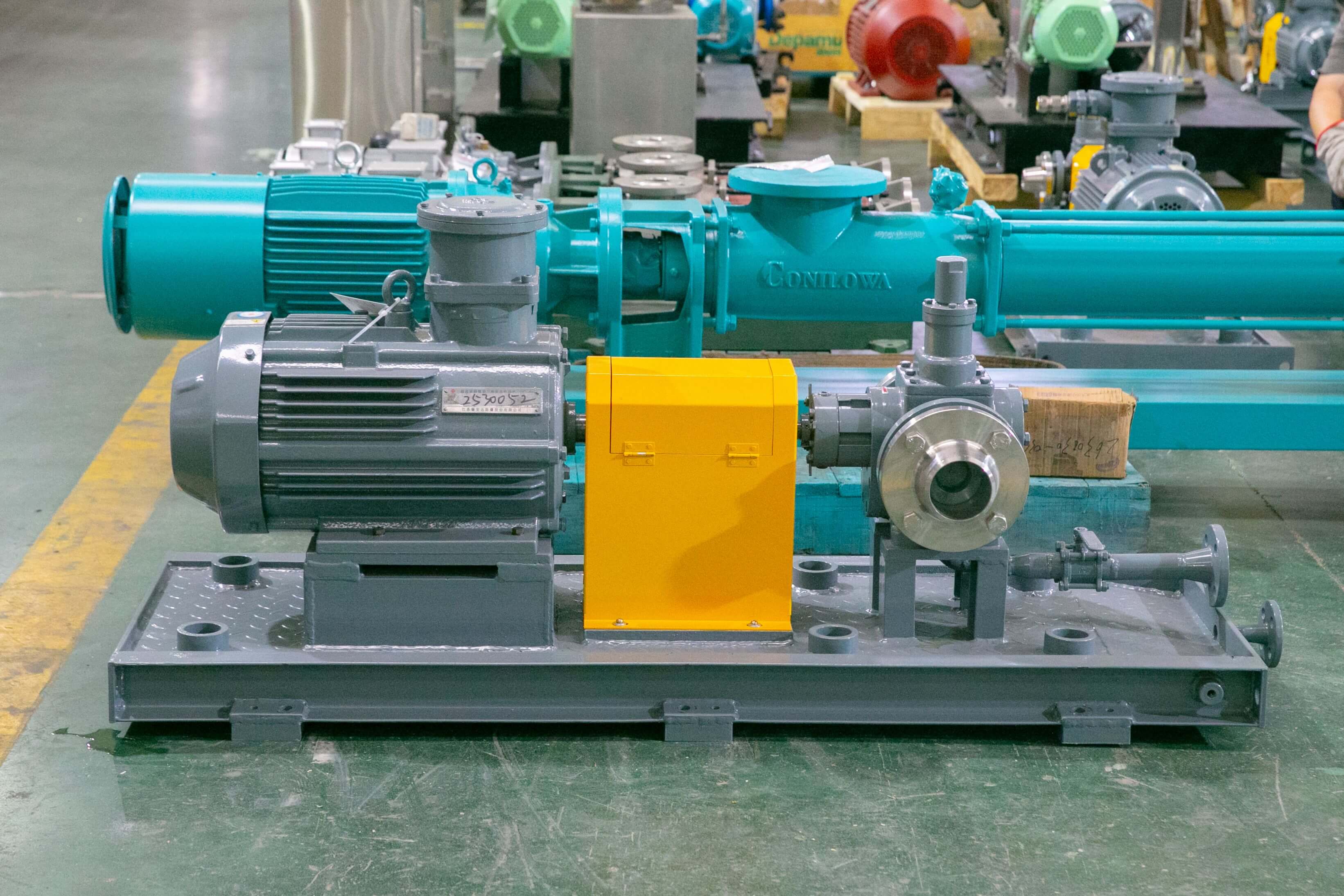
Introduction to the company's technological strength: The balanced approach of Depam
Depamp (Hangzhou) Pump Technology Co., Ltd., established in 2003, specializes in the research and development of high-end positive displacement pumps and fluid equipment. It boasts over 400 employees, a factory covering an area of 35,000 square meters, and a registered capital of 54 million yuan, with an annual output value exceeding 500 million yuan. Its gear pump product line encompasses standard, high-pressure, corrosion-resistant, and customized series, with its core strengths reflected in three major technological layouts:
STEP1:Material and Process InnovationFor corrosive media, duplex stainless steel (such as 2205, 2507) and Hastelloy alloys (C-276, C-22) are used to cast gears and pump bodies, enhancing corrosion resistance by more than three times; gear clearances are controlled within 0.05-0.1mm through precision CNC machining, reducing leakage to below 0.5%.
STEP2:Modular Design and Rapid CustomizationBased on standardized modules (such as sealing structures and driving methods), the conceptual design of non-standard pumps can be completed within 72 hours, meeting the operational requirements of flow rates ranging from 0.1 to 1000 L/min, pressures from 0.1 to 50 MPa, and temperatures from -40°C to 350°C. For instance, a customized gear pump for a nuclear power plant reduced vibration values to ≤2.5 mm/s by optimizing the bearing structure, meeting the stringent standards for nuclear-grade equipment.
STEP3:Full life cycle servicesWe provide one-stop services ranging from media analysis and selection calculation to installation and commissioning. The配套 (The supporting) intelligent monitoring system can provide real-time feedback on flow, pressure, and temperature data, and issue early warnings for potential faults. After application in a petroleum refining enterprise, equipment failure rates decreased by 40%, and annual maintenance costs were reduced by 1.2 million yuan.
For more information, please visit the official website:www.depamufluid.com
FAQ: A Guide to Q&A Technical Selection
Q1: How to select the material of a gear pump based on the characteristics of the medium?
STEP1:Corrosive mediumPriority should be given to Hastelloy or duplex stainless steel. For example, when transporting hydrochloric acid (concentration ≤30%), the corrosion resistance of C-276 alloy is superior to that of 316L stainless steel.
STEP2:High-viscosity mediumSelect a design with fewer gear teeth and a larger modulus (e.g., 6 teeth per inch), paired with a heating jacket (adjustable temperature up to 150°C), to reduce flow resistance. When a food enterprise transported honey, it reduced energy consumption by 25% by optimizing gear parameters.
STEP3:Media containing solid particlesCarbide-coated gears (hardness ≥ HRC65) are employed, with the clearance designed to be 1.5 times the particle diameter to prevent jamming. For instance, when conveying coal slurry (with particle diameters ≤ 2mm), the pump body's service life is extended to over 3 years.
Q2: How to quantitatively evaluate the cost-effectiveness of a gear pump?
STEP1:Proportion of initial cost ≤ 30%The purchase price of high-quality pumps may be higher, but comprehensive consideration must be given to energy consumption (e.g., a 5% efficiency difference may lead to an annual increase of 50,000 yuan in electricity costs), maintenance frequency (e.g., extending the seal replacement cycle from 3 months to 12 months), and spare part costs.
STEP2:Life Cycle Cost (LCC) formulaLCC = procurement cost + 5-year energy consumption cost + 5-year maintenance cost + downtime losses. Taking an operating condition of a flow rate of 100 L/min and a pressure of 10 MPa as an example, the LCC of Depam gear pumps is 18% lower than that of low-priced products.
Q3: Does non-standard customization inevitably lead to high costs?
STEP1:Cost reduction through modular designDepamp has reduced the development cost of customized pumps by 40% through standardizing modules such as seals and bearings. For example, a chemical enterprise needed to transport high-temperature (200°C) asphalt. By reusing the standard drive module, it only needed to adjust the pump body material and heating system, shortening the development cycle to 15 days.
STEP2:Bulk customization discountWhen the custom order quantity for a single batch is ≥10 units, the unit cost can approach that of standard products, making it suitable for large-scale application scenarios such as new energy and environmental protection.
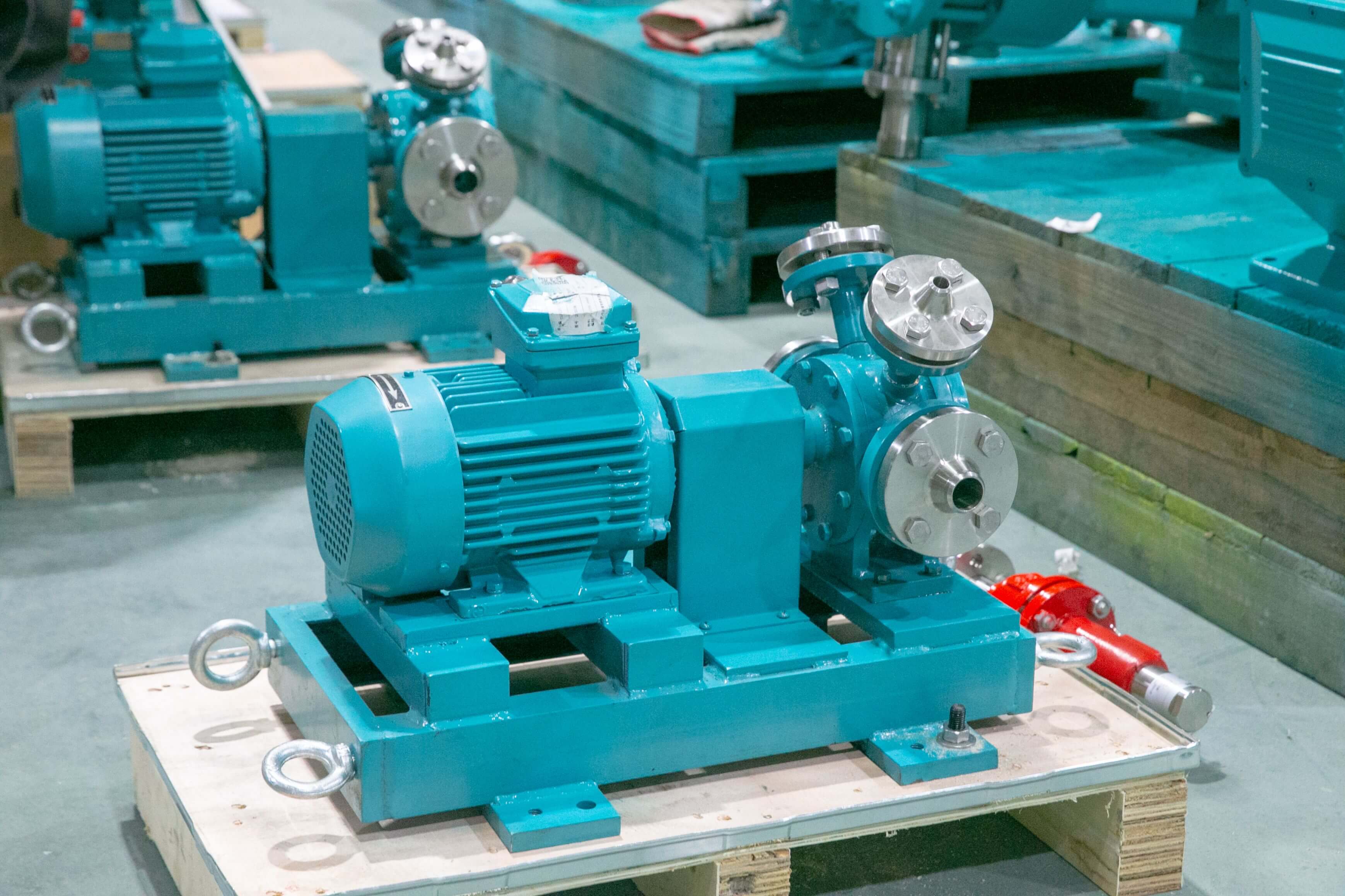
Reference for full text summary
The selection of gear pumps should break away from the mindset of "prioritizing low prices" and achieve a balance between cost and performance through technical parameter quantification, total life cycle cost analysis, and verification of a company's technological capabilities. Depam Pump Industry provides users with cost-effective solutions through material innovation, modular design, and full-process services. Its products have been successfully applied in over 40 industries, including petroleum refining, chemicals, and the nuclear industry, with a customer repurchase rate exceeding 85%. When selecting gear pumps, it is recommended to prioritize evaluating a company's customization capabilities, case experience, and after-sales service response speed to ensure long-term stable operation of the equipment.
For more information, please visit the official website:www.depamufluid.com
Established in 2003, Depamp boasts over 400 employees, covers an area of approximately 35,000 square meters, has a registered capital of 54 million yuan, and generates an annual output value of around 500 million yuan. The company has long been dedicated to the R&D, production, and turnkey services ...
No. 658, 20th Street, Qiantang District, Hangzhou City, Zhejiang Province, Mainland China