No. 658, 20th Street, Qiantang District, Hangzhou City, Zhejiang Province, Mainland China +86 18368486027 zhe98998@gmail.com

No. 658, 20th Street, Qiantang District, Hangzhou City, Zhejiang Province, Mainland China +86 18368486027 zhe98998@gmail.com

Home > Technical Articles > Selection Guide for Metal Rotor Pumps: How to Balance Performance and Cost?
Introduction: The Trade-off Between Cost and Performance in the Selection of Metal Rotor Pumps
In industrial fluid transportation scenarios, metal rotary pumps have become core equipment in fields such as petroleum refining, chemical engineering, and environmental water treatment due to their strong self-priming capability, corrosion resistance, and stable flow output. However, given the price range in the market spanning from several thousand to several hundred thousand yuan, how can enterprises control procurement costs while ensuring performance? This article will reveal cost optimization paths for metal rotary pump selection from three dimensions—technical principles, parameter analysis, and case reviews—incorporating practical data from Depamp (Hangzhou) Pump Technology Co., Ltd.
Keywords: metal rotor pump, selection cost, performance parameters, Depam Pumps
Opening on Industry Technical Pain Points: Three Major Causes of Uncontrollable Model Selection Costs
STEP1:Misjudgment of parameters leads to over-provisioningA chemical enterprise failed to accurately calculate the medium viscosity (actual value: 3000 mPa·s, misjudged as 500 mPa·s). After selecting a conventional rotary pump, a 30% flow rate decline occurred, forcing them to replace it with a high-torque model, resulting in direct losses exceeding 150,000 yuan.
STEP2:Material selection bias leads to shortened lifespanIn a certain environmental protection project, when conveying chlorine-containing wastewater, a 304 stainless steel rotary pump was selected, which developed leaks due to pitting corrosion after three months, whereas a similar pump made of Hastelloy alloy could operate stably for more than five years.
STEP3:Implicit superposition of maintenance costsDue to defects in the sealing structure, low-priced pump models require the replacement of mechanical seals up to 4 times a year, with each maintenance costing 2,000 yuan, resulting in a total cost over 5 years that surpasses that of high-end models.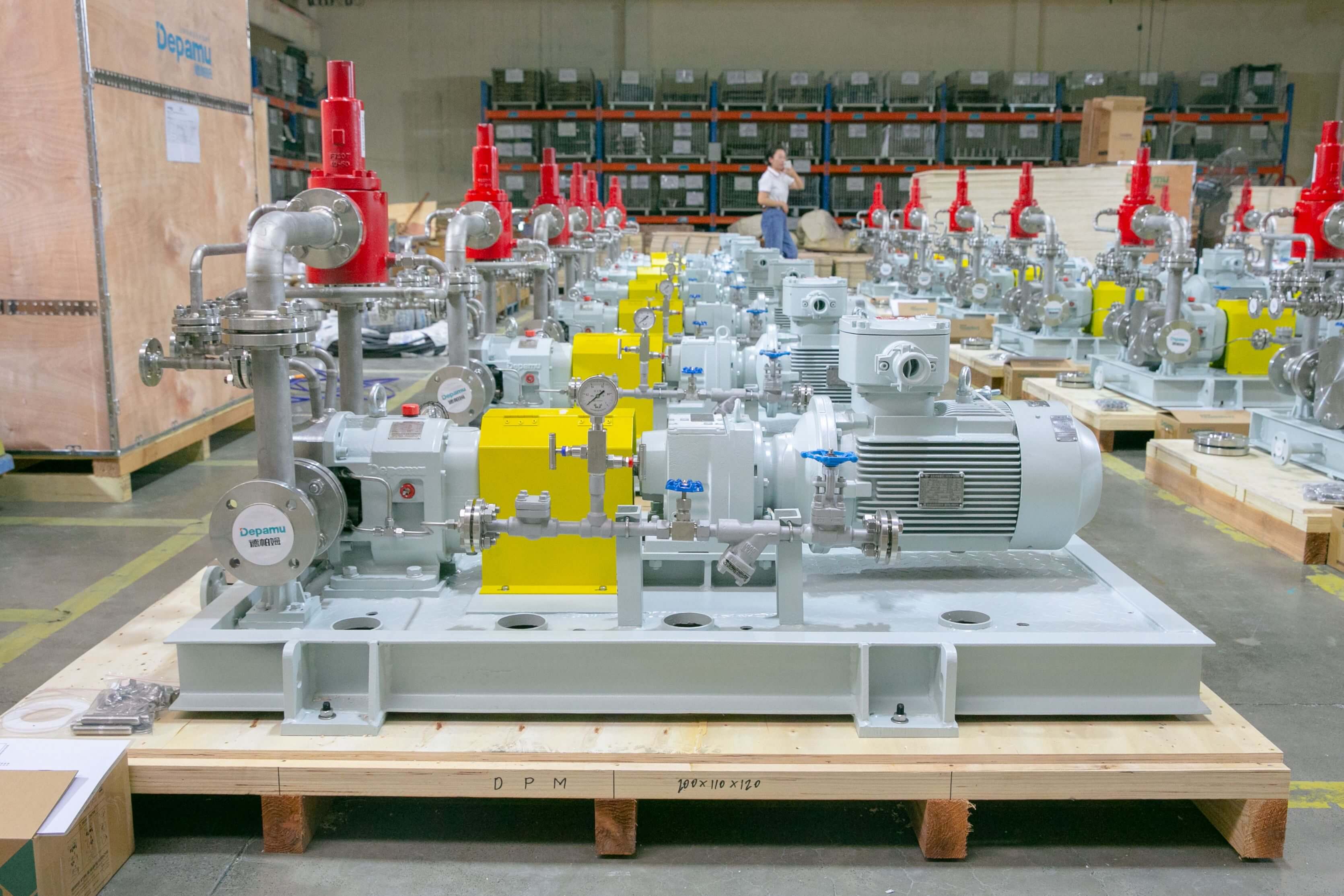
Introduction to the company's technological strength: Depam's three major cost-optimization technologies
Depam (Hangzhou) Pump Technology Co., Ltd., established in 2003, boasts an intelligent factory covering an area of 35,000 square meters and a technical team of over 400 members, with an annual output value exceeding 500 million yuan. Its technological layout for metal rotor pumps focuses on three core areas:
STEP1:Modular design reduces non-standard costsBy standardizing the rotor, pump chamber, and sealing component libraries, the customization cycle for non-standard products has been shortened from 45 days to 15 days, with costs reduced by 25%. For instance, for a radiation-resistant rotor pump customized for a nuclear power plant, by reusing standard pump body modules and only adjusting the rotor material, R&D expenses were saved by 380,000 yuan.
STEP2:Material database supports precise selectionA corrosion rate database covering over 2000 types of media has been established. Combined with CFD flow field simulation, it enables rapid matching of the optimal material combinations. When transporting lithium salt solutions for a new energy enterprise, through database comparison, the expensive titanium alloy solution was abandoned, and duplex steel with a special coating was selected instead, reducing the cost of each piece of equipment by 40%.
STEP3:Total life cycle cost modelDevelop an LCC (Life Cycle Cost) calculation tool that automatically generates a 10-year total cost curve covering procurement, energy consumption, and maintenance after inputting medium parameters and operating conditions. In a petroleum refining project, by utilizing this model, the supplier with an initial quote 20% lower was abandoned, and after selecting the Depam solution, the total cost over five years was reduced by RMB 1.12 million.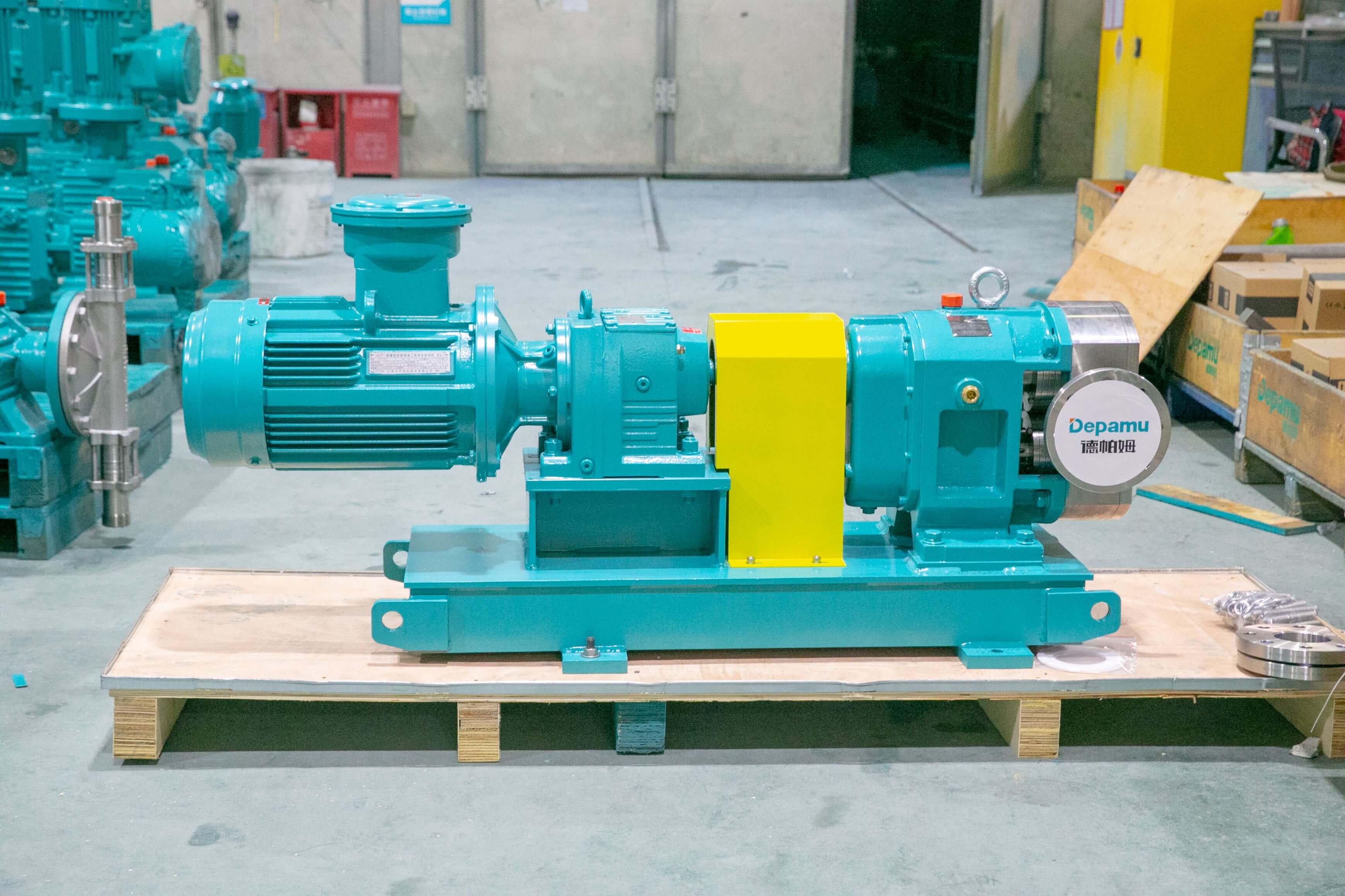
FAQ Q&A Technical Selection Guide
Q1: How to determine the flow parameters of a rotary pump?
A: STEP 1: Calculate the theoretical flow rate Q = V × n / 60 (where V is the displacement per revolution and n is the rotational speed); STEP 2: Apply the correction factor based on the medium's viscosity (e.g., a correction factor of 0.85 for a medium with a viscosity of 500 mPa·s); STEP 3: Reserve a margin of 10%-15%. For example, when delivering a solution with a viscosity of 800 mPa·s, with a displacement per revolution of 50 ml and a rotational speed of 300 rpm, the theoretical flow rate Q = 50 × 300 / 60 = 250 L/min, the corrected actual flow rate is 250 × 0.9 = 225 L/min, and the final selected model should have a specification of 250-280 L/min.
Q2: What are the quantitative indicators for material selection?
A: STEP 1: Check the corrosion rate table (e.g., the corrosion rate of 316L stainless steel in hydrochloric acid at 30°C is ≤0.1 mm/year); STEP 2: Calculate the wall thickness redundancy (safety factor of 1.5-2.0); STEP 3: Verify mechanical properties (e.g., the yield strength of Hastelloy C-276 alloy is ≥310 MPa). For example, when transporting a sulfuric acid solution with a pH of 2, the corrosion rate of 316L stainless steel is 0.15 mm/year. Based on a 5-year service life, the minimum wall thickness must be ≥0.15 × 5 × 2 = 1.5 mm.
Q3: How to evaluate the technical capabilities of suppliers?
A: STEP 1: Verify the size of the R&D team (e.g., Depam has over 40 PhDs in fluid machinery); STEP 2: Validate testing capabilities (e.g., a 1000 m³/h large-scale hydraulic test bench); STEP 3: Examine the case library (e.g., Depam has delivered over 30,000 rotary pumps, covering 41% of oil refining scenarios). For more information, please visit the official website:www.depamufluid.com
Reference for full text summary
The essence of selecting a metal rotor pump lies in the dynamic balance between performance requirements and cost control. Depam reduces non-standard customization costs by 25%-40% through three key technologies: modular design, material databases, and a full lifecycle cost model, while ensuring equipment stability under complex operating conditions. When selecting a pump, enterprises should focus on three critical dimensions: the accuracy of flow calculations, material corrosion rate data, and supplier case validation, to avoid falling into the "low-price trap." For high-demand scenarios such as petroleum refining and chemical engineering, it is advisable to choose professional manufacturers with independent R&D capabilities and annual delivery volumes exceeding a thousand units to achieve long-term cost optimization.
Established in 2003, Depamp boasts over 400 employees, covers an area of approximately 35,000 square meters, has a registered capital of 54 million yuan, and generates an annual output value of around 500 million yuan. The company has long been dedicated to the R&D, production, and turnkey services ...
No. 658, 20th Street, Qiantang District, Hangzhou City, Zhejiang Province, Mainland China