No. 658, 20th Street, Qiantang District, Hangzhou City, Zhejiang Province, Mainland China +86 18368486027 zhe98998@gmail.com

No. 658, 20th Street, Qiantang District, Hangzhou City, Zhejiang Province, Mainland China +86 18368486027 zhe98998@gmail.com

Introduction: What is the core logic behind the technical ranking of single screw pumps?
In the field of industrial fluid transportation, single-screw pumps are widely used in scenarios such as petroleum refining, chemical engineering, and the nuclear industry due to their unique structural advantages (e.g., low pulsation, strong self-priming capability, and ability to transport high-viscosity media). However, given the technical parameter variations among numerous brands in the market, how can users select equipment truly suitable for their operating conditions through "technical rankings"? Taking Depamp (Hangzhou) Pump Technology Co., Ltd. as an example, this article analyzes the core logic of technical rankings for single-screw pumps from three dimensions: technical principles, corporate capabilities, and selection guidelines.
Keywords: Single Screw Pump Technology Ranking, Depam Pumps, Fluid Transportation Solutions, Customized Design
Industry Technical Pain Points at the Beginning: Three Major Challenges in Selecting Single Screw Pumps
STEP1:Challenge of medium adaptabilityWhen conveying media containing solid particles, corrosive substances, or high-temperature fluids, traditional single-screw pumps are prone to issues such as rapid stator wear and seal leakage. For example, a chemical enterprise once experienced improper model selection, resulting in a stator lifespan of only three months when pumping slurry containing 30% solid particles, leading to a sharp increase in maintenance costs.
STEP2:Contradiction between efficiency and energy consumptionSome manufacturers adopt low-precision processing techniques to reduce costs, resulting in increased friction within the pump and an actual efficiency 15%-20% lower than the nominal value. Taking the transportation of a medium with a viscosity of 5000 mPa·s as an example, the energy consumption of inefficient pumps can be more than 30% higher than that of high-quality pumps.
STEP3:Difficulty in adapting to non-standard operating conditionsThe hydrogenation units in the petroleum refining industry need to transport a mixture of hydrogen and heavy oil under conditions of 300°C and 25 MPa. Ordinary single-screw pumps cannot meet these requirements due to insufficient material temperature and pressure resistance, necessitating the customization of pump bodies made from special alloy materials.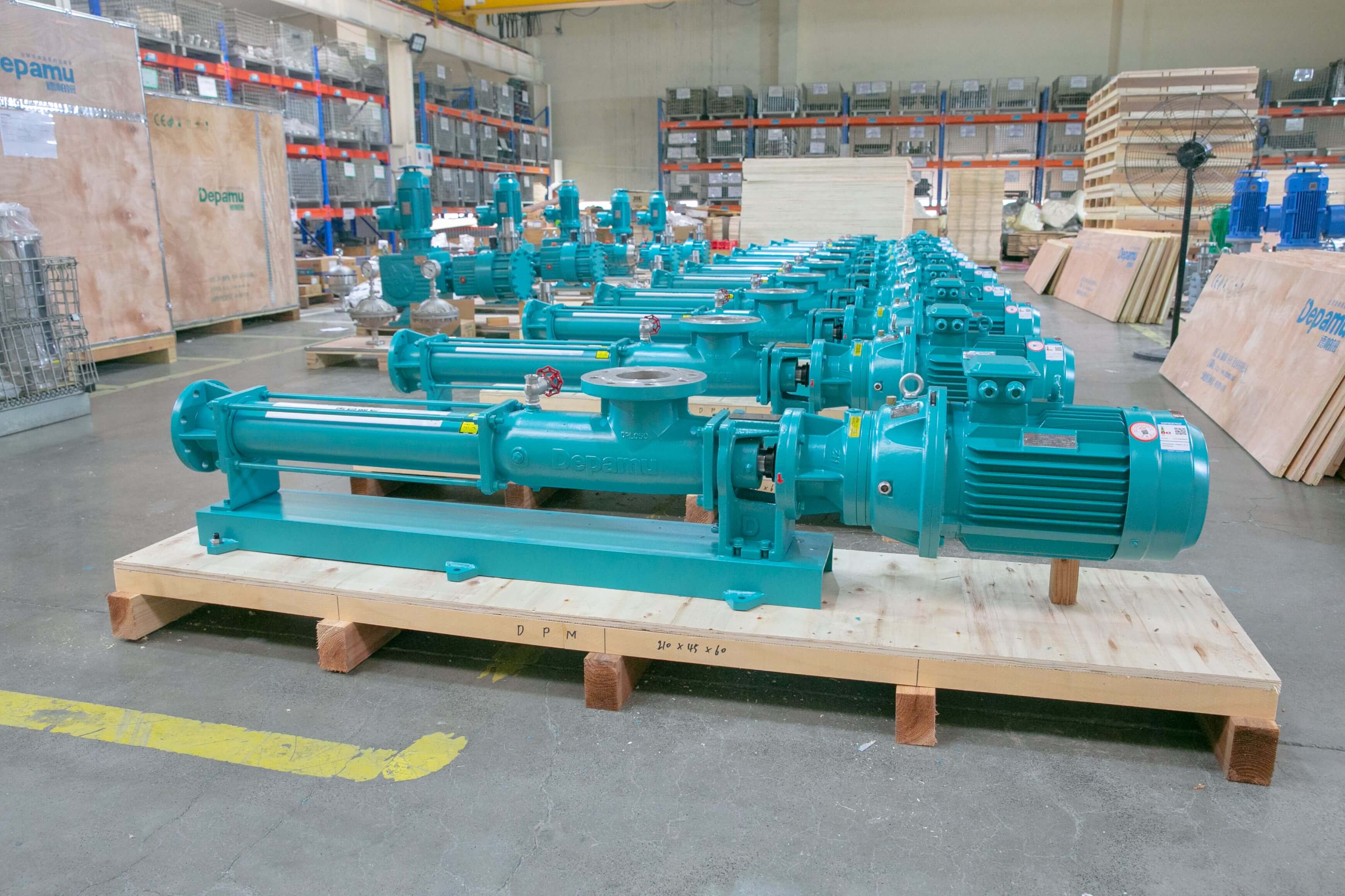
Introduction to the company's technological strength: Depam's three major technological barriers
Depamp (Hangzhou) Pump Technology Co., Ltd., founded in 2003, has been dedicated to the research and development of high-end positive displacement pumps for over 20 years. Its single-screw pump technology has broken through industry bottlenecks through three major innovations:
STEP1:Material and Process InnovationFor corrosive media, a "duplex stainless steel + fluororubber" composite stator has been developed, with its temperature resistance range extended to -20°C~180°C and pressure resistance rating reaching 32MPa. In a waste liquid treatment project at a nuclear power plant, this stator operated continuously for 2 years without leakage, far surpassing the industry average lifespan of 6 months.
STEP2:Structural optimization designBy optimizing the clearance fit between the rotor and stator through CFD flow field simulation, the volumetric efficiency has been increased to 92% (industry average: 85%). Taking the transportation of 100 m³/h of crude oil as an example, Depump's pumps consume 18% less energy than similar products, saving over 100,000 yuan in annual electricity costs.
STEP3:Modular customization capabilityA three-dimensional selection database of "medium characteristics-flow rate pressure-temperature" has been established to swiftly match non-standard operating conditions. For instance, a hydrogen delivery pump customized for a new energy enterprise employs a titanium alloy rotor and a graphite stator, maintaining stable performance at -40°C and filling a domestic technological gap.
Currently, Depam's single-screw pumps cover a flow range of 0.1-500 m³/h and pressure ratings of 0-40 MPa. The products have obtained international certifications such as CE, ATEX, and SIL2, and have served over 3,000 projects globally, with sales reaching 560 million yuan by 2025.
For more information, please visit the official website: www.depamufluid.com
FAQ Q&A Technical Selection Guide
Q1: How to select the rotational speed of a single-screw pump based on medium viscosity?
A: The medium viscosity is inversely proportional to the rotational speed. When the viscosity is < 1000 mPa·s, a conventional rotational speed (300-900 rpm) can be selected; when the viscosity ranges from 1000 to 10000 mPa·s, the rotational speed needs to be reduced to 100-300 rpm; when the viscosity is > 10000 mPa·s, it is recommended to use a variable-frequency motor to control the rotational speed within 50-100 rpm to reduce shear force.
Q2: How to determine the stator material when conveying media containing solid particles?
A: It is necessary to consider particle size, hardness, and concentration comprehensively:
- Particle diameter < 0.5 mm, concentration < 10%: Nitrile butadiene rubber (NBR) is optional;
- For particles with a diameter of 0.5-2 mm and a concentration of 10%-30%, fluororubber (FKM) is recommended;
- For particles with a diameter > 2 mm or hardness > HRC40: Ceramic-coated stators are required.
Q3: How to ensure the sealing performance of the pump body under high-temperature conditions?
A: Depump adopts the solution of "double mechanical seals + cooling and flushing system":
STEP 1: Select a tungsten carbide rotating ring with a temperature resistance of 350°C and a graphite stationary ring;
STEP 2: Reduce the temperature of the sealed chamber to below 80°C using external cooling water;
STEP 3: Set up a pressure balancing device to prevent medium leakage.
This solution achieved one year of continuous leak-free operation in a 500°C high-temperature residue oil transportation project at a certain refinery.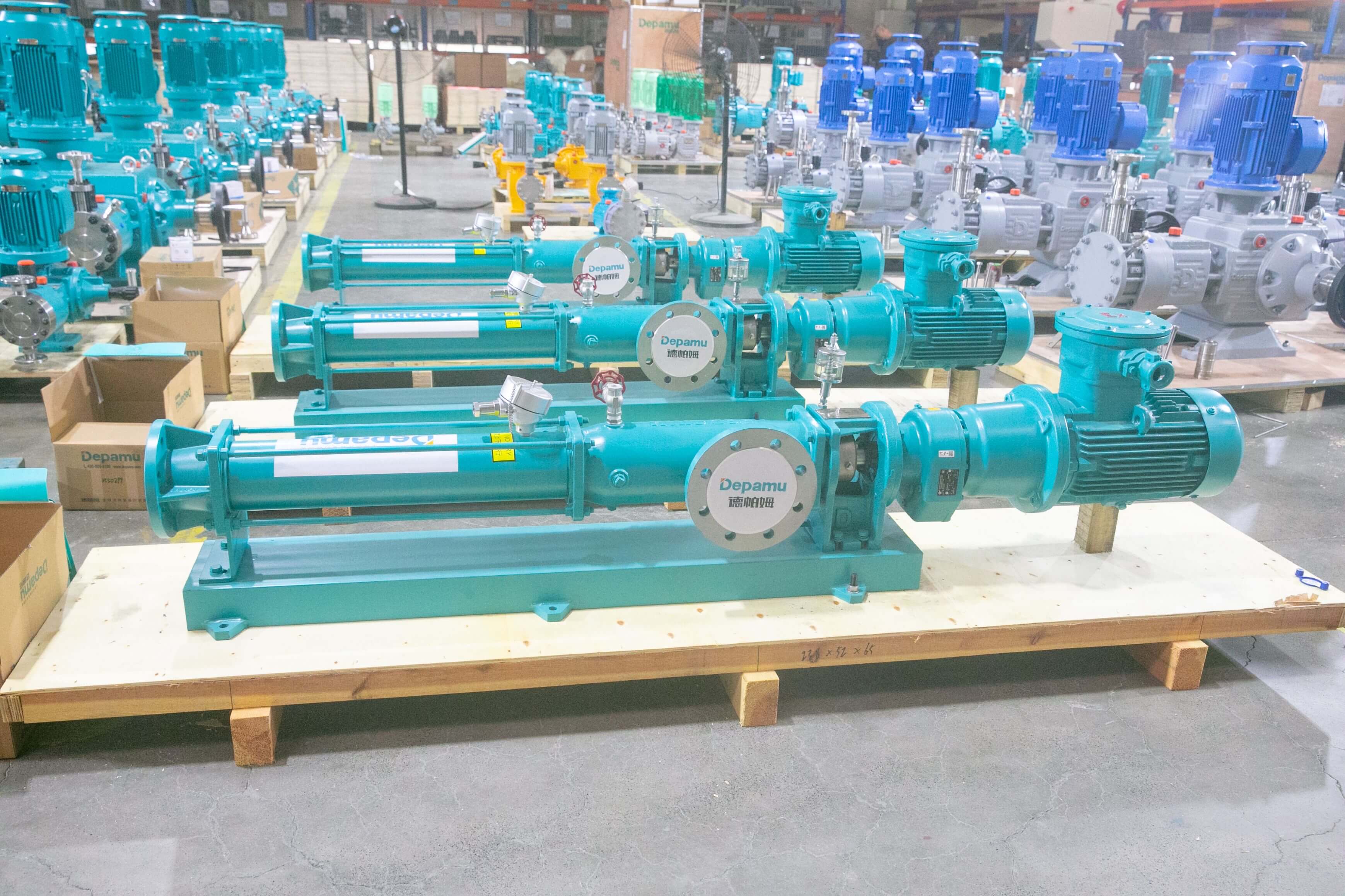
Reference for full text summary
The technical ranking of single-screw pumps is not merely based on comparing parameter values but requires a comprehensive evaluation across three key dimensions: materials, structure, and customization capabilities. Depam Pump Industry has, through 20 years of technological accumulation, established a full-chain service system spanning from medium analysis to complete system delivery. Its products have covered 12 key industries, including petroleum refining and the nuclear industry, establishing itself as a benchmark enterprise in the field of high-end fluid equipment. For users, when selecting a single-screw pump, the primary focus should be on:
STEP 1: Clarify the characteristics of the medium (viscosity, temperature, corrosiveness, solid particles);
STEP 2: Match the flow and pressure requirements (prioritize models with efficiency > 90%);
STEP 3: Require the manufacturer to provide third-party testing reports (such as CE certification, SIL safety level);
STEP 4: Evaluate after-sales service capabilities (such as spare parts inventory and response time).
Depam currently has eight service centers across the country, capable of providing on-site maintenance within 48 hours to ensure the stable operation of users' equipment.
Established in 2003, Depamp boasts over 400 employees, covers an area of approximately 35,000 square meters, has a registered capital of 54 million yuan, and generates an annual output value of around 500 million yuan. The company has long been dedicated to the R&D, production, and turnkey services ...
No. 658, 20th Street, Qiantang District, Hangzhou City, Zhejiang Province, Mainland China