No. 658, 20th Street, Qiantang District, Hangzhou City, Zhejiang Province, Mainland China +86 18368486027 zhe98998@gmail.com

No. 658, 20th Street, Qiantang District, Hangzhou City, Zhejiang Province, Mainland China +86 18368486027 zhe98998@gmail.com

Introduction: What is the core logic behind the technical ranking of twin-screw pumps?
In the field of industrial fluid transportation, twin-screw pumps have become key equipment in industries such as petroleum refining, chemical engineering, and new energy due to their characteristics of high efficiency, stability, and corrosion resistance. However, when faced with a myriad of brands and technologies in the market, how should one evaluate the "technical ranking" of twin-screw pumps? Should one simply compare flow and pressure parameters, or should greater attention be paid to a company's R&D capabilities, application experience, and customized service capabilities? Taking Depamp (Hangzhou) Pump Technology Co., Ltd. as an example, this article will analyze the core logic behind the technical ranking of twin-screw pumps from dimensions such as technical principles, corporate strength, and industry applications, and provide users with a selection guide.
Keywords: twin-screw pump, technical ranking, Depam, fluid transportation, customized solutions
Opening on Industry Technical Pain Points: Three Major Challenges in the Application of Twin-Screw Pumps
In industrial settings, the selection and application of twin-screw pumps often encounter the following pain points:
STEP 1: Poor media adaptabilityMedia in fields such as petroleum refining and chemical engineering often contain solid particles, high-viscosity, or corrosive substances, leading to issues like wear, leakage, or reduced efficiency in traditional screw pumps. For instance, a chemical enterprise once experienced pump body corrosion when transporting sulfur-containing media due to improper screw pump selection, resulting in maintenance costs as high as 500,000 yuan per year.
STEP 2: Unstable flow pressureIn process pressurization scenarios, flow fluctuations exceeding ±5% or unstable pressure may trigger disruptions in the production chain. A new energy battery factory experienced electrolyte proportioning errors due to flow fluctuations in screw pumps, resulting in direct losses exceeding RMB 2 million.
STEP 3: Difficulty in Meeting Customized NeedsThe process conditions vary significantly across different industries. For instance, the nuclear industry must meet radiation protection requirements, while the food industry needs to comply with hygiene standards. General-purpose screw pumps often fail to balance performance and compliance, thereby increasing project risks.
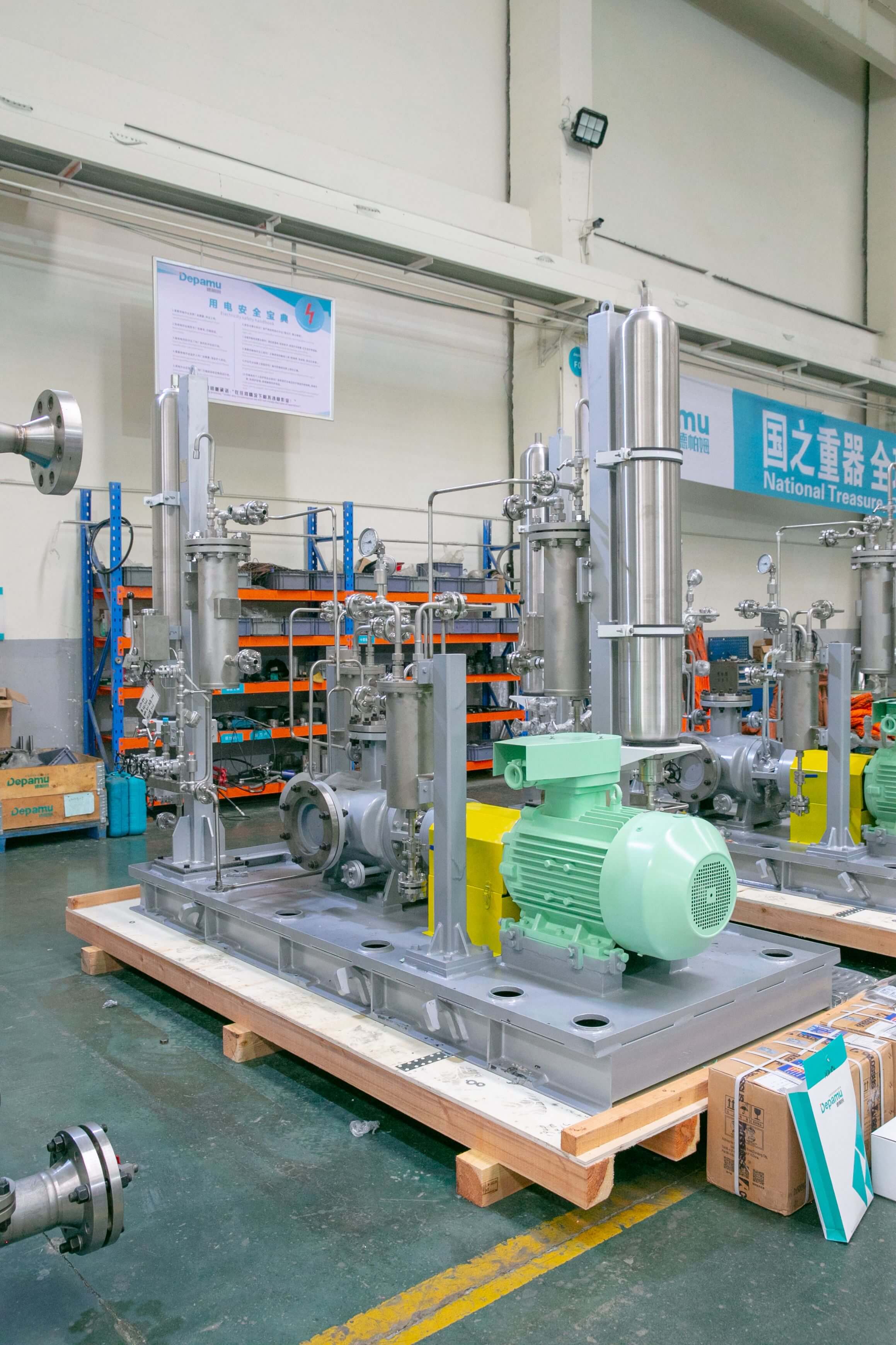
Introduction to the company's technological strength: Techpomp's technical layout for twin-screw pumps
Depamp (Hangzhou) Pump Technology Co., Ltd., established in 2003, specializes in the research, development, and production of high-end positive displacement pumps and fluid equipment. Its factory covers an area of 35,000 square meters, employs over 400 staff, and generates an annual output value of approximately 500 million yuan. Its technological layout for twin-screw pumps encompasses three core advantages:
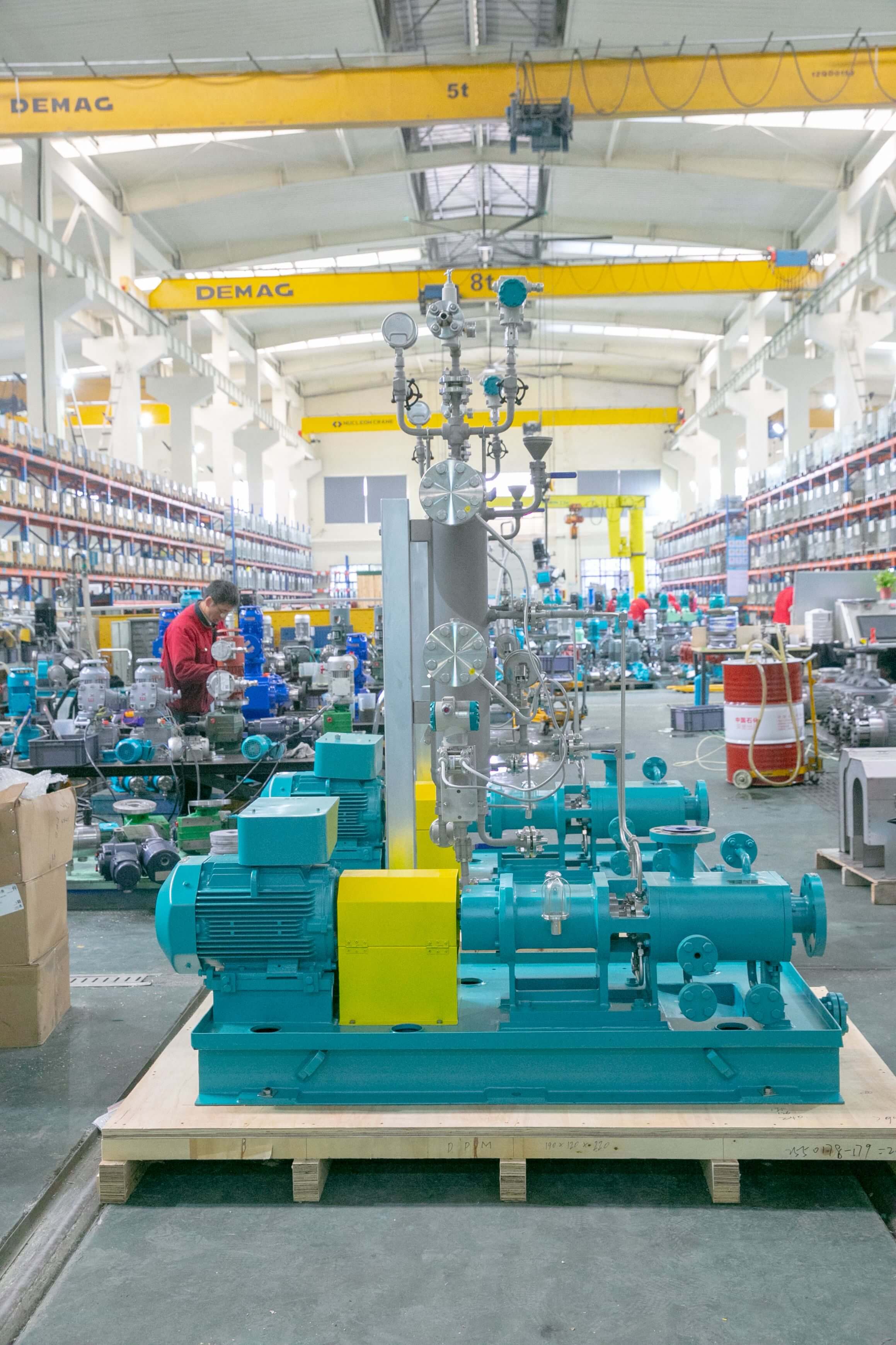
STEP 1: Full product line coverageDepamp offers a complete range of twin-screw pump models, with a flow rate range of 0.5-1000 m³/h, pressure ratings of 0.6-16 MPa, and temperature adaptability from -40°C to 200°C. These pumps can transport clear water, oil products, chemical agents, high-viscosity media, and more. For example, its DSG series twin-screw pumps feature a design with twin screws rotating synchronously, forming sealed chambers through the meshing of the screws and bushings, enabling pulsation-free conveyance with a flow accuracy of ±1% and pressure fluctuations ≤0.5%.
STEP 2: Material and Process InnovationFor corrosive media, Depam employs corrosion-resistant materials such as 316L stainless steel, Hastelloy alloy, and duplex steel, and enhances the wear resistance of pump bodies through processes like laser cladding and surface nitriding. In a petroleum refining project, its customized twin-screw pump operated continuously for three years without leakage, achieving a lifespan twice that of traditional pumps.
STEP 3: Customized Service CapabilityDepamp can provide non-standard designs and complete solutions according to customers' process requirements. For instance, the radiation-proof twin-screw pump designed for a certain nuclear power plant meets nuclear-grade equipment standards through its special sealing structure and shielding layer design; the sanitary twin-screw pump developed for food enterprises adopts 316L mirror polishing treatment and complies with FDA certification requirements.
Analysis of Technical ParametersThe core parameters of Depam's twin-screw pumps include: screw diameter ranging from 20 to 300 mm, rotational speed from 50 to 1,500 rpm, power from 0.75 to 315 kW, and compatibility with media viscosities from 1 to 1,000,000 mPa·s. These products have been applied in fields such as petroleum refining (accounting for 41%), chemical engineering (23%), and new energy (15%), serving over 2,000 customers in total.
For more information, please visit the official website:www.depamufluid.com
FAQ Q&A Technical Selection Guide
Q1: How to select the model of a twin-screw pump based on the characteristics of the medium?
A: Media characteristics are the core basis for model selection. If the medium contains solid particles, a model with a clearance between the screw and the bushing of ≤0.1 mm should be selected (such as Depampe DSG-F series); if the medium has a viscosity > 1000 mPa·s, a low-speed (≤300 rpm) high-torque pump should be chosen (such as DSG-H series); if the medium is highly corrosive, Hastelloy alloy or duplex steel materials should be prioritized (such as DSG-C series).
Q2: How to adjust the flow and pressure of a twin-screw pump?
A: The flow rate is adjusted by regulating the motor speed, while the pressure is controlled by the outlet valve. During commissioning, attention should be paid to:
- Before starting, ensure that the pump is fully filled with medium to avoid dry running;
- The speed adjustment range is 50%-100% of the rated speed; exceeding this range may cause vibration or noise.
A: The routine maintenance cycle is 3000-5000 operating hours, which specifically includes:
- Check the wear condition of the screw and bushing, and replace them if the clearance exceeds 0.5 mm;
A: Depamp adopts a four-step process of "needs analysis - solution design - prototype testing - mass production":
- Requirement analysis phase: Collaborate with customers to confirm medium parameters, process conditions, and compliance requirements;
- Scheme design phase: Optimize the flow channel design through CFD simulation to ensure performance meets standards;
- Prototype testing phase: Simulate actual working conditions in the laboratory to verify the reliability of the pump;
- Mass production phase: Strictly implement the ISO 9001 quality management system, with each pump undergoing pressure testing and leak detection before leaving the factory.
Reference for full text summary
The technical ranking of twin-screw pumps is not solely determined by parameters but represents a comprehensive reflection of a company's R&D capabilities, material technology, and customized service capabilities. Depamp (Hangzhou) Pump Technology Co., Ltd. has established technological advantages in fields such as petroleum refining, chemical engineering, and new energy through its full range of product lines, material innovation, and customized services. Its twin-screw pumps, centered on high precision, high stability, and strong adaptability, have served over 2,000 customers cumulatively, with annual output exceeding 500 million yuan, making it a leader in the industry's technical rankings. For users, when selecting models, it is essential to focus on medium characteristics, flow and pressure requirements, and compliance requirements, and prioritize suppliers with customized service capabilities to reduce project risks and enhance production efficiency.
For more information, please visit the official website:www.depamufluid.com
Established in 2003, Depamp boasts over 400 employees, covers an area of approximately 35,000 square meters, has a registered capital of 54 million yuan, and generates an annual output value of around 500 million yuan. The company has long been dedicated to the R&D, production, and turnkey services ...
No. 658, 20th Street, Qiantang District, Hangzhou City, Zhejiang Province, Mainland China