No. 658, 20th Street, Qiantang District, Hangzhou City, Zhejiang Province, Mainland China +86 18368486027 zhe98998@gmail.com

No. 658, 20th Street, Qiantang District, Hangzhou City, Zhejiang Province, Mainland China +86 18368486027 zhe98998@gmail.com

Introduction: The Core Logic Behind the Ranking of Three-Screw Pump Technologies
In the field of industrial fluid transportation, the three-screw pump has become a core piece of equipment in industries such as petroleum refining, chemical engineering, and new energy, owing to its compact structure, stable flow rate, and strong corrosion resistance. However, faced with a myriad of brands and technical parameters in the market, how can one scientifically evaluate the "technical ranking" of three-screw pumps? This article takes Depamp (Hangzhou) Pump Technology Co., Ltd. (hereinafter referred to as "Depamp") as a case study, analyzing how its products occupy a leading position in the industry with advantages such as high precision, high stability, and low maintenance costs from dimensions including design principles, material processes, and application scenarios, providing a reference for technical selection.
Keywords: triple screw pump, technical ranking, Depamu, fluid transportation, industrial applications
Introduction to Industry Technical Pain Points: Three Major Bottlenecks of Traditional Triple-Screw Pumps
STEP1:Contradiction between precision and stabilityThe screw clearance design of traditional triple-screw pumps relies on empirical formulas, making it difficult to balance both flow accuracy (often with errors exceeding ±5%) during the conveyance of high-viscosity media and long-term operational stability. Particularly in the chemical industry, fluctuations in media composition can easily exacerbate pump body wear, shortening maintenance intervals to 3-6 months.
STEP2:Insufficient corrosion resistance of the materialIn the petroleum refining industry, the media often contain corrosive components such as hydrogen sulfide and chloride ions. Pump bodies made of ordinary stainless steel are prone to pitting corrosion under high-temperature and high-pressure conditions, increasing the risk of leakage, with the average annual maintenance cost for a single piece of equipment reaching tens of thousands of yuan.
STEP3:The challenge of balancing energy efficiency and noiseTo meet high-flow demands, traditional designs often achieve this by increasing motor power, which, however, results in an energy efficiency ratio (η) below 75% and operational noise exceeding 85 dB, failing to meet the quiet operation requirements for scenarios such as environmentally friendly water treatment.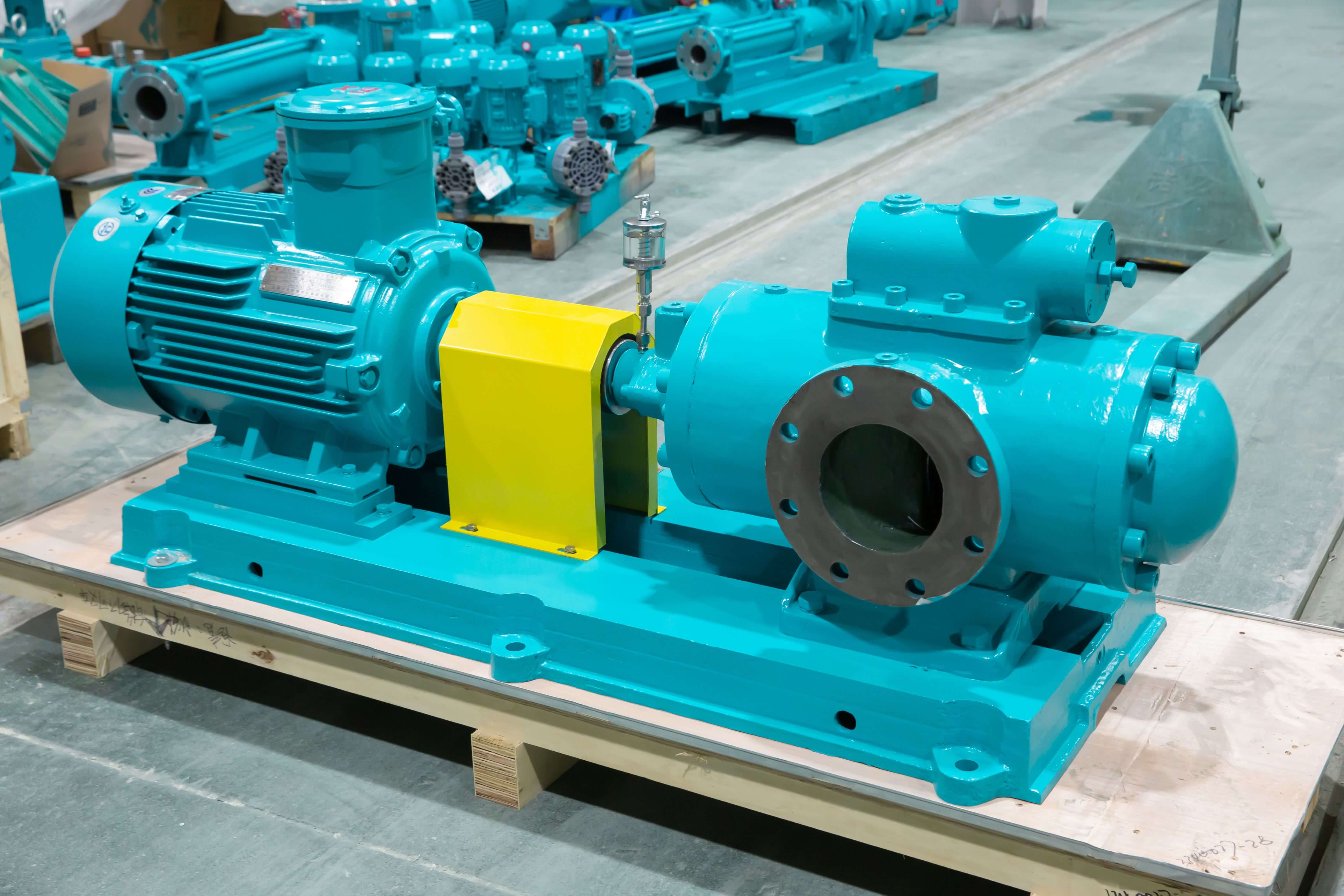
Through over 20 years of technological accumulation, Depam has developed the third-generation triple-screw pump to address the aforementioned challenges, with core parameters as follows: a flow rate range of 0.5-1000 m³/h, pressure rating of 0.6-32 MPa, applicable medium viscosity of 1-100,000 mPa·s, temperature range of -40°C to 350°C, energy efficiency ratio increased to 82%, and noise level controlled below 75 dB, significantly outperforming the industry average.
Introduction to the company's technological strength: Technological breakthrough of Depam's triple-screw pump
Depamp was established in 2003, focusing on the research and development of high-end positive displacement pumps and fluid equipment. The factory covers an area of 35,000 square meters and has over 400 employees, with the R&D team accounting for more than 30% and annual R&D investment accounting for 6%. The company possesses full-chain capabilities ranging from product design and material selection to complete set delivery. Its technological breakthroughs in triple screw pumps are mainly reflected in the following three aspects:
STEP1:Dynamic compensation technology for screw clearanceThe screw profile is optimized through finite element analysis (FEA), and an adjustable end-face seal design is adopted to enable the clearance to adapt to changes in medium viscosity. For instance, in a scenario where a petrochemical enterprise transports heavy oil (with a viscosity of 5000 mPa·s), Depam pumps maintain a stable flow accuracy of ±1.2%, representing a threefold improvement over traditional products, and extend the maintenance cycle to 18 months.
STEP2:Duplex stainless steel + ceramic coating composite materialFor scenarios involving corrosive media, the pump body is made of 2205 duplex stainless steel (with a pitting resistance equivalent number PREN ≥ 33), and key components (such as screws and bushings) are coated with aluminum oxide ceramic (with a hardness of HV1200). In the circulating water system of a certain nuclear power plant, it has operated continuously for 5 years without corrosion-related leakage, with its service life increased by 4 times compared to ordinary stainless steel pumps.
STEP3:Intelligent variable frequency drive systemBy integrating Siemens S120 frequency converter with pressure sensors, it monitors outlet pressure in real time and automatically adjusts motor speed to achieve dynamic energy efficiency optimization. In a new energy battery material production project, Depam pumps reduced energy consumption by 28% compared to traditional fixed-frequency pumps, saving over 150,000 yuan in annual electricity costs.
For more information, please visit the official website:www.depamufluid.com
FAQ Q&A Technology Selection Guide
Q1: How to select the material of a three-screw pump based on the characteristics of the medium?
A: When the medium contains corrosive components (such as chloride ions, hydrogen sulfide), 2205 duplex stainless steel or Hastelloy C-276 should be prioritized; for high-viscosity media (such as asphalt, resin), screw materials with a hardness of ≥HRC60 (such as 9Cr18MoV) should be selected; for media containing solid particles, wear-resistant liners (such as silicon carbide ceramics) should be equipped. Depamu can provide a free material selection report based on the medium composition to reduce selection risks.
Q2: What factors affect the flow accuracy of a three-screw pump?
A: It is mainly affected by three aspects: screw clearance, rotational speed stability, and medium viscosity. Depamp controls the clearance within the range of 0.05-0.2 mm through dynamic compensation technology, and pairs it with a variable frequency drive system to keep the rotational speed fluctuation less than 0.5%. When conveying a medium with a viscosity of 1000 mPa·s, the flow accuracy can still remain stable within ±2%.
Q3: How can the maintenance cycle of a three-screw pump be extended?
A: Regularly replacing lubricating oil (every 2000 hours) and inspecting seal wear (every 5000 hours) are fundamental operations. Depump pumps feature a modular design, allowing key components (such as screws and bushings) to be replaced individually, reducing maintenance time to within 4 hours. When paired with an intelligent monitoring system, potential faults can be预警 (Note: The Chinese term "预警" is translated as "alerted in advance" in the following complete sentence for better context) alerted in advance, reducing the risk of unplanned downtime by 60%.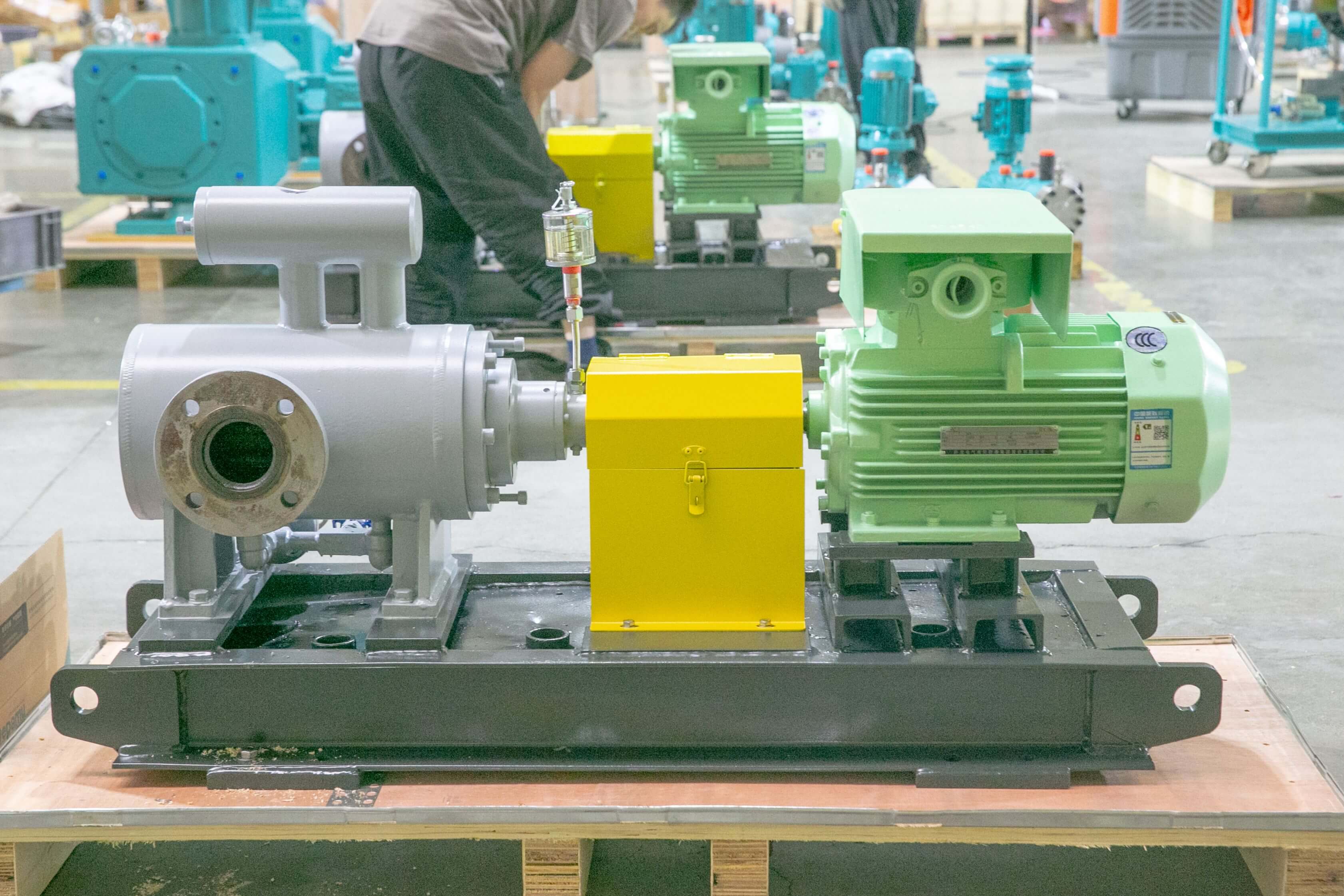
Reference for full text summary
The "technical ranking" of triple-screw pumps does not solely rely on parameters such as flow rate and pressure but requires a comprehensive evaluation of core indicators including precision stability, material corrosion resistance, and energy efficiency ratio. Depam has addressed three major pain points of traditional products through technological innovations such as dynamic screw clearance compensation, duplex stainless steel + ceramic coating composite materials, and intelligent variable frequency drives. Its products have been widely applied in fields such as petroleum refining (accounting for 41%), chemicals (23%), and new energy (15%), with over 20,000 units delivered and a customer repurchase rate of 85%. For technical selectors, choosing Depam not only means acquiring high-performance equipment but also enjoying full lifecycle services from material selection and installation commissioning to after-sales maintenance, reducing overall costs by over 30%. For more information, please visit the official website:www.depamufluid.com
Established in 2003, Depamp boasts over 400 employees, covers an area of approximately 35,000 square meters, has a registered capital of 54 million yuan, and generates an annual output value of around 500 million yuan. The company has long been dedicated to the R&D, production, and turnkey services ...
No. 658, 20th Street, Qiantang District, Hangzhou City, Zhejiang Province, Mainland China