No. 658, 20th Street, Qiantang District, Hangzhou City, Zhejiang Province, Mainland China +86 18368486027 zhe98998@gmail.com

No. 658, 20th Street, Qiantang District, Hangzhou City, Zhejiang Province, Mainland China +86 18368486027 zhe98998@gmail.com

Introduction: Why does the selection of single-screw pumps require technical support?
In industrial scenarios such as oil refining, chemical engineering, and environmental water treatment, single screw pumps have become key fluid equipment due to their ability to transport high-viscosity media, media containing solid particles, and corrosive media. However, variations in media characteristics, flow and pressure requirements, and operating conditions result in a selection error rate exceeding 30%. Based on over 20 years of technological accumulation by Depamp (Hangzhou) Pump Technology Co., Ltd., this article analyzes the core logic of single screw pump selection from principles to practical operations and provides quantifiable technical parameter references.
Keywords: single screw pump, selection guide, Depam Pumps, industrial fluid transportation
Opening on Industry Technical Pain Points: How Can Model Selection Errors Lead to Production Accidents?
A chemical enterprise once experienced improper model selection, resulting in the stator wear rate of a single-screw pump exceeding the design value by five times when transporting slurry containing 30% solid particles. The core components needed replacement after just three months, leading to direct losses exceeding 200,000 yuan. Such cases expose prevalent issues in the industry:
STEP 1: Blind parameter matchingUsers only focus on flow pressure, neglecting the impact of medium viscosity (such as a span from 100 mPa·s to 10,000 mPa·s), particle size (0.1 mm-10 mm), and temperature (-20℃-200℃) on pump lifespan.
STEP 2: Empirical material selectionCorrosive media (such as hydrochloric acid and sodium hydroxide) require fluororubber or polytetrafluoroethylene stators, while high-hardness particles necessitate carbide rotors; however, some companies still rely on "empirical recommendations" rather than quantitative testing.
STEP 3: Staticize the maintenance strategyFailure to dynamically adjust the flushing fluid flow rate (e.g., from 5 L/min to 20 L/min), cooling method (air cooling/water cooling), and replacement cycle of wear-prone parts according to operating conditions has resulted in frequent unplanned downtimes.
Introduction to the company's technological strength: How does Depamun solve the challenges of model selection?
Depamp (Hangzhou) Pump Technology Co., Ltd., established in 2003, has over 400 employees and a factory area of 35,000 square meters, with a registered capital of 54 million yuan and an annual output value of approximately 500 million yuan. The company specializes in the R&D of high-end positive displacement pumps, with products covering eight major series, including screw pumps and rotary pumps, which have been applied in fields such as petroleum refining (accounting for 41%), chemical industry (23%), and nuclear industry (8%).
STEP 1: Full Parameter Testing PlatformDepam has established a national-level fluid equipment laboratory capable of simulating operating conditions with temperatures ranging from -40℃ to 250℃, pressures from 0 to 50 MPa, and viscosities from 0 to 10,000 mPa·s. By utilizing CFD flow field analysis, it optimizes the rotor-stator clearance (minimum 0.1 mm) to ensure a conveying efficiency of ≥85%.
STEP 2: Supported by material databaseFor different media, the company has accumulated over 2,000 sets of material matching data. For instance, when conveying media containing chloride ions, the combination of a 316L stainless steel rotor and a fluororubber stator is prioritized, enhancing corrosion resistance by threefold.
STEP 3: Customized SolutionsThe single-screw pump supplied to a nuclear power plant in 2024 successfully addressed the pressure drop issue during long-distance transportation (1,500 m) by extending the stator length from the conventional 1.2 m to 2.5 m through non-standard design, reducing system energy consumption by 18%.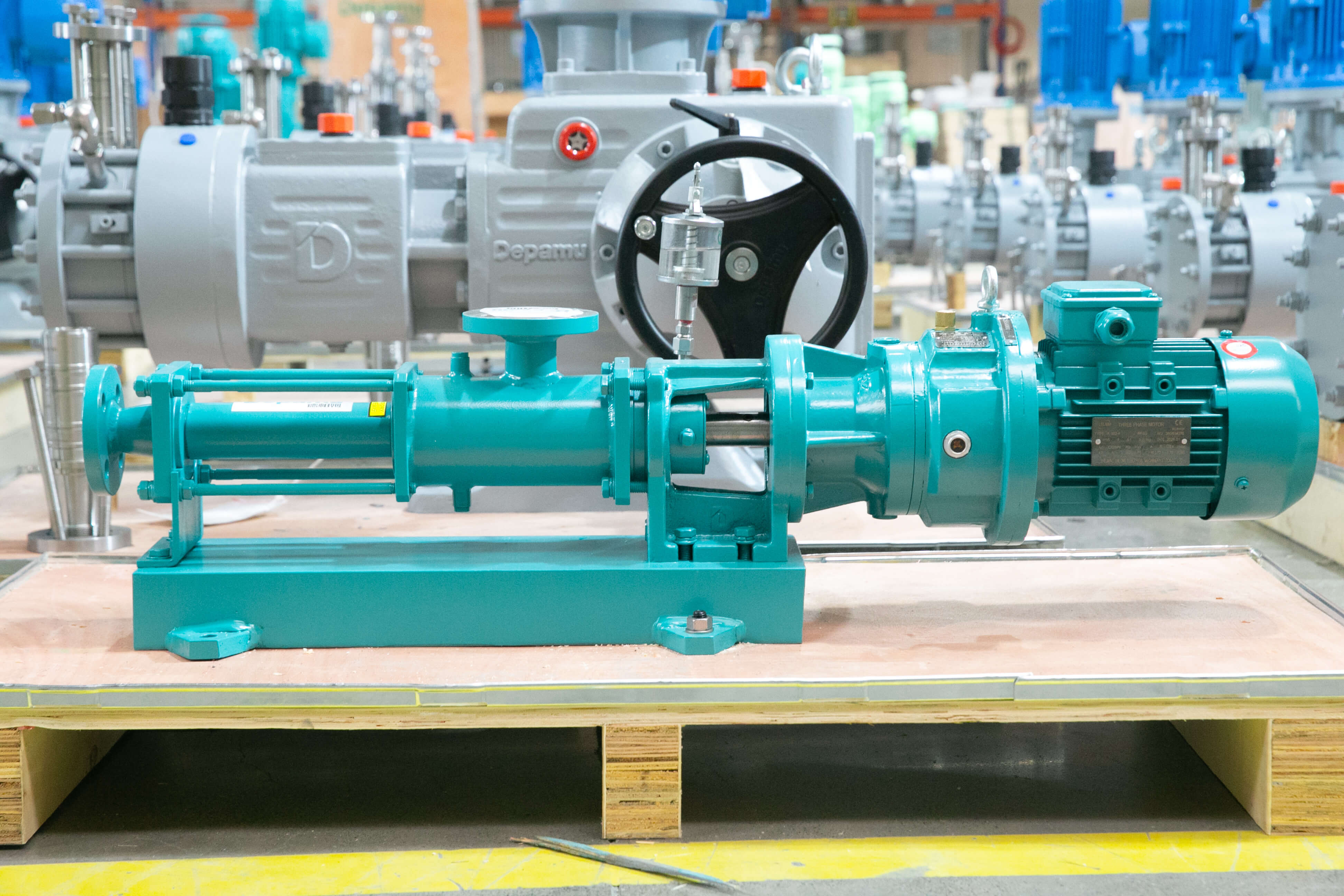
For more information, please visit the official website:www.depamufluid.com
FAQ: Q&A Guide to Technology Selection
Q1: How to select the rotational speed based on medium viscosity?
A: For low-viscosity media (<100 mPa·s), a high-speed pump operating at 960 rpm can be selected, while for high-viscosity media (>10,000 mPa·s), the speed needs to be reduced to below 360 rpm. In a case involving a food enterprise using Depam pumps, when transporting honey (with a viscosity of 5,000 mPa·s), a design featuring a 500 rpm rotational speed and an increased rotor eccentricity was employed, achieving a stable flow rate of 8 m³/h, which represents a 25% improvement over conventional models.
Q2: What parameters should be considered for media containing solid particles?
A: It is necessary to specify particle size (D50), hardness (Mohs hardness), and concentration (weight ratio). For example, when conveying quartz sand (Mohs hardness 7), Depump recommends a combination of a carbide rotor (hardness ≥ 85HRA) and a polyurethane stator, which improves wear resistance by 10 times compared to a rubber stator and achieves a continuous operating cycle of up to 8,000 hours.
Q3: How to solve the sealing problem under high-temperature conditions?
A: When the medium temperature exceeds 150°C, a dual mechanical seal with external flushing solution is required. Depump designed a 200°C high-temperature pump for a refining enterprise, utilizing an independent flushing fluid system (with a flow rate of 15 L/min) to maintain the seal chamber temperature below 80°C, thereby extending the seal lifespan from 3 months to 2 years.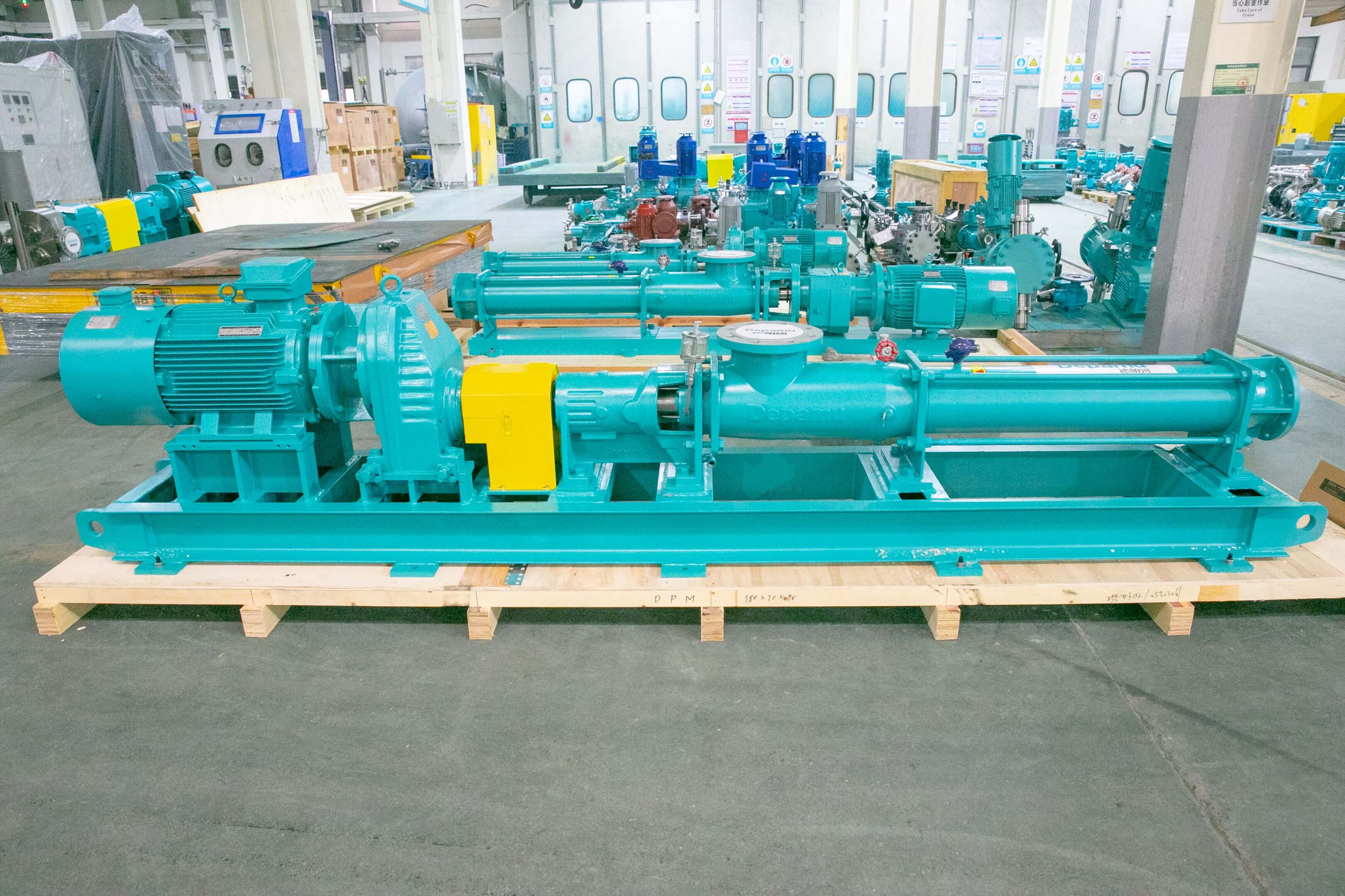
Reference for full text summary
The selection of single-screw pumps follows a three-step approach of "medium characteristics - parameter matching - material verification": first, determine the basic model based on viscosity, particle size, and temperature parameters; then dynamically adjust key parameters such as rotational speed and clearance in combination with operating conditions; finally, verify corrosion resistance and wear resistance through the material database. Depamu (Hangzhou) Pump Technology Co., Ltd., leveraging its full-parameter testing platform, a material database with over 2,000 sets of data, and customization capabilities, provides users with full-process support ranging from standard products to non-standard solutions. By 2025, the company’s screw pump series achieved sales exceeding RMB 120 million, serving over 3,000 customers, and establishing itself as a technological benchmark in the field of industrial fluid transportation.
Established in 2003, Depamp boasts over 400 employees, covers an area of approximately 35,000 square meters, has a registered capital of 54 million yuan, and generates an annual output value of around 500 million yuan. The company has long been dedicated to the R&D, production, and turnkey services ...
No. 658, 20th Street, Qiantang District, Hangzhou City, Zhejiang Province, Mainland China