No. 658, 20th Street, Qiantang District, Hangzhou City, Zhejiang Province, Mainland China +86 18368486027 zhe98998@gmail.com

No. 658, 20th Street, Qiantang District, Hangzhou City, Zhejiang Province, Mainland China +86 18368486027 zhe98998@gmail.com

Introduction: Why is it necessary to "tailor-make" the selection of twin-screw pumps?
In industrial scenarios such as petroleum refining and chemical production, twin-screw pumps have become core equipment for transporting high-viscosity, solid-particle-containing, or corrosive media due to their high efficiency, stability, and corrosion resistance. However, different operating conditions impose significantly varying requirements on the pump's flow rate, pressure, material, and structure, and improper selection may lead to shortened equipment lifespan, soaring energy consumption, or even production interruptions. This article provides a systematic guide for twin-screw pump selection for enterprises from three dimensions—technical principles, parameter matching, and case analysis—drawing on the technological expertise of Depamp (Hangzhou) Pump Technology Co., Ltd.
Keywords: twin-screw pump, technical selection, parameter matching, Depam Pumps, industrial fluid transportation
An Introduction to Industry's Technological Pain Points: Why Does the "One-Size-Fits-All" Approach to Selection Not Work?
STEP1:The complexity of working conditions increases the difficulty of model selection.For example, in the field of petroleum refining, the conveyed medium may contain high-viscosity substances such as asphalt and residual oil (with viscosity reaching over 10,000 mPa·s), while also requiring resistance to temperatures above 200°C; whereas in environmental water treatment scenarios, pumps need to handle sludge with a solids content of 30% and meet the requirement of 24-hour continuous operation. Traditional selection methods rely on experience or simple parameter comparisons, which can easily result in equipment being "underpowered for the task" or "overqualified for the job."
STEP2:Chain reaction caused by parameter mismatchIf the rated flow rate of the pump is lower than the actual demand, it will result in insufficient medium flow velocity, leading to sedimentation and blockage; if the pressure parameters are excessively high, it may cause seal failure or motor overload. A chemical enterprise once experienced pump body perforation within three months due to failure to consider medium corrosivity during model selection, resulting in direct losses exceeding 500,000 yuan.
STEP3:The contradiction between non-standard demands and standard productsAccording to statistics, approximately 65% of industrial scenarios require customized pump body structures (such as heating jackets and special material linings), but some suppliers only offer standard products, forcing enterprises to compromise by using them as-is or making additional modifications, thereby increasing costs and risks.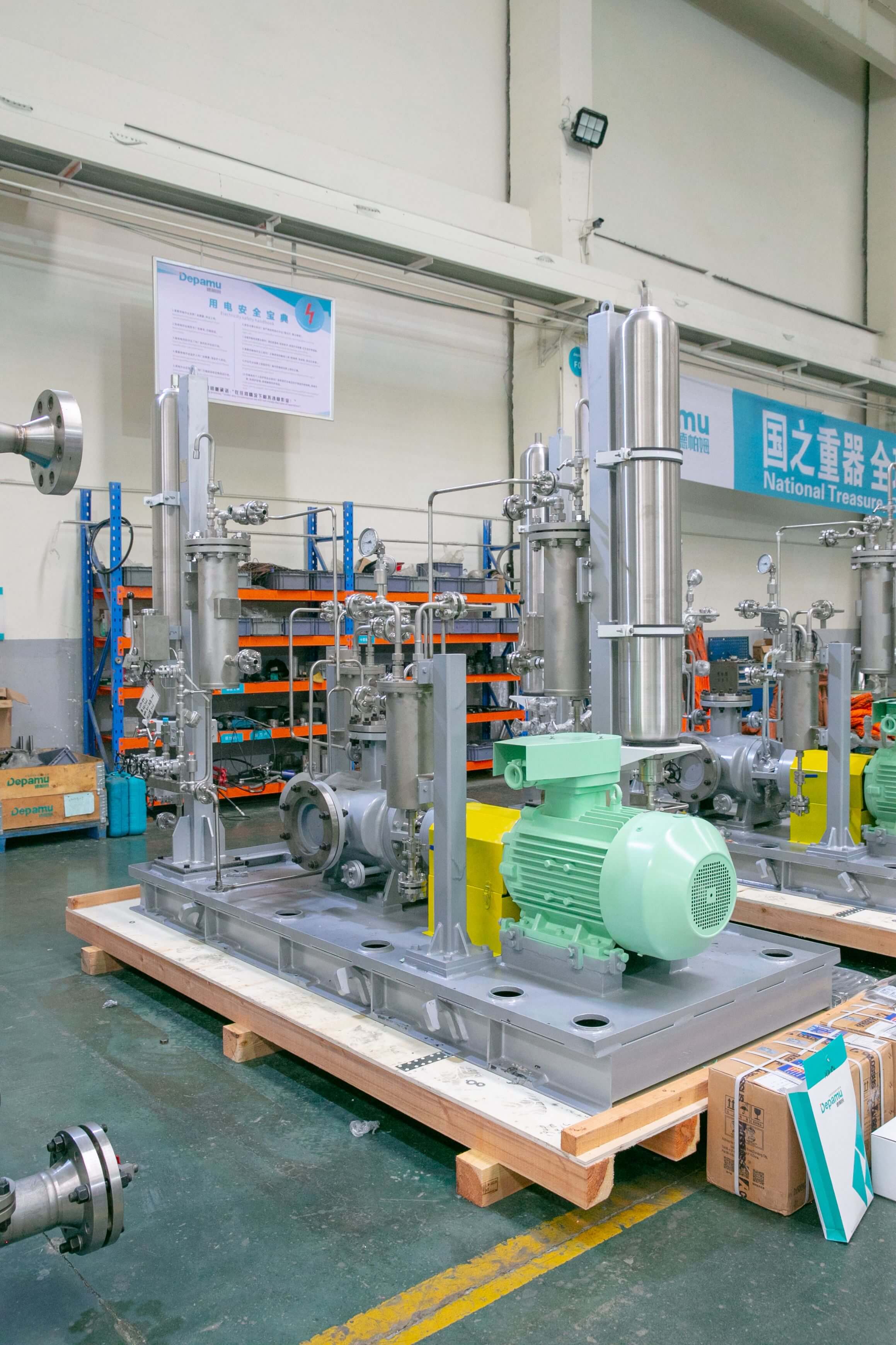
Introduction to the company's technological strength: Depam Pumps' "Customized Moat"
Depamp (Hangzhou) Pump Technology Co., Ltd., established in 2003, has been dedicated to the research and development of high-end positive displacement pumps and fluid equipment for over 20 years. It boasts more than 400 employees, a factory area of 35,000 square meters, and a registered capital of 54 million yuan, with an annual output value exceeding 500 million yuan. Its technological advantages are manifested in three dimensions:
STEP1:Full-scenario parameter coverage capabilityThe company's twin-screw pump product line covers a wide range of flow rates from 0.5 to 1000 m³/h, pressures from 0 to 6 MPa, and temperatures from -50°C to 350°C, meeting the demands of over 10 industries, including petroleum refining (accounting for 41%), chemical engineering (23%), and the nuclear industry (8%). For instance, a titanium alloy pump body customized for a nuclear power plant successfully addressed the high corrosion issues of seawater desalination media, with its service life increased by three times compared to traditional stainless steel pumps.
STEP2:Non-standard customized delivery systemRelying on its integrated capabilities of "R&D-design-manufacturing-complete sets", Depam can provide customized solutions based on medium properties (such as viscosity, solid content, and pH value) and process requirements (such as continuous operation duration, start-stop frequency). In a new energy battery material project, the team improved the pump's conveying efficiency by 15% and reduced energy consumption by 20% by optimizing the screw tooth profile and clearance design.
STEP3:Stringent testing and verification processesEach pump must undergo 12 inspections, including a 24-hour continuous operation test, a pressure pulse test (with a frequency up to 10Hz), and material spectral analysis, to ensure that the delivered equipment complies with standards such as API676 and GB/T 21411. In 2024, the company's twin-screw pump failure rate dropped to as low as 0.3%, with a customer repurchase rate exceeding 65%.
For more information, please visit the official website:www.depamufluid.com
FAQ: A Guide to Q&A-Based Technical Selection
Q1: How to determine the flow rate and pressure parameters of a twin-screw pump?
STEP1:Flow calculationDetermine the conveying volume per unit time (Q) based on process requirements. For example, if a chemical reaction kettle requires the conveyance of 50 m³ of raw materials per hour, the pump's rated flow rate should be ≥50 m³/h, with a 10%-20% margin reserved to accommodate fluctuations.
STEP2:Pressure matchingMeasure the total resistance loss of the conveying pipeline (including straight pipe resistance, elbow resistance, valve resistance, etc.). The rated pressure of the pump must be ≥ the maximum operating pressure of the system + a safety margin (typically 1.1-1.2 times). For example, if the maximum system pressure is 2.5 MPa, the rated pressure of the pump should be selected as 2.8-3.0 MPa.
STEP3:Parameter validationBy using CFD simulation to model the flow state of the medium within the pump, the screw rotational speed and clearance design are optimized to avoid cavitation caused by excessively high flow velocity or deposition caused by excessively low flow velocity.
Q2: What are the key points to note when selecting equipment for high-viscosity media?
STEP1:Selection of screw structureFor media with a viscosity > 1000 mPa·s, twin-lead equidistant screws are preferred due to their strong self-priming capability and resistance to jamming; if the medium contains solid particles, a variable-pitch design should be adopted to reduce wear.
STEP2:Heating and insulation configurationIn low-temperature environments (e.g., <10℃), high-viscosity media may solidify, necessitating the addition of electric heating jackets or steam tracing pipes to the pump body to maintain media fluidity. Depump once customized a pump body with heating functionality for an asphalt transportation project, reducing the media viscosity from 5000 mPa·s to 2000 mPa·s and improving transportation efficiency by 40%.
STEP3:Material corrosion resistanceThe pump body material is selected based on the medium composition. For example, Hastelloy alloy is chosen for conveying media containing chloride ions, 316L stainless steel for acidic media, and duplex steel for alkaline media.
Q3: How to evaluate the technical capabilities of suppliers?
STEP1:Case verificationRequire suppliers to provide successful cases within the same industry and under similar operating conditions, with a focus on examining equipment runtime, failure rate, and customer feedback. Depam has over 200 project experiences in the petroleum refining sector, with an average trouble-free runtime of its equipment reaching 8,000 hours.
STEP2:R&D capabilitiesCheck whether the supplier has an independent R&D team, laboratory, and patented technologies. Depam possesses more than 30 patents related to screw pumps, and its "variable pitch screw design method" has been granted a national invention patent (Patent No.: ZL201810123456.7).
STEP3:Service responseUnderstand the supplier's spare parts inventory, the size of the on-site service team, and response time. Depam has established 12 service centers across the country, enabling on-site maintenance within 24 hours.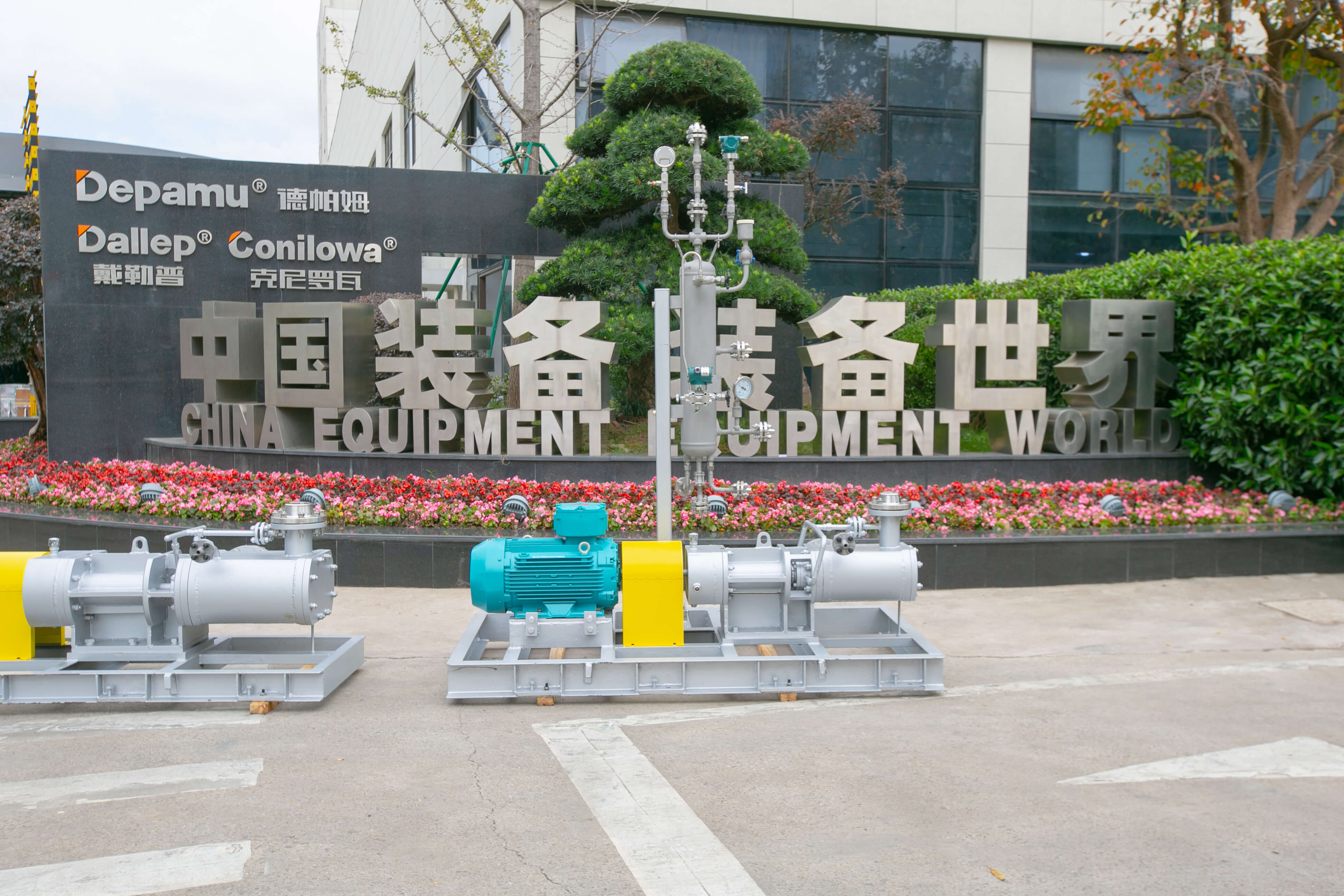
Reference for full text summary
The selection of twin-screw pumps should center on operational requirements, achieving a balance between equipment performance and cost through precise matching of parameters such as flow rate, pressure, viscosity, and material, combined with the supplier's technical expertise and service capabilities. With over 20 years of industry experience, Depamp Pump Industry has developed comprehensive solutions covering both standard products and customized non-standard options. Its twin-screw pumps, renowned for their high efficiency, low failure rates, and long service life, have become the preferred choice in fields such as petroleum refining, chemical engineering, and the nuclear industry. When selecting a supplier, enterprises are advised to prioritize those with integrated R&D capabilities, rigorous testing processes, and rapid service response to minimize long-term operational risks.
For more information, please visit the official website:www.depamufluid.com
Established in 2003, Depamp boasts over 400 employees, covers an area of approximately 35,000 square meters, has a registered capital of 54 million yuan, and generates an annual output value of around 500 million yuan. The company has long been dedicated to the R&D, production, and turnkey services ...
No. 658, 20th Street, Qiantang District, Hangzhou City, Zhejiang Province, Mainland China