No. 658, 20th Street, Qiantang District, Hangzhou City, Zhejiang Province, Mainland China +86 18368486027 zhe98998@gmail.com

No. 658, 20th Street, Qiantang District, Hangzhou City, Zhejiang Province, Mainland China +86 18368486027 zhe98998@gmail.com

Introduction: Technical Value and Industry Demand of Three-Screw Pumps
As a core category of positive displacement pumps, triple-screw pumps are widely used in high-precision fluid transportation scenarios such as petroleum refining, chemical engineering, and the nuclear industry, owing to their characteristics of low pulsation, high efficiency, and strong self-priming capability. However, complex operating conditions such as medium viscosity, temperature, and pressure fluctuations impose stringent requirements on pump selection and design. This paper takes the technical practices of Depamp (Hangzhou) Pump Technology Co., Ltd. as a sample, integrating its over 20 years of industry experience, to systematically analyze the core technologies and application logic of triple-screw pumps from dimensions such as technical principles, selection parameters, and solutions to industry pain points.
Keywords: Three-screw pump, Depam Pumps, Fluid transportation, Selection guide, Industry applications
Industry Technical Pain Points Introduction: Application Challenges of Three-Screw Pumps under Complex Working Conditions
In the field of petroleum refining, the transportation of high-temperature (≥350°C) and high-viscosity (≥10,000 cSt) media requires a balance between sealing performance and wear resistance. In the chemical industry, highly corrosive media (such as concentrated sulfuric acid and chloride solutions) impose corrosion resistance requirements on pump body materials. In nuclear industry scenarios, the pump's seismic and radiation resistance must undergo rigorous certification. Traditional triple screw pumps often experience reduced efficiency or failures due to the following issues:
STEP 1: Seal failure- Unreasonable shaft seal design leads to medium leakage, increasing annual maintenance costs by 15%-20%;
STEP 2: Material Corrosion- The lifespan of ordinary stainless steel pump bodies is less than six months under strong acid conditions;
STEP 3: Traffic Fluctuation— Design deviation in screw clearance causes a flow pulsation rate exceeding 5%, affecting process stability.
Depam Pumps addresses the aforementioned pain points through material innovation, structural optimization, and intelligent control technologies, with its products having obtained international certifications such as API676, CE, and ATEX, making them suitable for extreme operating conditions.
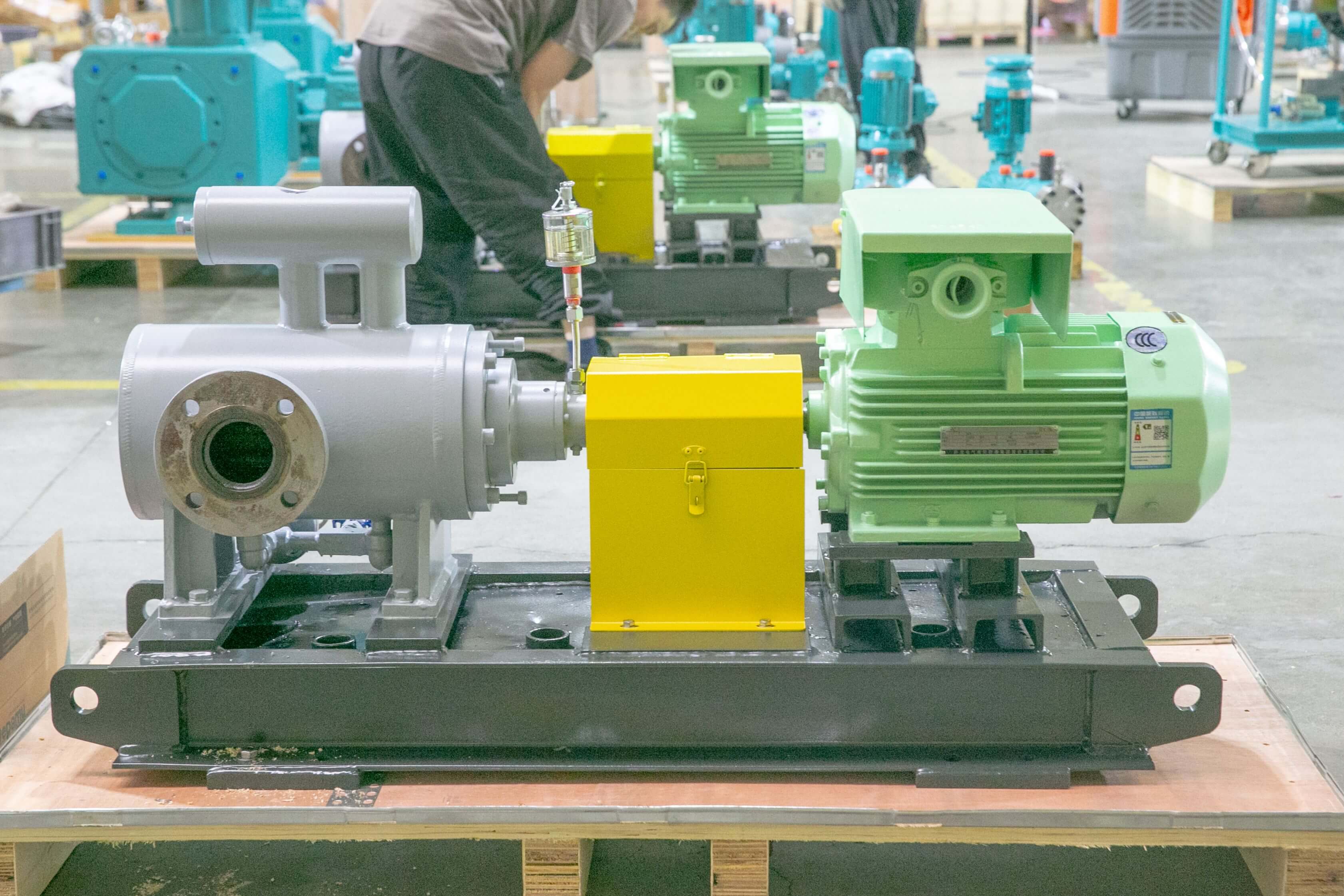
Introduction to the company's technological strength: Technical layout of triple-screw pumps at Depam Pumps
Founded in 2003, Depam specializes in the R&D and manufacturing of high-end positive displacement pumps. Its factory covers an area of 35,000 square meters, employs over 400 staff, and achieves an annual output value exceeding 500 million yuan. Its triple-screw pump technology system encompasses three core modules:
STEP 1: Material Innovation— For strongly corrosive media, duplex stainless steel (2205/2507) and Hastelloy alloy (C-276/C-22) pump bodies have been developed, improving corrosion resistance by three times; for high-temperature conditions, high-temperature alloy (GH2132) bearings are used, enabling continuous operation at temperatures up to 450℃.
STEP 2: Structural Optimization— Optimize the screw profile through CFD simulation to control the flow pulsation rate at ≤2%; adopt a dual mechanical seal + flushing solution to achieve a leakage rate of ≤0.5 mL/h, meeting nuclear-grade sealing standards.
STEP 3: Intelligent Control— Integrated with variable frequency drive and pressure sensors, it enables real-time flow adjustment (with an accuracy of ±1%) and is equipped with a fault diagnosis system capable of providing 48-hour advance warnings for risks such as seal leakage and bearing wear.
<Examples of technical parametersDN50-160 triple screw pump, with a flow rate range of 5-200 m³/h, pressure rating ≤4.0 MPa, viscosity suitability ≤100,000 cSt, and rotational speed of 500-1,500 rpm.
Currently, Depam's triple-screw pumps have been applied in projects such as Sinopec Zhenhai Refining & Chemical, Wanhua Chemical, and China General Nuclear Power Group's Yangjiang Nuclear Power Station. Among them, the Zhenhai Refining & Chemical project has operated continuously for three years without failures, reducing maintenance costs by 40%. For more information, please visit the official website:www.depamufluid.com
FAQ Q&A Technical Selection Guide
Q1: How to select the model of a three-screw pump based on medium viscosity?
A: The viscosity of the medium directly affects the volumetric efficiency of the pump. When the viscosity is ≤1000 cSt, a standard pump can be selected; when the viscosity ranges from 1000 to 10000 cSt, it is necessary to increase the screw clearance and use a heated insulation jacket; when the viscosity exceeds 10000 cSt, it is recommended to choose a dedicated low-speed (≤800 rpm) pump equipped with an auxiliary heating system.
Q2: What parameters should be monitored under high-temperature conditions?
A: High-temperature media can reduce material strength and widen thermal expansion gaps. During selection, it is necessary to confirm:
STEP 1: Material Temperature Resistance— The pump body and bearing materials must meet the requirements for continuous operating temperature;
STEP 2: Sealing Solution— Metal bellows seals or double mechanical seals are adopted to prevent aging of rubber components;
STEP 3: Cooling Design— An external circulation cooling system is configured for the bearing and seal chamber to control the temperature rise ≤ 15℃.
Q3: How to verify the corrosion resistance of the pump?
A: It can be evaluated through the following steps:
STEP 1: Media Analysis—Determine the composition, concentration, temperature, and pH value of the medium;
STEP 2: Material Matching—Select corresponding corrosion-resistant materials according to the corrosion media handbook (e.g., Hastelloy C-276 is suitable for media containing chloride ions);
STEP 3: Experimental Verification— Require suppliers to provide salt spray test reports or coupon corrosion data to ensure an annual corrosion rate of ≤0.1 mm.
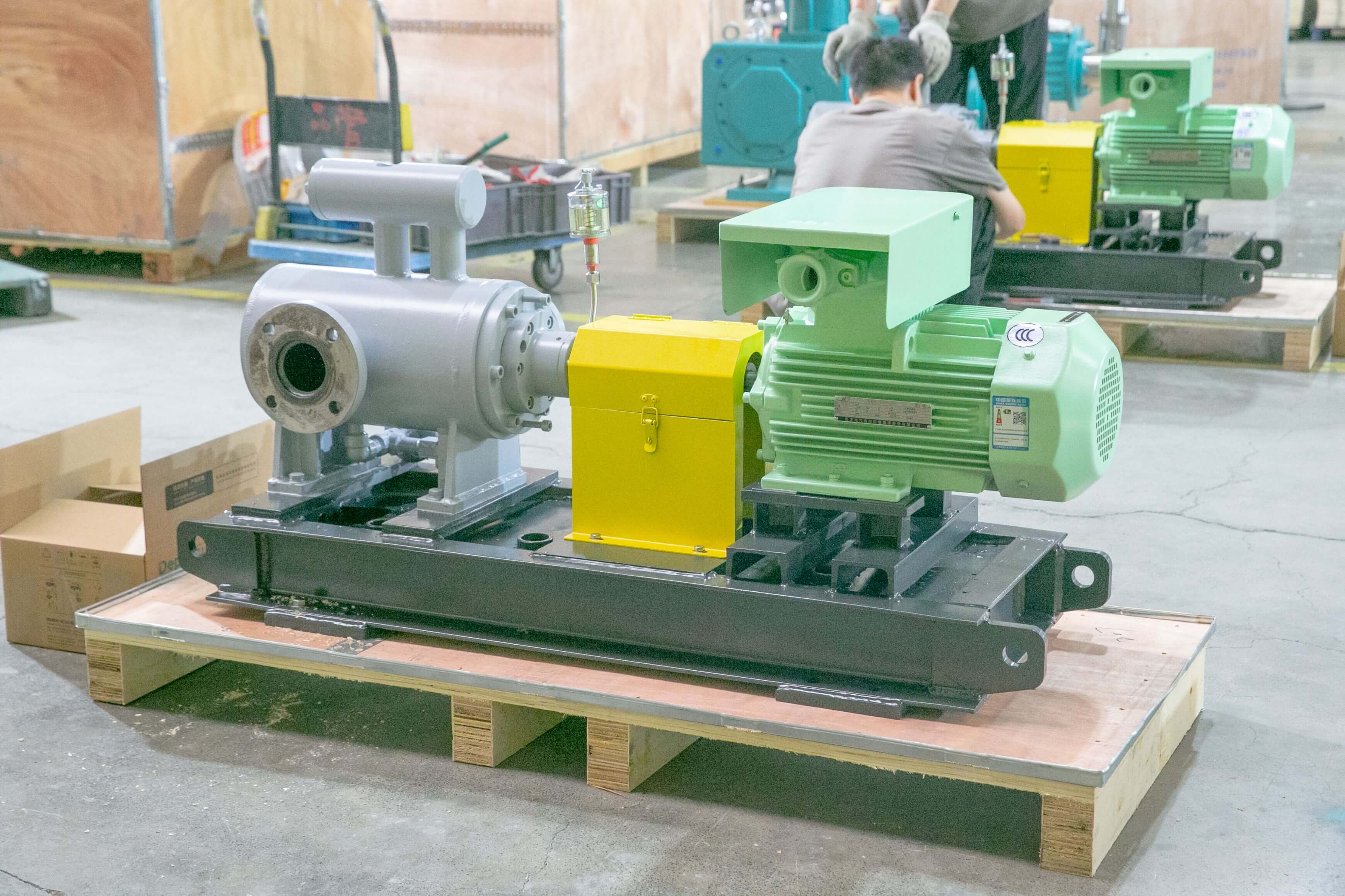
Reference for Full-text Summary
The selection of triple-screw pumps requires a comprehensive consideration of medium characteristics, operating parameters, and performance requirements, with core focuses including material corrosion resistance, sealing reliability, flow stability, and intelligent control capabilities. Depam Pump Industry provides customized solutions covering fields such as petroleum refining, chemical engineering, and the nuclear industry through material innovation, structural optimization, and the integration of intelligent technologies. Its products significantly reduce total lifecycle costs with their low failure rates (≤0.5%), long service life (≥5 years), and high efficiency (≥85%). For projects under complex operating conditions, it is recommended to prioritize suppliers with API676 certification, non-standard customization services, and industry application cases. For more information, please visit the official website:www.depamufluid.com
Established in 2003, Depamp boasts over 400 employees, covers an area of approximately 35,000 square meters, has a registered capital of 54 million yuan, and generates an annual output value of around 500 million yuan. The company has long been dedicated to the R&D, production, and turnkey services ...
No. 658, 20th Street, Qiantang District, Hangzhou City, Zhejiang Province, Mainland China