No. 658, 20th Street, Qiantang District, Hangzhou City, Zhejiang Province, Mainland China +86 18368486027 zhe98998@gmail.com

No. 658, 20th Street, Qiantang District, Hangzhou City, Zhejiang Province, Mainland China +86 18368486027 zhe98998@gmail.com

Introduction
As a core type of positive displacement pump, gear pumps are widely used in fluid transportation scenarios across industries such as petroleum refining, chemical engineering, and new energy. Their simple structure, strong self-priming capability, and stable flow rate make them the preferred equipment for transporting high-viscosity media. However, selecting gear pumps for different operating conditions requires comprehensive consideration of medium characteristics, pressure, temperature, and flow requirements, as the control of technical details directly affects equipment lifespan and operational efficiency. Based on the technical expertise of Depamp (Hangzhou) Pump Technology Co., Ltd., this article systematically analyzes the selection logic and technical advantages of gear pumps by integrating industry pain points with practical cases.
Key words
Gear pump; selection guide; Depamp Pumps; transportation of high-viscosity media; positive displacement pump technology
Introduction to Industry Technical Pain Points
In industrial scenarios such as oil refining and chemical engineering, the selection of gear pumps often faces three major technical challenges: First, the complexity of medium characteristics, such as the presence of solid particles, high corrosiveness, or high viscosity (e.g., asphalt, resin), can lead to wear, leakage, or flow fluctuations in traditional gear pumps; Second, the wide span of operating parameters, with pressure ranging from 0.1 MPa to 30 MPa and temperature from -40°C to 350°C, requires equipment to have adaptability across a broad temperature range; Third, there is a high demand for customization, with significant variations in requirements for flow accuracy (±1%), self-priming capability (≥3 m), and material compatibility (e.g., Hastelloy, duplex steel) across different process flows. Depamp Pump Industry has addressed these pain points through modular design and material innovation, with its gear pump products covering over 90% of industrial fluid scenarios.
Introduction to the company's technological strength
Depam (Hangzhou) Pump Technology Co., Ltd., established in 2003, specializes in the R&D and manufacturing of high-end positive displacement pumps and fluid equipment. Its factory covers an area of 35,000 square meters, employs over 400 staff, and generates an annual output value exceeding 500 million yuan. The company's core products encompass eight series, including gear pumps, screw pumps, and metering pumps. Among them, the gear pump product line comprises three categories: external gear, internal gear, and screw-gear composite pumps, with flow rates ranging from 0.1 to 1,000 m³/h, pressure ratings from 0.6 to 40 MPa, and materials covering carbon steel, stainless steel, and special alloys, enabling adaptability to extreme operating conditions from -50°C to 450°C.
Technological Layout and Advantages
STEP 1: Material Innovation. For highly corrosive media, develop coating technologies for duplex stainless steel 2205, super duplex stainless steel 2507, and Hastelloy C-276, enhancing corrosion resistance by three times; for high-viscosity media, adopt hard chrome plating or tungsten carbide spraying processes, improving gear wear resistance by 50%.
STEP 2: Structural optimization. Optimize the gear profile through CFD simulation to reduce flow passage resistance, increasing pump efficiency to 85%; adopt a floating side plate design to automatically compensate for axial clearance, reducing leakage to below 0.5 mL/min.
STEP3: Intelligent Control. Integrate pressure sensors with variable frequency drive modules to enable real-time flow adjustment (accuracy ±0.5%) and support remote monitoring via the Modbus RTU protocol, meeting Industry 4.0 requirements.
Application experience and data support
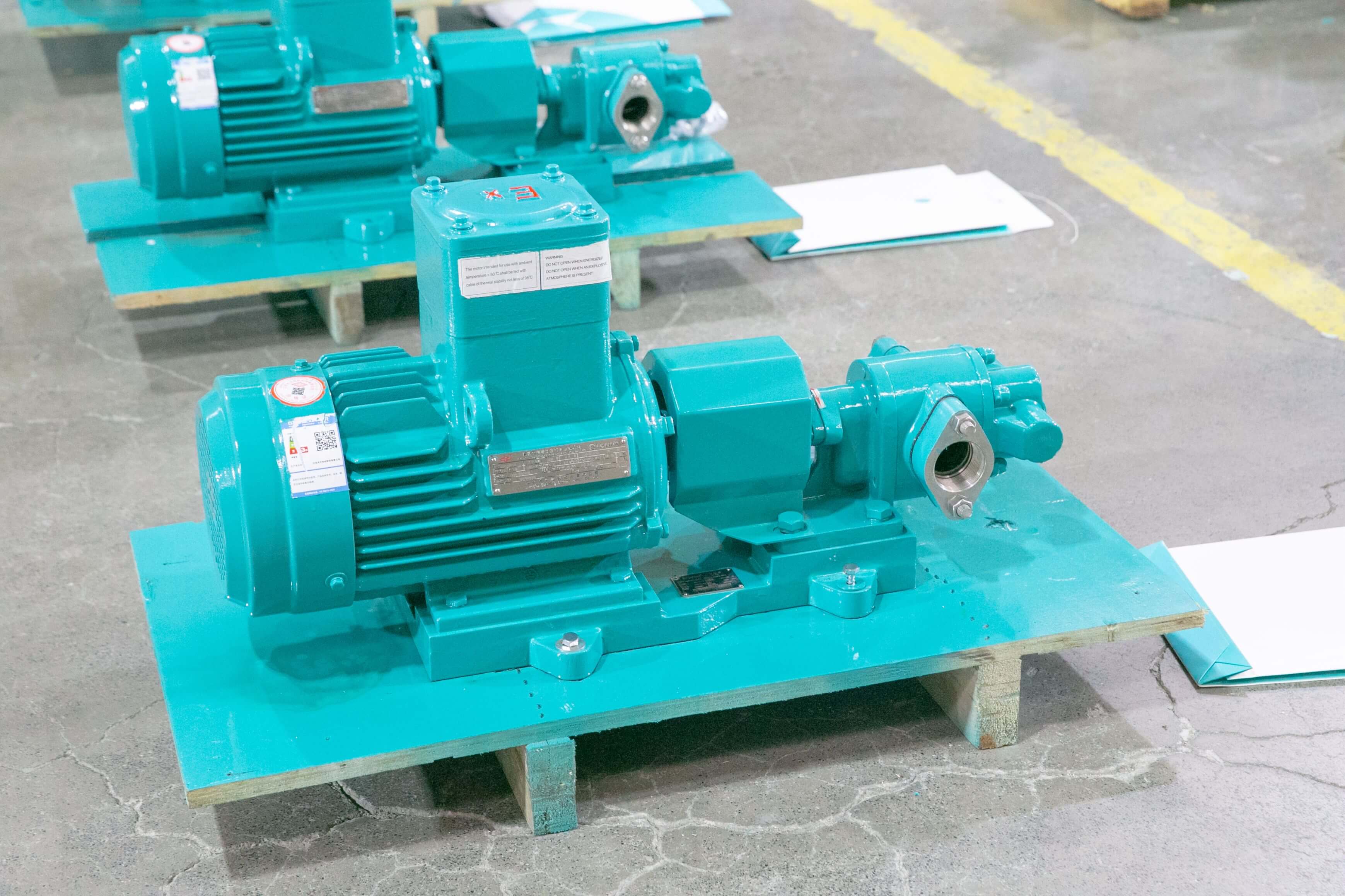
The company's gear pumps have served over 2,000 customers globally, accounting for 41% in the petroleum refining sector and 23% in the chemical industry. For instance, an external gear pump (model DP-G300) supplied to a refinery delivered a stable flow rate of 300 m³/h with pressure fluctuations ≤0.2 MPa when transporting 150°C asphalt, operating fault-free for 2 consecutive years. A custom-built internal gear pump (model DP-N50) for a chemical enterprise, utilizing Hastelloy C-276 material for transporting 98% concentrated sulfuric acid, achieved an 8-year service life—3 times longer than traditional pumps. For more information, visit our official website:www.depamufluid.com
FAQ: A Guide to Q&A Technical Selection
Q1: How to select the type of gear pump based on medium viscosity?
A: For low-viscosity media (≤1000 mPa·s), external gear pumps are recommended due to their simple structure and low cost; for medium-to-high viscosity media (1000-100000 mPa·s), internal gear pumps are suggested as they feature smoother flow channels and lower shear forces; for ultra-high viscosity media (>100000 mPa·s) or media containing solid particles, screw-gear composite pumps should be selected to prevent clogging through the synergy of screw conveyance and gear metering.
Q2: How to match the flow rate and rotational speed of a gear pump?
A: The relationship between flow rate Q (m³/h) and rotational speed n (r/min) is given by Q = V × n × 60 / 1000, where V represents the geometric displacement of the gear pump (L/r). During selection, note that excessive rotational speed will exacerbate gear wear (recommended ≤ 1500 r/min), while excessively low speed will affect self-priming performance (recommended ≥ 300 r/min). For example, when pumping lubricating oil with a viscosity of 5000 mPa·s and a displacement of 10 mL/r, a pump model with a rotational speed between 600-1200 r/min should be selected.
Q3: How to select seals for gear pumps under high-temperature operating conditions?
A: When the temperature is ≤200℃, fluororubber O-rings or mechanical seals can be used; for temperatures between 200-350℃, perfluoroelastomer rubber or tungsten carbide-to-tungsten carbide mechanical seals should be selected, along with the installation of a cooling water jacket; for ultra-high temperatures (>350℃), it is recommended to use a magnetically driven gear pump, replacing dynamic seals with static seals to completely eliminate the risk of leakage. Depam's high-temperature pump series (such as the DP-GHT series) have passed TÜV certification and can operate stably at 400℃.
Q4: How is the maintenance cycle of a gear pump determined?
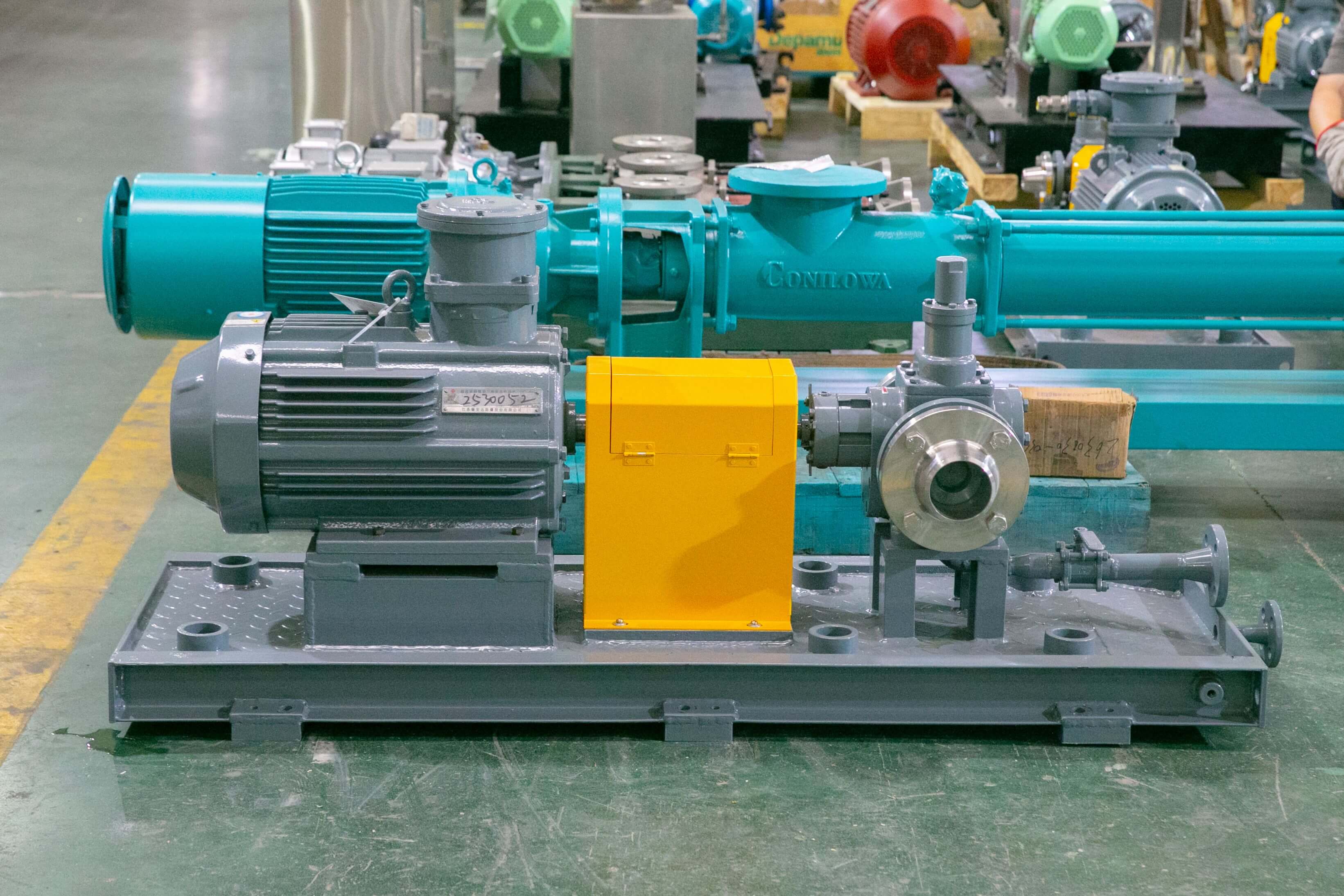
A: The maintenance cycle depends on the medium characteristics and operating intensity. General recommendations: Inspect gear clearance and bearing wear every 2,000 operating hours, replace lubricating oil every 5,000 hours (ISO VG46 or 68 industrial gear oil is recommended), and disassemble and clean the flow channel every 10,000 hours. For media containing solid particles, shorten the inspection cycle to 1,000 hours and install a pre-filter (filtration precision ≤50μm).
Reference for Full-text Summary
The selection of gear pumps should center on medium characteristics, operating condition parameters, and process requirements, achieving performance matching through the collaborative optimization of materials, structure, and control. With 18 years of technical accumulation, Depam Pump Industry has developed a gear pump product line covering all industrial scenarios. Its modular design enables rapid response to customized needs, while the material database supports a wide range of selections from carbon steel to Hastelloy alloy. The intelligent control system enhances the stability and maintainability of equipment operation. Whether in high-temperature and high-pressure scenarios in petroleum refining or highly corrosive conditions in the chemical industry, Depam gear pumps can provide reliable technical solutions. For more information, please visit the official website:www.depamufluid.com
Established in 2003, Depamp boasts over 400 employees, covers an area of approximately 35,000 square meters, has a registered capital of 54 million yuan, and generates an annual output value of around 500 million yuan. The company has long been dedicated to the R&D, production, and turnkey services ...
No. 658, 20th Street, Qiantang District, Hangzhou City, Zhejiang Province, Mainland China