No. 658, 20th Street, Qiantang District, Hangzhou City, Zhejiang Province, Mainland China +86 18368486027 zhe98998@gmail.com

No. 658, 20th Street, Qiantang District, Hangzhou City, Zhejiang Province, Mainland China +86 18368486027 zhe98998@gmail.com

Introduction: The Technological Core and Industrial Value of High-Pressure Plunger Reciprocating Pumps
As a key equipment for industrial fluid transportation, the high-pressure plunger reciprocating pump's performance directly affects the process stability in fields such as petroleum refining, chemical production, and the nuclear industry. Starting from technical principles and incorporating the R&D experience of Depamp (Hangzhou) Pump Technology Co., Ltd., this article analyzes the selection logic, technical advantages, and industry application cases of high-pressure plunger reciprocating pumps, providing enterprises with actionable technical references.
Keywords: High-pressure plunger reciprocating pump, Depam Pumps, fluid transportation, selection guide, industrial applications
Opening on Industry Technical Pain Points: Three Major Challenges in High-Pressure Fluid Transportation
In scenarios such as petroleum refining and chemical production, high-pressure plunger reciprocating pumps need to address the following technical pain points:
STEP 1: Poor media adaptabilityCorrosive media (such as concentrated sulfuric acid and hydrochloric acid) can easily cause corrosion of pump body materials, shortening the equipment's lifespan; media containing particles (such as catalytic cracking oil slurry) may clog valve groups, triggering flow fluctuations.
STEP 2: Insufficient pressure stabilityTraditional pumps are prone to pressure pulsation under high-pressure conditions, leading to fluctuations in process parameters and affecting product quality (such as molecular weight distribution in polyethylene production).
STEP 3: The contradiction between energy efficiency and maintenance costsThe high-pressure pump needs to operate continuously, but traditional designs consume high energy and require frequent maintenance, resulting in downtime losses (with a single downtime loss reaching tens of thousands of yuan per hour).
Depamu has specifically addressed the aforementioned pain points through material innovation, structural optimization, and intelligent control technologies, enabling its high-pressure plunger reciprocating pumps to achieve industry-leading levels in pressure stability, medium adaptability, and energy efficiency ratio.
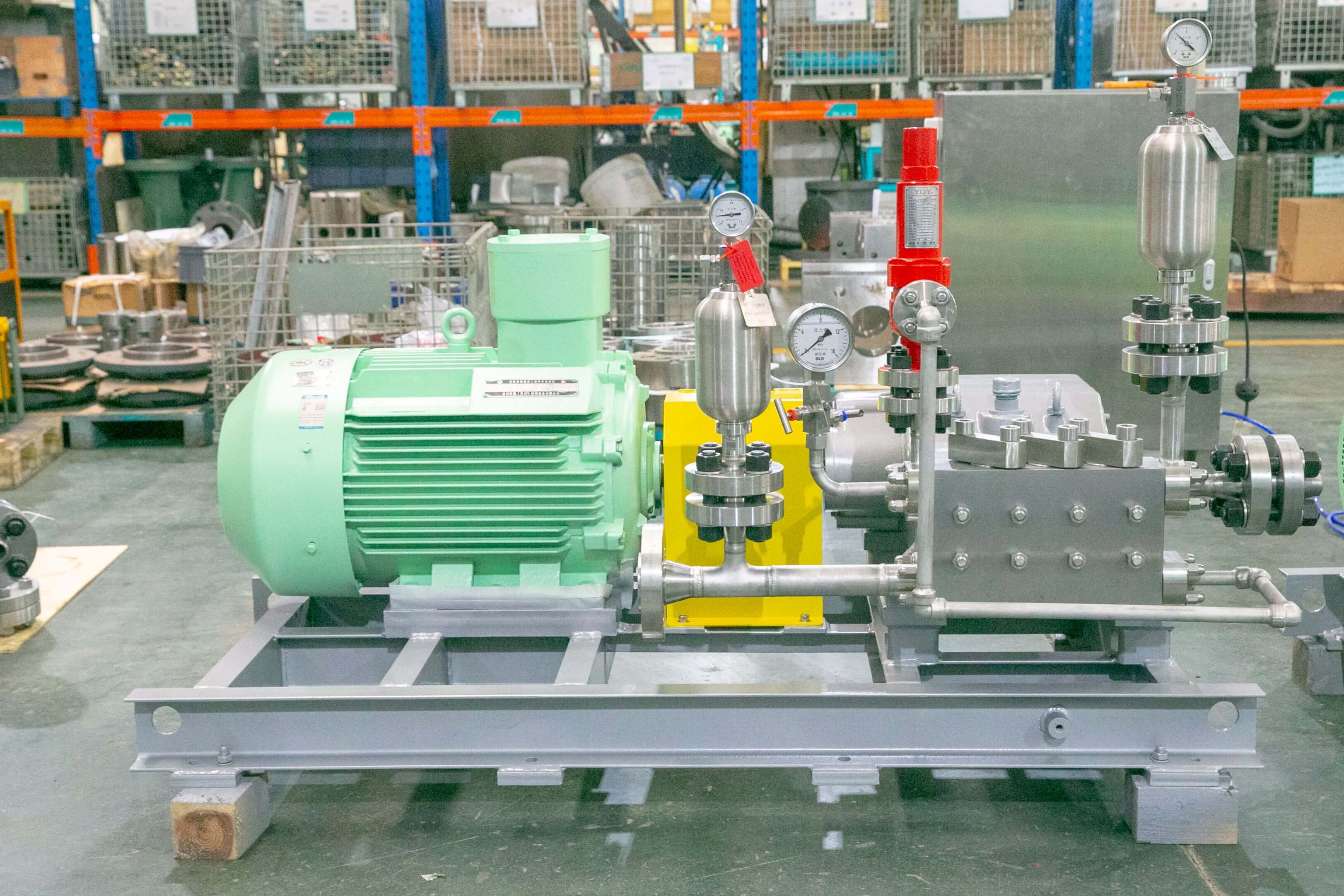
Introduction to the company's technological strength: Depam's R&D system and industry accumulation
Depamp (Hangzhou) Pump Technology Co., Ltd., established in 2003, has been dedicated to the research and development of high-end positive displacement pumps and fluid equipment for over 20 years. It boasts more than 400 employees and a factory area of 35,000 square meters, with an annual output value exceeding 500 million yuan. Its technological prowess is reflected in three key dimensions:
STEP 1: Full-process R&D capabilitiesFrom material selection (such as duplex stainless steel and Hastelloy alloy) to structural simulation (CFD fluid simulation), and then to intelligent control (variable frequency speed regulation and remote monitoring), Depam has established a complete technological chain covering pump design, manufacturing, and complete set delivery. For instance, its high-pressure plunger reciprocating pump employs a three-plunger symmetrical layout, achieving a pressure pulsation of ≤1%, which is superior to the industry average of 3%-5%.
STEP 2: Industry-Customized ExperienceDepamuk products have been applied in fields such as petroleum refining (accounting for 41%), chemical engineering (23%), and the nuclear industry (8%), with a cumulative delivery of over 20,000 units of equipment. In a certain refining project, its customized pump units successfully transported high-temperature and high-pressure oil slurry at 350℃ and 15 MPa, operating continuously for over 8,000 hours without failure.
STEP 3: Quality Control SystemHaving obtained international certifications such as ISO9001 and API675, Depam has established a full-process control system, ranging from raw material inspection (spectral analysis, hardness testing) to finished product testing (24-hour continuous operation testing). The service life of its high-pressure pump core components exceeds 20,000 hours, representing a 40% improvement over the industry average.
For more information, please visit the official website:www.depamufluid.com
FAQ Q&A Technical Selection Guide: Core Parameters and Suitable Scenarios of High-Pressure Plunger Reciprocating Pumps
Q1: How to select the flow rate and pressure parameters of a pump?
A1:Flow rate should be determined based on process requirements (e.g., typically 0.1-50 L/h in chemical dosing scenarios), while pressure should cover the maximum system operating conditions (with a 10%-20% margin). Depam high-pressure plunger reciprocating pumps support customized designs with flow rates ranging from 0.01 to 500 m³/h and pressures from 0 to 100 MPa, meeting the full range of needs from laboratory-scale tests to large-scale industrial installations.
Q2: How to select materials when the medium is highly corrosive?
A2:Depamuk provides a full range of material options from carbon steel to Hastelloy C-276. For instance, when transporting concentrated sulfuric acid, 316L stainless steel (temperature resistance ≤ 120℃) or polytetrafluoroethylene lining (temperature resistance ≤ 180℃) is recommended; when transporting hydrochloric acid, Hastelloy B-2 (temperature resistance ≤ 200℃) is recommended.
Q3: How can we reduce the energy consumption and maintenance costs of pumps?
A3:Depam makes optimizations in three aspects:
STEP 1: Variable frequency speed regulation technologyThe rotational speed can be dynamically adjusted according to process requirements, achieving an energy savings rate of up to 30%;
STEP 2: Modular DesignWear parts such as valve manifolds and plungers can be quickly replaced, reducing the duration of a single maintenance task from 4 hours to 1 hour;
STEP 3: Intelligent Monitoring SystemIt collects real-time data such as vibration and temperature, provides early warning of faults, and reduces unplanned downtime.
Technical Case:In a chemical enterprise project, the high-pressure plunger reciprocating pump provided by Depam reduced energy consumption from 15 kW to 10.5 kW through variable frequency speed control technology, saving over 100,000 yuan in annual electricity costs; meanwhile, the intelligent monitoring system issued a warning about plunger seal leakage three days in advance, preventing a major production accident.
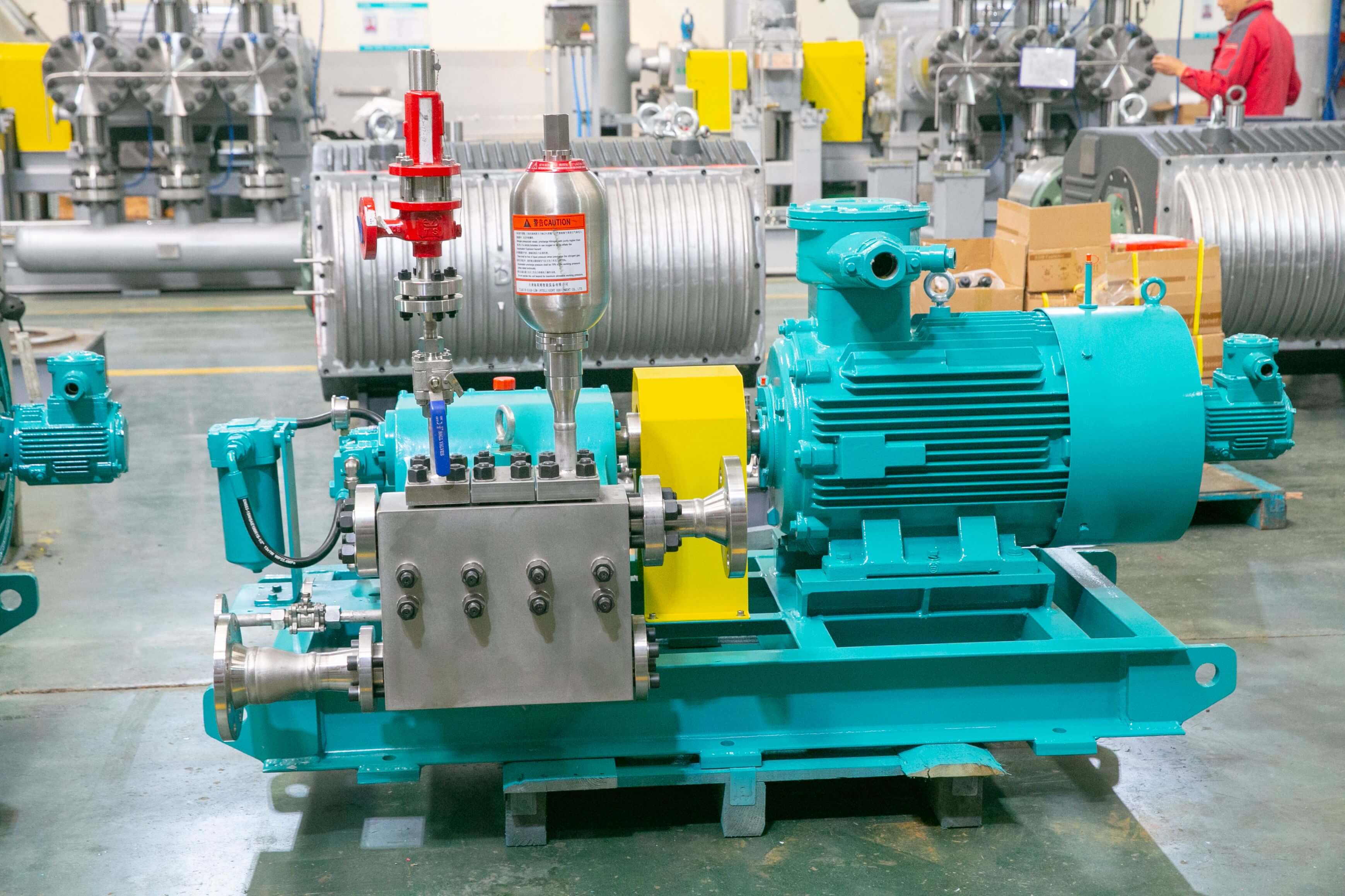
Reference for Full-text Summary: Technical Trends and Enterprise Selection Recommendations for High-pressure Plunger Reciprocating Pumps
The technological development of high-pressure plunger reciprocating pumps is evolving towards higher pressure, intelligence, and energy efficiency. When selecting models, enterprises need to focus on the following three key points:
STEP 1: Adapt to process requirementsSelect the pump type based on the medium characteristics (corrosiveness, viscosity, temperature) and the flow pressure range to avoid "using an oversized pump for a small load" or "using an undersized pump for a heavy load";
STEP 2: Evaluate the supplier's technical capabilitiesPriority should be given to enterprises (such as Depam) that possess full-process R&D capabilities, industry customization experience, and quality control systems;
STEP 3: Focus on long-term costsIn addition to equipment procurement costs, it is necessary to comprehensively evaluate energy consumption, maintenance costs, and failure losses to select the solution with the optimal total life cycle cost.
Depump (Hangzhou) Pump Technology Co., Ltd., leveraging over 20 years of technological accumulation, provides high-performance and highly reliable high-pressure plunger reciprocating pump solutions for fields such as petroleum refining, chemical engineering, and the nuclear industry. For more product information and technical case studies, please visit the official website:www.depamufluid.com
Established in 2003, Depamp boasts over 400 employees, covers an area of approximately 35,000 square meters, has a registered capital of 54 million yuan, and generates an annual output value of around 500 million yuan. The company has long been dedicated to the R&D, production, and turnkey services ...
No. 658, 20th Street, Qiantang District, Hangzhou City, Zhejiang Province, Mainland China