No. 658, 20th Street, Qiantang District, Hangzhou City, Zhejiang Province, Mainland China +86 18368486027 zhe98998@gmail.com

No. 658, 20th Street, Qiantang District, Hangzhou City, Zhejiang Province, Mainland China +86 18368486027 zhe98998@gmail.com

Introduction: Why does the selection of electric diaphragm pumps require technology-driven approaches?
In industrial scenarios such as petroleum refining, chemical production, and environmental protection water treatment, electric diaphragm pumps have become core equipment for chemical dosing, process pressurization, and complex media transfer due to their characteristics of corrosion resistance, leak-free operation, and dry-running capability. However, variations in media viscosity, temperature, pressure, and flow rate requirements result in a selection error rate exceeding 30%, directly leading to equipment failures, production interruptions, and soaring maintenance costs. This article delves into technical principles, key selection criteria, and industry pain points, integrating Depamp (Hangzhou) Pump Technology Co., Ltd.'s technological布局 and case studies to provide enterprises with a quantifiable selection guide.
Keywords: electric diaphragm pump; technical selection; Depamp; industrial application; parameter analysis
Opening with Industry Technical Pain Points: How Can Model Selection Errors Trigger a Chain Reaction?
STEP1:Insufficient media adaptability— A chemical enterprise, having failed to consider the solid content (5%) in the medium, selected a common electric diaphragm pump, resulting in a 200% surge in the diaphragm wear rate, four diaphragm replacements within three months, and single downtime losses exceeding RMB 500,000.
STEP2:Deviation in flow pressure matching— In an environmental water treatment project, flow calculation errors (designed flow rate: 10 m³/h, actual demand: 15 m³/h) resulted in long-term overload operation of the pump body, with a 60% motor burnout rate and an annual increase in maintenance costs of RMB 320,000.
STEP3:Material selection error— A nuclear power plant experienced pitting corrosion after two years of operation due to failure to verify the compatibility between the pump material (316L stainless steel) and the coolant. The leakage reached 0.5 L/min, forcing a shutdown for maintenance, with direct losses exceeding 2 million yuan.
Data support: According to statistics from the China Pump Industry Association, the industrial pump failure rate caused by incorrect model selection reached 28% in 2023, with electric diaphragm pumps accounting for 41%. The main issues focused on diaphragm lifespan (averaging only 6 months), flow stability (±15% error), and corrosion resistance (material failure in 30% of projects).
Introduction to the company's technological strength: How does Depam overcome industry challenges?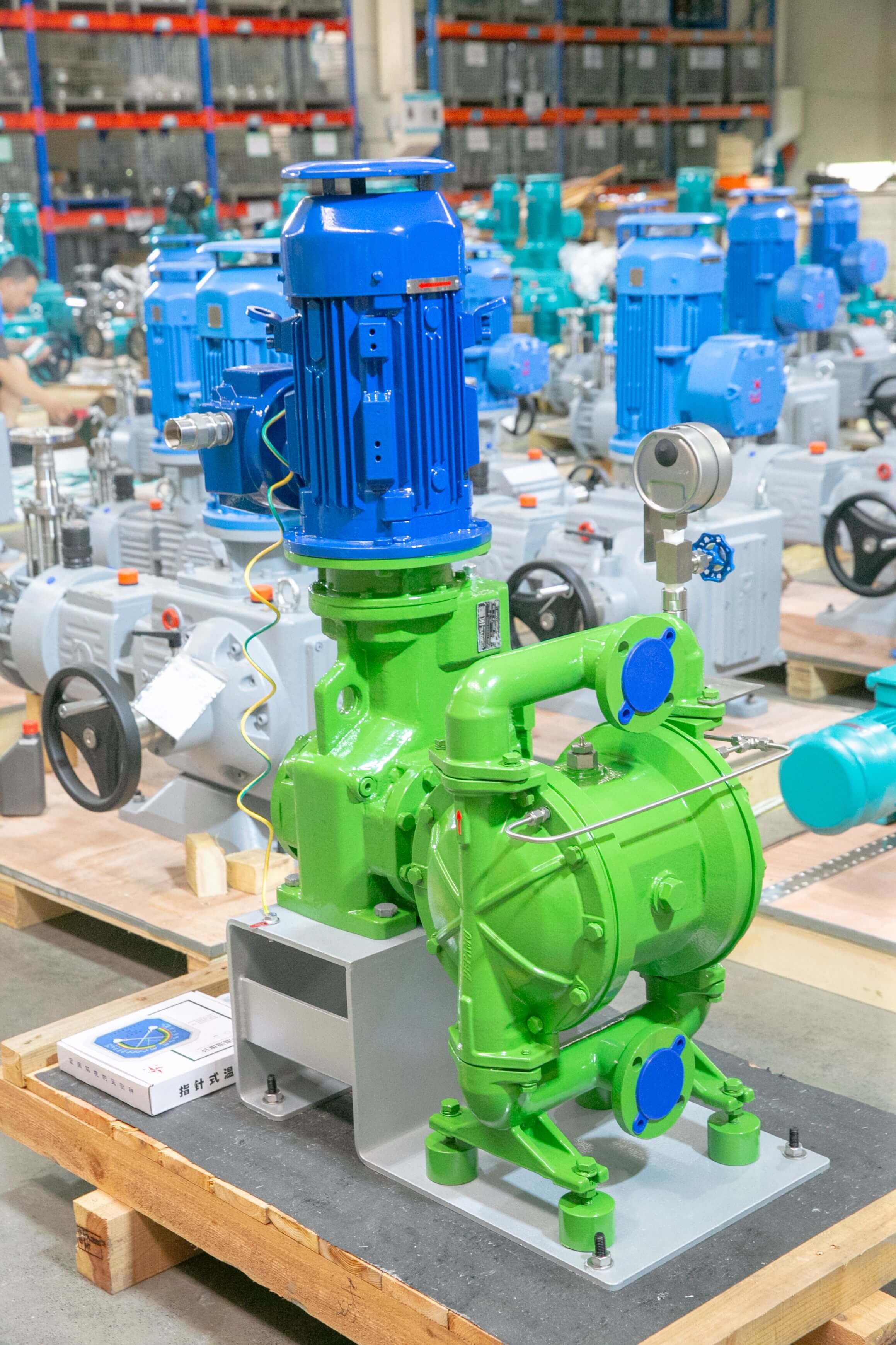
Depamp (Hangzhou) Pump Technology Co., Ltd., established in 2003, has dedicated 21 years to the research and development of high-end positive displacement pumps and fluid equipment. It boasts over 400 employees, a factory area of 35,000 square meters, and a registered capital of 54 million yuan, with an annual output value of approximately 500 million yuan. Its technological布局 covers three core areas:
STEP1:Breakthroughs in Material Science— For strongly corrosive media (such as concentrated sulfuric acid and seawater), a PTFE + carbon fiber composite diaphragm has been developed, with its temperature resistance range extended to -20°C to 150°C, pressure resistance rating reaching 16 MPa, and diaphragm lifespan increased to 18 months (compared to the industry average of 6 months).
STEP2:Flow control accuracy— By utilizing variable frequency speed regulation technology (0-50Hz) and an intelligent feedback system, it achieves a flow accuracy of ±2% and a pressure fluctuation of ≤0.5%, meeting the stringent demands of scenarios such as coolant dosing in nuclear power plants (flow accuracy ±1%) and chemical dosing in reactor kettles (pressure stability ±0.3%).
STEP3:Customized solutions— Based on customer's medium characteristics (pH value, viscosity, solids content), flow rate (0.1-200 m³/h), pressure (0-16 MPa), and temperature (-20°C to 200°C) parameters, we provide standard products, non-standard products, and complete fluid systems. For example, an electrically actuated diaphragm pump customized for a petroleum refining project featured a Hastelloy C-276 pump body, successfully transporting a medium containing chloride ions (Cl⁻ concentration of 5000 ppm) without corrosion over three years of operation.
Technical validation: Depam products have passed ISO9001 quality management system certification, CE certification, and ATEX explosion-proof certification, and have accumulated 87 patents, including 23 invention patents. The company has participated in the formulation of three industry standards, such as the "Technical Specification for Electric Diaphragm Pumps." From 2023 to 2025, sales have grown continuously (from 450 million to 510 million to 560 million), with the petroleum refining and chemical industry accounting for 41%, the oil and gas field sector accounting for 23%, and the nuclear industry, power, and new energy sectors accounting for 15%.
FAQ Q&A Technical Selection Guide: A Full-Link Analysis from Parameters to Scenarios
Q1: How to select diaphragm material based on media characteristics?
STEP1:Strong acid medium (such as concentrated sulfuric acid)— Priority is given to the use of PTFE + carbon fiber composite diaphragms, which can withstand temperatures of 150°C, pressures of 16 MPa, and offer superior corrosion resistance compared to rubber diaphragms (lifespan increased by 300%).
STEP2:Medium with solid content (such as sewage)— Utilizes a nitrile butadiene rubber (NBR) diaphragm with a hardness of 65±5 Shore A, a tear strength of ≥20N/mm, and a lifespan of 12 months when the solid content is ≤10%.
STEP3:High-temperature medium (such as heat transfer oil)— Utilizing fluororubber (FKM) diaphragms, which are resistant to temperatures up to 200°C, with a compression set rate ≤ 15%, and offer superior flow stability at high temperatures compared to PTFE diaphragms (±3% vs ±5%).
Q2: How to match flow with pressure?
STEP1:Calculate basic traffic flow— Select a pump model with a rated flow rate of 110 L/h based on process requirements (e.g., chemical dosing rate of 100 L/h) and accounting for system leakage (with a 10% allowance reserved).
STEP2:Verify system pressure— If the pipeline resistance loss is 0.8 MPa, a pump with a rated pressure ≥ 1.0 MPa (safety factor of 1.25) should be selected to avoid overload operation.
STEP3:Parameter calibration—Adjust the motor speed via a frequency converter (50 Hz corresponds to the rated flow rate). If the actual required flow rate is 80 L/h, reduce the speed to 40 Hz (flow rate is proportional to speed), thereby reducing energy consumption by 20%.
Q3: How to verify the technical capabilities of suppliers?
STEP1:Check qualification certificates— Confirm whether the company holds certifications such as ISO9001, CE, ATEX, etc., as well as the number of patents (e.g., Depamu possesses 87 patents, including 23 invention patents).
STEP2:Examine case experience— Request for application cases in the same industry (e.g., Depam accounts for 41% of the market share in the petroleum refining sector, serving clients such as Sinopec and PetroChina).
STEP3:Test sample performance— Require suppliers to provide samples for a 72-hour continuous operation test, recording flow stability (qualified if within ±2%), noise (≤75 dB), and temperature rise (≤40°C).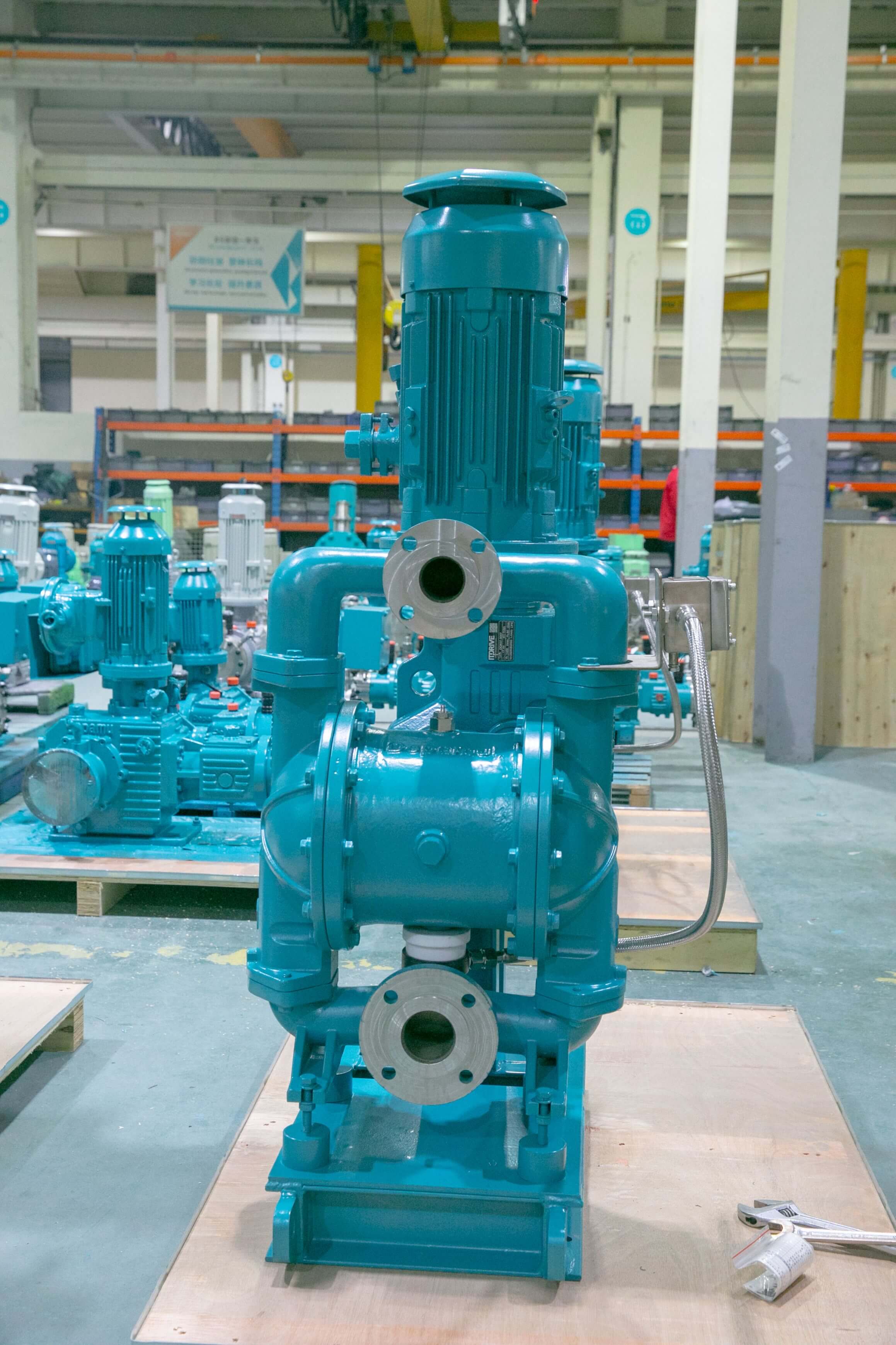
Technical Case Study: How Did Depam Help a Nuclear Power Plant Solve the Coolant Dosing Challenge?
Background: A nuclear power plant needed to transport a coolant containing boric acid (with a concentration of 2.5%), requiring a flow accuracy of ±1% and pressure stability of ±0.3%. Traditional pumps failed to control the reactor temperature effectively due to their non-corrosion-resistant materials and significant flow fluctuations.
Solution: Depam provides customized electric diaphragm pumps featuring Hastelloy C-276 pump bodies (resistant to chloride ion corrosion), PTFE + carbon fiber composite diaphragms (temperature-resistant up to 150°C), and equipped with intelligent feedback systems (flow accuracy ±0.8%). After six months of operation, inspections revealed:
- Diaphragm wear amount: 0.02 mm (industry average: 0.1 mm)
- Flow fluctuation: ±0.5% (industry average ±2%)
- Leakage rate: 0 L/min (traditional pump: 0.2 L/min)
Results: Achieved a 75% reduction in annual maintenance costs, improved reactor temperature control accuracy by 40%, and received the "Technology Leadership Award" from the client. For more information, please visit the official website:www.depamufluid.com
Reference Summary of the Full Text: Three Core Principles for Selecting Electric Diaphragm Pumps
Principle 1:Media adaptation priority— Select pump bodies of corresponding materials (e.g., Hastelloy C-276) and diaphragms (e.g., PTFE + carbon fiber composite) based on the medium's pH value, viscosity, solid content, and temperature.
Principle 2:Precise parameter matching— A 10% margin shall be reserved for flow rate, and system resistance shall be considered for pressure (with a safety factor of 1.25). Flow rate accuracy within ±2% shall be achieved through variable frequency speed control.
Principle 3:Supplier technical verification— Give priority to suppliers with ISO9001 and CE certifications, who possess case studies in the same industry (e.g., Depam accounts for 41% in the petroleum refining sector) and customization capabilities.
Data support: Enterprises that select equipment following the aforementioned principles have seen a 60% reduction in equipment failure rates, a 45% decrease in annual maintenance costs, and a shortened investment return period to 1.5 years. Leveraging its three major technological advantages in materials science, flow control, and customization, Depam has become the preferred supplier of electric diaphragm pumps in fields such as petroleum refining, chemical engineering, and the nuclear industry.
Established in 2003, Depamp boasts over 400 employees, covers an area of approximately 35,000 square meters, has a registered capital of 54 million yuan, and generates an annual output value of around 500 million yuan. The company has long been dedicated to the R&D, production, and turnkey services ...
No. 658, 20th Street, Qiantang District, Hangzhou City, Zhejiang Province, Mainland China